
Fine line trends look incredible online, but dotwork holds a different kind of Halloween energy. The tiny stippled shadows, repeating points, and negative space let spooky imagery feel both delicate and weighty at once. These pieces age into texture instead of mud when set up right. Read on for dotwork Halloween ideas, what to ask for at the consult, and how to show them off.
1. Mini Jack-o'-Lantern on Inner Forearm
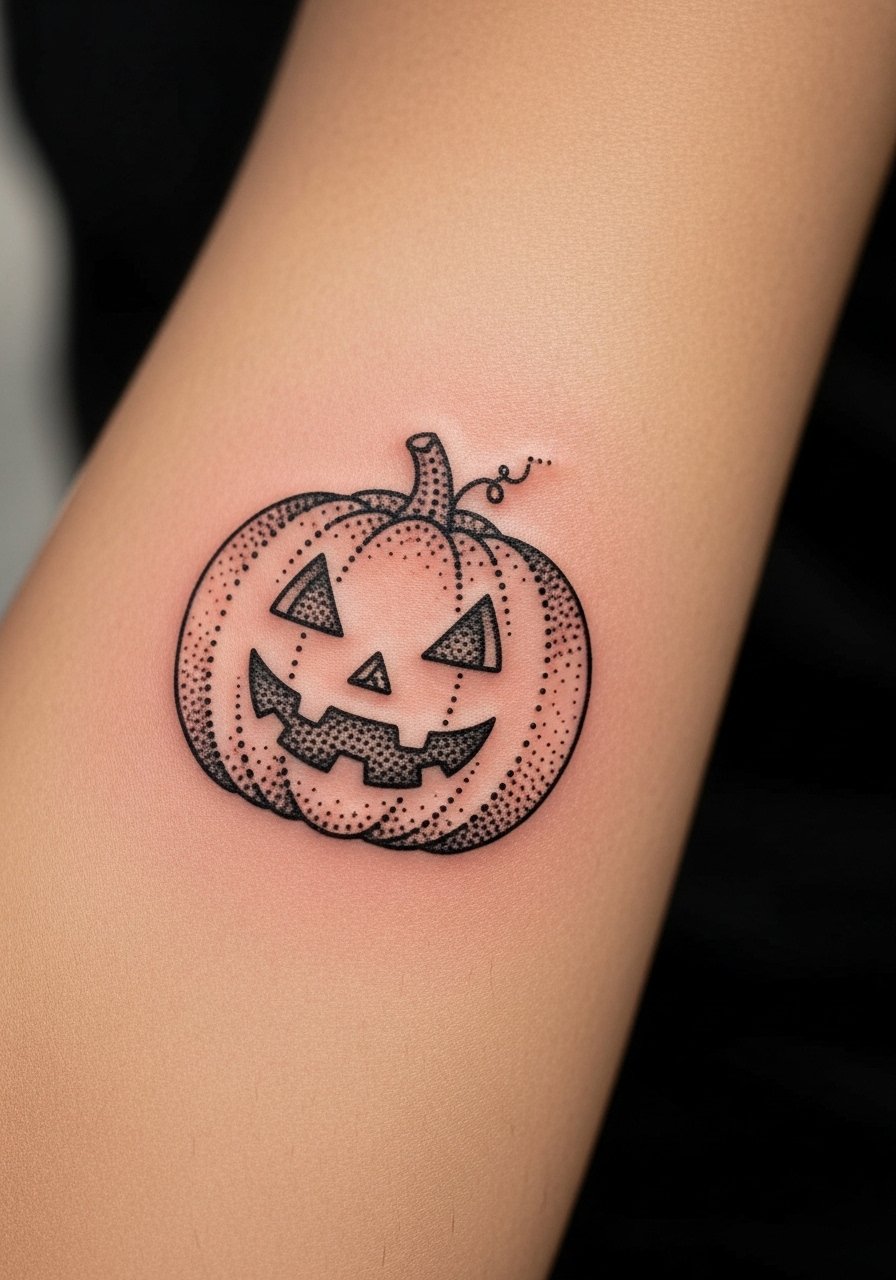
I recommend this when you want a visible Halloween motif without full-on flash. Fair warning, the inner forearm is forgiving but shows blur faster if the dots are packed too dense. Tell your artist you want stipple shading with slightly increased spacing between dots, so the texture reads at six months and still reads at two years. Expect a low-to-moderate pain level and a single short session. A common mistake is asking for hyper-detail at a tiny scale. For the session wear, roll up a loose button-down shirt so the artist has clean access without tugging at the sleeve.
2. Crescent Moon With Stippled Crater on the Wrist
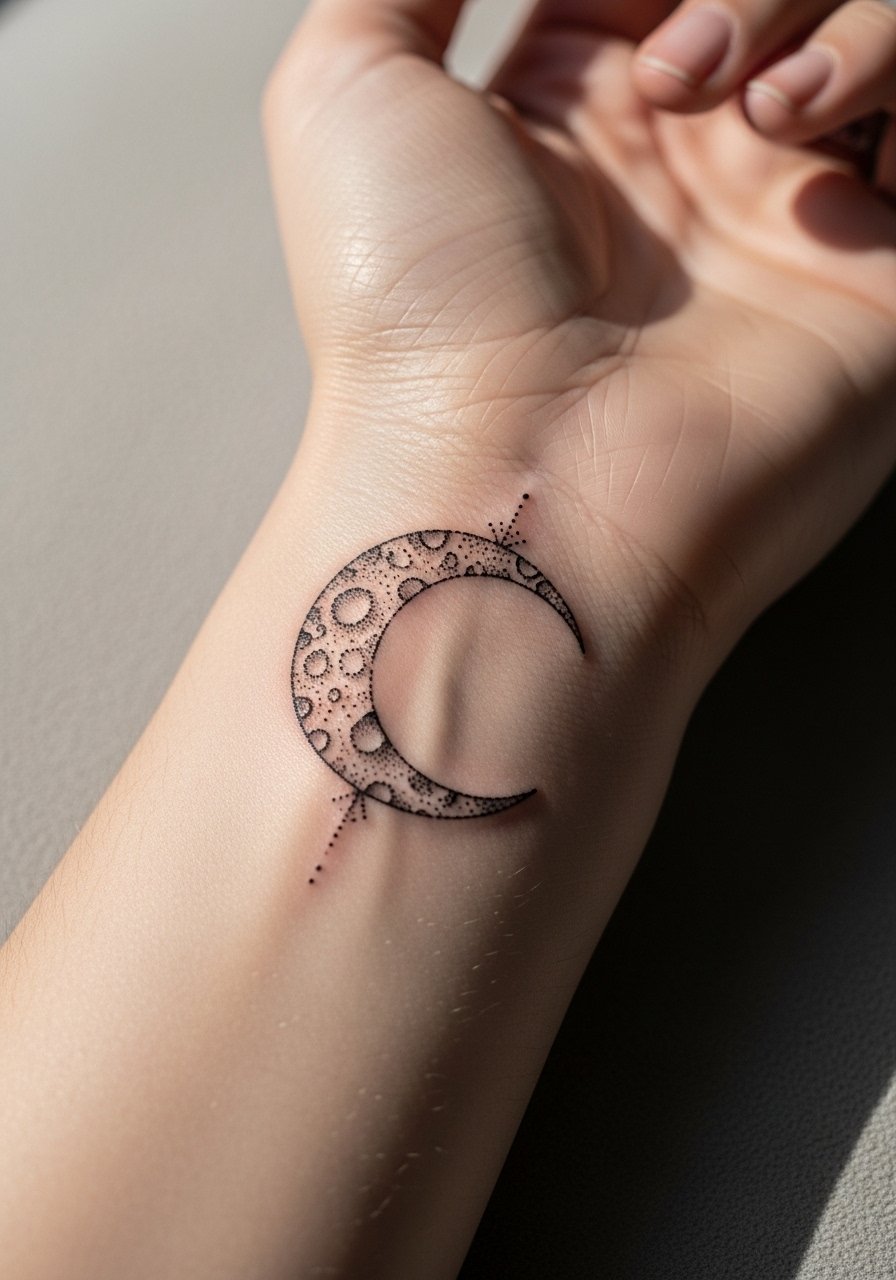
There's something about a crescent rendered in pointillism that reads like a miniature landscape. The wrist is a high-friction zone, so expect touch-up sooner than on the forearm. In consultation, ask for slightly bolder surrounding linework and more open stipple fields near joints to prevent early merging. Session time is short but painful spikes happen when the needle crosses bone. For showing off, pair it with a thin chain pendant necklace that sits above the wrist for an elegant contrast.
3. Stippled Haunted House on the Upper Arm
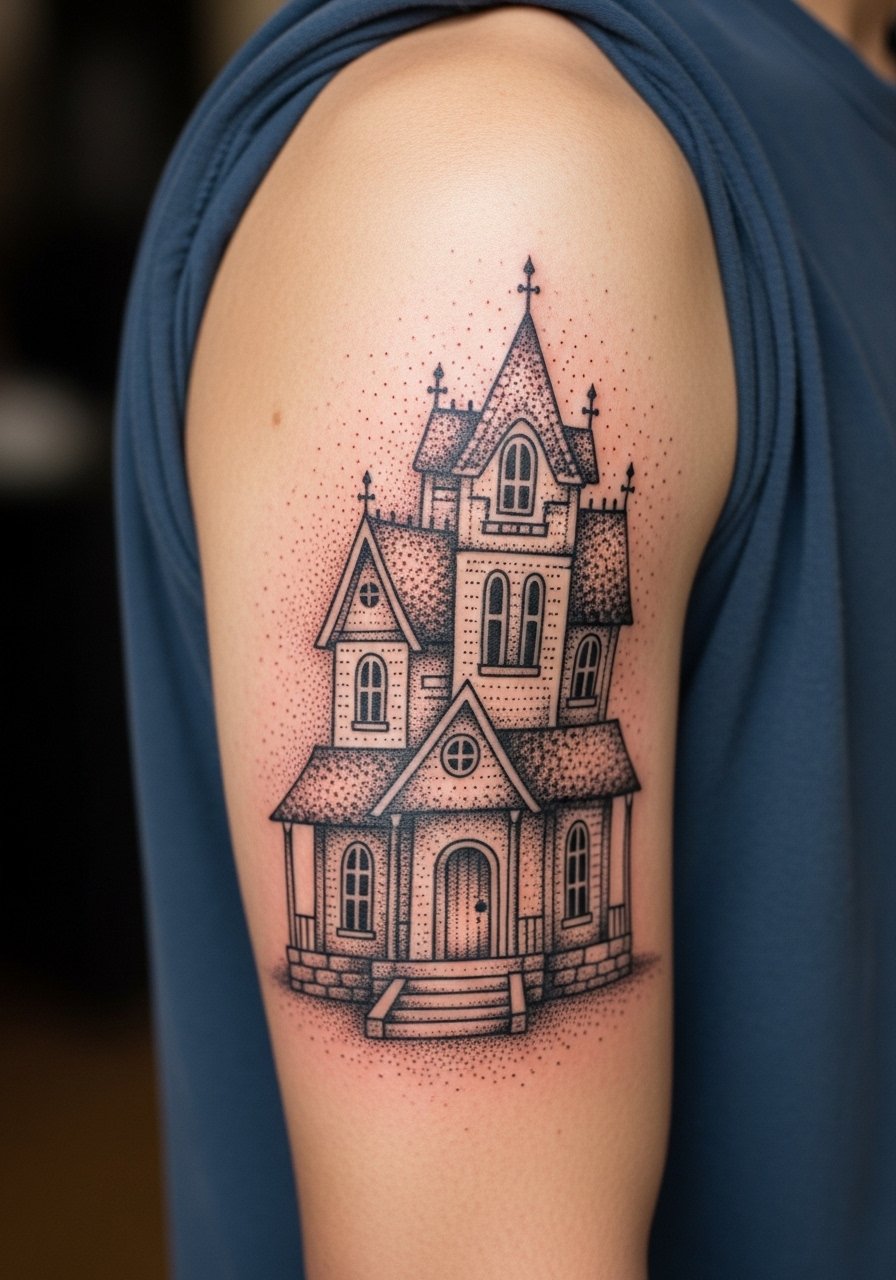
Most people pick a haunted house reference that is either too dense or too sparse. For dotwork, ask for clear silhouette shapes and stippled negative space behind windows. The outer upper arm gives room to breathe and ages well, with moderate pain during the session and a typical one to two hour block. A common mistake is packing tiny windows filled with dots, which soften into a gray patch at year three. Wear a loose tank top to the appointment so the artist can work without fabric getting in the way.
4. Micro Dotwork Bat Cluster on the Collarbone
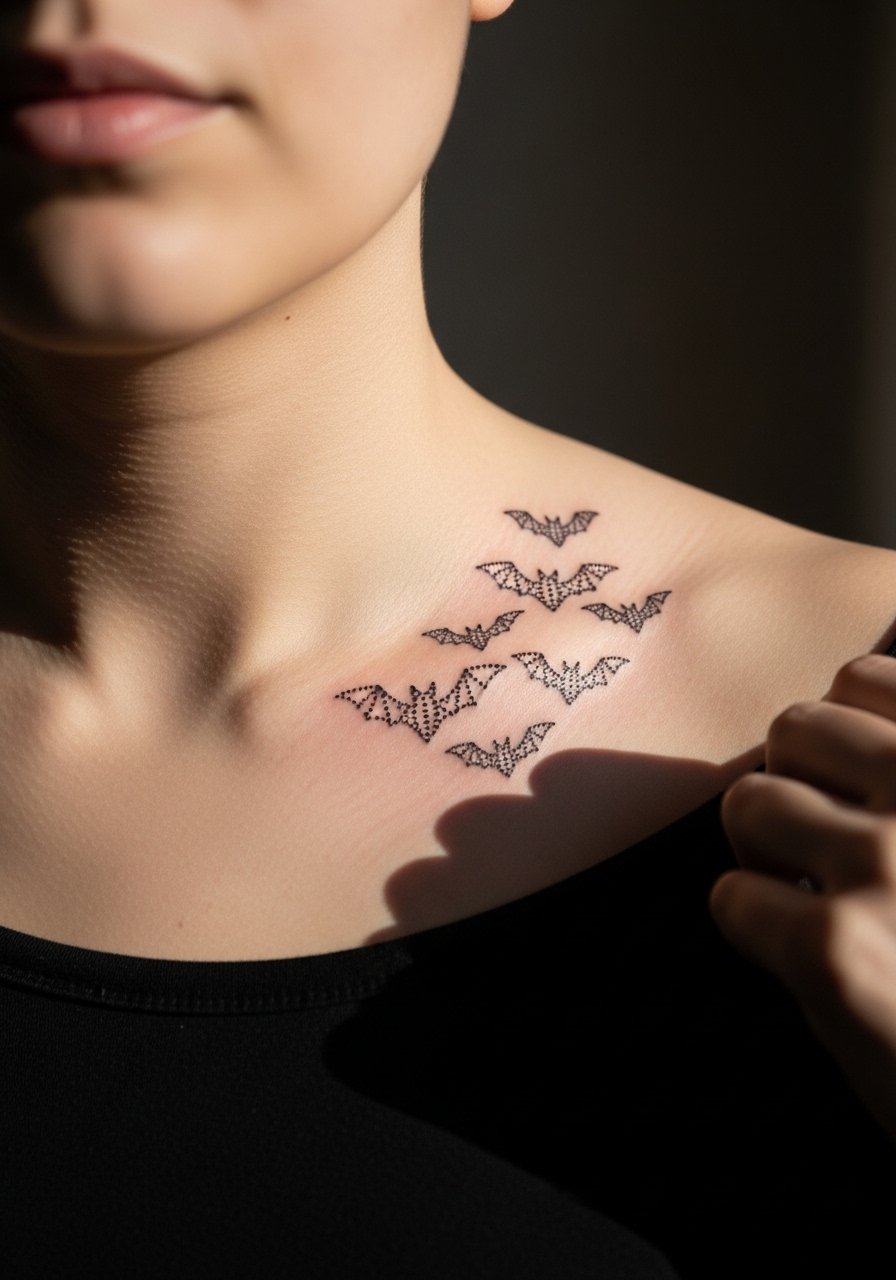
The collarbone is visible and dramatic. Fair warning, collarbone sessions sting when the needle crosses the bone. Dotwork here pops when spacing is deliberate. Tell your artist you want varied negative space between bats and a softer stipple fade toward the shoulder. Expect a single short session and potential touch-up at year three depending on sun exposure. For evenings out, an open-back midi dress or a wide-neck top frames the cluster without covering the work.
5. Spooky Mandala With Skull Center on the Sternum
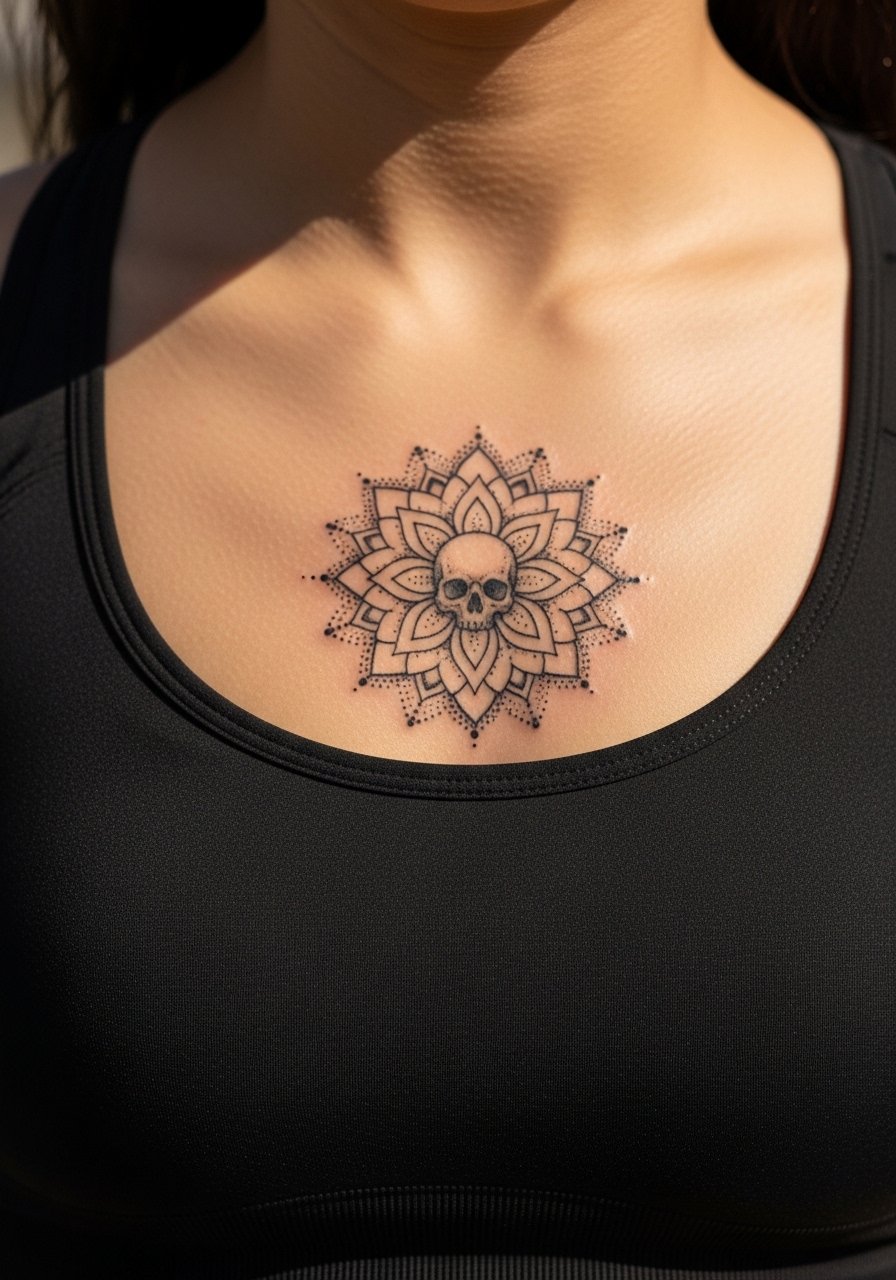
Sternum work requires an artist experienced with curving planes. Artists split on whether dense dotwork holds on sternums. One camp says heavy stipple shifts with chest movement and blurs. The other camp argues that with proper spacing and depth it settles fine. Ask the artist where they stand, and request a mockup on the flat chest while breathing normally. Pain is higher here and sessions may be chunked into shorter passes. For the session, wear a strapless top or a fitted sports bra so the artist can work without fabric adjustments.
6. Tiny Ghost Ring Finger Tattoo
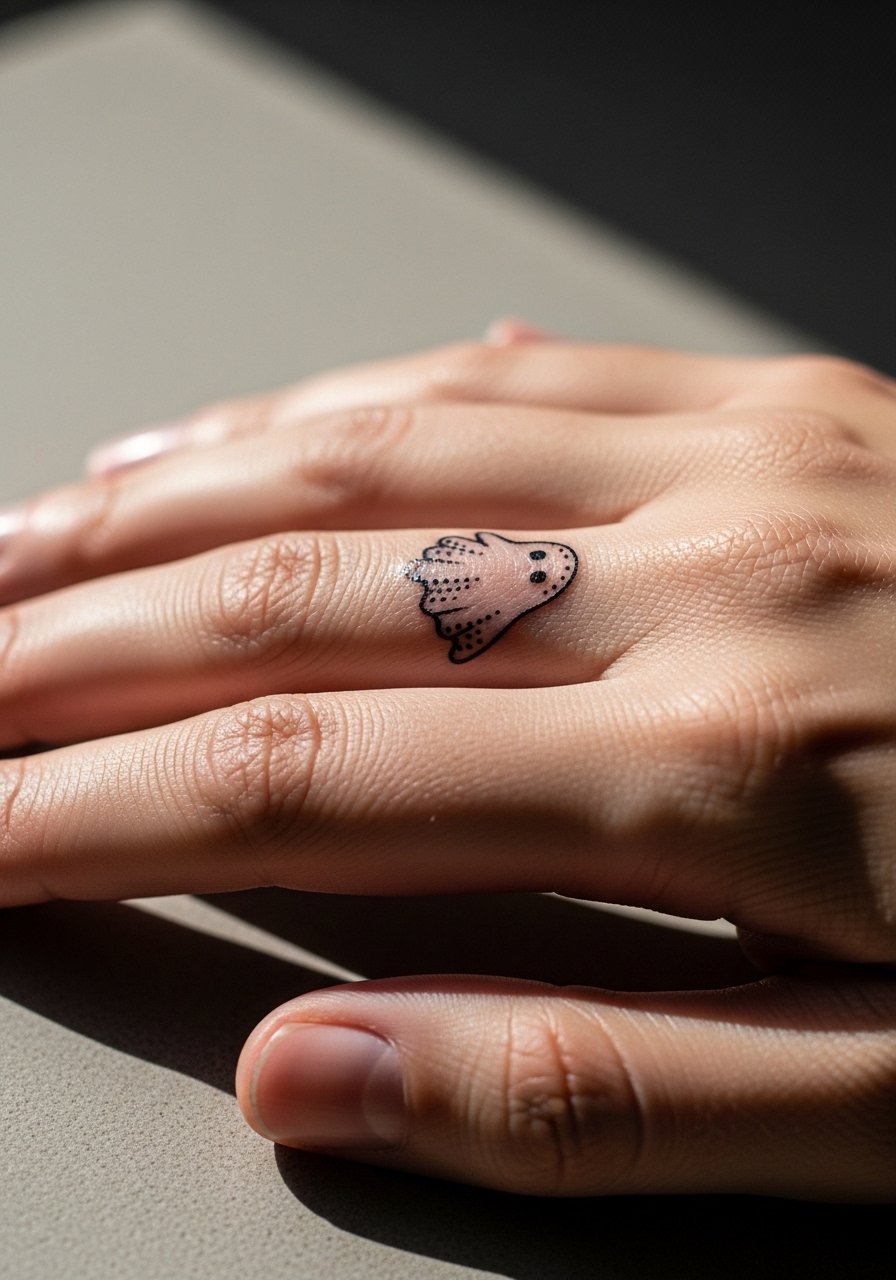
Finger tattoos are fun but fade fast. The big mistake is insisting on tiny dense dotwork on a finger. Ask for slightly larger negative space in the ghost body and bolder contour dots that will weather better. Expect higher touch-up rates and daily friction from washing and rings. Session time is brief yet painful because of thin skin. For protecting the area after the session, avoid bulky rings during the first week. Keep in mind hand and finger tattoos still influence some hiring decisions, so think about your workplace.
Pre-Session Essentials
The collarbone, wrist, and finger pieces above demand different prep than larger arm work, and a few targeted items smooth the session and the first week.
-
Stencil transfer paper kit. Lets you preview the linework on skin before committing, which is handy for tiny Halloween motifs and finger placements.
-
Topical numbing cream. Applied 30 to 45 minutes before can take the edge off clavicle and sternum sensitivity without obscuring linework.
-
Thin protective film roll. Keeps wrist and finger tattoos cleaner during the first week of frequent hand washing and typing.
-
Fragrance-free body wash. Cleanses healing dotwork without irritating the delicate stipple channels that fine Halloween pieces depend on.
-
Aquaphor healing ointment. Thin layers in the first few days lock in moisture for tight dot shading without clogging skin.
7. Haunted Tree Silhouette Down the Ribcage
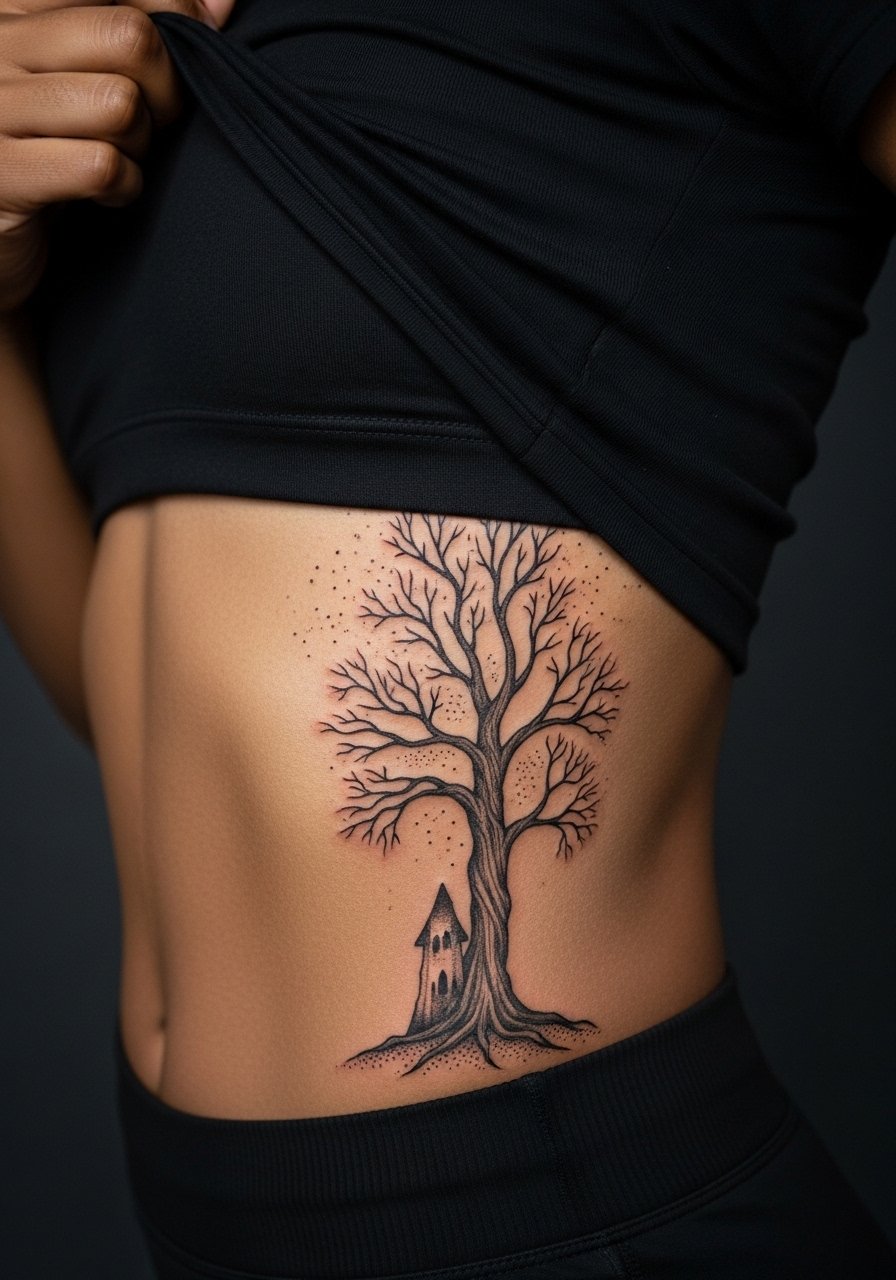
Fair warning, ribcage sessions are painful but they let detailed dotwork breathe. The biggest mistake is asking for a tiny, dense forest in that area. Ask for negative space branches and stipple gradients that move with the curve of the ribs. Expect shorter passes across multiple sessions when coverage is large. Artists split on fine line detail on ribs. Some say the skin there stretches too much and blurs. Others say proper spacing and depth keep detail intact. Bring a loose zip-up hoodie or a bandeau top for modesty between passes.
8. Stippled Candy Corn Trio on the Ankle
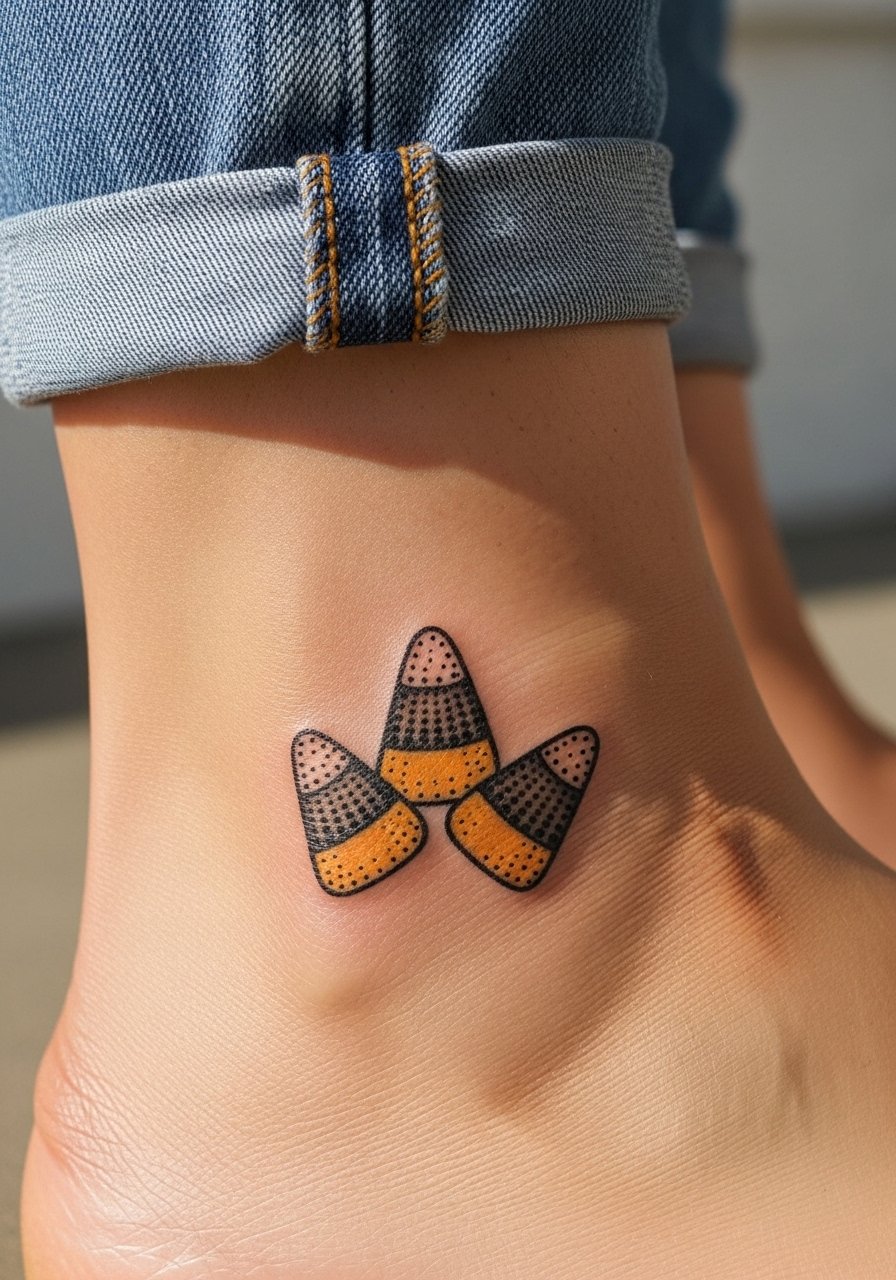
There is low pain at the ankle but high friction from shoes and socks. For longevity, ask the artist to place the dots with micro-spacing near the shoe contact line and keep brighter highlights toward the inner ankle. Session time is short and most clients book a single pass. A common mistake is placing the design too close to the shoe seam. Wear shoes that allow the ankle to breathe and show it off with sandals after the healing window so the work can be visible without rubbing.
9. Dotwork Witch Silhouette on the Calf
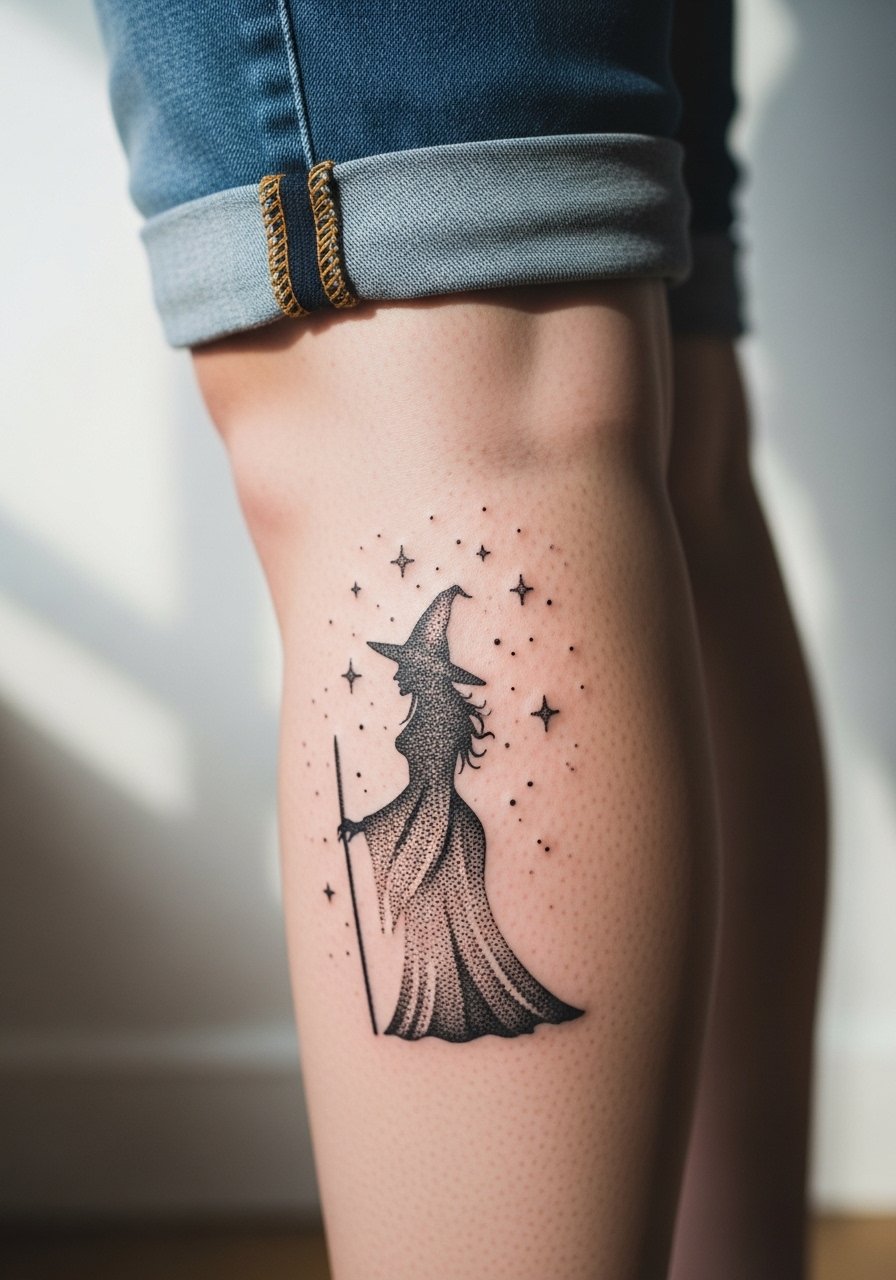
The calf is a forgiving canvas that keeps dot detail well. I've seen calf pieces hold crisp stippling for five years with normal sun exposure. Ask for stronger contour dots around the silhouette so the negative space reads from a distance. Expect a moderate session length and lower pain levels compared with ribs. For evening looks, pair this with a mid-length skirt that lifts to reveal the witch when you walk.
10. Haunted Lantern Behind the Ear
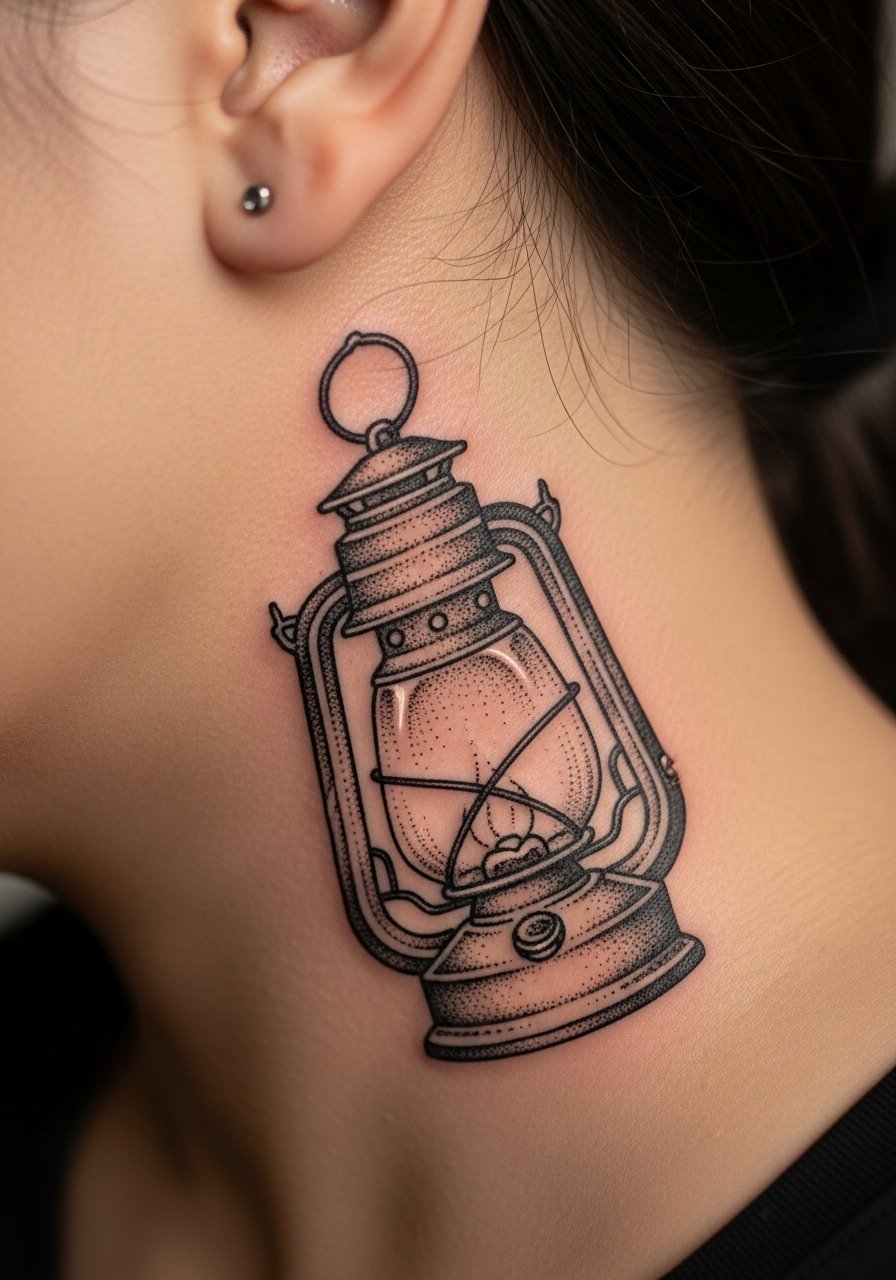
Behind-the-ear placements need a careful consult about visibility. The one-sentence professional note here is that behind-the-ear work requires precision because the skin is thin and movement affects depth. In practice, dotwork lanterns look best with modest negative space and slightly bolder outer dots. Pain is low but healing can be tricky with hair oils and neck sweat. Ask the artist how they manage aftercare for hairy areas. For showing it off, sweep hair up or use a wide-neck shirt to reveal the placement selectively.
11. Stippled Raven on the Shoulder Blade
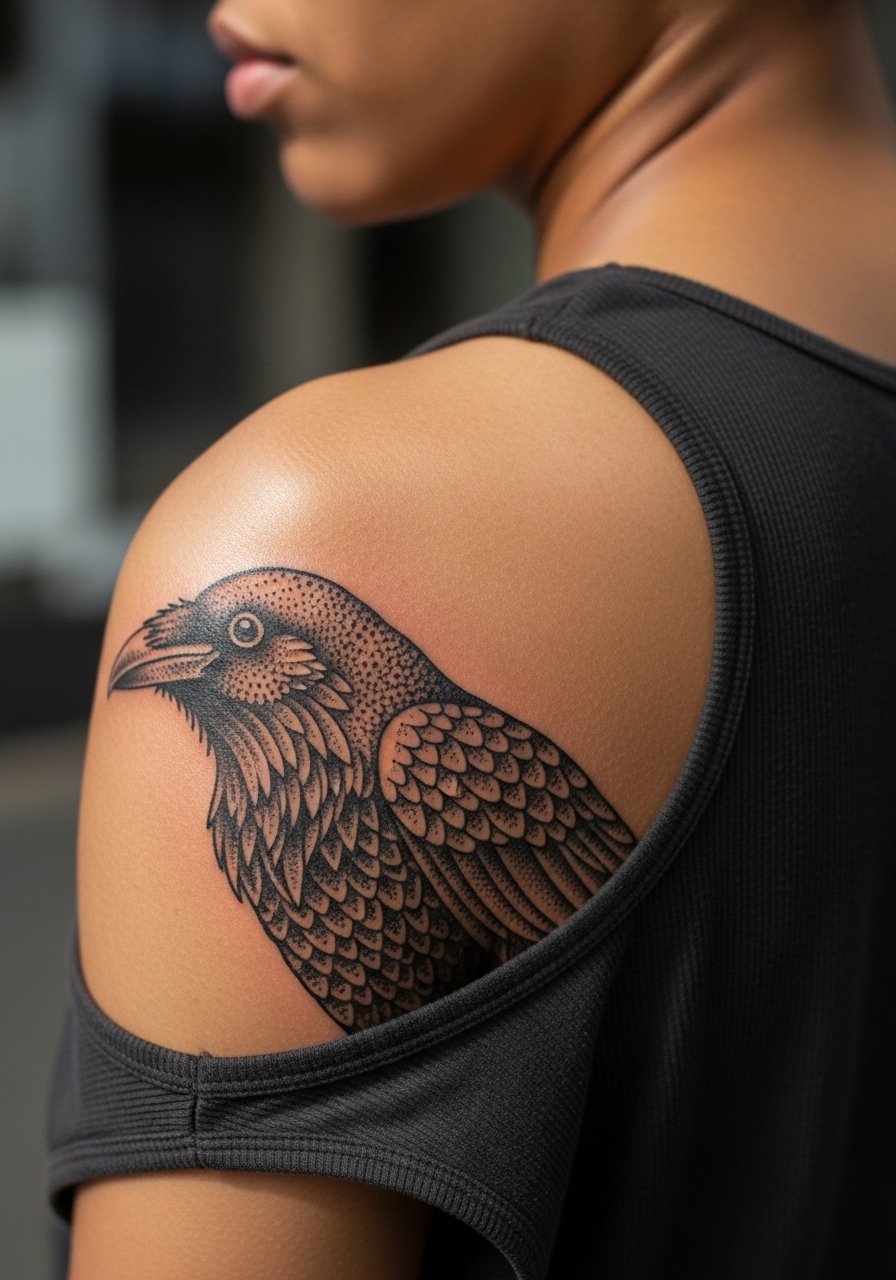
Shoulder blades handle heavy dotwork well because they get less daily friction. Most clients choose strong stipple gradients and a defined silhouette so the raven holds its shape as seasons pass. The session is moderate and comfortable since the area is broad. Common mistakes include asking for too many micro details near the wing edges. For session wear, button down shirts or a loose tank top make access easy for multiple passes.
12. Tiny Ouija Planchette on the Side of the Neck
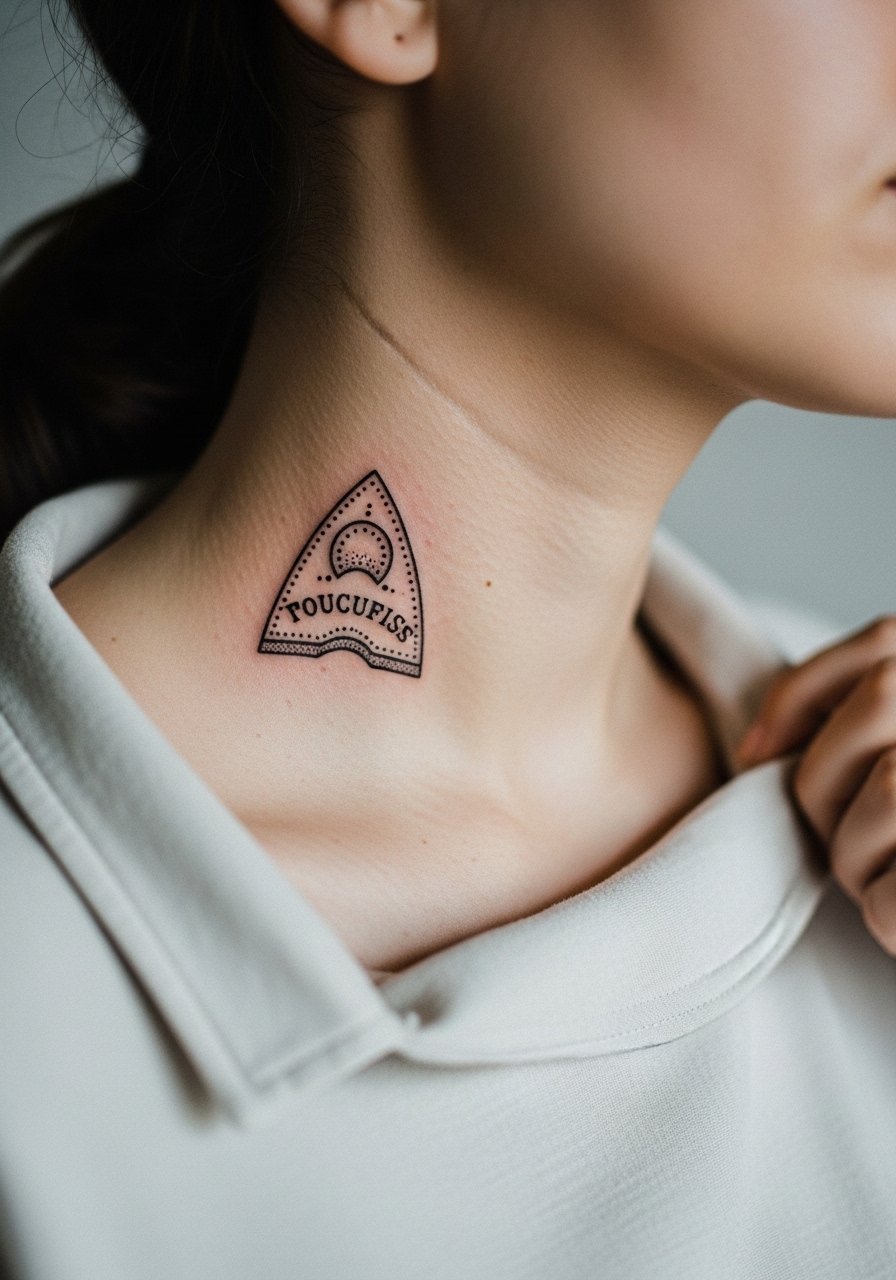
Neck tattoos carry visibility consequences so think placement through. A subtle planchette in dotwork can read as jewelry when paired with a collarbone chain. Expect a brief but sensitive session because the neck is tender. Tell your artist you prefer spaced stippling and distinct contour dots so the shape keeps definition. For showing off without full exposure, a thin chain pendant necklace that sits above the art can frame it nicely.
13. Dotwork Spiderweb Around the Elbow
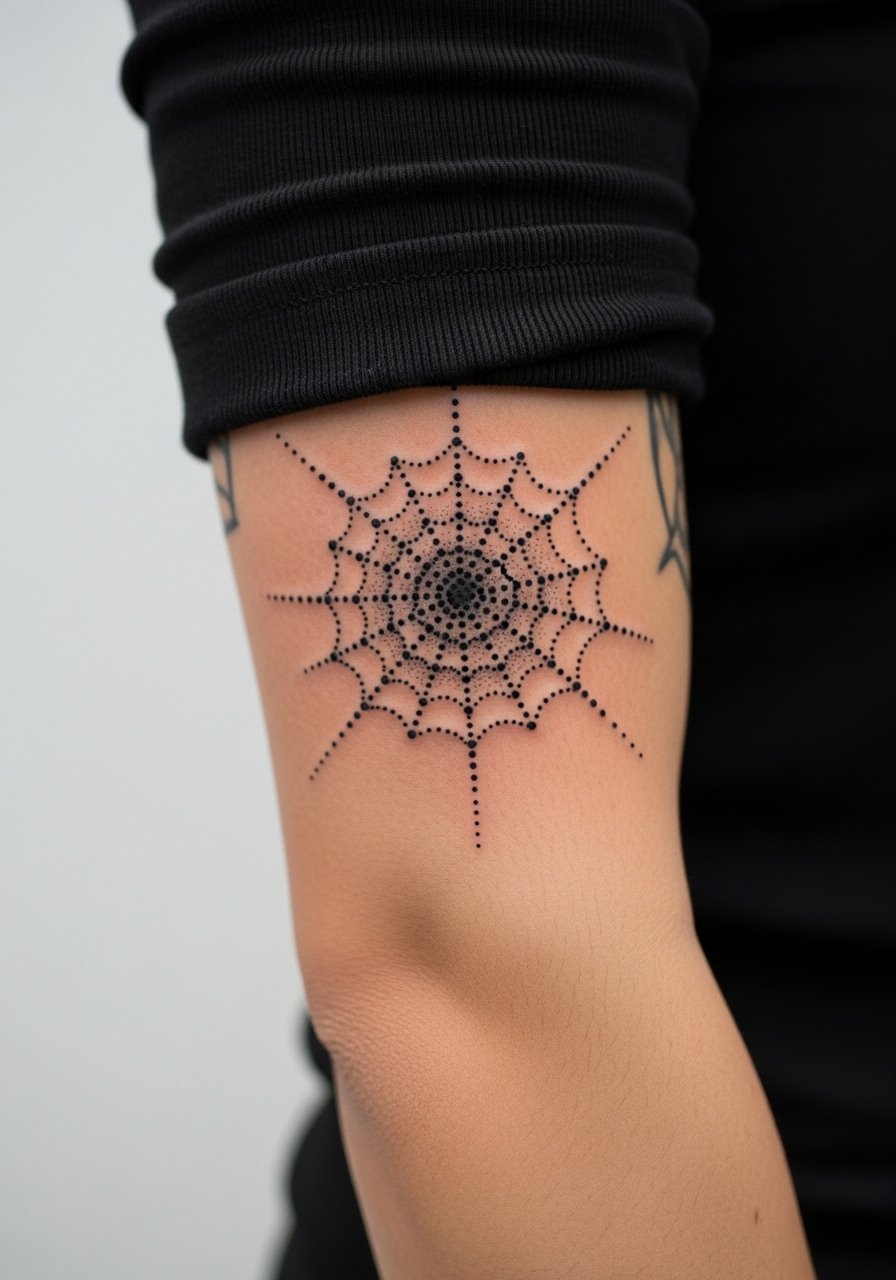
Elbows are notorious for poor longevity when highly detailed. The visual impact lead applies here because a spiderweb that respects the elbow's stretch and motion will read better over time. Ask your artist for larger negative spaces and fewer microdots directly over the joint. Pain is higher when the needle crosses the point. Expect touch-ups sooner than on flat skin. For the appointment, wear a sleeve you can roll up easily, such as a stretchy long-sleeve top, to avoid fabric pulling.
14. Crescent Skull on the Upper Thigh
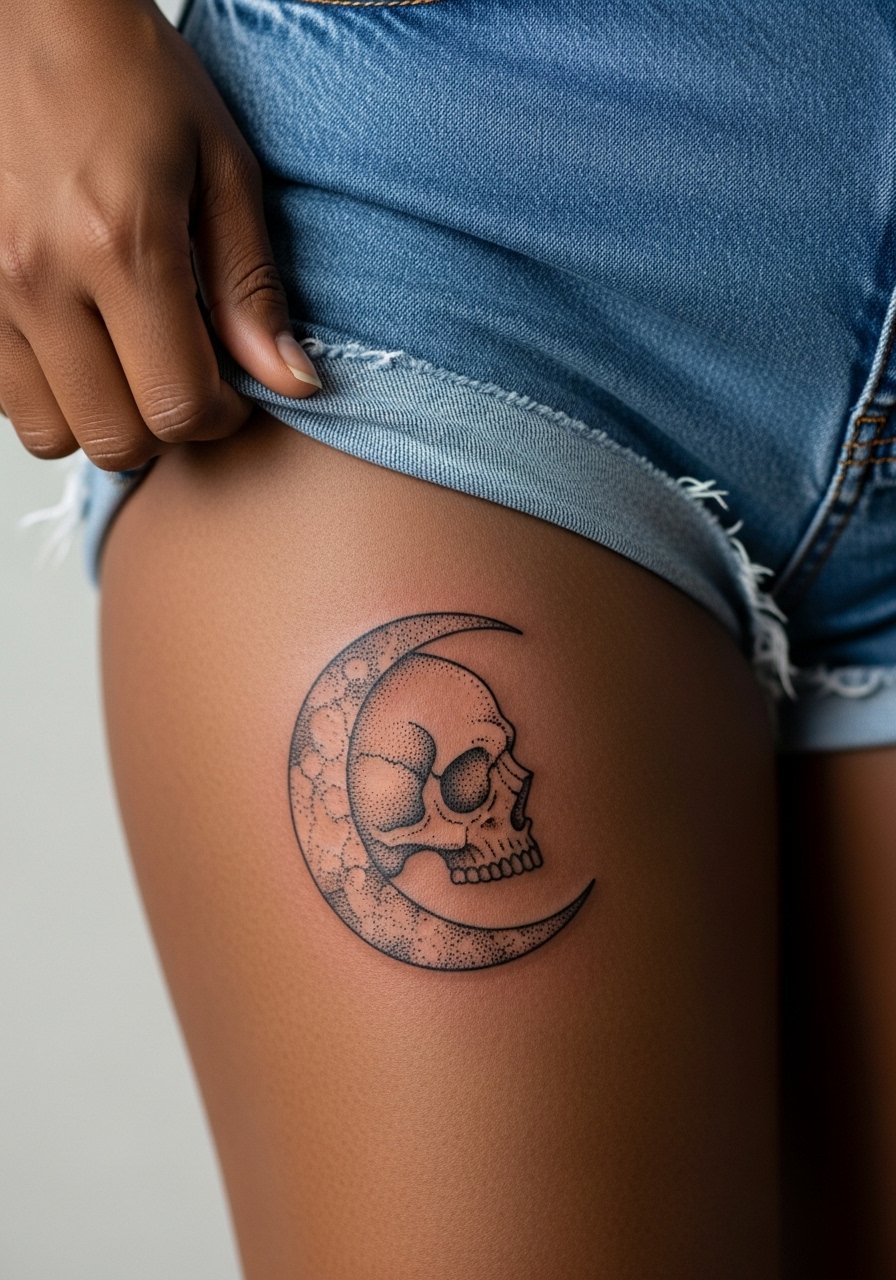
Upper-thigh dotwork gives room for delicate gradients and holds well if you avoid dense stipple near stretch lines. The session feels moderate and you can usually lie comfortably for longer stretches. A common mistake is requesting tiny text or micro faces within the skull, which can smear over time. For the session, wear loose shorts or a wrap skirt so the artist can access the area without jostling fabric.
15. Tiny Black Cat Silhouette on the Ankle Bone
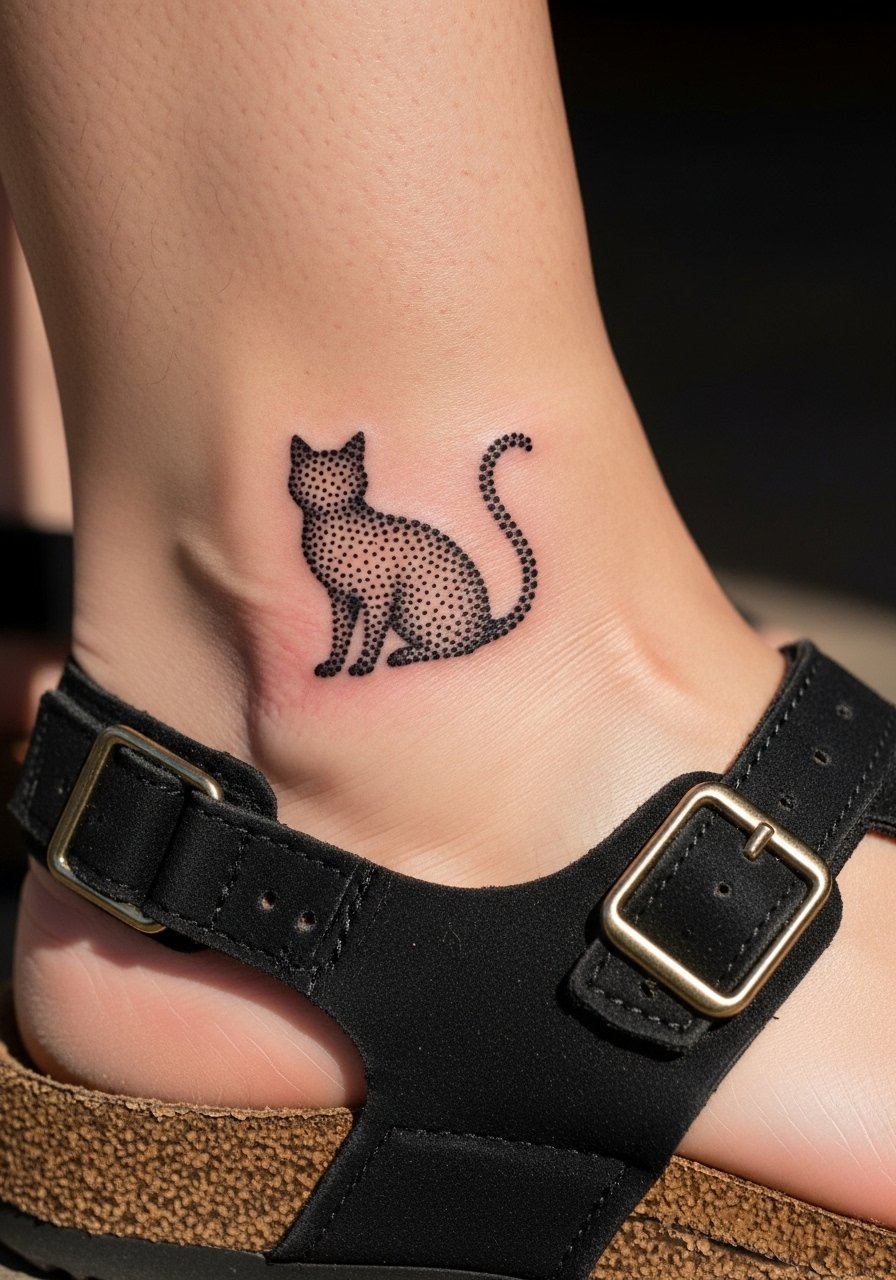
Ankle bone placements need mindful spacing to avoid early loss of contour. The visual impact is immediate but the challenge is daily rubbing from socks. Request contour dots that are slightly bolder around the silhouette and stipple that fades before the shoe contact zone. Pain is modest but sharply felt over bone. For showing off, choose open footwear like women sandals so the cat is visible without friction.
16. Dotwork Graveyard Scene Across the Lower Back

Lower-back pieces let you build a small narrative with depth. The mistake is over-cluttering with tiny motifs that lose separation. Ask for layered stipple planes and stronger foreground contour dots so the headstones read apart from the fog. Sessions can be longer but comfortable. For modesty between passes, wear a tank top or a t-shirt you can lift slightly. Consider how this will look with low-rise or high-waisted clothing when you show it off.
17. Tiny Moon and Bat Duo on the Back of the Hand
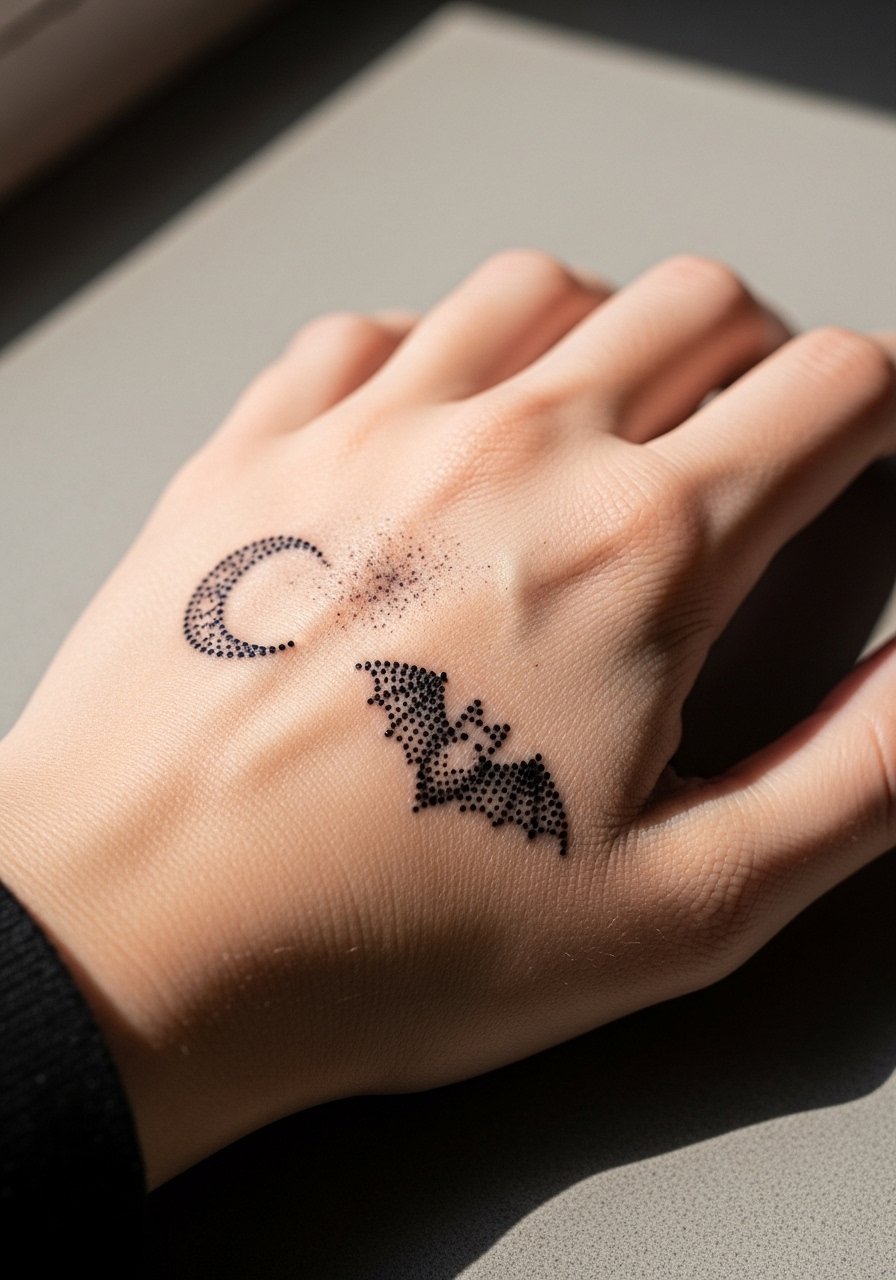
Hand pieces are high visibility and high maintenance. The aging lead matters here because the thin tissue and frequent washing move dots faster than on the forearm. Ask for slightly bolder contour stippling and accept that touch-ups are likely within two years. The session is brief but more painful than nearby forearm work. A common career consideration applies for visible hand tattoos, so weigh that before booking. For the appointment, avoid jewelry so the artist can work unobstructed.
Frequently Asked Questions
Q: Will dotwork fade faster than solid blackwork on areas like the wrist and fingers?
A: Dotwork can fade faster on high-friction, exposed areas because the individual points depend on skin texture. From what I've seen, solid saturation holds longer on hands and wrists. Ask the artist to increase spacing and contour dots for small placements, and expect touch-ups earlier on fingers.
Q: Can a dotwork mandala on the ribcage stay detailed or will it blur with chest movement?
A: It depends on spacing and depth. Some artists say dense dotwork on ribs softens as the skin moves. Others will plan wider stipple gradients and chunked sessions to maintain clarity. Ask for a breathing test during the mockup to see how the design flexes.
Q: What should I wear to a sternum or upper chest dotwork session?
A: Wear a fitted sports bra or a wide-neck shirt you can pull aside. That keeps the area covered yet accessible. I like recommending a fitted sports bra because it offers modesty between passes and clear access for the artist.
Q: How often do small Halloween dotwork pieces need touch-ups?
A: Small visible pieces like fingers, wrists, and hands usually need touch-ups every one to three years depending on sun exposure and friction. Larger sites like calves and shoulders often go longer between sessions.
Q: Is dotwork safe for darker skin tones, or does stippling show differently?
A: Dotwork works on all skin tones but the approach changes. On darker tones, artists often focus on contrast with bolder contour dots and more open negative space so the pattern reads. Talk to an artist who has healed examples on a range of skin tones before booking.