
Fine line watercolor pieces look effortless online, but the reality is more particular. Watercolor saturation, placement, and the plant's natural shape all change how a December birth flower tattoo will age. Pick a style that matches your daily wardrobe and ask targeted questions in consultation so the color sits where it belongs and the linework reads for years. The first idea shows how to make paperwhite narcissus work on the inner wrist.
1. Paperwhite Narcissus on the Inner Wrist
I've seen delicate narcissus wrist pieces hold up when artists balance loose watercolor with confident linework. Pain is mild for most people, and a single 45- to 90-minute session usually does it. Tell your artist you want the color to sit slightly outside the contour lines so the petals keep motion over time. A common mistake is making the whole bloom too small, which causes the petal edges to blur after two to three years. Expect subtle fading by year two and plan a light touch-up around year three if you want fresh brightness. For showing it off, roll up sleeves and pair with a thin chain pendant necklace so the wrist remains the focal point.

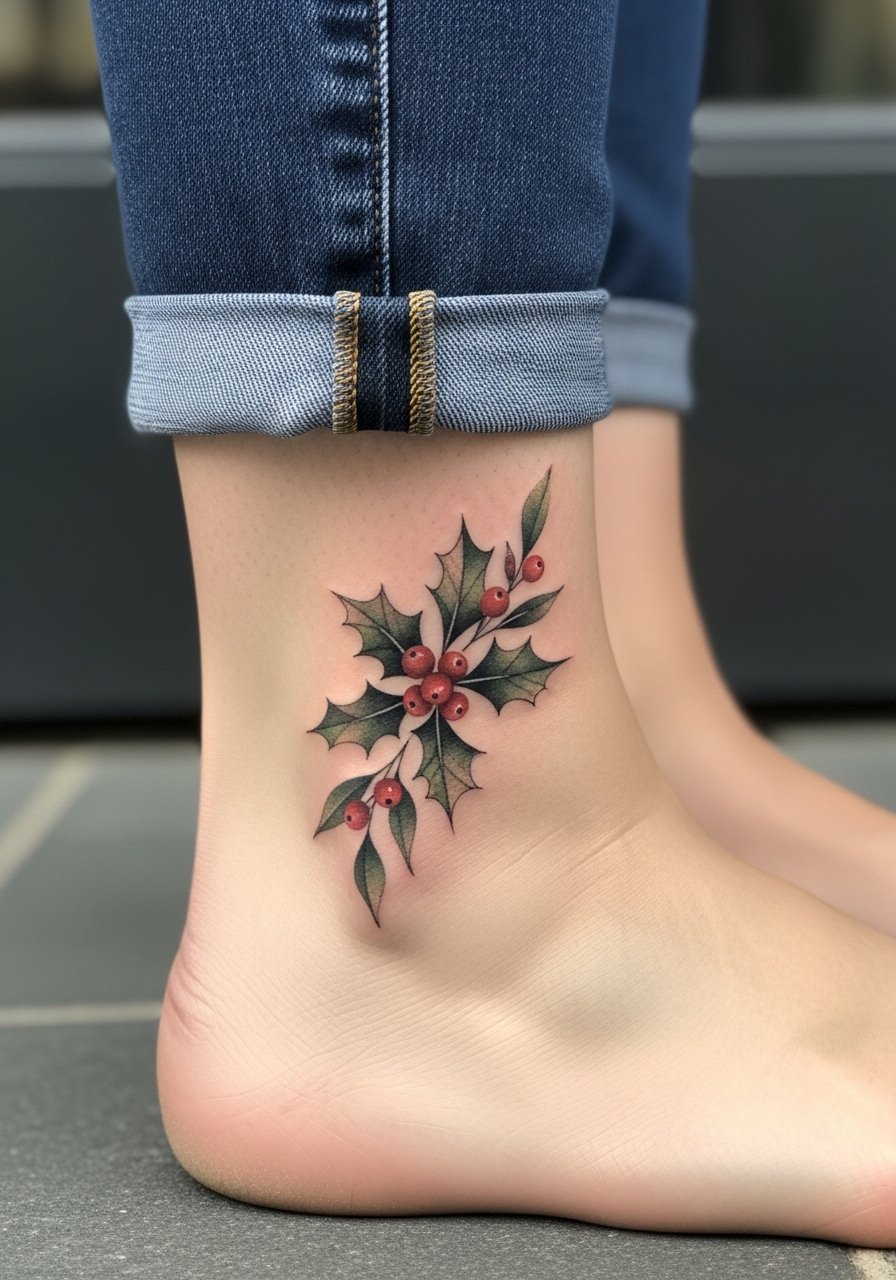
2. Holly Berry Cluster on the Ankle
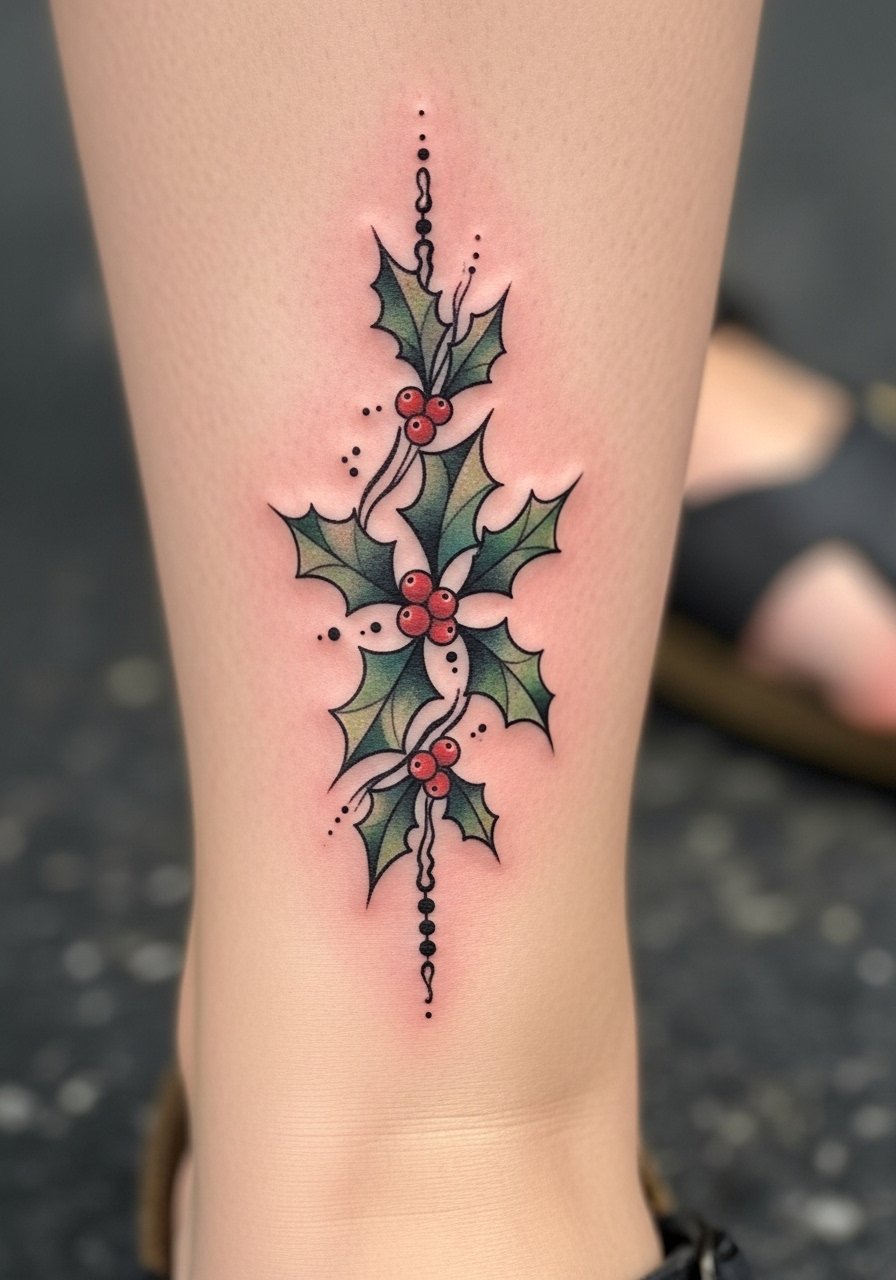
Fair warning, the ankle rubs against shoes and socks during the first two weeks, so friction is the main concern. The session tends to be short, often under an hour, because negative space reads beautifully with watercolor here. Ask for slightly bolder seed points where the berries meet the stem to avoid dot loss. A common version that ages poorly uses tiny stippled berries that fade into skin texture. With modest saturation at the start, this placement keeps contrast even after several years. For the appointment wear, bring slip-on shoes and a pair of jeans you can roll up so the artist has clear access and you stay comfortable.
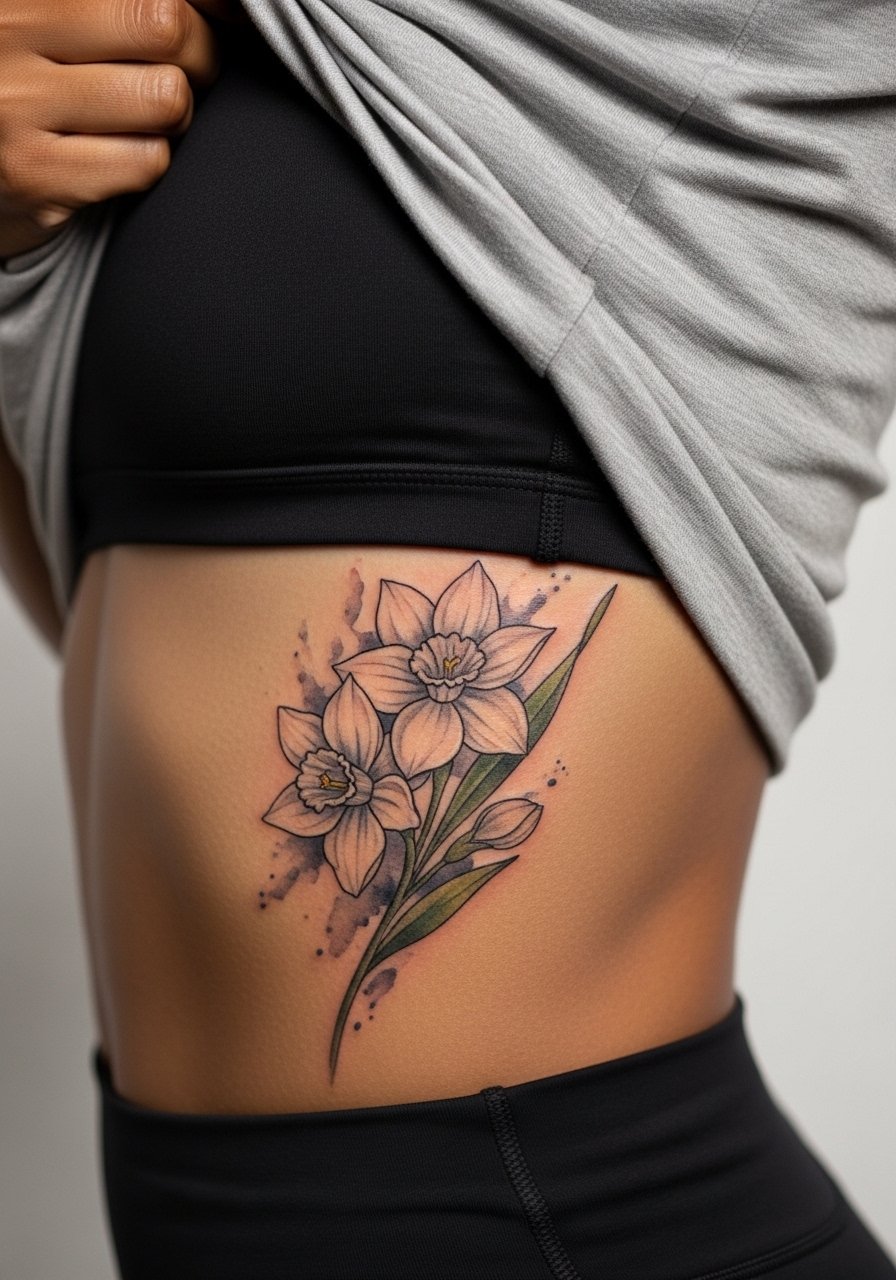
3. Delicate Narcissus on the Ribcage
Most watercolor pieces on the ribcage look incredible in the mirror but face a faster fading timeline. Pain-wise the ribcage is high, often a 7 out of 10, and sessions take longer if the artist layers washes. Artists split into two camps about fine detail on ribs. One camp says that skin movement and stretch blur fine edges quickly. The other camp argues proper depth and spacing solves that problem. Ask your artist where they stand and request slightly more spacing between petals to avoid early merging. Expect a touch-up at year two to restore lighter washes if you want the original pop. For sensitive area prep, wear a cropped top you can lift, or a shirt that zips in front.
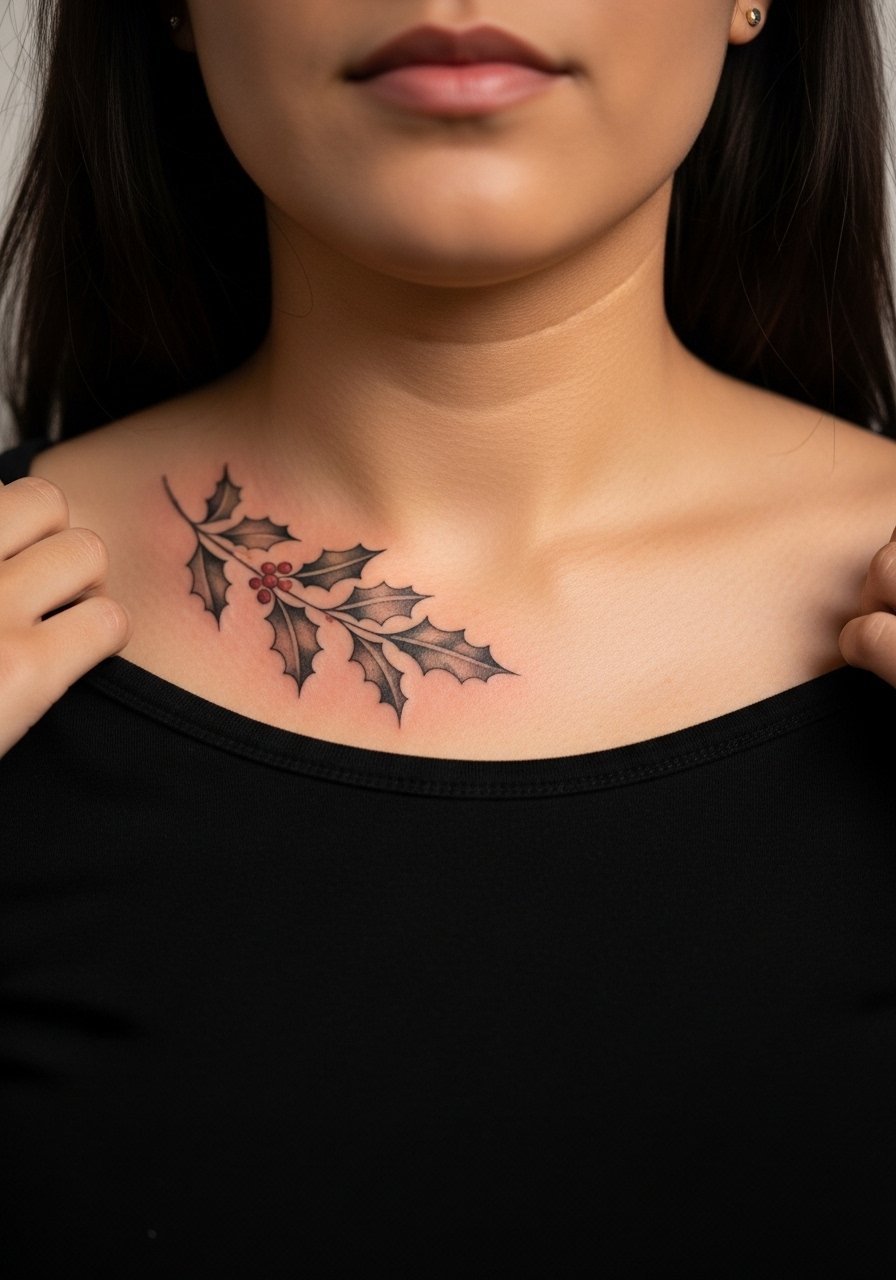
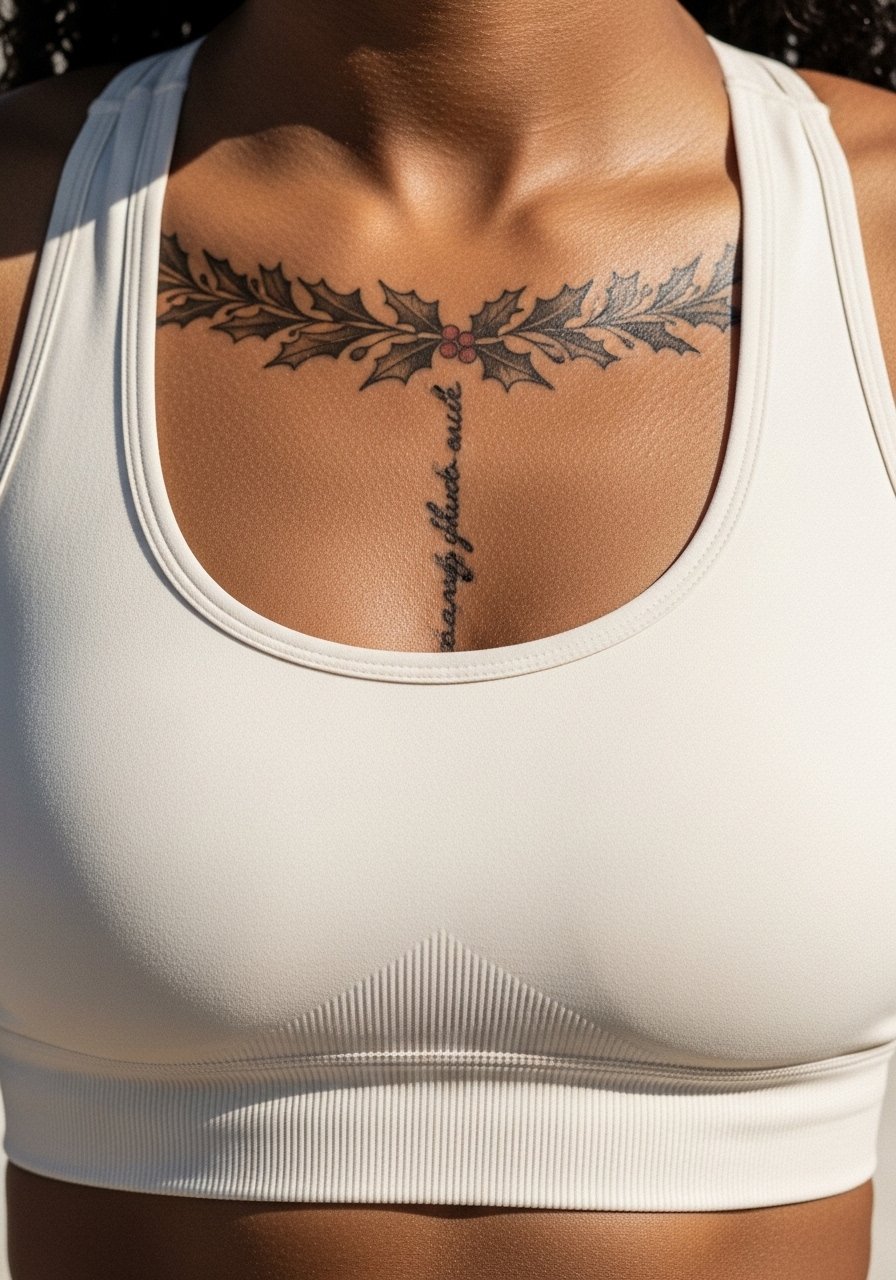
4. Holly Branch Across the Collarbone
There is a real visual payoff when a holly branch follows the collarbone curve, and it photographs well. Sessions are moderate length, often 60 to 120 minutes, with some time spent mapping the flow so the design complements bone structure. A common mistake is putting too much tiny detail directly over the bone, which creates uncomfortable healing and potential line softening. Ask for negative space around the leaves so the watercolor wash breathes. This area is visible with wide-neck tops. Pair it with an open-neck blouse to frame the artwork without covering it.
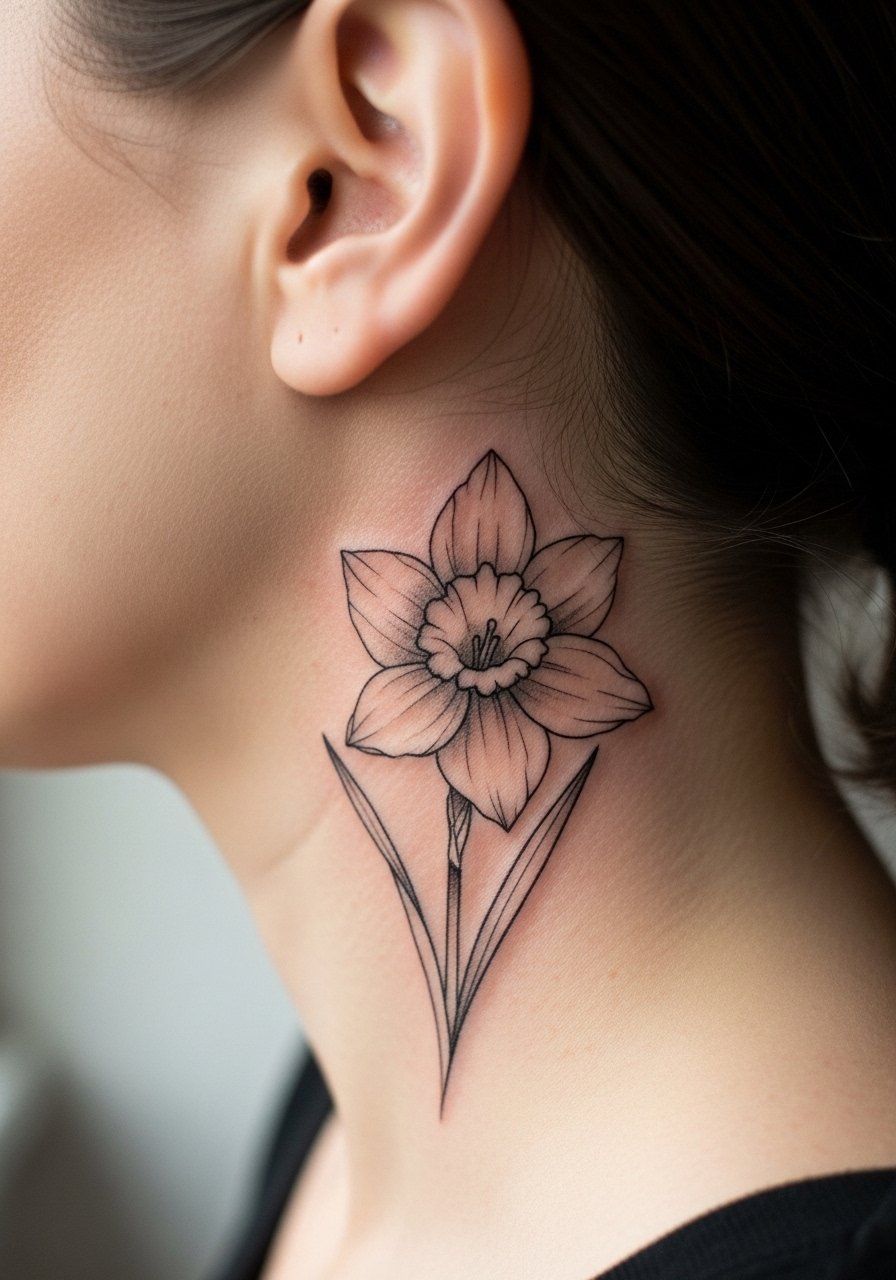
5. Mini Narcissus Behind the Ear
When small watercolor hits a subtle spot behind the ear it acts like a personal accent. The session is quick, usually under 30 minutes, and pain is low to moderate. For safety and professional framing, describe placement as "on the skin behind the ear, below the hairline on the neck" to your artist. The common error is making the color too saturated at once, which can look patchy as it settles. Ask for ink diluted slightly so the wash fades evenly. Hand over a few reference photos showing scale so the artist sees how small the bloom should be. Behind-ear ink is intimate, so think about how often you want it visible.
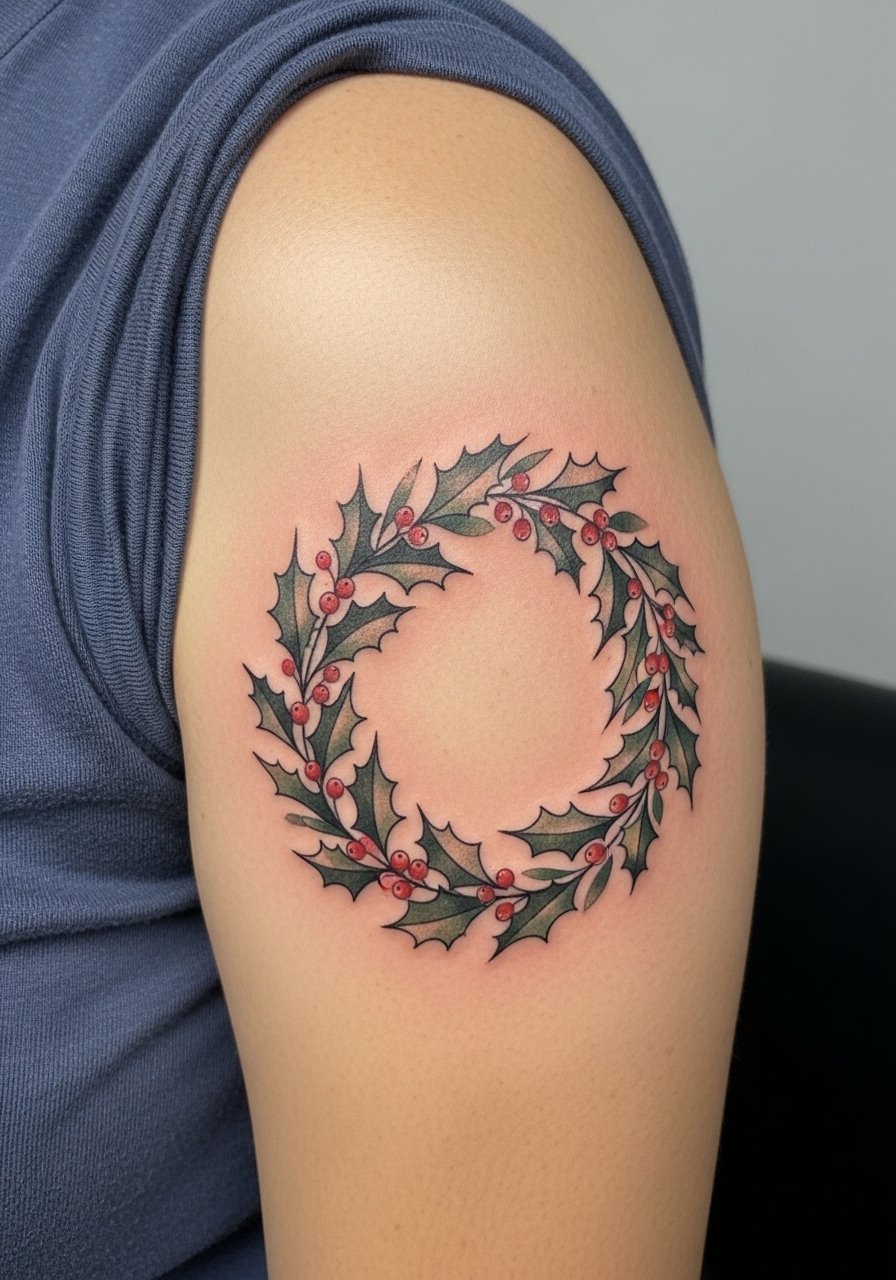
6. Holly Wreath on the Upper Arm
I've seen upper-arm wreaths last well because the skin there moves less and gets moderate sun exposure. Expect a 90- to 150-minute session for a medium-sized wreath that mixes linework with soft washes. Common mistakes include dense color packing that ages into a muddy patch. Tell your artist you want distinct leaf edges with faded centers so the wreath keeps dimension over time. This placement pairs naturally with short-sleeve linen shirts. Try a short-sleeve linen shirt to show the piece without squeezing the area when the shirt is on.
Studio Day Picks
The upper-arm wreath, wrist narcissus, and ankle holly above need slightly different prep and first-week solutions, so a few targeted items make the session and the healing window easier.
- Transfer stencil paper kit. Helps you and the artist preview the bloom placement for wrists and collarbones before needle meets skin.
- Waterproof protective film roll. Useful for ankle and wrist pieces that face friction from shoes and daily washing.
- Gentle fragrance-free body wash. Keeps color-safe cleansing gentle during showers for delicate watercolor areas.
- Soothing cooling gel pad pack. Eases the immediate post-session sensitivity on ribs and upper chest without interfering with ink.
- Aquaphor Healing Ointment. A thin layer helps retain moisture on small fine-line washes during the first few days.
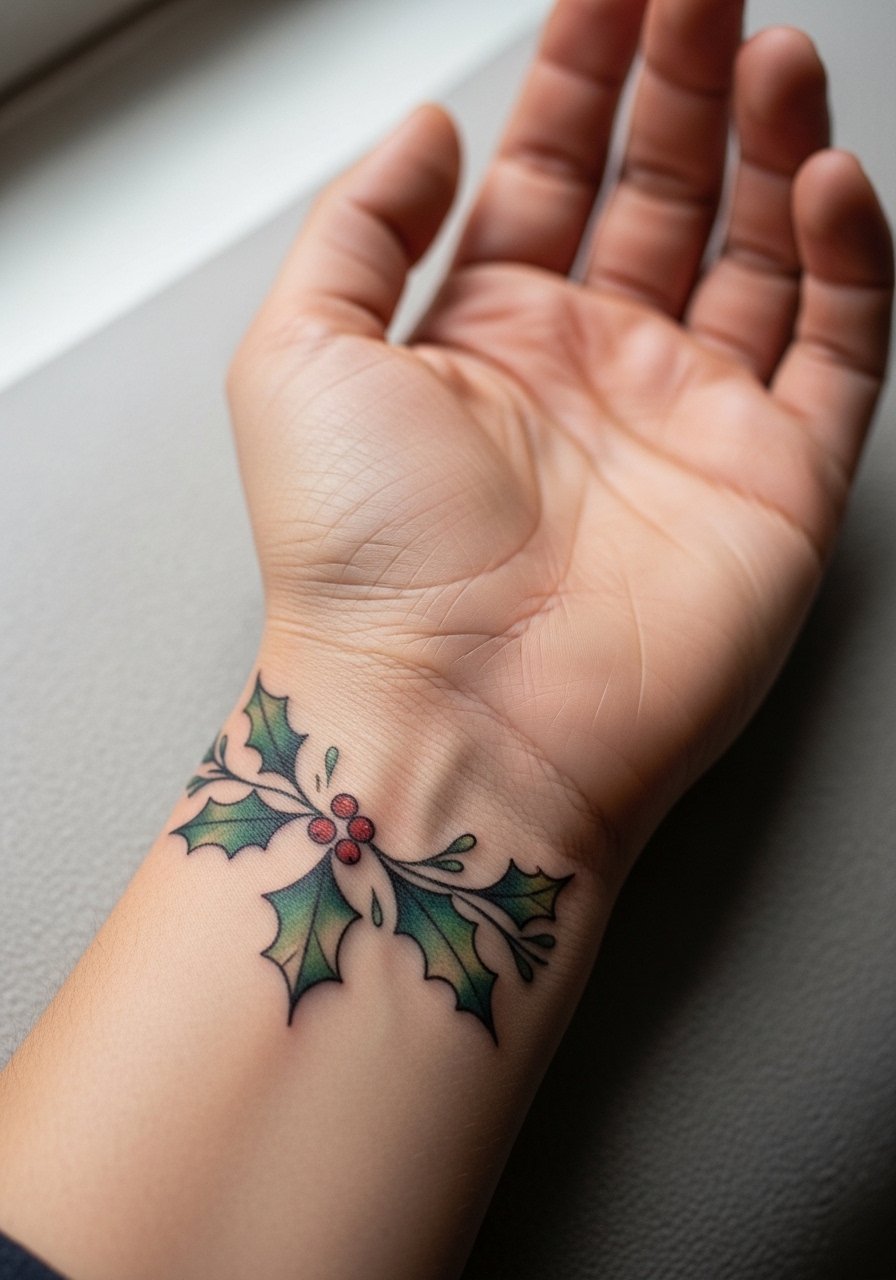
7. Small Holly Garland on the Wrist Band
The wrist band garland reads like jewelry when proportioned correctly. Pain is low and sessions are short, often 30 to 60 minutes. The most frequent mistake is crowding the wrist with tiny leaves that end up merging into one another. Ask for slightly larger leaf silhouettes and thin connecting stems so the garland holds up. At about six months the watercolor will soften and the darker accents become the anchor. Expect lighter touch-ups sooner if you wear bracelets that rub the area. For showing this off, stack with a minimalist bracelet so the wrist looks curated and not crowded.
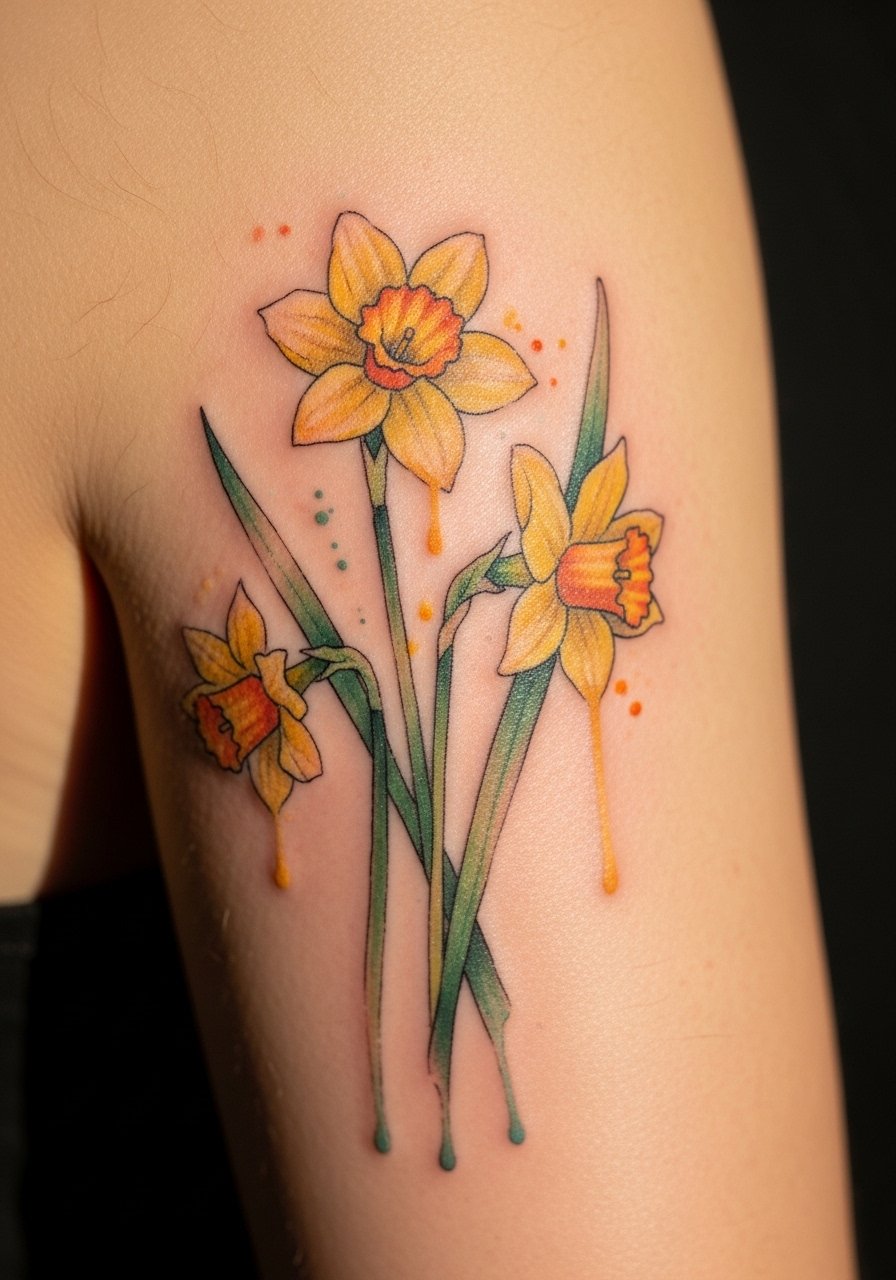
8. Single Narcissus on the Back of the Arm
There is a quiet elegance to a single bloom centered on the back of the arm. Sessions are moderate and the area tolerates shading well because it sees less sun. A common aging issue is picking a too-thin stem, which can fade faster than the petals. Tell your artist you want the stem slightly reinforced with pigment so the composition reads as a whole element at two years. This spot pairs well with sleeveless dresses. Try an open-back dress or tank to keep the bloom visible without exposing sensitive skin.
9. Holly and Script Along the Rib Line
The rib line holds linear compositions beautifully when executed at the right scale. Pain is high here, expect multiple shorter sessions if you want complex layered washes. Artists disagree about fine script on ribs. One side says the stretch distorts small lettering quickly. The other side says with proper spacing script can last. Say explicitly in consultation that you want the script spaced from the main holly element by at least a half-inch so both parts age independently. For the session wear, bring a sports bra or a zip-up hoodie you can lift to expose the area without being fully bare.
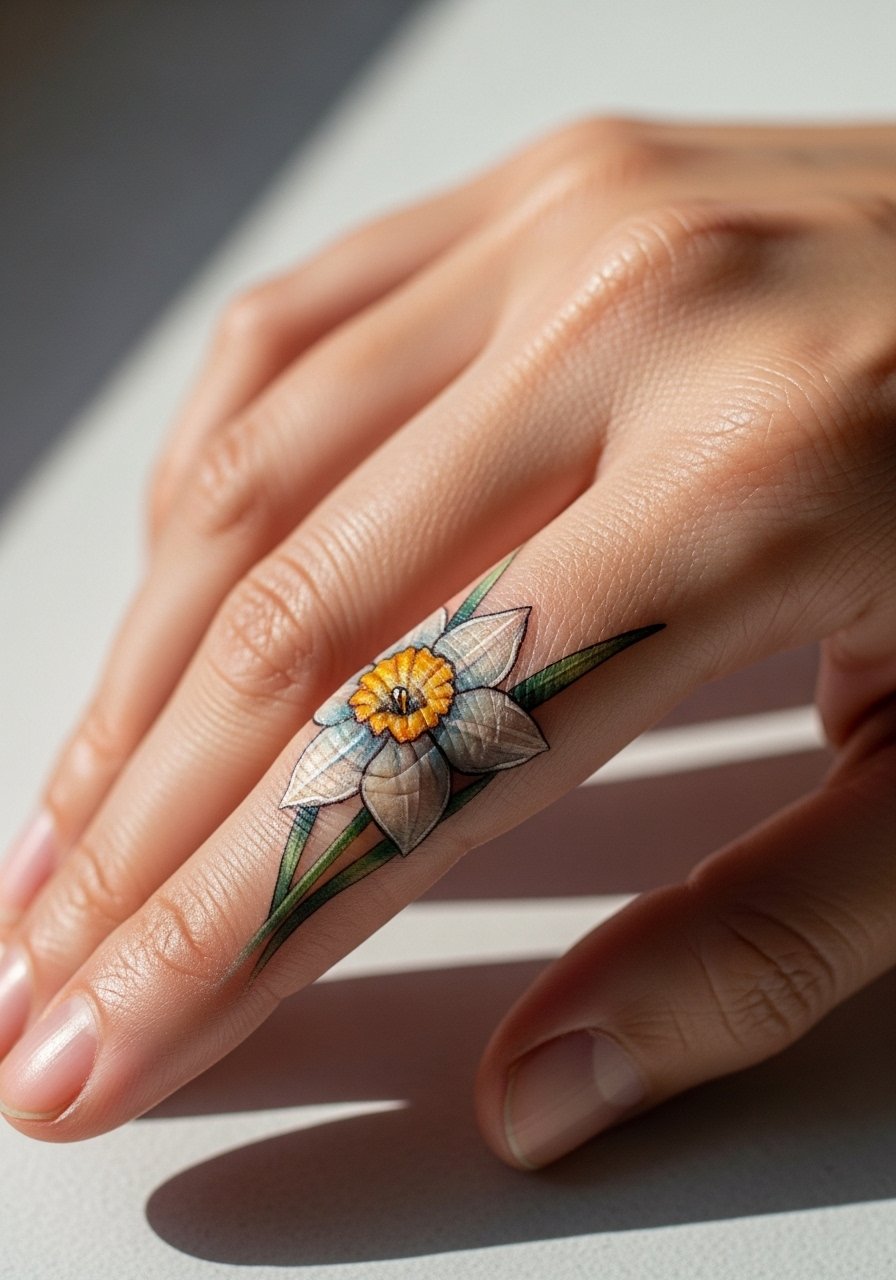
10. Tiny Narcissus on the Finger Edge
Finger tattoos are fashionable and fragile, especially watercolor washes. Expect a quick but potentially touch-up-prone session. The biggest mistake is asking for soft watercolor on a spot that endures constant hand washing. If you want durability, request slightly stronger linework around the petal edges and plan realistic expectations about fading. For the session wear, avoid gloves that can trap moisture post-session. When showing it off, a thin stack of dainty rings complements the small bloom without overwhelming the finger.
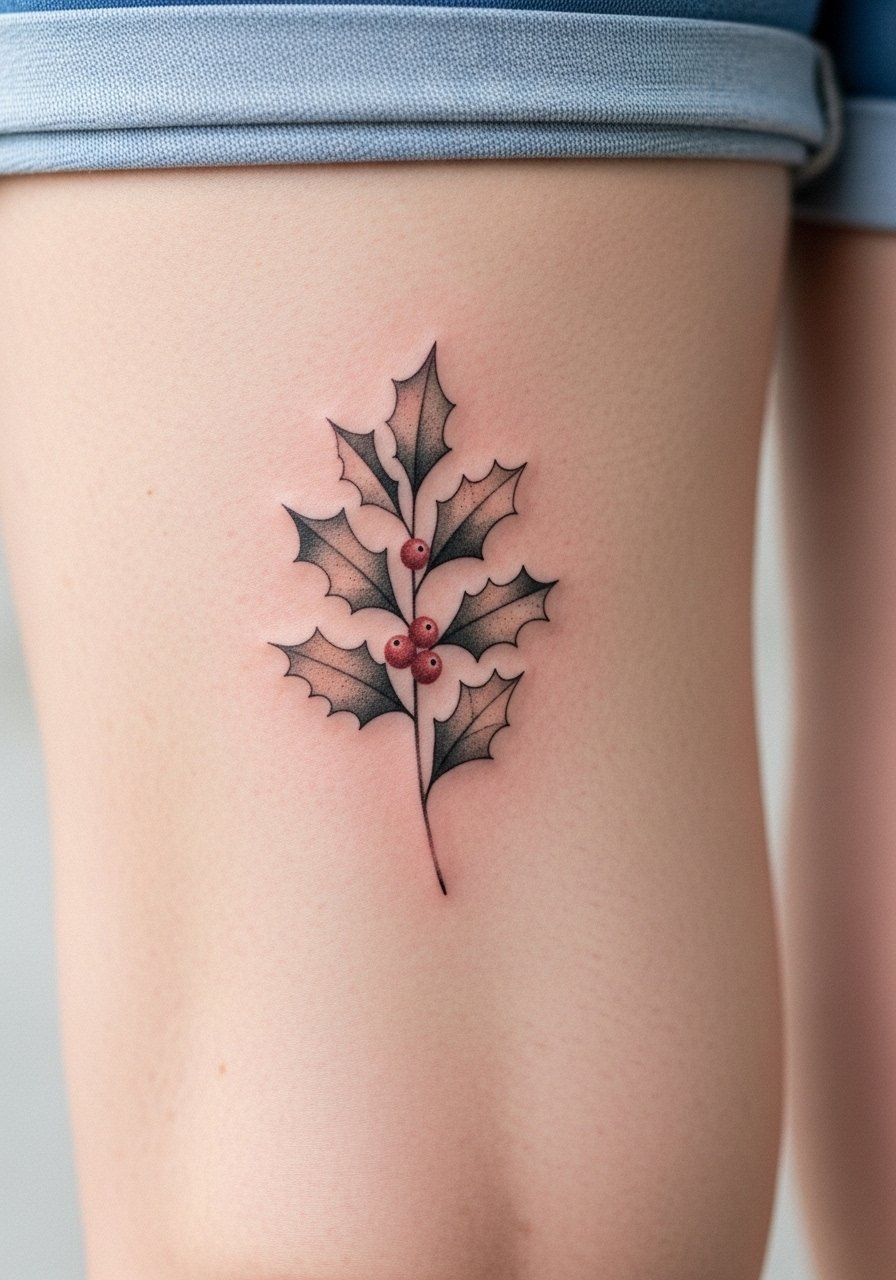
11. Holly Sprig Behind the Knee
The area behind the knee takes movement into account and can be tricky while sleeping during the first night. Sessions are moderate in length and the skin can react to heavy saturation with stiff scabs. A common error is pushing color too deep to try to prevent fading, which risks blowout. Ask for a softer approach with layered washes so the ink sits naturally in the dermal layer. During recovery, avoid tight pant seams and consider loose shorts or a wrap skirt for the first week. A pair of loose drawstring linen pants makes movement comfortable while the area heals.
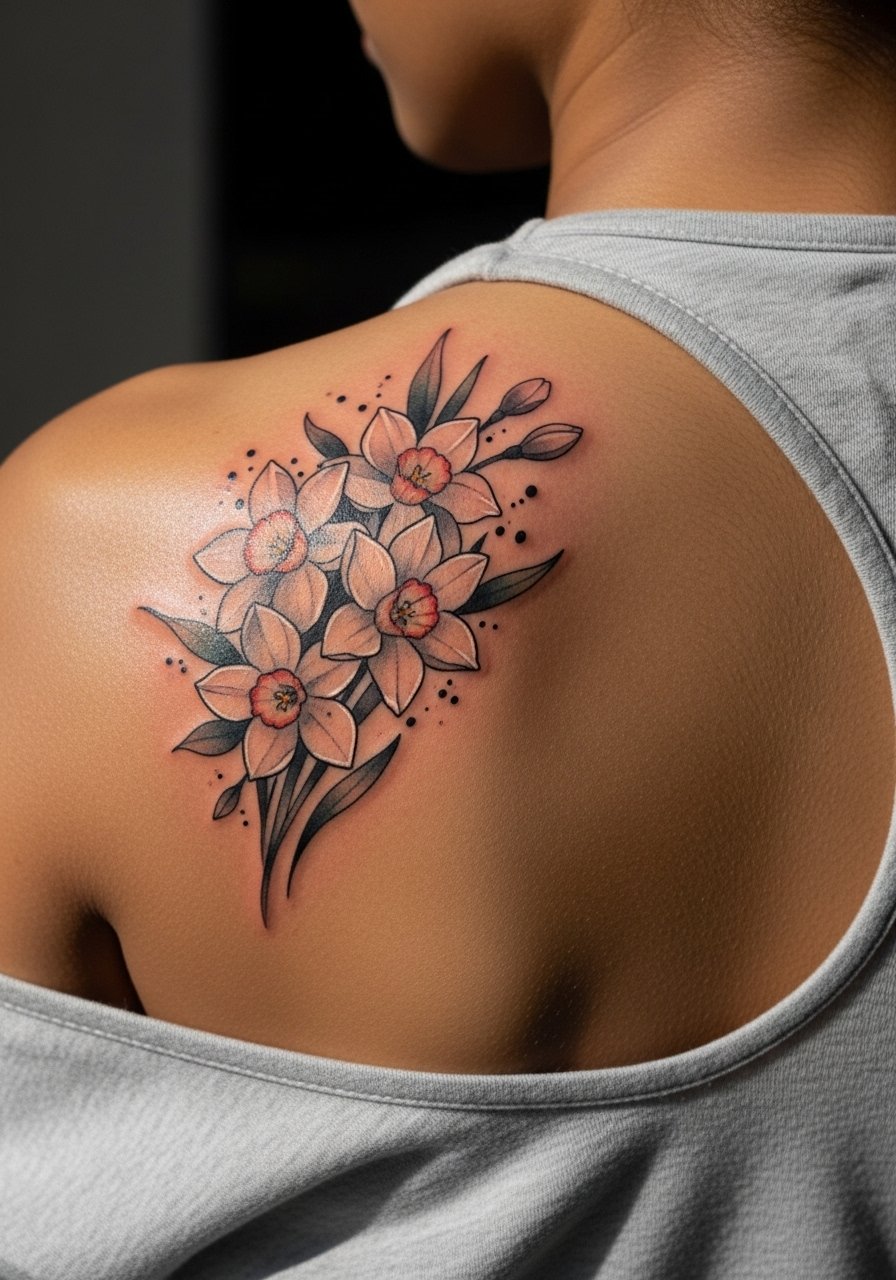
12. Narcissus Cluster on the Shoulder Blade
I've seen shoulder-blade clusters age gracefully because they avoid sun and friction if you keep sunscreen on when exposed. Sessions can run long if the piece is expansive, often two hours or more. Avoid asking for tiny detailed centers that can pack and blur. Tell your artist you want subtle stipple shading inside the petals to preserve the bloom's structure. For showing it off at events, an open-back blouse shows the shoulder blade without risking irritation from straps or tight fabrics.
13. Holly Circlet on the Calf
There is an old-school charm to a holly circlet on the calf that also photographs well in profile. Sessions are comfortable and often under two hours. The most common mistake is overly fine leaf veins that disappear as the tattoo heals. Ask your artist for simplified vein suggestions and slightly higher saturation in the berry centers to keep contrast. Calf pieces tolerate heavier saturation so the watercolor can be richer at the start. Pair this placement with midi skirts or ankle boots to let the circlet peek out in cooler months.

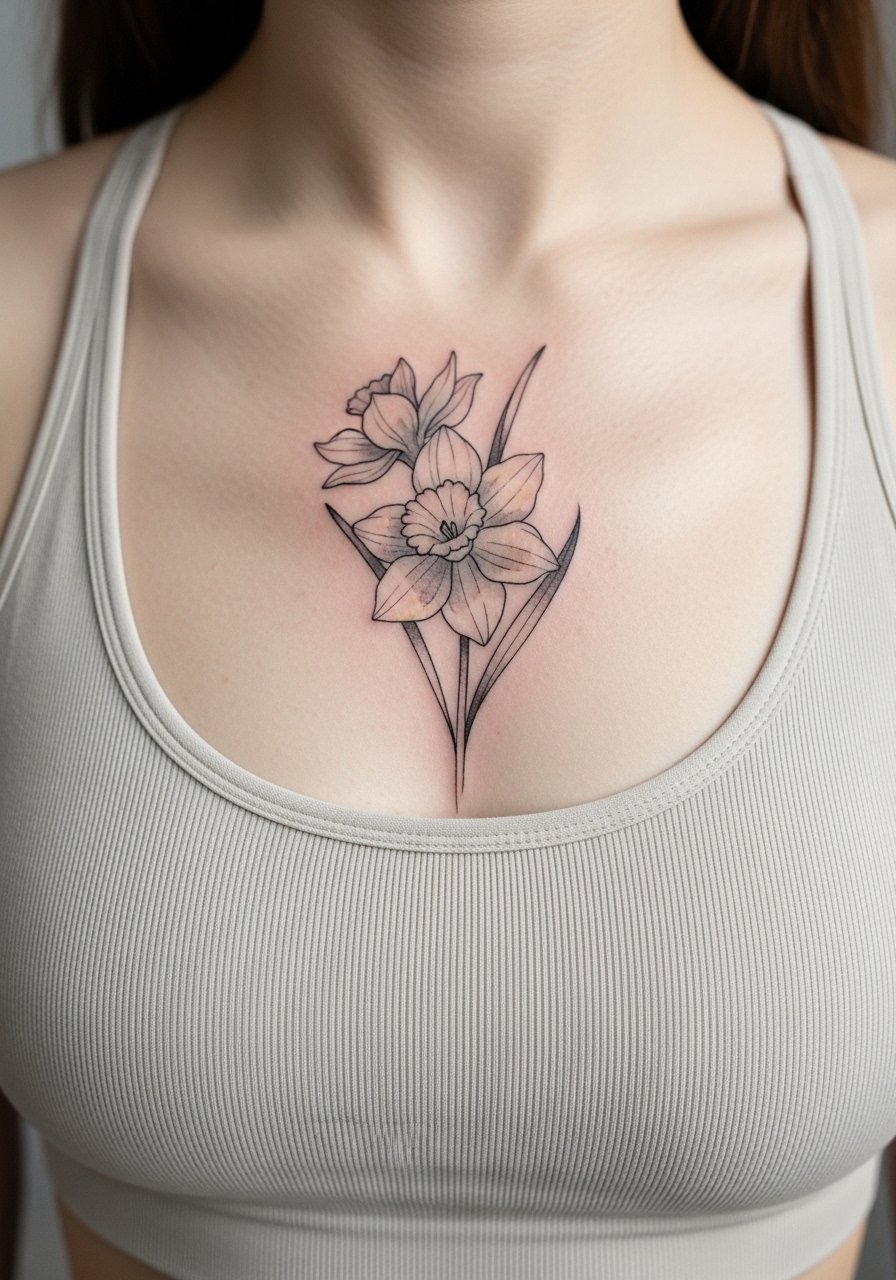
14. Single Narcissus Over the Sternum
Sternum watercolor needs careful planning since the curve changes how petals read. Pain can be high and sessions may be split. Artists split on fine work in this area. One group says close detail compresses with body movement, which causes blurring. The other group says precise spacing and correct needle depth prevent that. Ask for a mock-up that shows how the bloom sits with breath and posture. For the session wear, a fitted sports bra or bandeau makes access easier and keeps exposure minimal. Consider a fitted sports bra you can easily shift without being unclothed.
15. Holly Chain Along the Foot Arch
Foot tattoos face constant friction from shoes and socks, which affects watercolor longevity. Sessions are brief but you should plan for slower healing because swelling is common. The typical mistake is underestimating how much the color will fade from shoe contact. Request slightly bolder berry accents and expect touch-ups after a year if you wear closed shoes daily. For the session, wear sandals or shoes you can take off quickly. A pair of simple flat sandals keeps the foot free and reduces rubbing while healing.
16. Narcissus Sleeve Accent on the Forearm
There is something about a narcissus repeating as an accent along the forearm that reads like a botanical cuff. Sessions can vary from one longer appointment to multiple short sessions depending on saturation. The common error is trying to cram many small blooms too close together. Ask your artist for breathing room between each spray and request that washes flow in the same direction as your arm to complement movement. Forearm pieces age well because they are easy to protect from sun with long sleeves. For everyday wear, rolled-up sleeves highlight the blooms. A rolled-up linen shirt frames the forearm without overshadowing the tattoo.

17. Holly Sprig on the Side Hip
Hip placements are intimate and heal in a slightly different way because clothing can sit on the area. Sessions tend to be moderate in length and require careful planning for aftercare to avoid rubbing. The typical mistake is choosing very saturated, dense washes that scab heavily when friction occurs. Ask for softer layers and be ready to sleep with shorts or loose bottoms that do not press into the site. For the appointment, go with high-waisted shorts or jeans you can easily lower at the waistline. A pair of high-waisted denim lets the artist access the hip without too much exposure.

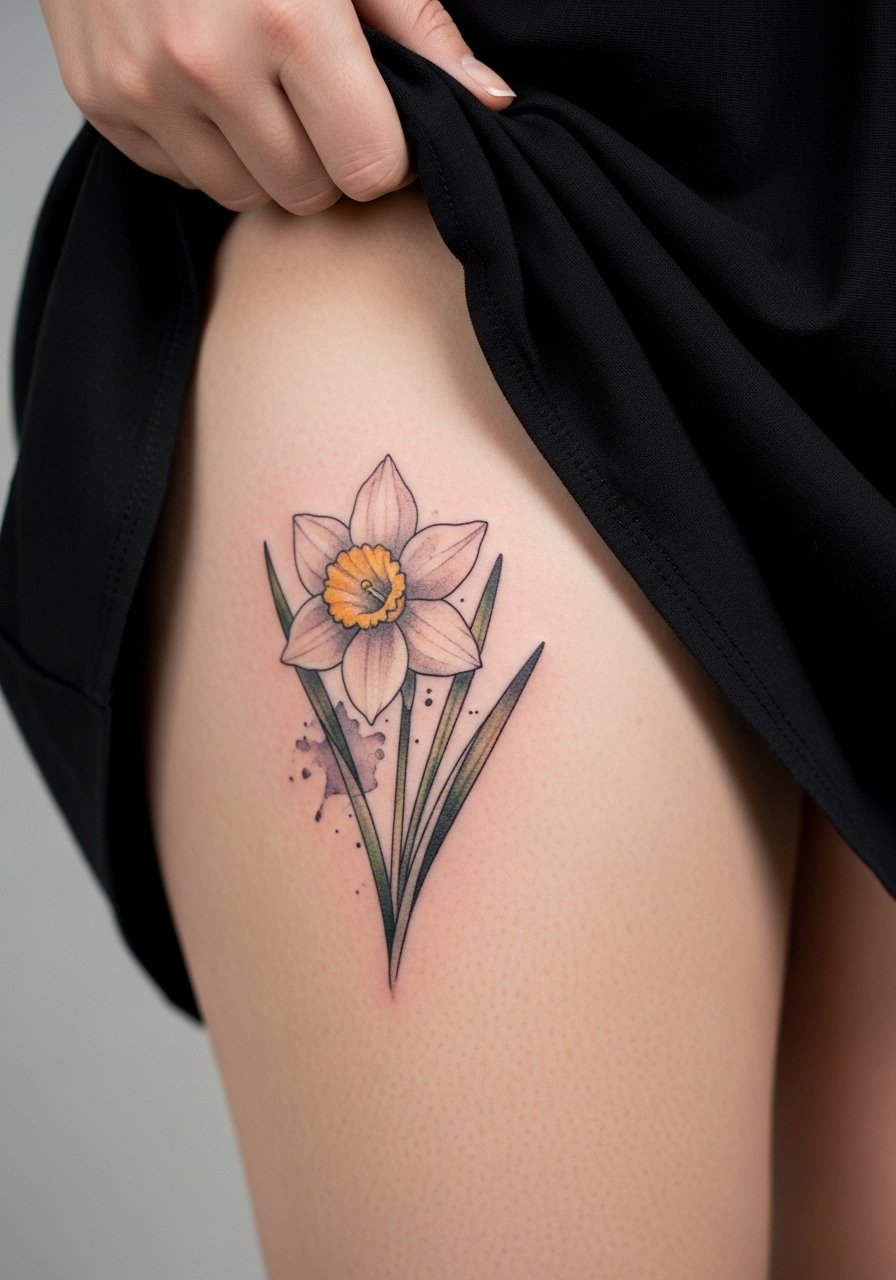
18. Narcissus Bloom on the Thigh
Thigh pieces accept big washes and age slowly if you avoid too-tight garments in the first two weeks. Sessions can be long for larger compositions. The usual error is placing dense watercolor too close to stretch-prone areas like the upper inner thigh. Ask the artist to set the bloom slightly outward so it sits on firmer skin. Thigh tattoos benefit from showing off with skirts or shorts. Try a flowy midi skirt for evenings out to keep attention on the bloom while staying comfortable.
19. Holly Motif Around the Wrist Cuff
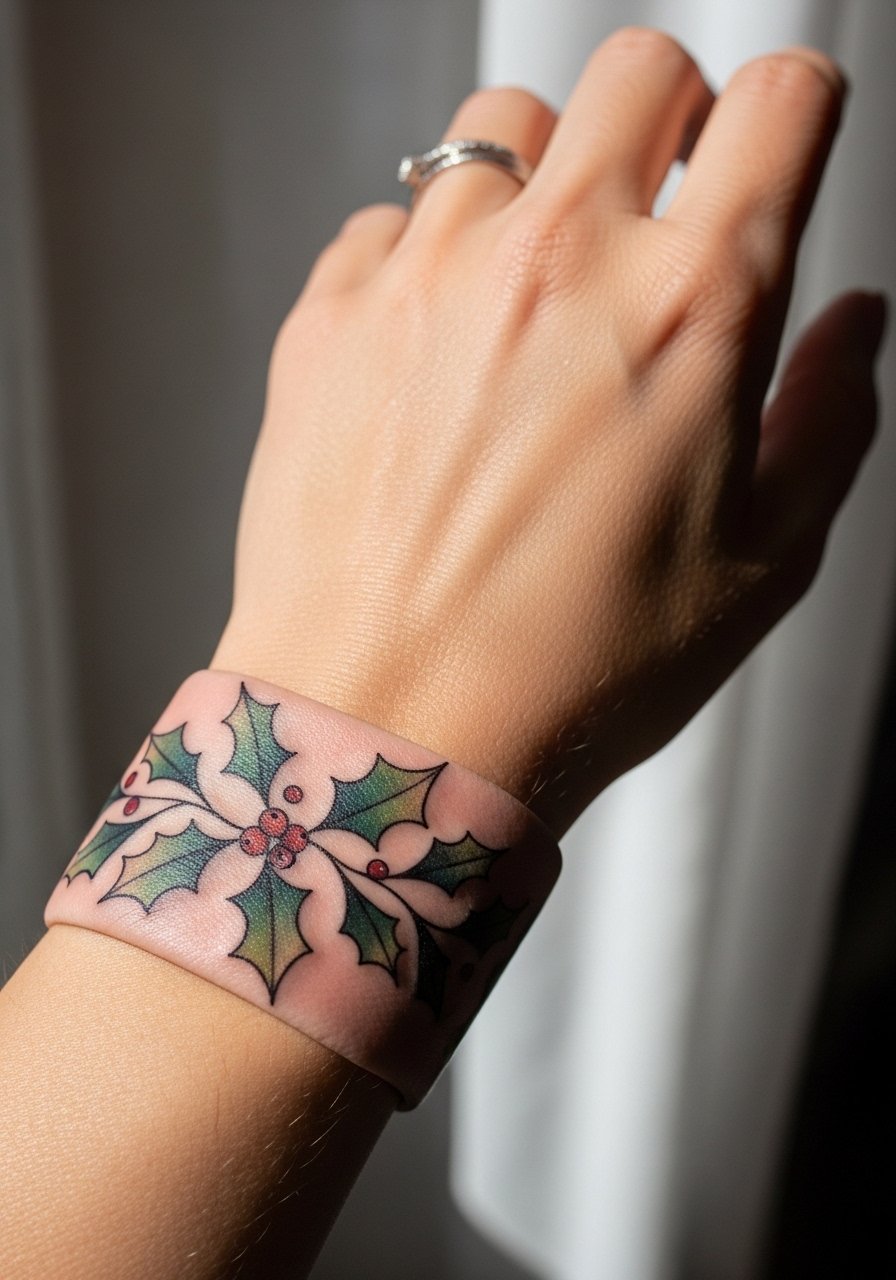
A cuff of holly around the wrist reads like a seasonal bracelet and holds up when the leaves are sized properly. Sessions are short and usually under an hour for a minimalist cuff. The common mistake is using super-fine veins that do not survive frequent handwashing. Request slightly stronger outline anchors so the wash stays contained. Expect the watercolor to soften after several months but the darker berry anchors to remain. Pair this with a minimalist watch so the wrist area stays styled without rubbing on delicate washes.
20. Narcissus on the Back of the Neck
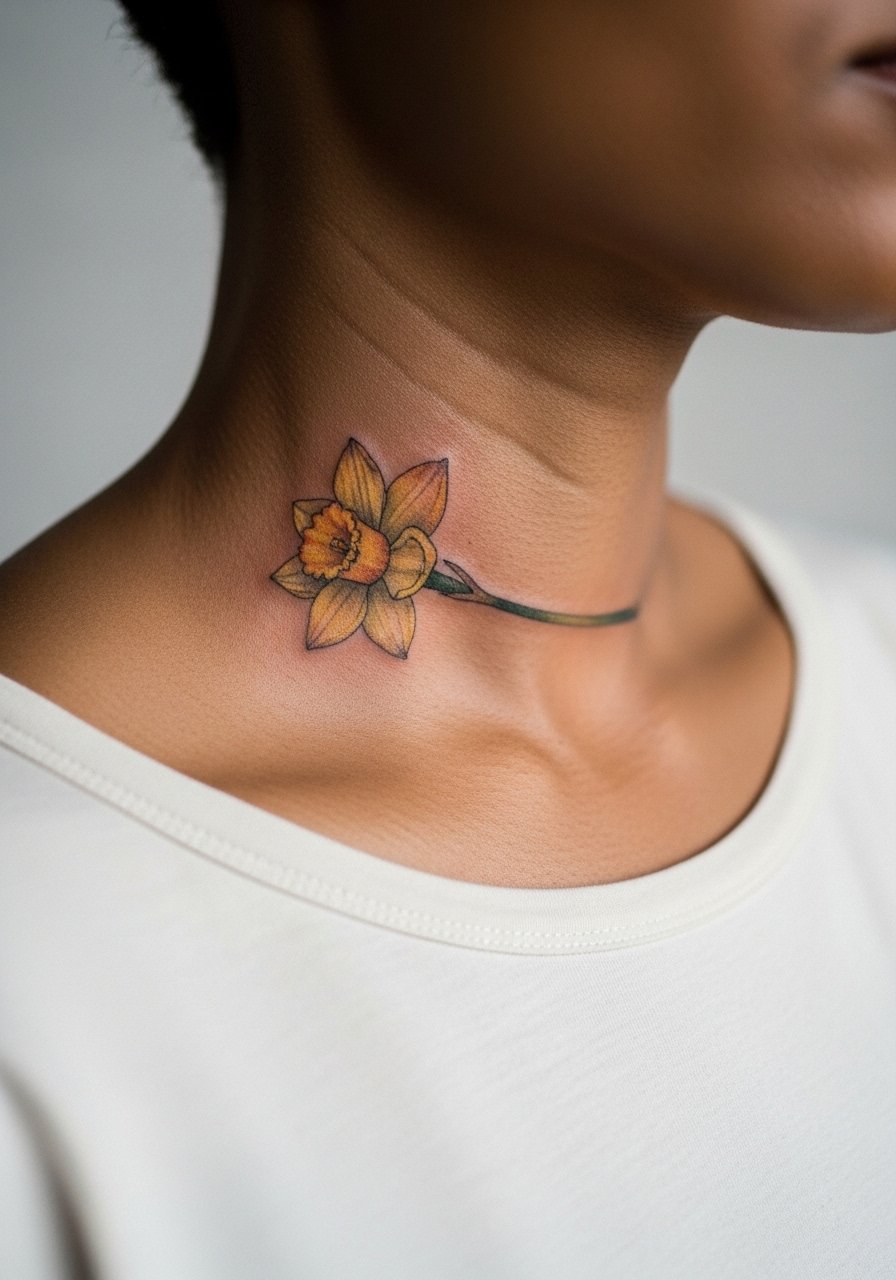
Neck pieces need special thought because they are visible and sometimes sensitive in professional contexts. The session is brief for a small bloom, and the skin accepts washes well when the artist spaces elements properly. The biggest mistake is placing tiny detailed roots or stems that blur with hairline movement. Ask for the bloom to sit slightly higher or lower depending on your hairstyle to preserve visibility. For session ease and modest exposure, wear a wide-neck shirt you can pull to one side so only the tattoo zone shows.
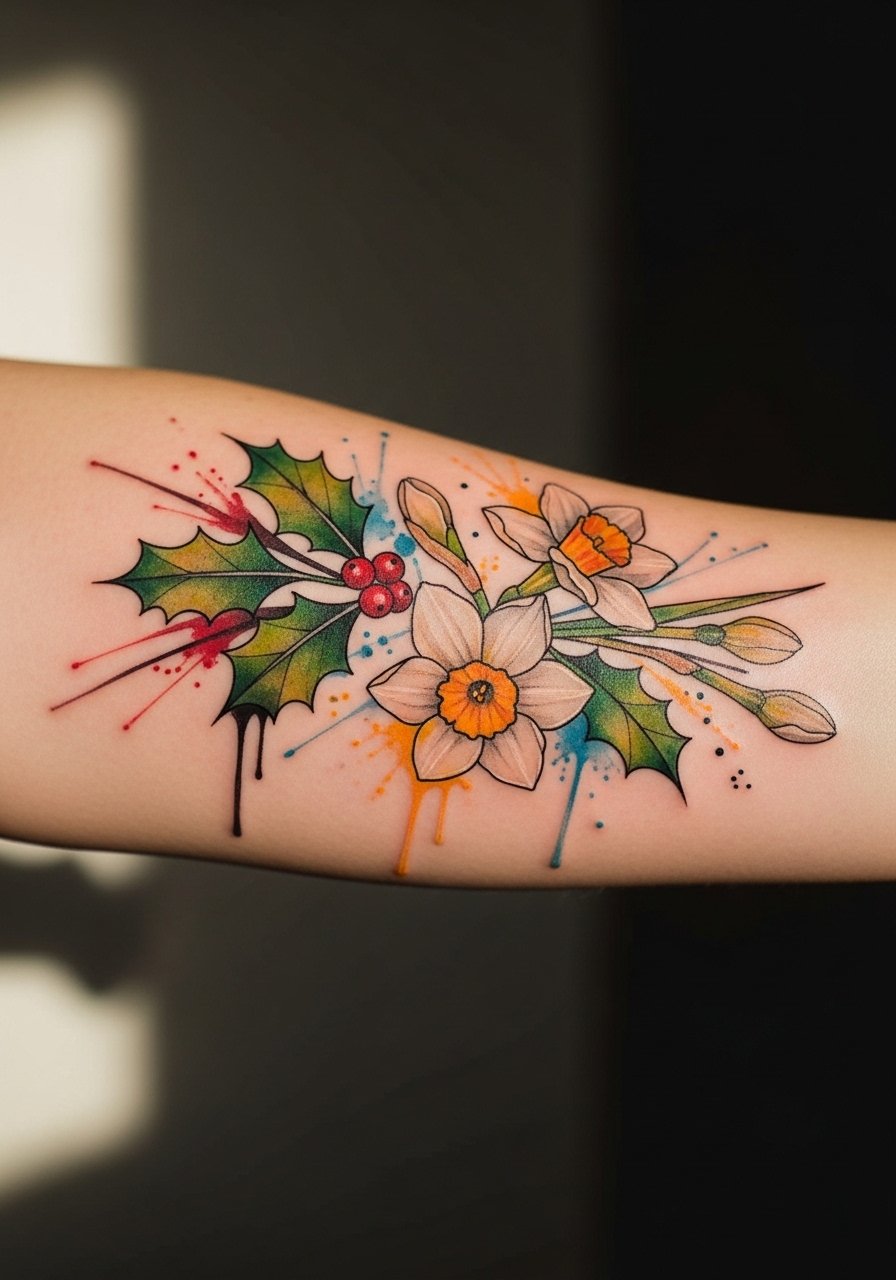
21. Holly and Narcissus Mixed Botanical Sleeve Accent
For a larger arm composition that mixes both December birth flowers, plan this as a custom piece. Sessions may be multiple and require careful saturation planning so the two plants remain distinct. A visual-impact lead fits here because strong leaf anchors and softer narcissus washes balance from across the room. The common mistake is matching both species with identical washes, which blurs identity as it heals. In consultation, map where each bloom sits in relation to muscle lines so motion enhances the design. Expect touch-ups at year two for any lighter watercolor areas. For long sessions, bring a loose button-down you can slide aside. A loose button-down shirt keeps you comfortable while allowing the artist access.
Frequently Asked Questions
Q: How long will a watercolor December birth flower tattoo keep its color?
A: In my experience, watercolor fades faster than solid blackwork because it relies on soft saturation. Expect noticeable softening by year two to three, especially on high-exposure spots like wrists or fingers. Touch-ups around year two are common if you want the original brightness.
Q: Should I pick narcissus or holly for visibility on darker skin tones?
A: Both work, but on darker tones bolder berry centers and slightly more saturated petal highlights help the design read. Ask your artist to test color swatches on a similar tone in the consult so the washes show before the needle hits skin.
Q: Can I mix fine line with watercolor for these floral designs?
A: Yes, combining confident linework with soft washes often gives the best long-term results because the linework provides structure. Tell your artist you want the linework to act as an anchor and the watercolor to sit outside it for natural aging.
Q: Are ribcage watercolor tattoos more likely to blur than forearm ones?
A: Many artists I talk with split into two camps on this. One camp says ribs blur faster due to stretch and movement. The other camp says proper spacing and depth make ribs fine. The safe move is to ask your artist which side they fall on and to request more spacing if you lean toward longevity.
Q: What should I wear to a session for a collarbone or sternum tattoo?
A: For collarbone or sternum work pick a wide-neck shirt or a fitted sports bra you can shift to reveal only the area. A zip-up hoodie or a fitted sports bra gives easy access and keeps you comfortable during longer sessions.
Q: Will these watercolor pieces hold up if I exercise a lot?
A: Frequent sweating and friction accelerate fading during the first few months. Protect fresh work from tight gear and shower carefully. After the initial healing window, consistent sunscreen and minimal abrasion are the biggest factors in preservation.