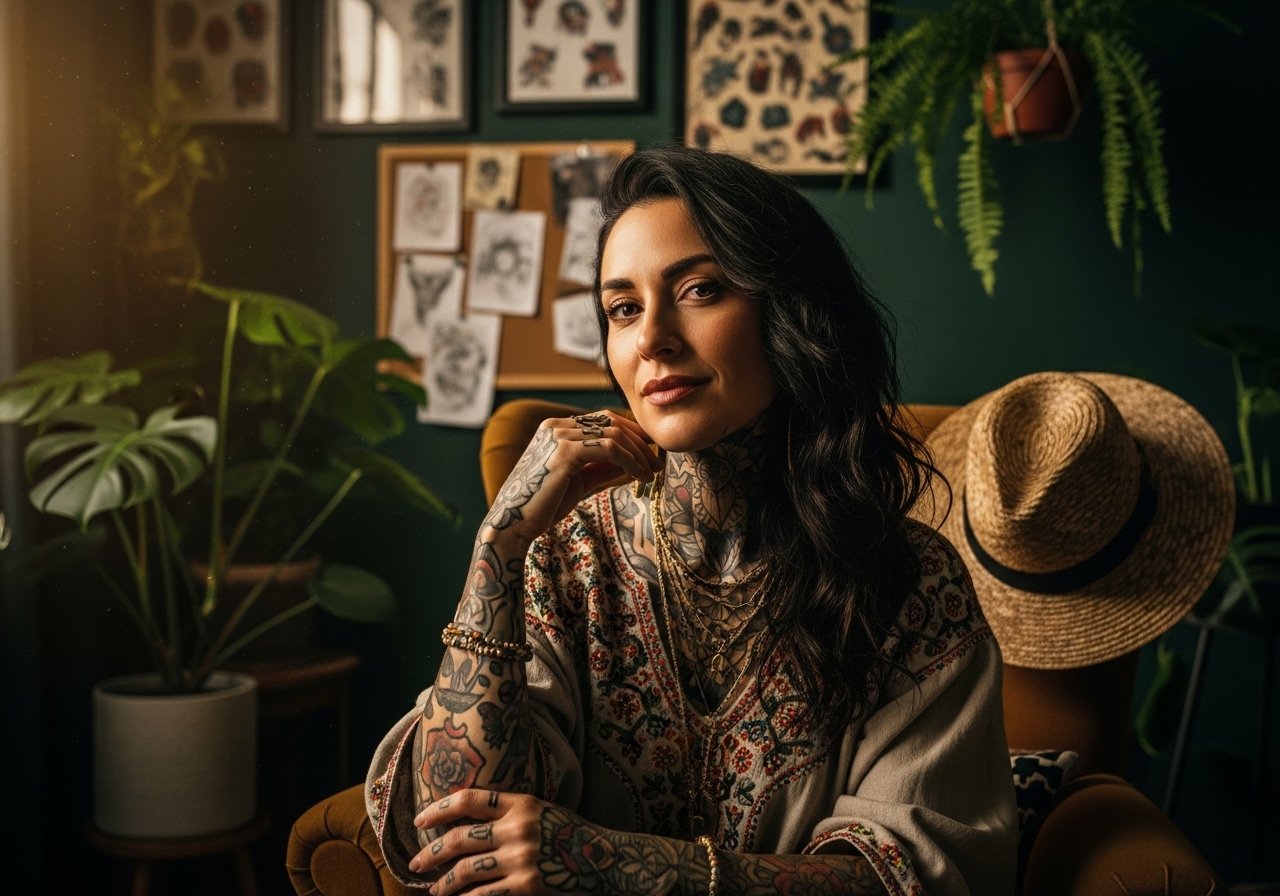
Bold color holds up longer than tiny photo realism for most placements, even when the design is a well-loved movie face. Saturation and clean spacing keep a colorful Star Wars tattoo readable through touch-ups and sun exposure, so plan the color blocks and placement first, then the details. Below are 21 colorful Star Wars tattoo ideas that balance franchise detail with long-term wearability, plus what to ask your artist at booking.
1. Mandalorian Helmet with Crossing Lightsaber on Forearm
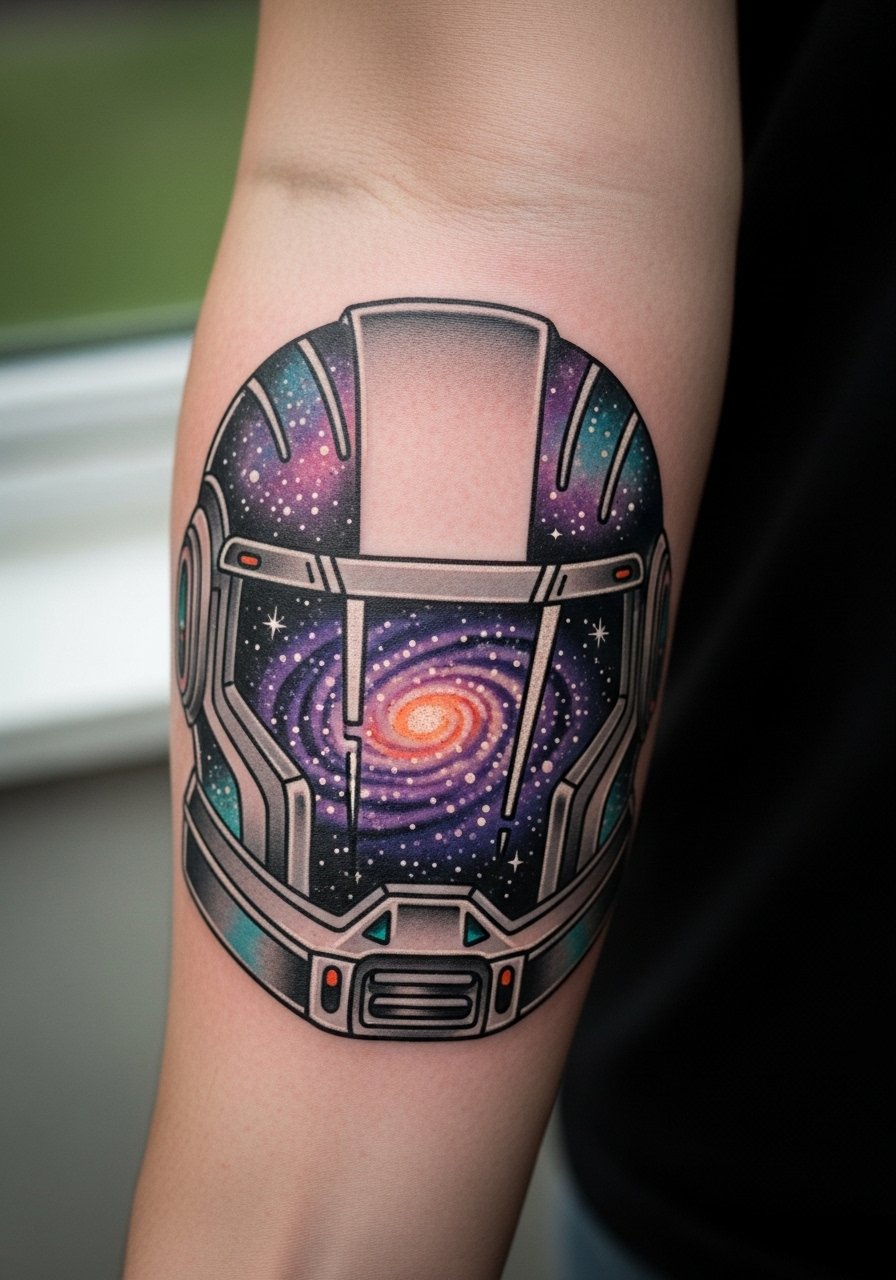
I pick this one for people who want a statement that reads from across a room without needing a sleeve. Ask for bold outline work and medium-size color blocks so the galaxy details do not bleed into the helmet over time. Fair warning on the forearm, the inner side heals differently than the outer. During consultation request slightly thicker linework in high-contrast areas to avoid blowout, and plan a touch-up at year two for the small highlights. For showing it off, a fitted black short sleeve tee frames the forearm colors without competing with them. Session feel is moderate, one to two hours depending on size.
2. Minimalist Rebel Alliance Logo on the Wrist
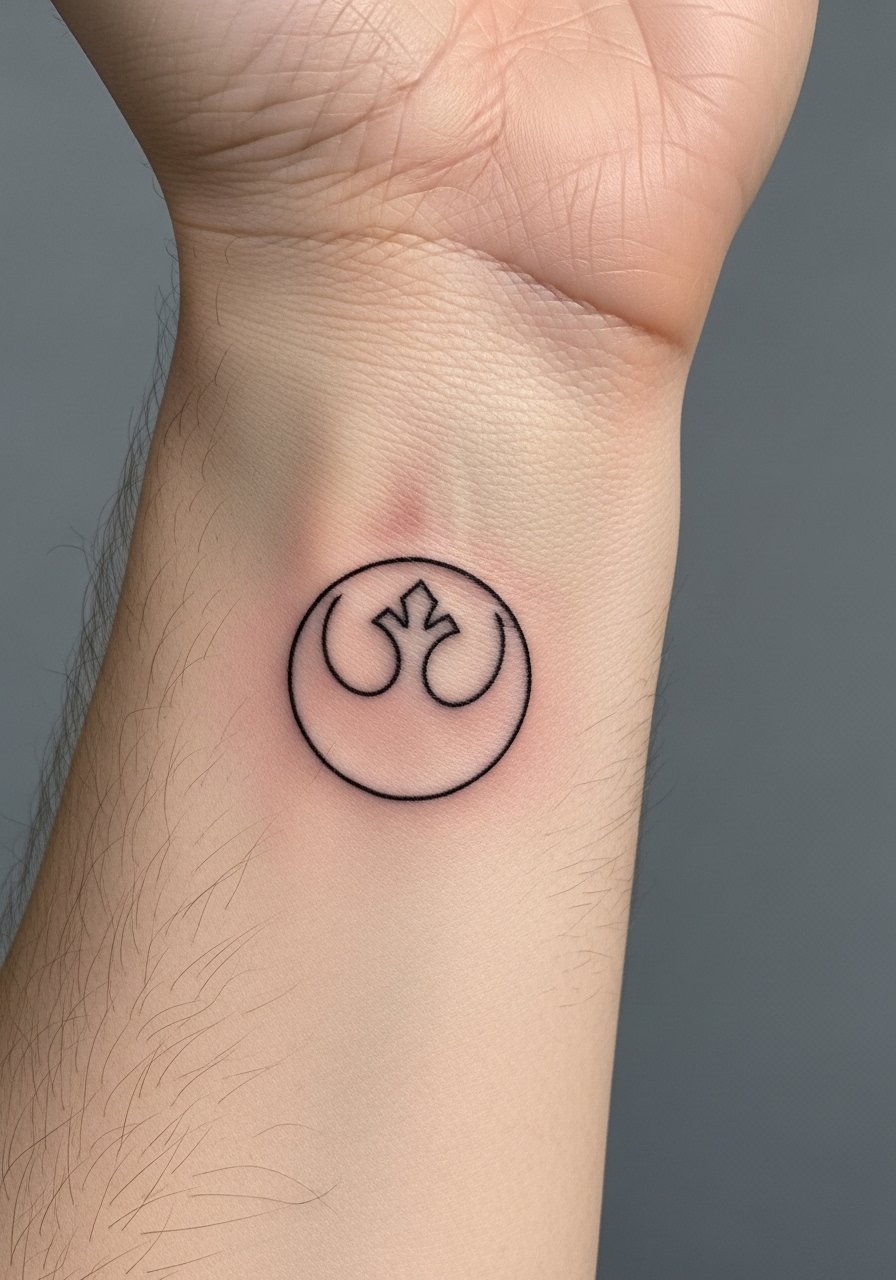
This small, crisp logo works if you want a subtle fandom mark that still uses color accents. Ask your artist for a single saturated fill and clean linework rather than micro shading, because tiny shading on the wrist tends to fade first. The wrist is higher on the touch-up list because of daily washing and friction. For display, stack a thin silver chain bracelet loosely above the mark so the tattoo remains the focal point. Plan for a short session under an hour and expect a touch-up around year two if you wear bracelets often.
3. Boba Fett Full Armor Portrait on the Shoulder
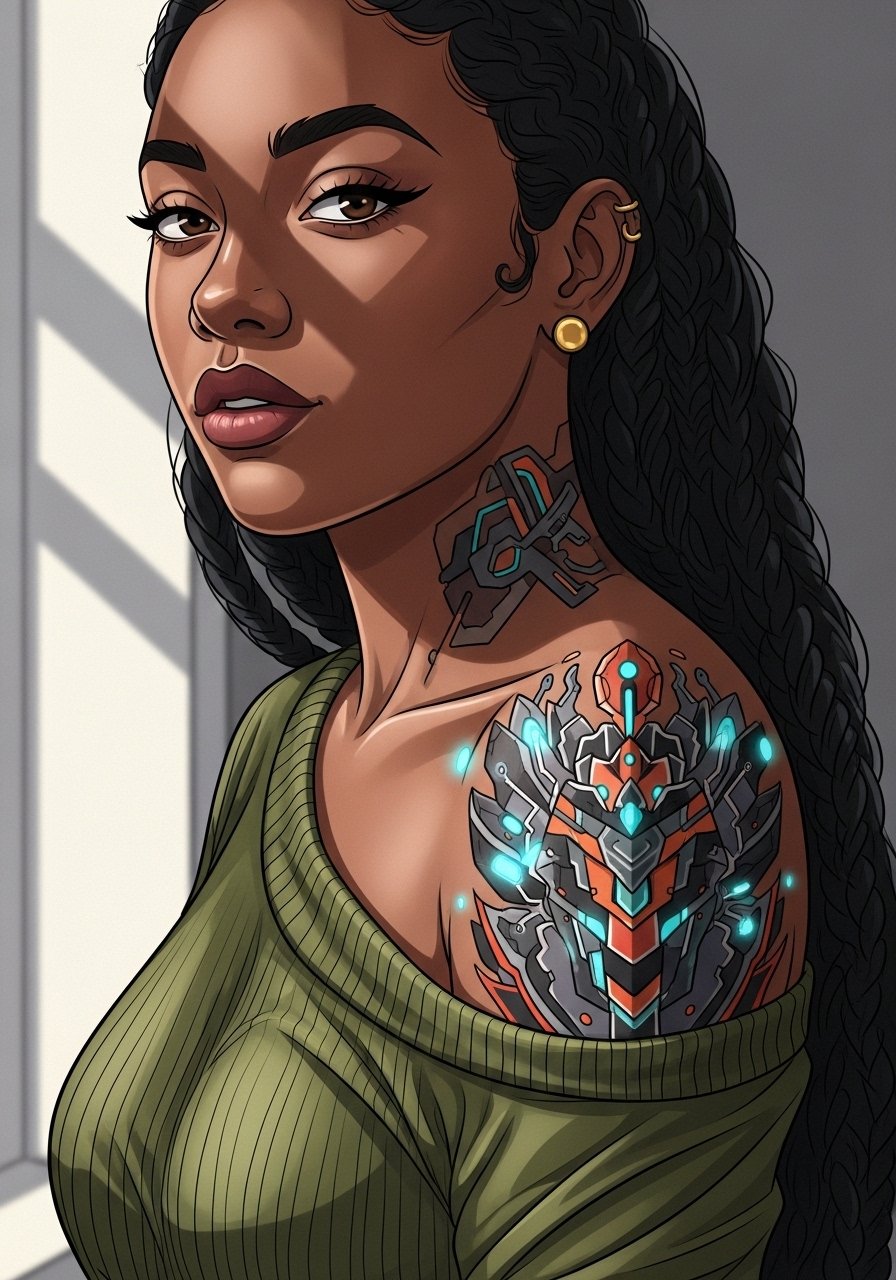
A shoulder portrait takes advantage of round anatomy to give depth to armor plates and reflective accents. Ask your artist for layered saturation rather than tiny stipple for the armor reflections so the metal reads over time. The shoulder tolerates longer sessions but can stiffen near the deltoid after two hours, so break larger pieces into two sessions. For evenings out, pair the piece with an off shoulder olive top that echoes armor tones. Common mistakes are overscaling tiny details, which blur into the color fields after sun exposure. Expect medium pain and solid touch-up longevity if you protect it from prolonged UV.
4. Darth Vader Mask with Red Lightsaber Glow on Upper Arm
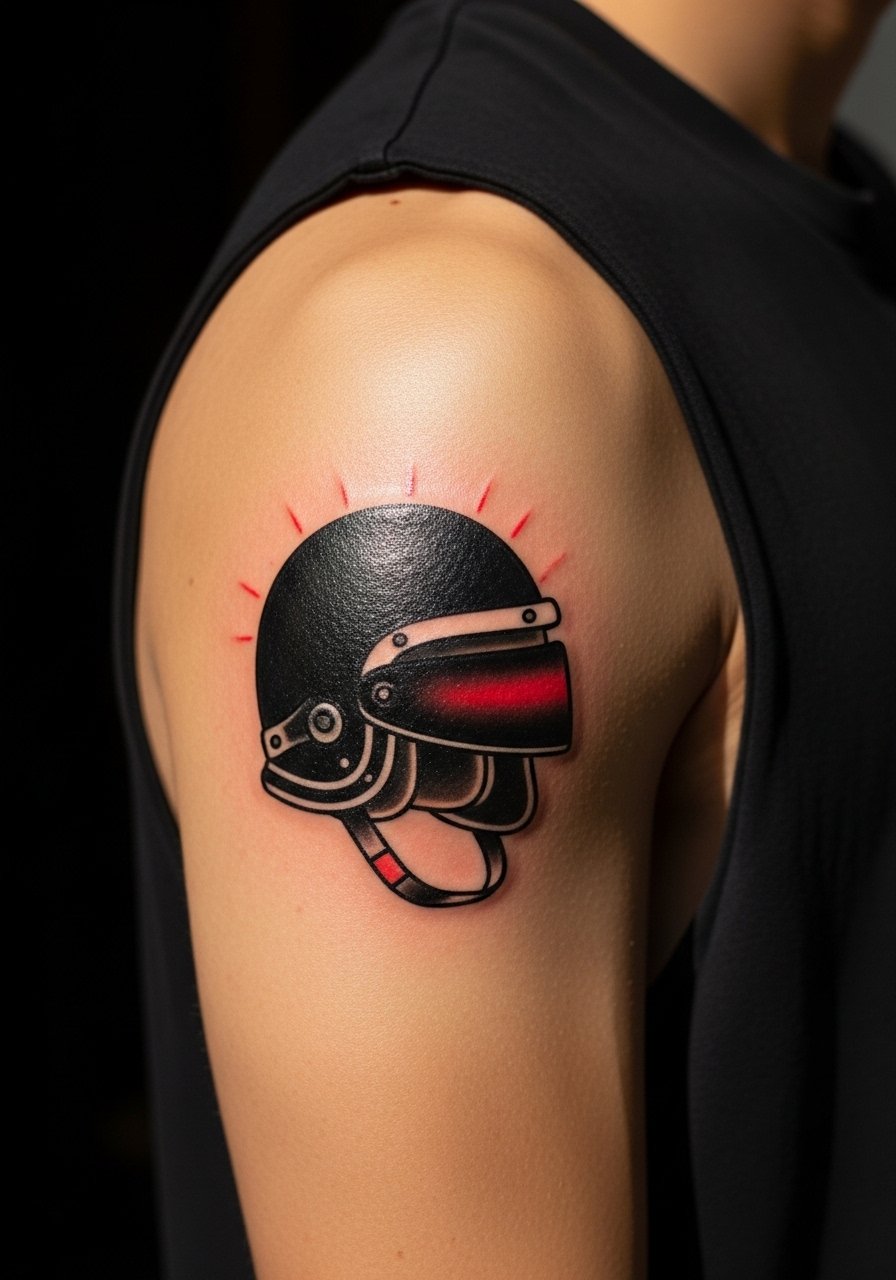
This is a bold chest-adjacent statement when placed on the upper arm. Ask for dense black saturation around the mask and controlled red saturation for the lightsaber glow so the red does not muddy the black over time. Upper arm work is forgiving for saturation and ages better than thin wrist lines. For showing it off, a sleeveless muscle tank black keeps attention on the shine and highlights. The main mistake is asking for tiny texture inside the mask instead of broad values. Expect two shorter sessions for mid-sized portraits and a touch-up at year three for any color refresh.
5. Colorful R2-D2 Droid in Watercolor on the Calf
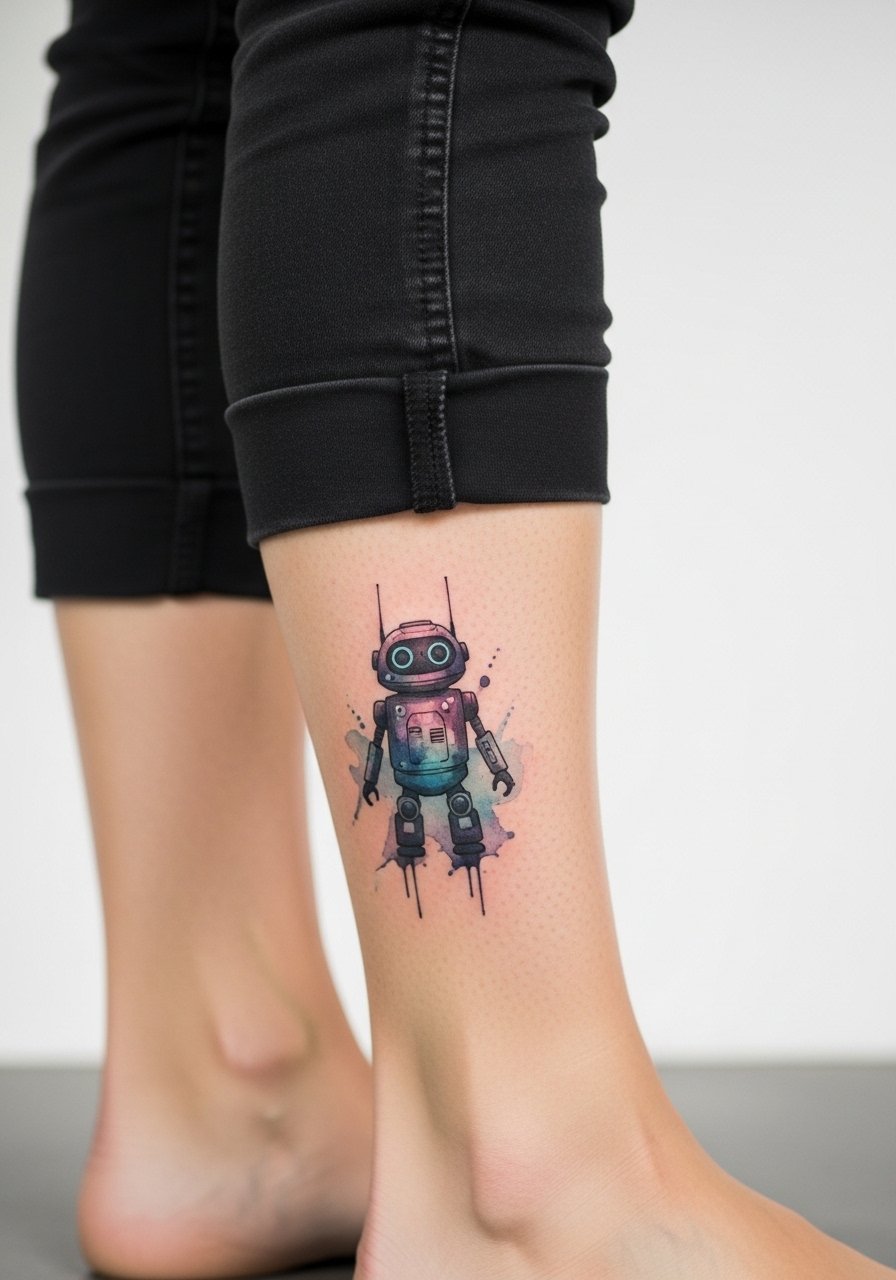
R2-D2 translates well to a looser watercolor treatment that reads playful and modern. Ask for a focused line anchor around the droid with watercolor strokes kept outside the linework so the color can fade softly without destroying form. Calf placement handles vibrant washes and is easier to conceal for work reasons. For casual wear, roll a pair of slim fit joggers rolled cuff to show the piece without constant abrasion. Expect a single longer session and gentler fading in two to five years depending on sun exposure.
6. Grogu with Wide Eyes on the Collarbone
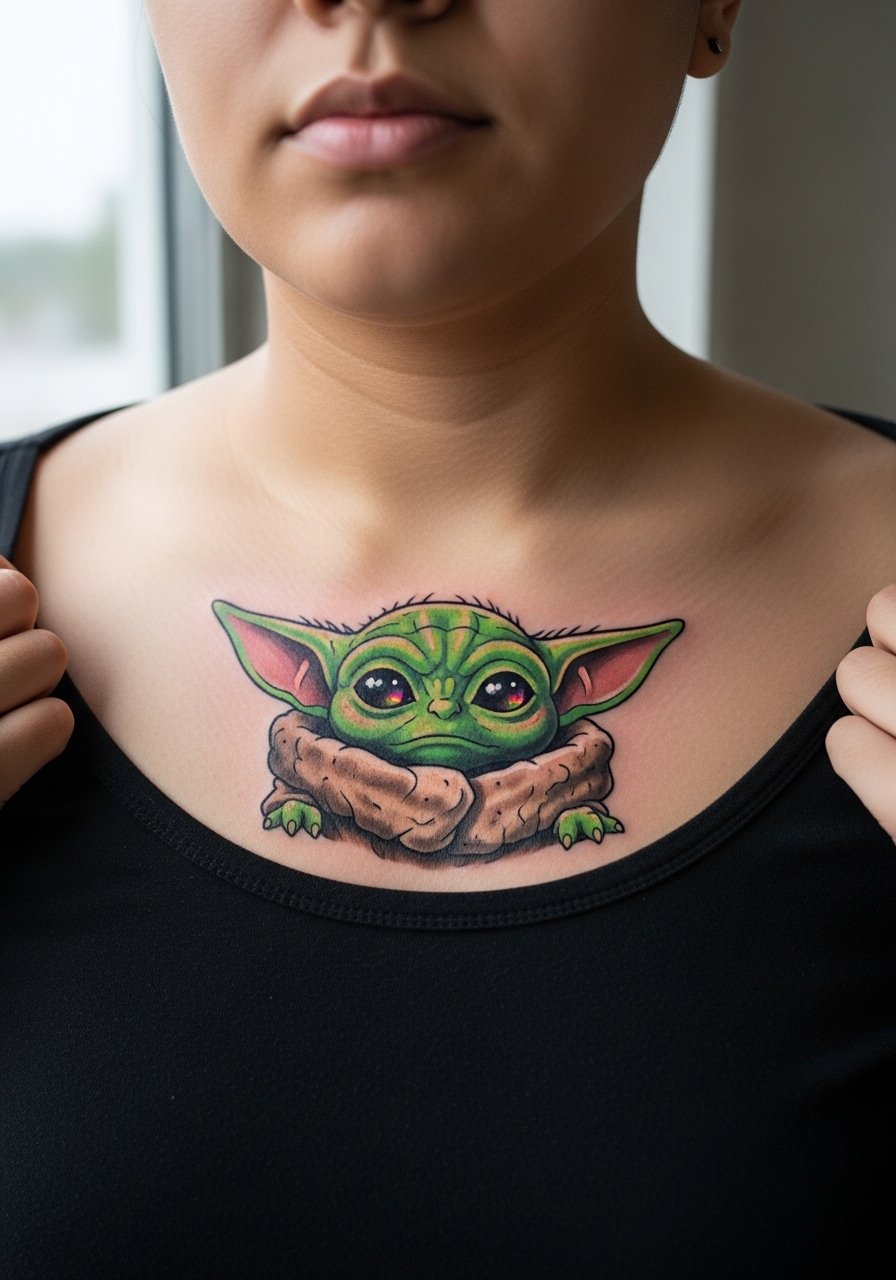
A collarbone Grogu reads intimate because of the placement and scale. Ask for slightly higher contrast in the eyes and nose so the facial cues stay legible after healing. Collarbone skin can be fussy during shading, so expect brief breaks when the artist works across the bone. Session wear should be a loose wide-neck top that the artist can pull aside. This placement ages well if you avoid heavy jewelry rubbing directly over the piece. Plan a single session for small portraits and a possible quick touch-up at year two.
Studio Day Picks
The first six ideas include wrist, forearm, shoulder, upper arm, calf, and collarbone work, so a small kit that covers transfer previews, sensitivity, and first-week protection helps the session and early healing.
-
Stencil transfer paper kit. Lets you preview the linework on skin before committing, which is especially helpful for the forearm helmet and collarbone Grogu to check scale and tilt.
-
Topical numbing cream. Applied as directed before the appointment eases wrist and collarbone sensitivity without changing the artist's art when used responsibly.
-
Thin protective film roll. Keeps calf and wrist pieces cleaner during the first days when clothing friction and showers are most disruptive.
-
Fragrance free gentle body wash. A gentle wash cleans healing areas without stripping color or irritating fresh linework.
-
Aquaphor healing ointment. A thin layer during the initial days locks in moisture for small, colorful pieces while allowing the skin to breathe.
7. Millennium Falcon Silhouette with Hyperspace Trails on Inner Bicep
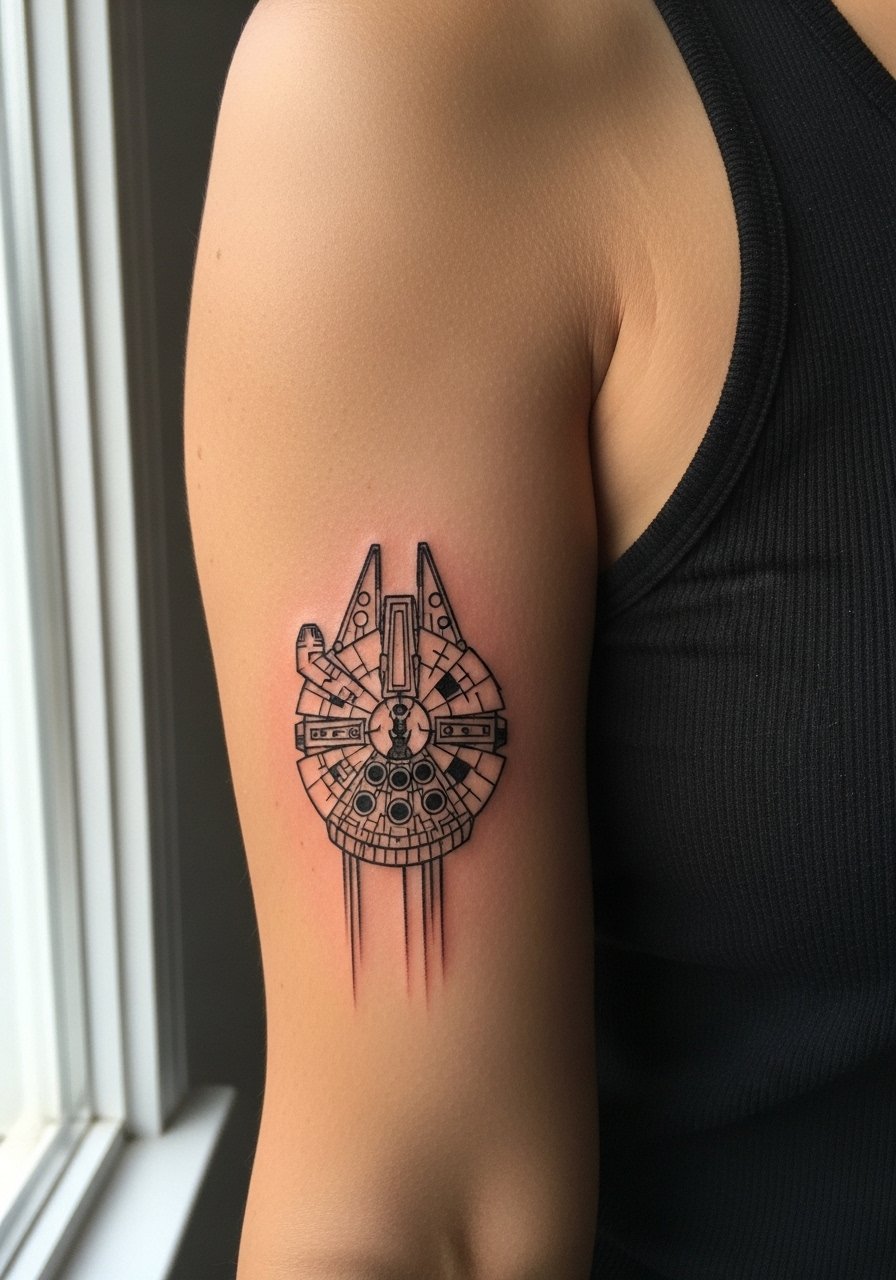
The inner bicep is one of those placements where scale matters more than detail. For a sleek Falcon silhouette, ask the artist to keep the negative space clean and the trails as soft gradients that do not rely on tiny stippling. The inner bicep can blur with very thin lines because the tissue shifts during arm movement. During the session you may feel a flinch spot near the triceps, but most clients tolerate one to two hours. Avoid heavy texture inside the silhouette because fine stipple there tends to patch up over time. No styling link here because session wear is the priority.
8. Stormtrooper Helmet with Reflective Highlights on Outer Forearm
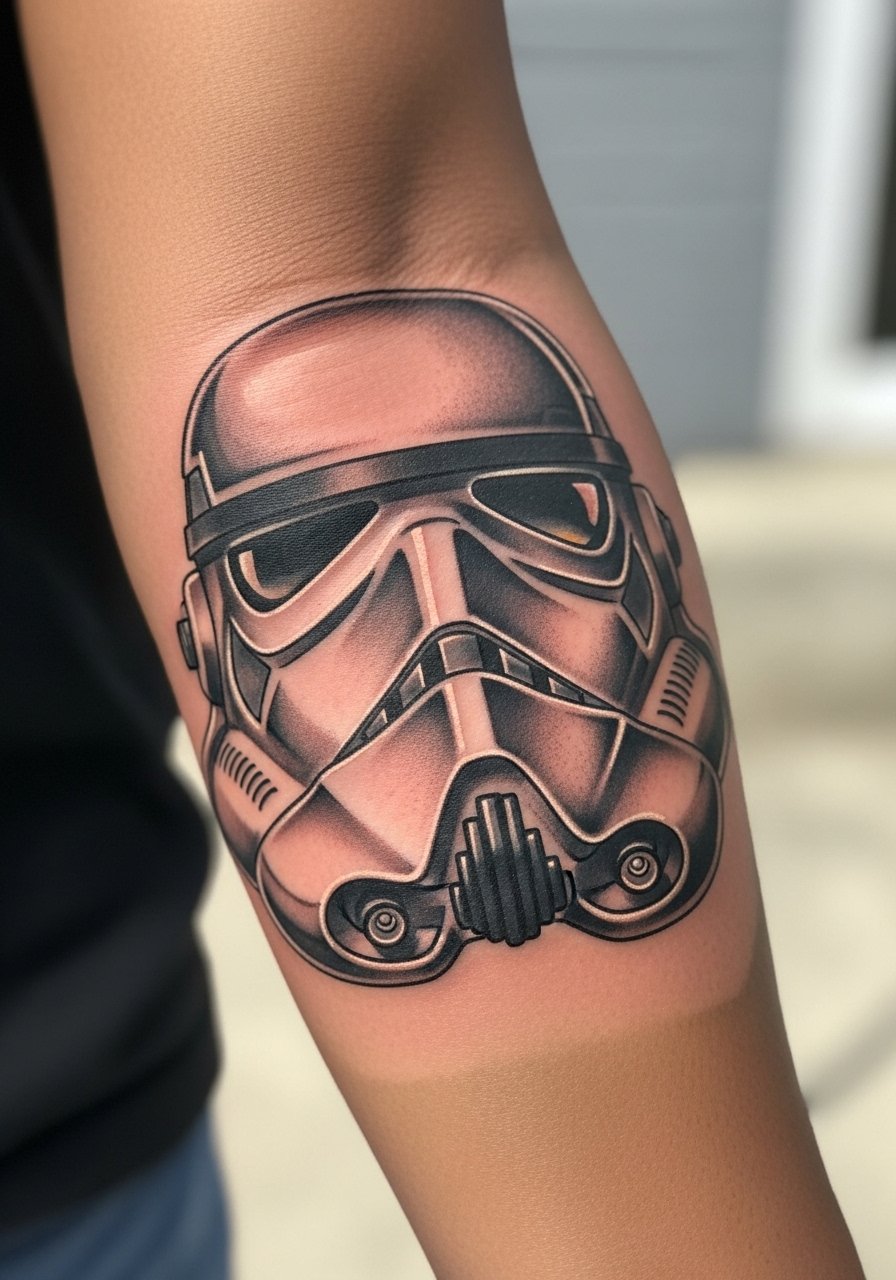
This design relies on strong black saturation and precise highlights to read as reflective armor. Tell your artist you want bold black fills and crisp white spacing for the shine so small grays do not muddy. Forearm placement shows off the contrast but sees frequent sun exposure, so protect it from UV after healing. Common mistakes include over-detailing the reflective sections tiny and tight, which creates a faded look sooner. Expect one to two sessions and a likely touch-up at year three if you wear the area in the sun a lot.
9. Chewbacca Textured Fur Panel on the Thigh
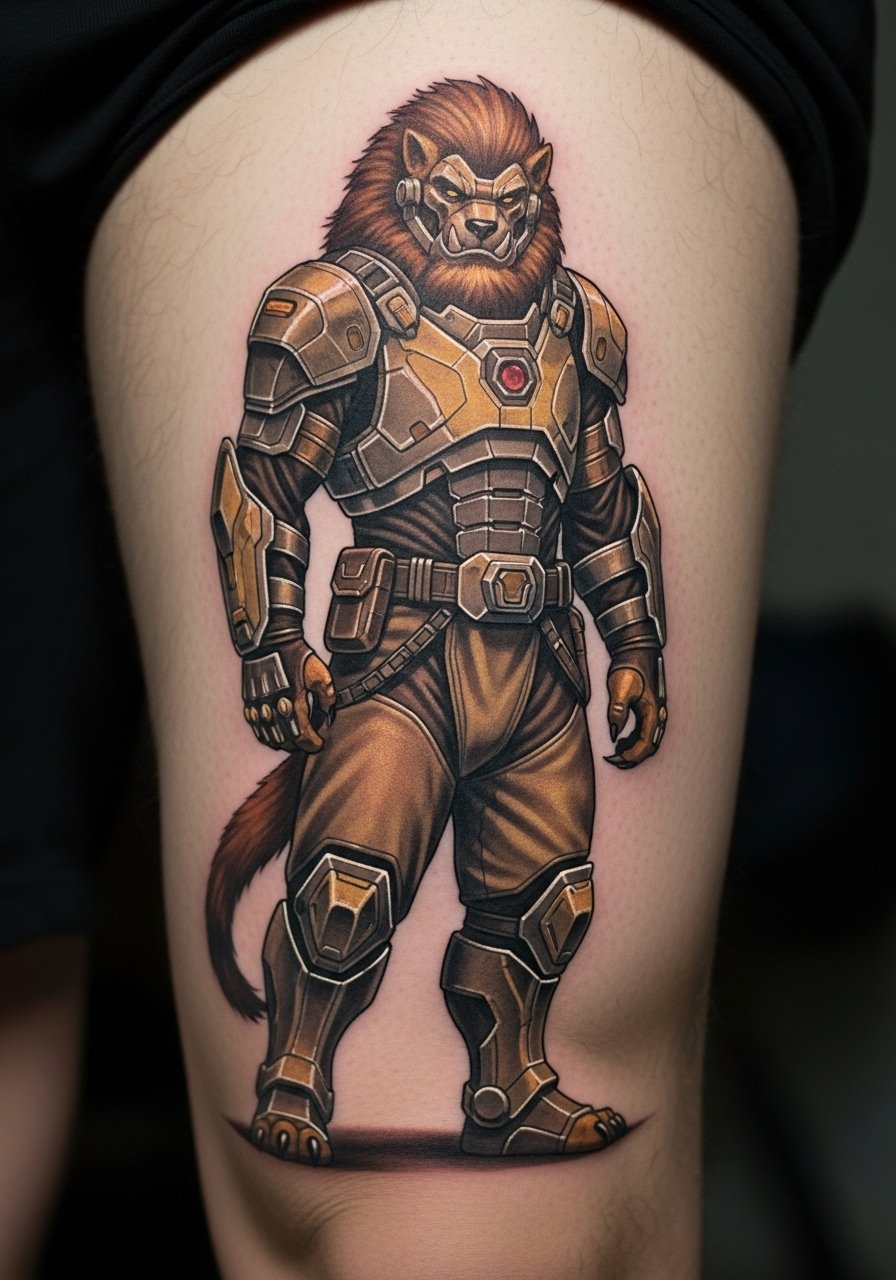
Thigh flesh takes saturation well and lets artists build textured fur using directional strokes that age into a tactile look. Ask for directional stipple and layered saturation rather than single thin strokes because the latter can thin out after healing. For showing the piece, high-cut shorts create a natural contrast with warm fur tones and a high cut cargo shorts aesthetic pairs well. Sessions here are comfortable and longer, often two to three hours, with lower blowout risk than hands or ribs. Expect color to settle over a few months and plan a touch-up if you want the fur highlights vivid after a year.
10. Death Star Explosion with TIE Fighters as a Back Panel
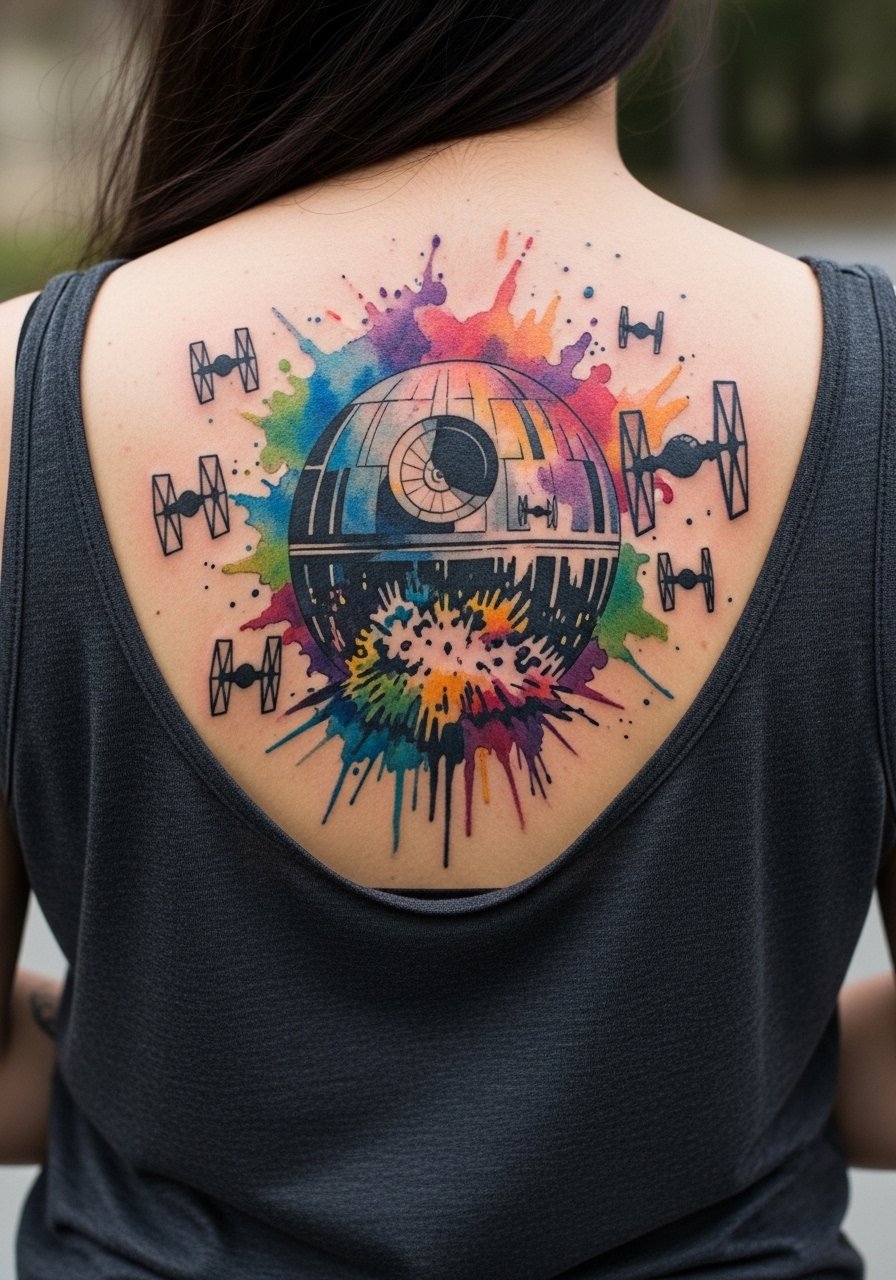
Large back pieces let you stage an epic scene that breathes. For watercolor explosions, request defined silhouette anchors for the TIE fighters so the scene still reads if the washes fade. Big back work usually involves multiple sessions across weeks. One debate worth mentioning applies to large washes. Some artists avoid watercolor outright on the back, arguing that the skin movement there makes washes unpredictable. Other artists say with planned saturation and solid anchors, the result holds. Ask your artist which approach they prefer and why. Expect multi-session work and a longer-term plan for touch-ups.
11. X-Wing Starfighter in Flight Across a Sleeve
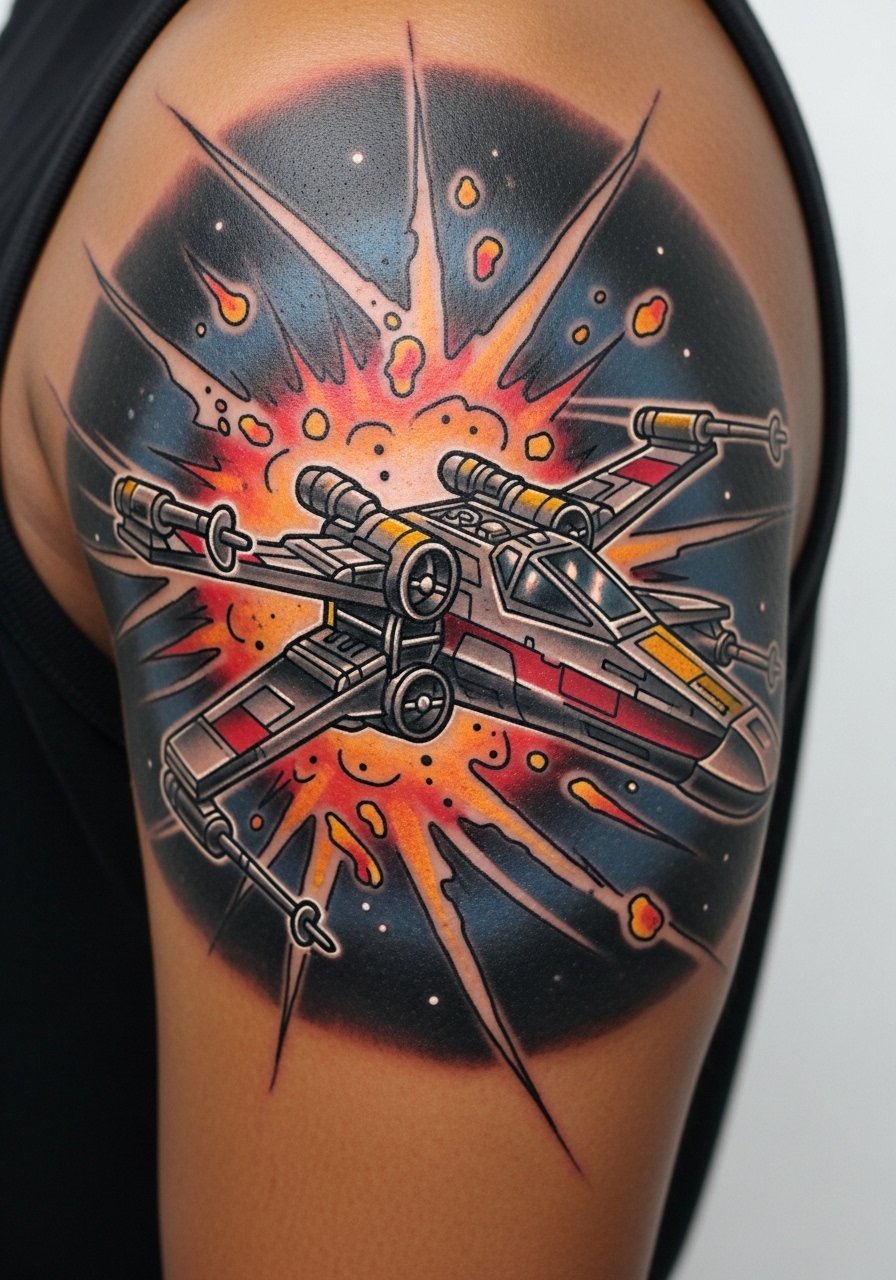
A sleeve-level X-Wing is for someone who wants movement and color scale. Tell your artist you want bold values in the fighter and open negative space for motion lines so the sleeve does not become a dense color block too quickly. Upper arm and elbow areas demand session planning because curving anatomy can distort perspective. For casual wear, a loose short sleeve tee lets you roll sleeves to show the craft while keeping edges protected. Expect three or more sessions depending on sleeve coverage.
12. BB-8 Pop Art Discus on the Calf
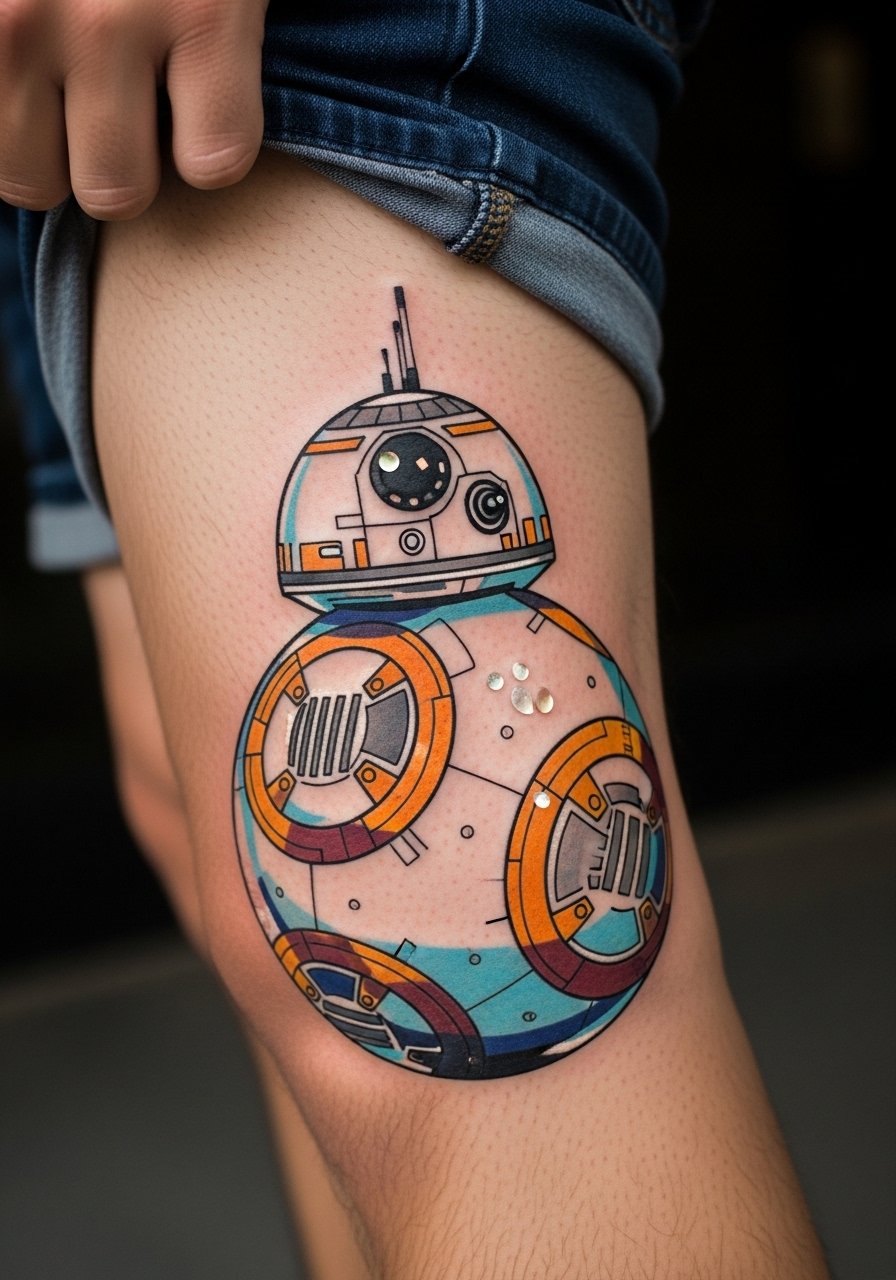
BB-8 takes pop color well. Ask for a crisp black anchor around the robot and color fills that are slightly separated from the black to protect against spreading. Inner calf is comfortable during sessions, and washes hold well there. A mistake I see is demanding ultra-fine highlights inside the panels that are too small for the anatomy. For footwear that frames the work, white canvas sneakers can play up the color without hiding the piece. Expect a single session for small BB-8s and gentle fading that keeps the graphic readable for years.
13. Mandalorian-Jedi Lightsaber Crossover with Galaxy Motifs on Upper Back
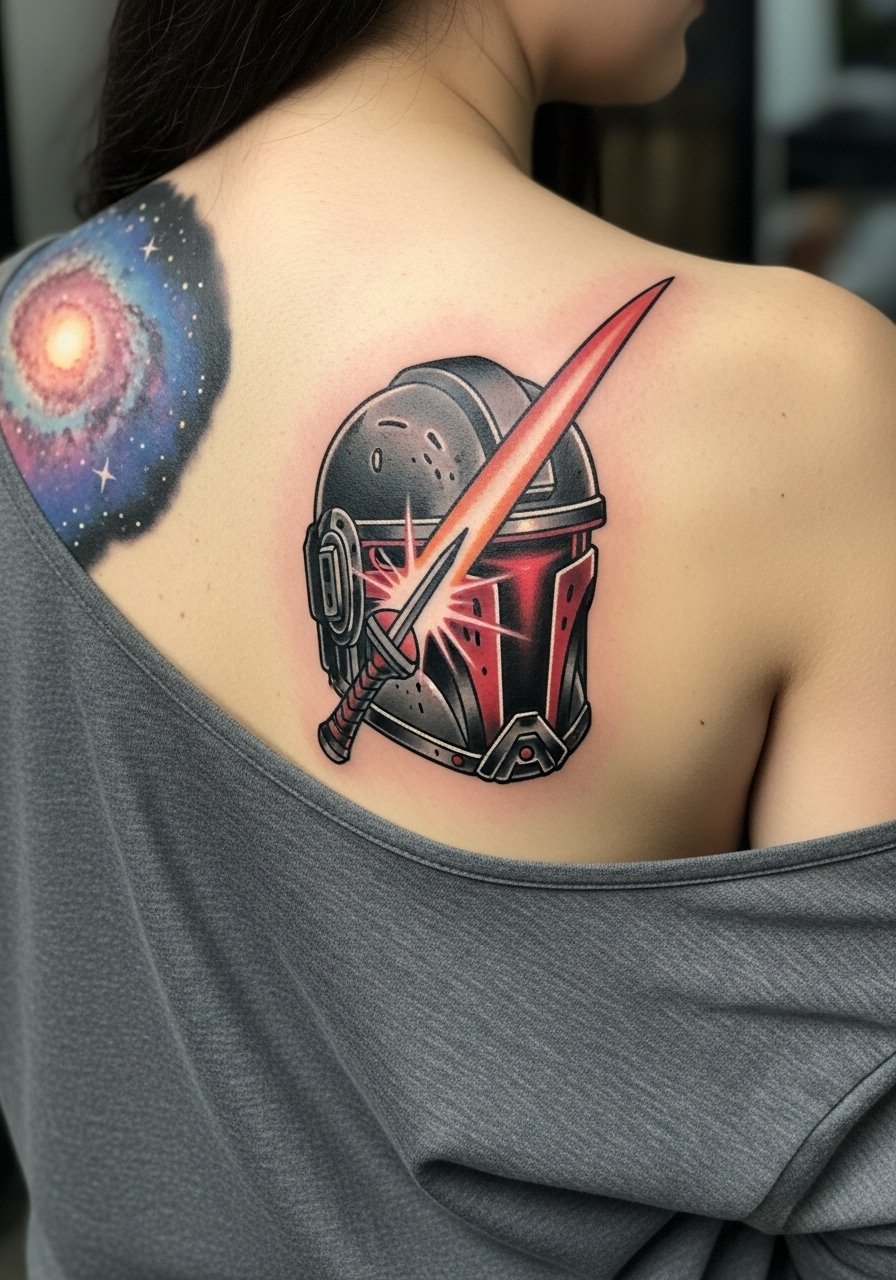
This hybrid design is one of the under-covered ideas that blends factions into a single composition. Ask your artist to anchor the helmet with heavier linework and let the lightsaber cross with a gradient glow and subtle speckled stars. Upper back gives room for a galaxy without compressing the motifs. The main mistake is trying to include too many small elements in a compact area. Sessions will be medium to long and you should plan for color refreshes if you want the galaxy specks bright after several years.
14. Ewok Face with Reflective Fur Accent on the Thigh
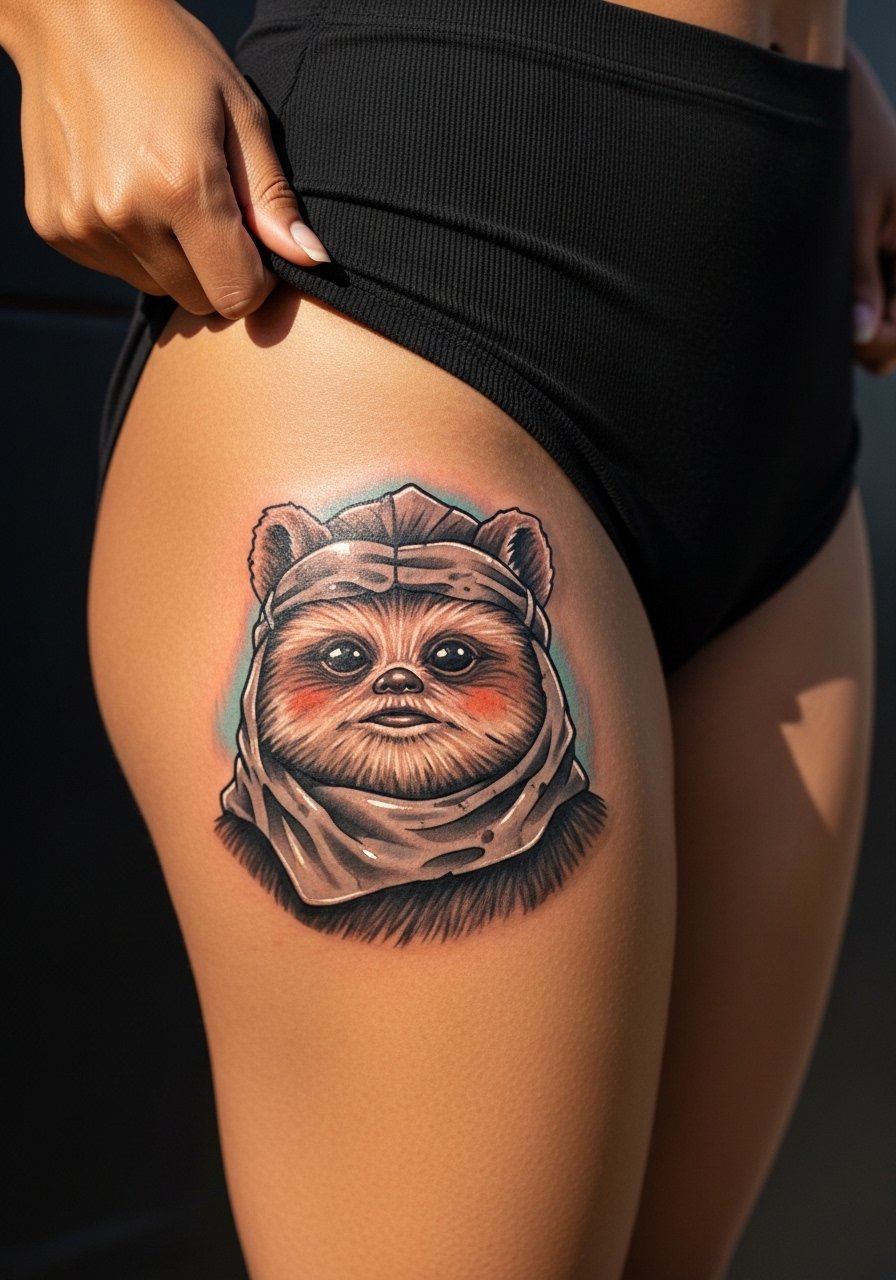
Adding reflective texture to an Ewok's fur gives a tactile, playful finish that avoids the mush of all-brown fills. Ask for layered warm browns and a few high-value highlights to let the fur read in low light. Thigh placement suits textured realism and reduces blowout risk compared with hands. For show-off styling, pair the piece with a rugged leather belt buckle and high-cut shorts to echo the warmth in the fur. Sessions run comfortable and long so stay hydrated and take breaks.
15. Yakuza-Style Sleeve Reimagined with Star Wars Motifs
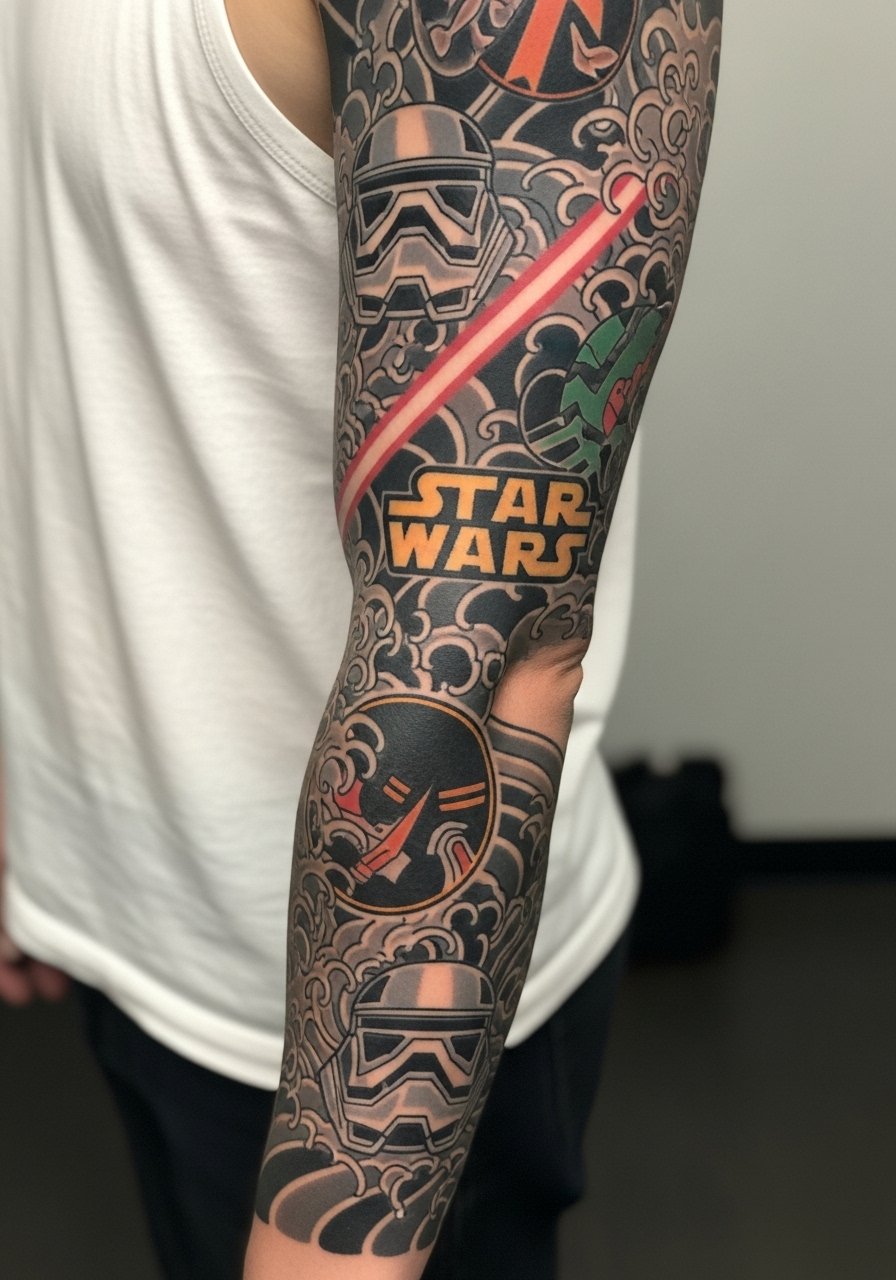
This cultural fusion needs respectful design choices. If you choose this route, discuss which elements are traditional and which are reinterpretations. Artists split on fidelity to classic motifs. One camp prefers strict adherence to traditional composition, the other favors reimagining elements to avoid direct cultural borrowing. Name both views in your consultation and agree on a respectful approach. For session wear, a loose button down shirt you can roll up keeps the arm accessible. Expect many sessions and a long-term saturation plan.
16. AT-AT March in Low-Saturation Linework on the Ribcage
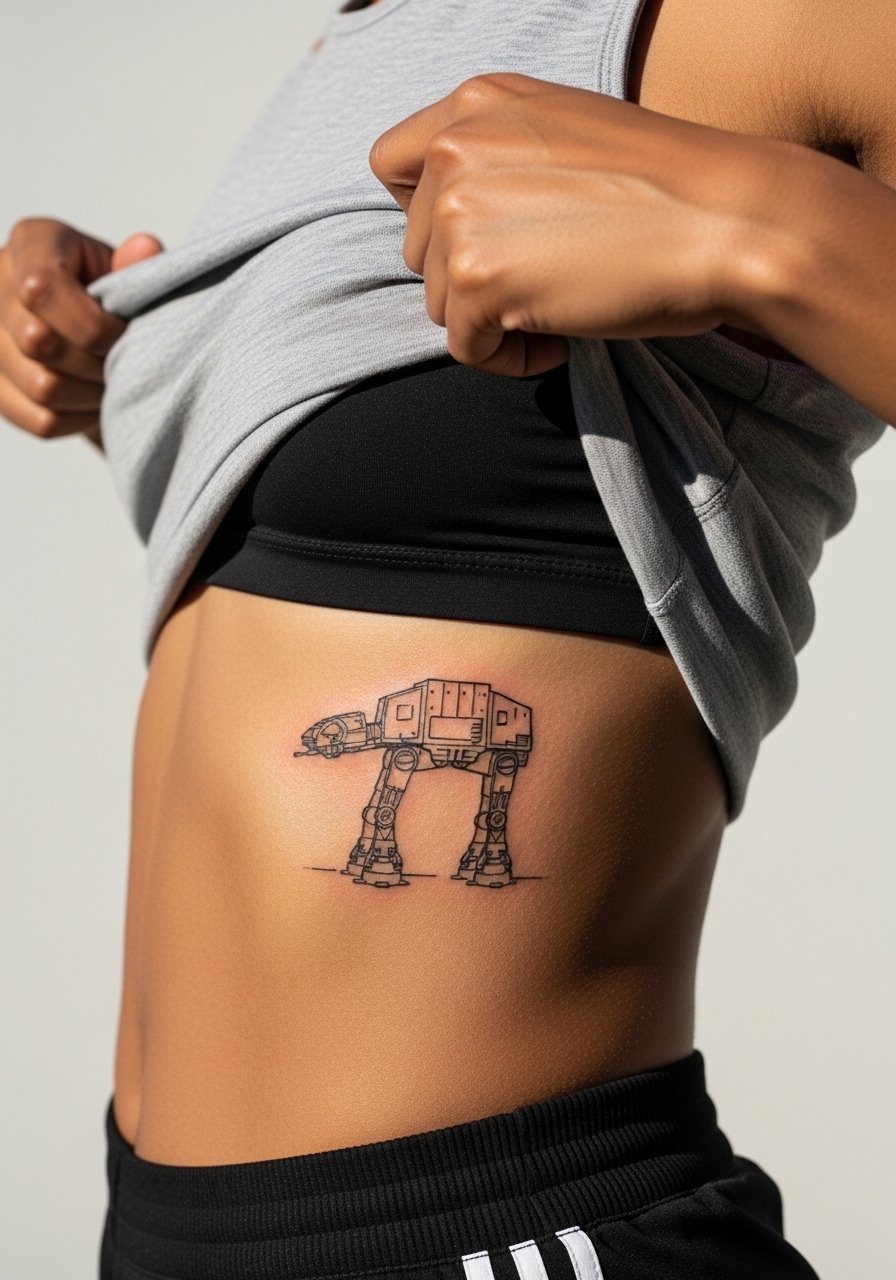
Ribcage tattoos are notorious for how the skin stretches and how fine lines behave. The controversy is clear and worth naming. One group of artists says fine line on ribs blurs within two years because of skin movement. The other group says with proper needle depth and spacing, the lines can settle fine. For this piece, ask for slightly bolder outlines and more spacing between the walkers so the composition holds even if minor softening occurs. Sessions will be more uncomfortable than the arm but short breaks make them manageable. Expect a likely touch-up at year two to maintain crispness.
17. Lightsaber Stack on the Wrist with Color Fade Effects
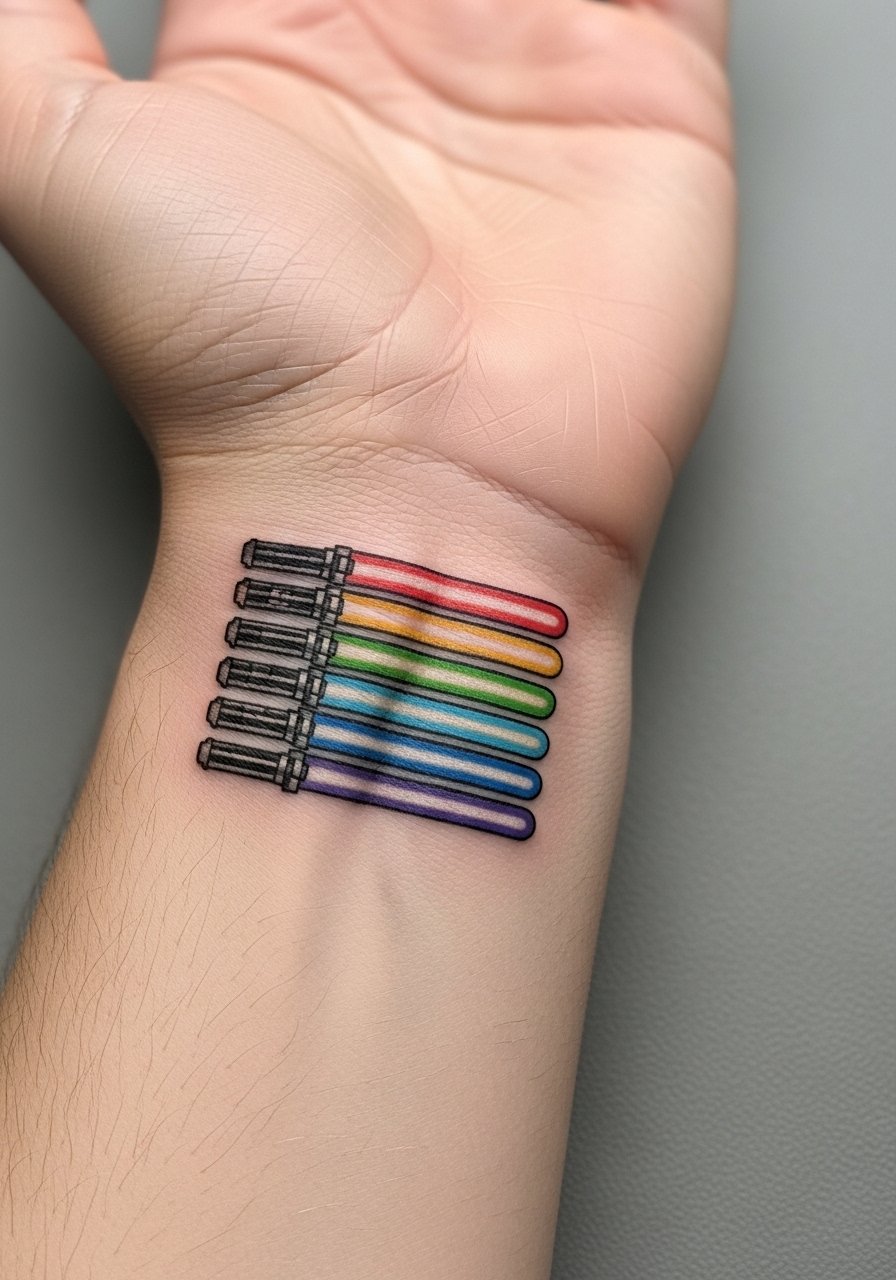
A wrist lightsaber stack is graphic and compact. Request that each saber has a solid color block separated from adjacent color by thin negative space to avoid early blending. The wrist handles color but sees frequent washing and bracelets, so anticipate more frequent touch-ups than an upper arm piece. For showing it off, a minimalist neutral watch on the opposite wrist balances the look. Sessions are short and sharp, and a quick touch-up at year two is normal.
18. Tie Fighter Scatter on the Shoulder Blade
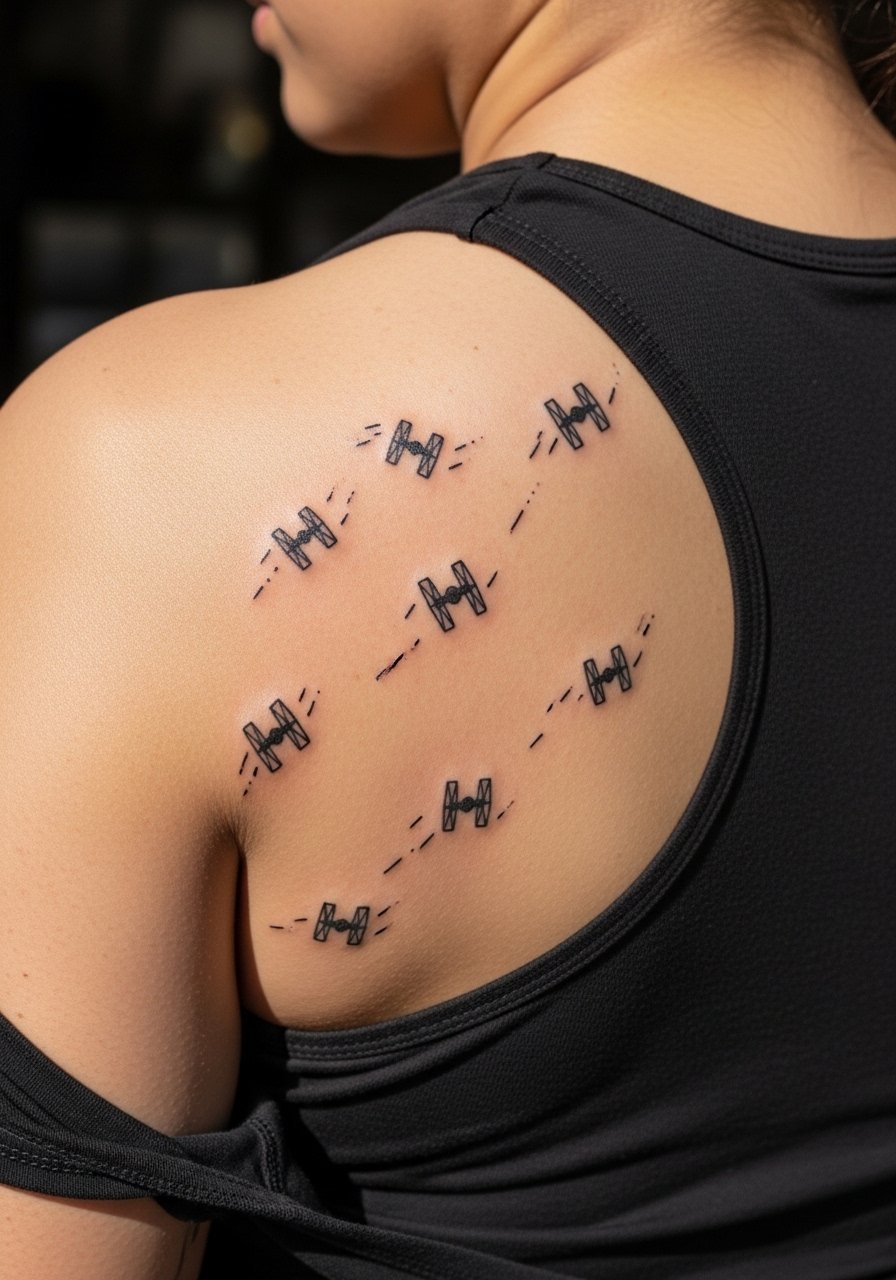
Small silhouette clusters look elegant on the shoulder blade where the skin sits flat. Ask your artist to keep the silhouettes slightly larger than you think, because tiny shapes can lose definition over time. Shoulder blade sessions are comfortable and heal well. A common mistake is cramming too many tiny shapes into a small square. Plan for a single session and a touch-up if you want the black to remain dense in five years.
19. Millennium Run Coordinates Script on the Inner Forearm
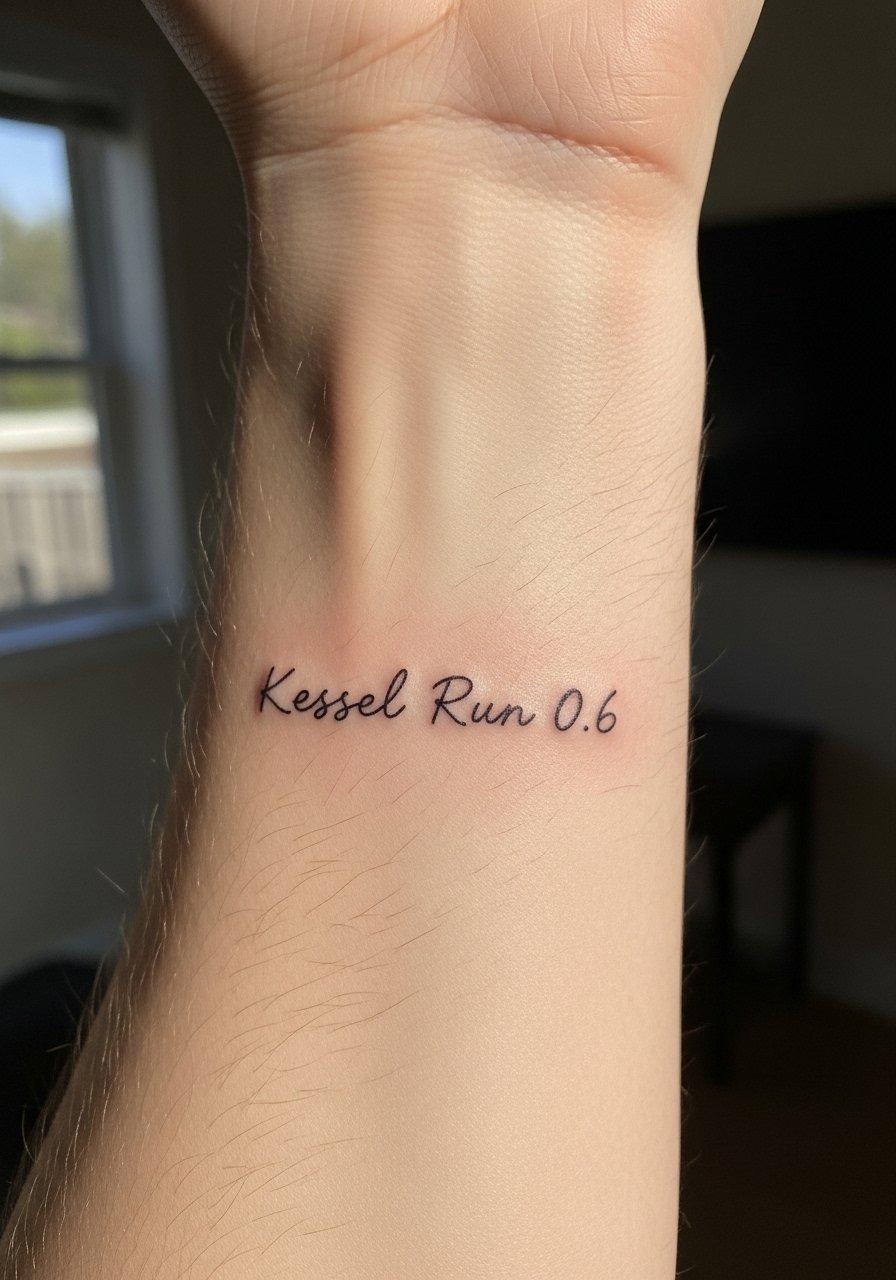
Texted coordinates need precision. When lettering is this small on the inner forearm, tell your artist the exact spacing and font weight you want. Tiny script often softens, so choose a slightly heavier weight for longevity. The inner forearm is forgiving but avoid single-needle micro script unless you accept likely touch-ups. For session wear, a loose tank top gives the artist clear access. Expect light to moderate pain and check in for a touch-up if any letters feather.
20. Death Star Blueprint in Neo-Traditional Color on the Upper Arm
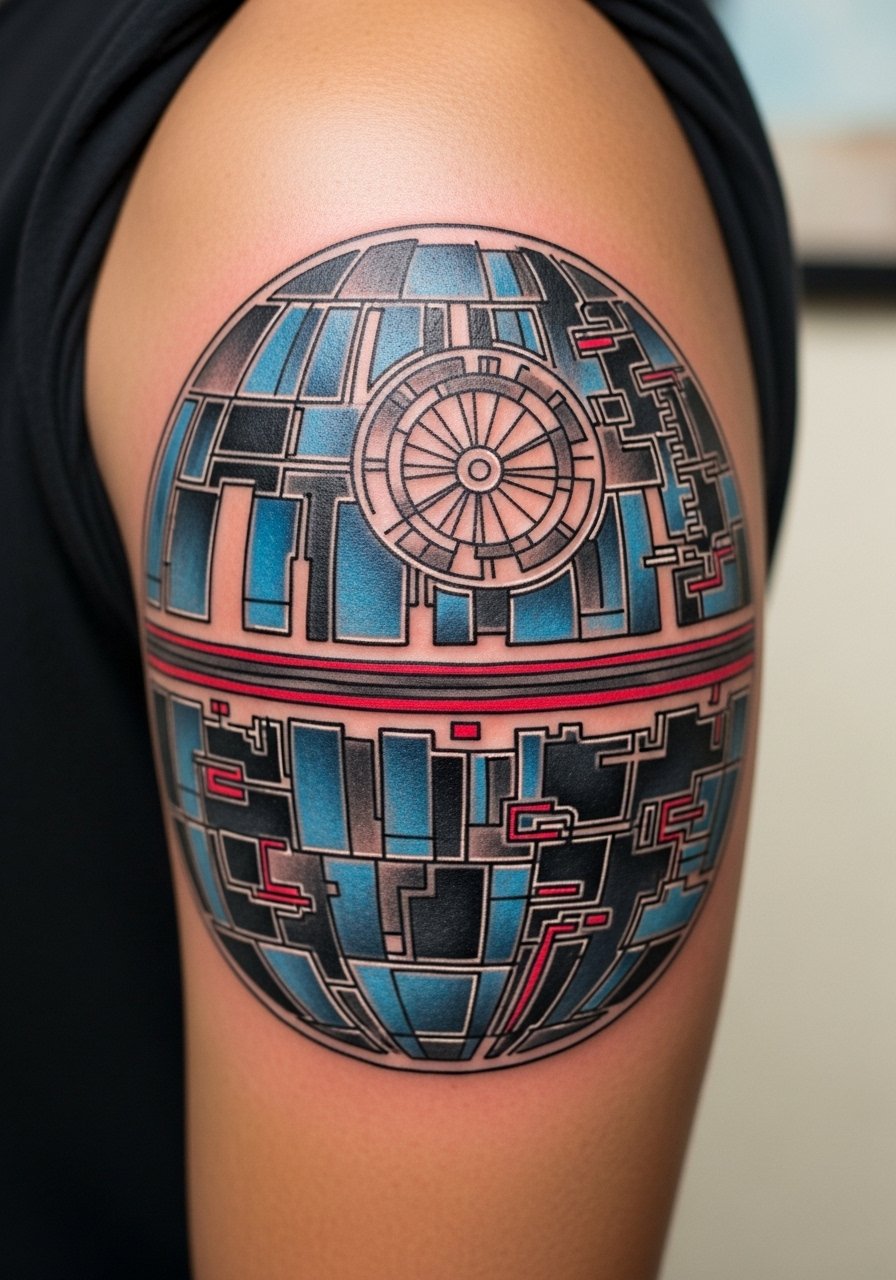
A schematic-style Death Star looks modern with blocked color panels and clear linework. Ask for separation between linework and color fills so the blueprint lines remain crisp if a fill softens. Upper arm saturation is forgiving and ages more predictably than the wrist. Avoid ultra-fine internal hatch marks that can blur. Sessions are mid-length and a precise touch-up after a year keeps blueprint lines clear.
21. Force Glyph Abstract with Stipple Shading on the Upper Chest
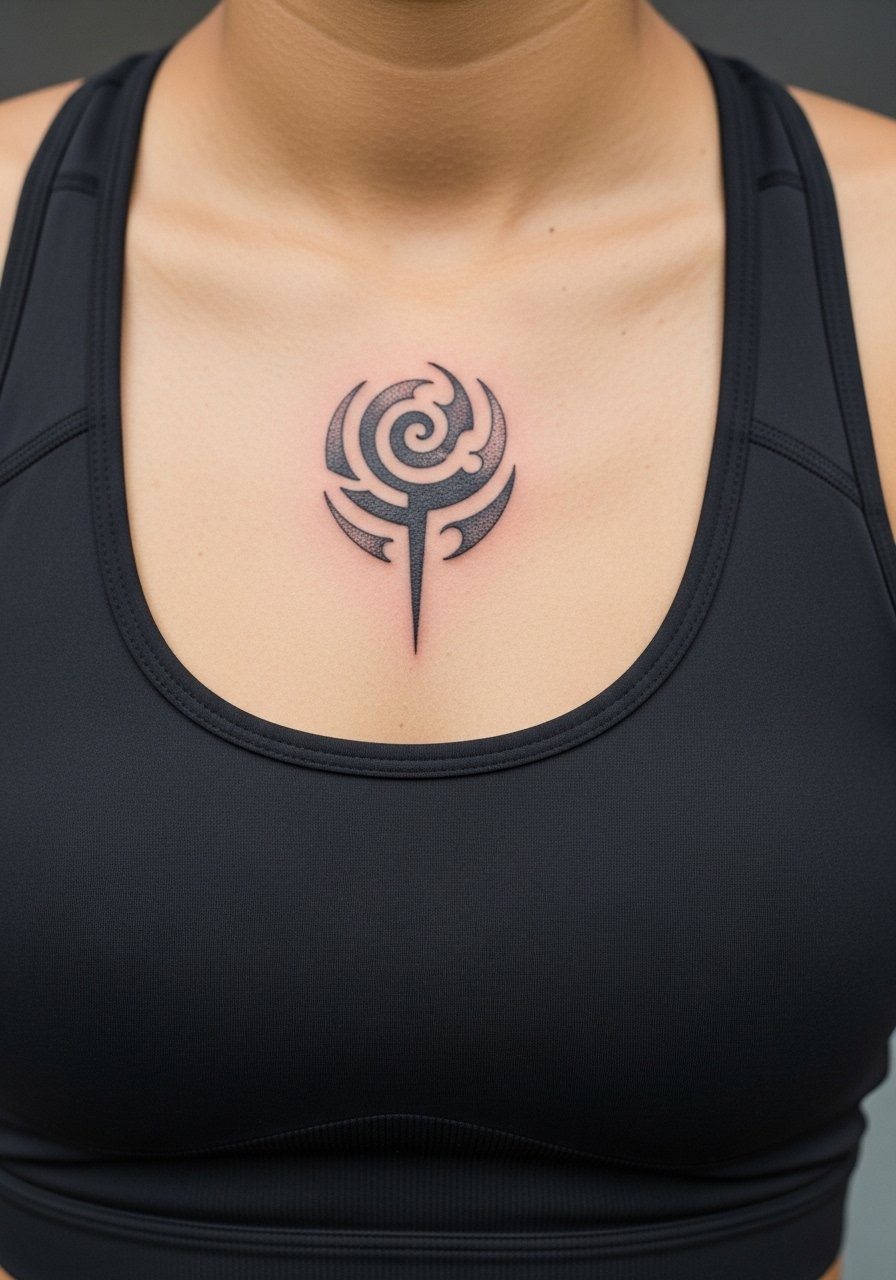
An abstract glyph with stipple shading reads less literal and ages into texture beautifully on chest skin. For a sternum-adjacent placement, wear a fitted sports bra to the appointment to allow the artist clean access while maintaining modesty. Artists differ on how dense stipple should be in this zone. Ask for moderate dot spacing so shading does not merge into a patch over time. Expect moderate discomfort across bone areas and plan a short touch-up if the dots lose contrast after initial settling.
Frequently Asked Questions
Q: How much does a colorful Star Wars tattoo cost and what affects the final price?
A: Prices vary by shop and complexity, but factors that move the needle are size, color saturation, and session count. A medium, fully saturated portrait needs more time and sessions than a small silhouette. Tell your artist your ideal dimensions and whether you want packed saturation or a lighter watercolor wash so they can estimate sessions.
Q: Will watercolor-style pieces like the Death Star explosion fade faster than neo-traditional portraits?
A: Watercolor fades differently because it uses softer fills and less black anchoring. If you want color that lasts, ask for defined black or dark anchors around the main shapes. Watercolor can look gorgeous for years if you limit sun exposure and accept occasional color refreshes.
Q: Are fine line designs a bad idea for ribs and inner wrist placements?
A: Fine line on ribs or inner wrist is riskier because of skin movement and friction. Some artists refuse fine single-needle work there for longevity reasons. The safer route is to request slightly heavier lineweight and more spacing, and to budget for a touch-up at year two.
Q: How should I dress for a shoulder or upper back session to make chair time smoother?
A: Wear a loose button down shirt or a tank you can pull aside without exposing other areas. That way the artist has clean access and you stay comfortable during multi-hour sessions.
Q: How often do colorful pieces need touch-ups to stay vivid?
A: Expect a touch-up within two to three years for most colorful work, depending on sun exposure and placement. High-friction zones like wrists and ankles often need touch-ups sooner than upper arm or thigh work.