
Fine line trends look gorgeous on a feed but they do not always hold up. Bold blackwork tends to age into a readable shape, while hyper-detailed tiny numerals can blur within a few years if placed on high-movement skin. Pick a placement and line weight that suit your lifestyle and skin type, and the sheet of ideas below will help you visualize what actually lasts and what needs touch-ups.
1. Roman Numeral Date on Inner Wrist
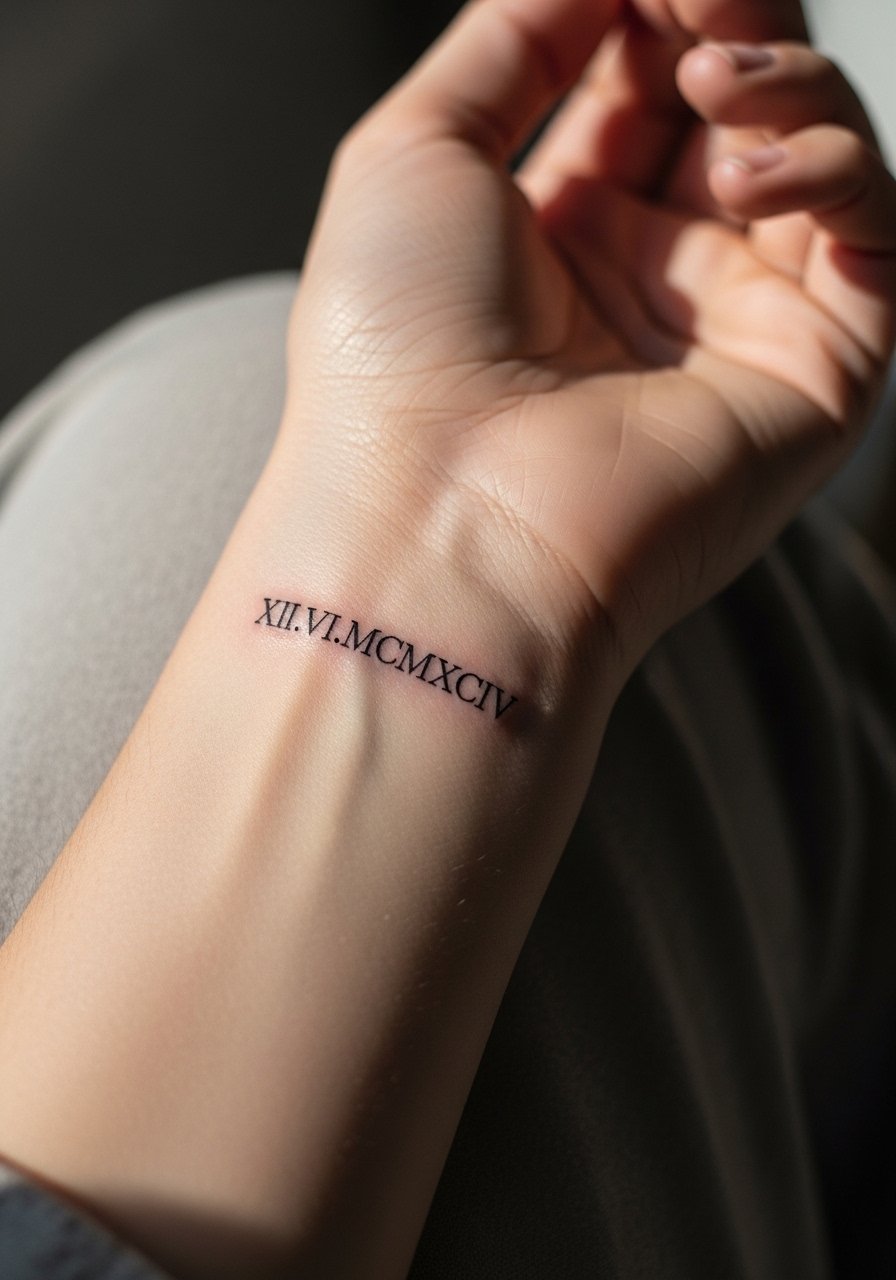
The inner wrist is where a small Roman numeral reads like a private marker that you see every day. I recommend sizing at least two inches and asking for a slightly thicker line weight than a single needle so the characters stay legible after a year. Expect moderate pain and a short session. Common mistakes are making the numerals too tight on the curve and skipping a stencil test. For showing it off, pair the wrist piece with a rolled cuff chambray shirt and a thin chain bracelet. During the appointment, wear a sleeveless top so the artist has clear access.
2. Hourglass Framed Numerals on Outer Forearm
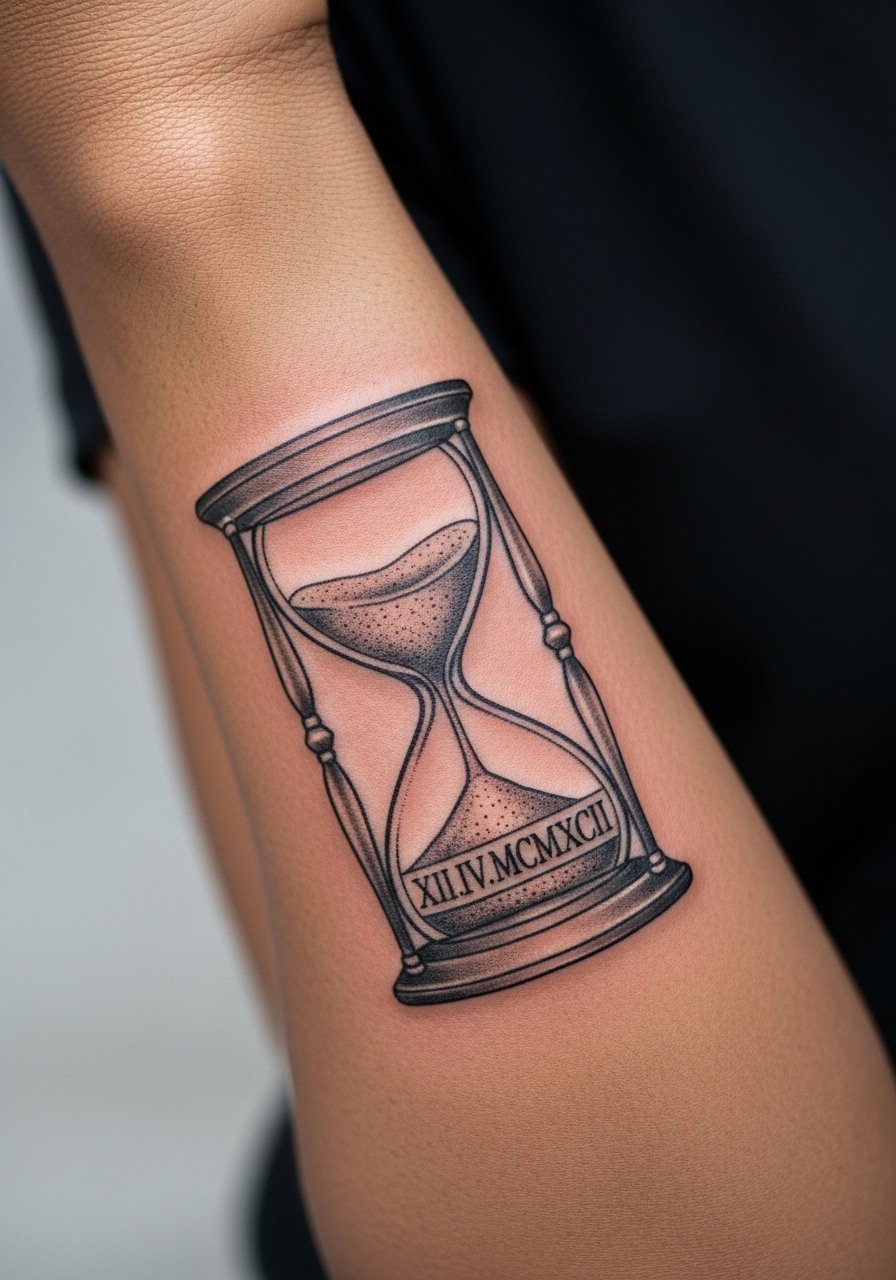
Fair warning, the outer forearm flexes with movement and sunlight sees it often. I prefer an hourglass that holds the numerals inside the glass with a small surround of stipple shading so the numerals keep separation as the piece heals. Tell your artist you want the numerals slightly bolder than the decorative linework. This runs 1 to 2 sessions depending on shading. The usual slip is requesting ultra-thin numerals that fade into the stippling. For outfits, roll short sleeves and try an oxford button down shirt half-rolled to frame the forearm.
3. Heart Enclosing Roman Numerals on Collarbone
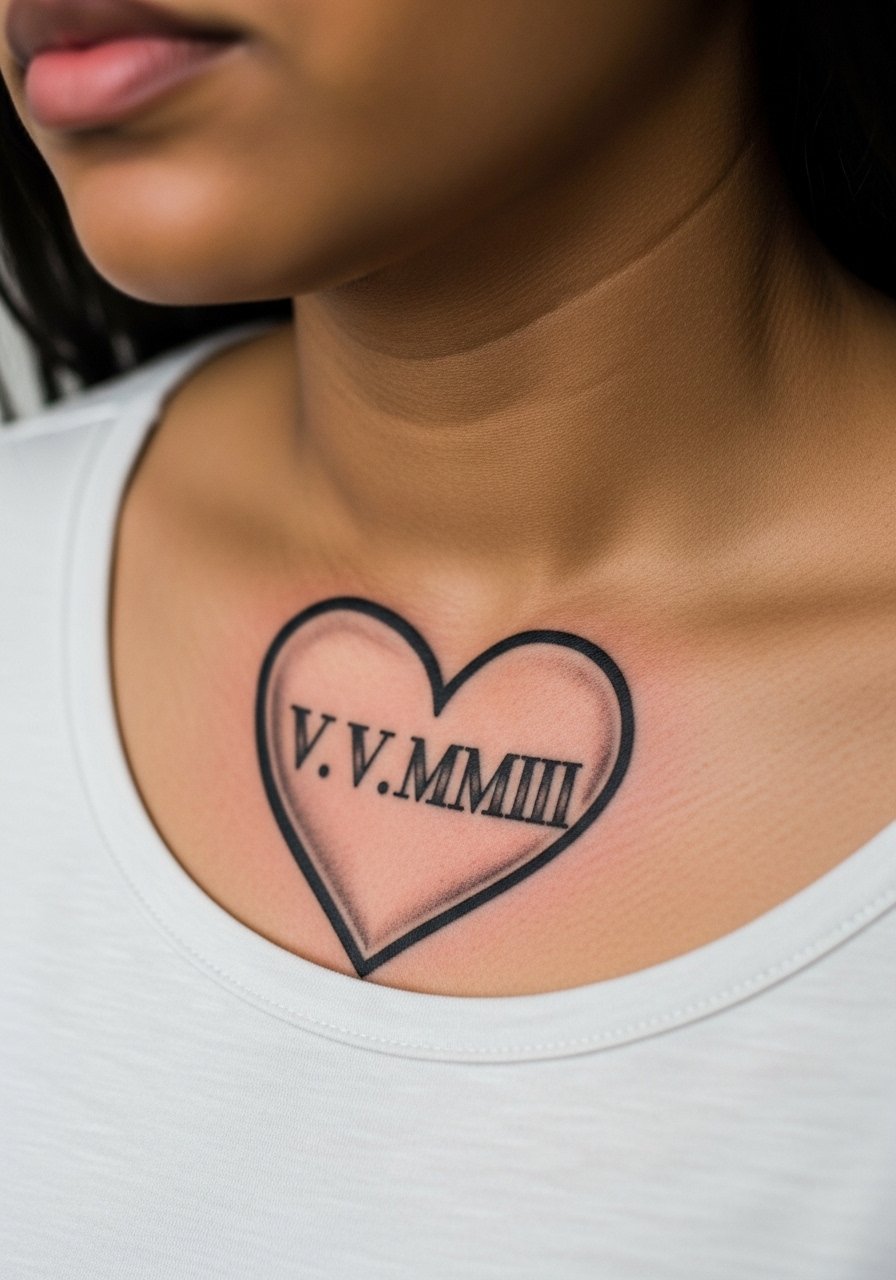
The collarbone shows up with low-cut tops and off-shoulder sweaters. Expect sharp initial contrast that softens into a subtle wash over time. I tell clients to pick a heart scale that lets the numerals breathe and to avoid tiny serifs that disappear in a year. Pain is moderate and a single session usually covers both outline and light shading. For showing it off, an off shoulder sweater frames the piece while a delicate chain necklace keeps attention upward. Wear a strapless bra to the session so the artist can stencil clearly.
4. Compass Rose with Roman Numerals on Shoulder
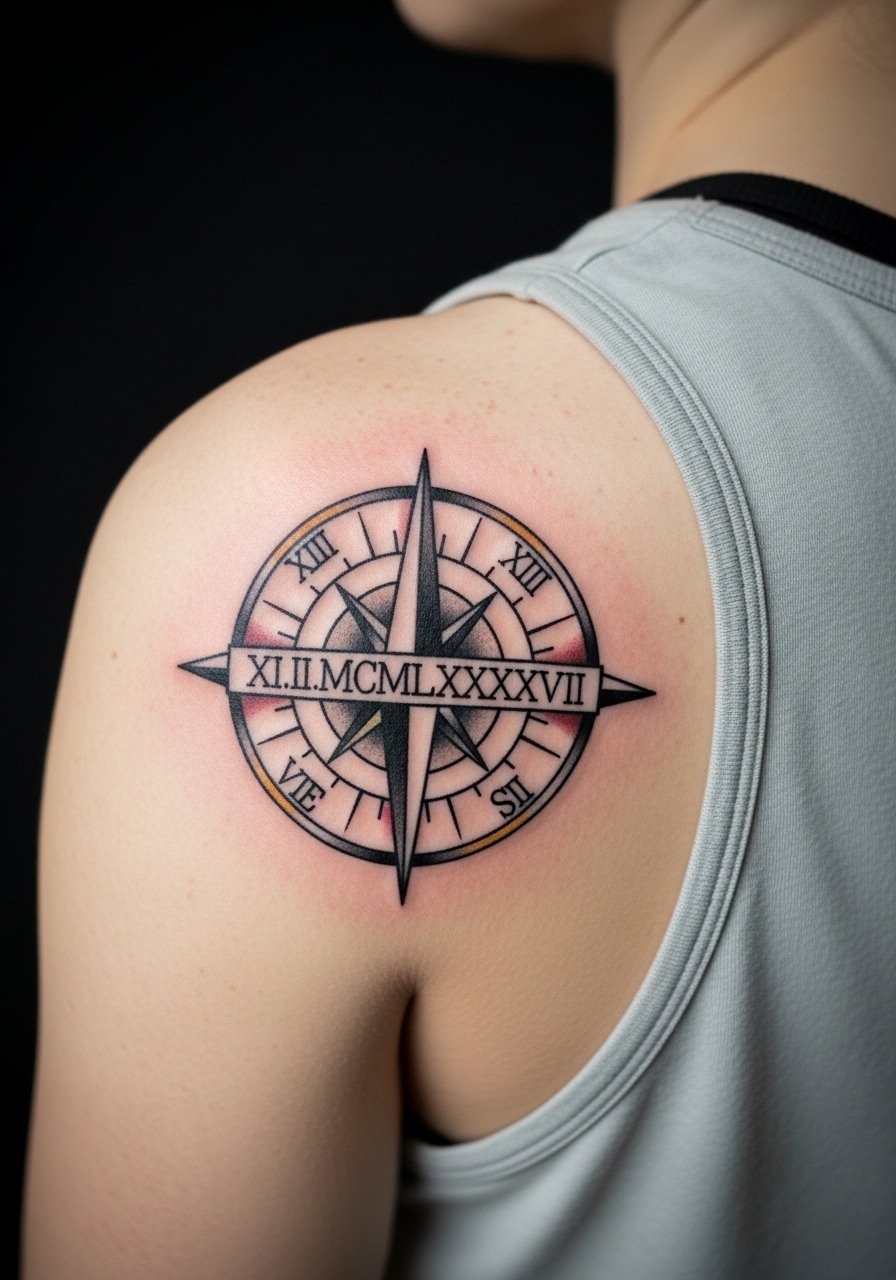
There is a visual payoff when numerals sit inside a compass. The shoulder gives enough flat area for crisp linework and helps the numerals stay readable as the body moves. I ask artists for a five-inch diameter and for the numerals to have a small baseline so they do not warp with muscle. This is usually two sessions because of color or shading. Common mistakes are crowding the numbers against the compass points. For the session, wear a loose tank top so the artist can work without tugging.
5. Skeleton Key with Roman Numerals on Ribcage
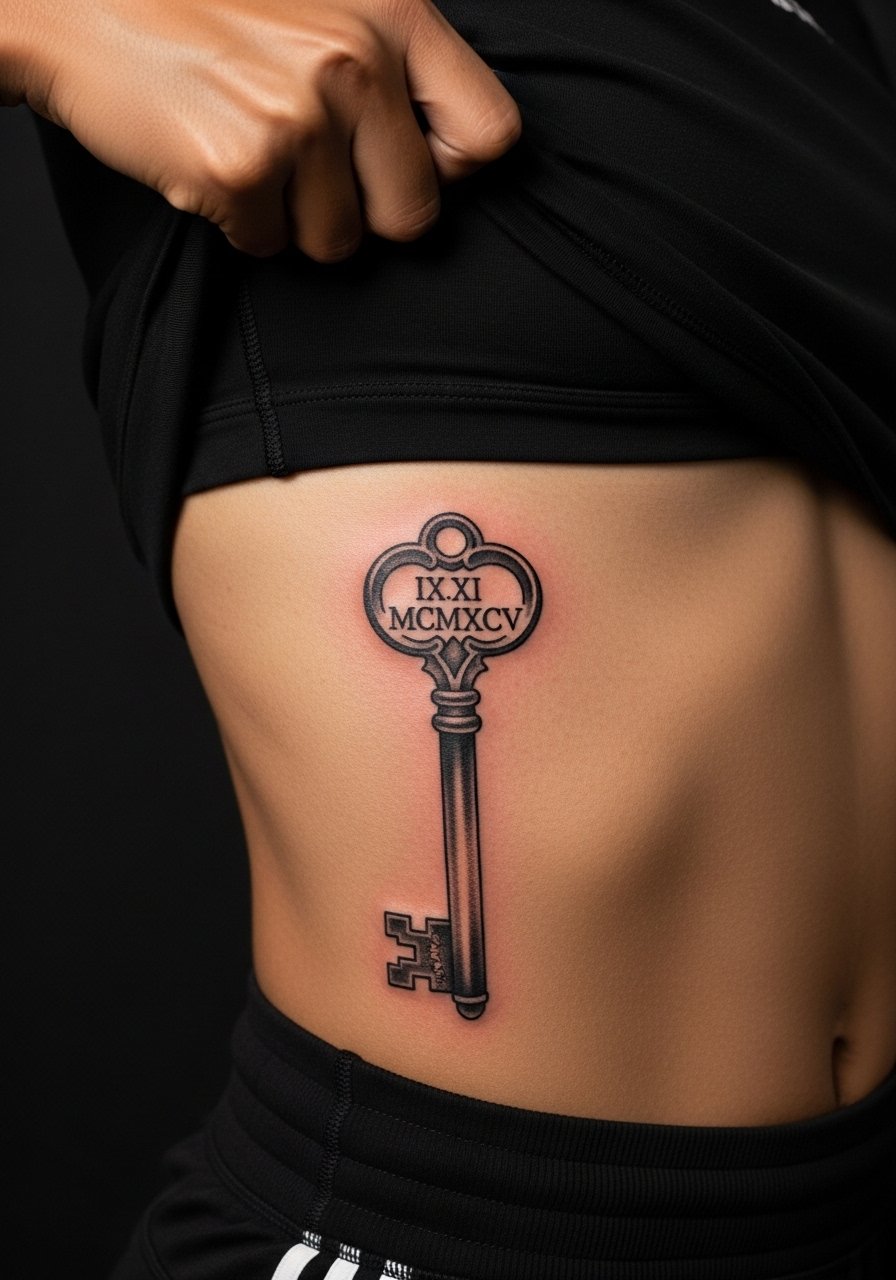
Fair warning, the ribcage is a high-pain placement but it yields a very private result. Artists disagree on fine line at this spot. One camp says thin numerals blur quickly because the skin stretches with breath. The other camp says correct needle depth and spacing keep fine lines intact. Name that debate in consultation and ask how they plan touch-ups. The common error is asking for tiny script on a curved area. For sessions, wear a sports bra and loose shorts so the artist can work cleanly.
6. Floral Wreath Around Roman Numerals on Ankle
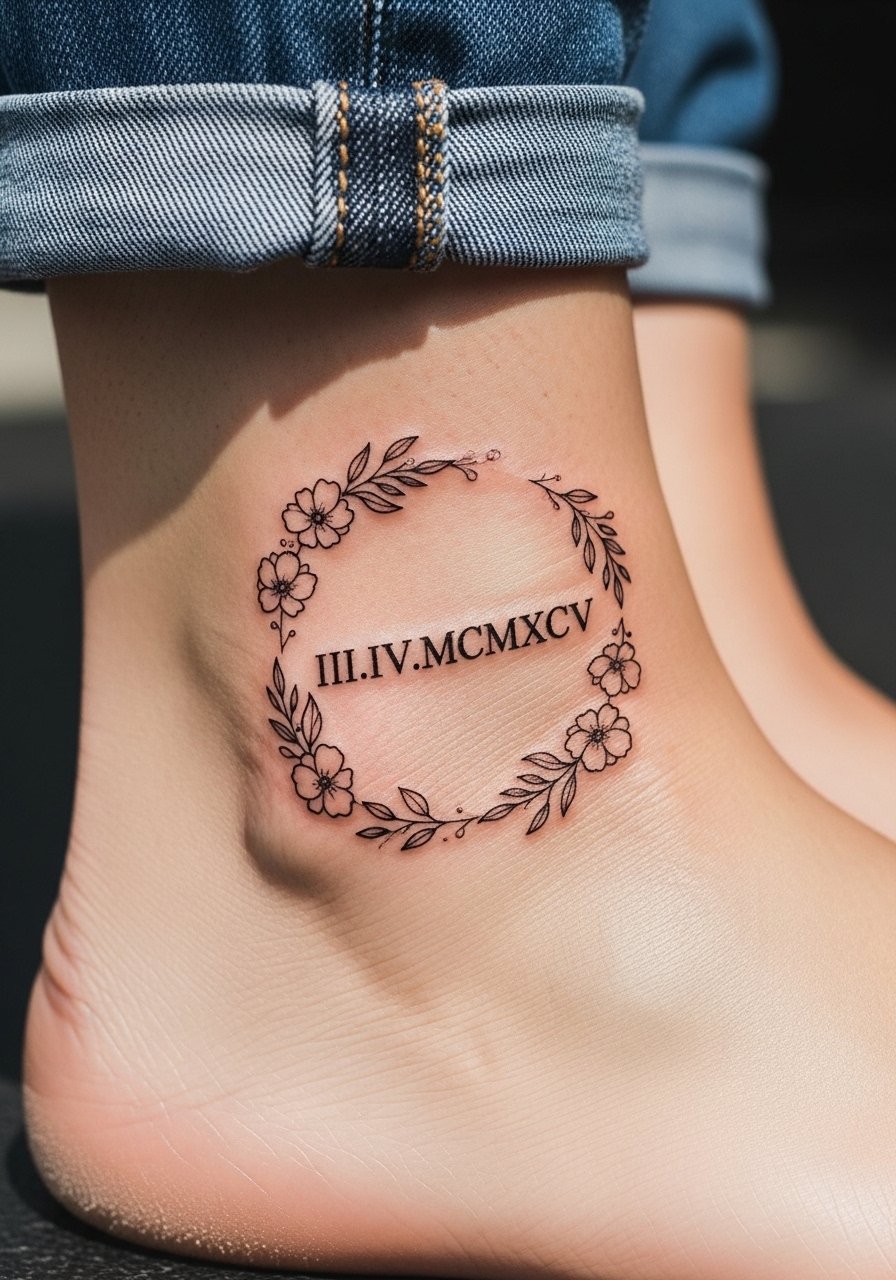
Ankle pieces are easy to hide, but they face friction from socks and shoes during healing. I recommend a narrow wreath with numerals set in negative space so each character keeps contrast. Keep the numerals big enough to read at two inches. Pain is low to moderate and one session usually suffices. A frequent mistake is choosing ultra-thin leaves that fill in over time. For summer looks, cuffed straight-leg jeans and barefoot sandals show the ankle without competing with the floral ring.
Studio Day Picks
The wrist, forearm, collarbone, shoulder, ribcage and ankle pieces above all have different prep needs. These five items smooth the session and the first week of healing.
-
Hustle Butter Deluxe. A gentler alternative to greasy ointments for that first week when fine line work needs moisture without clogging the area.
-
Second Skin tattoo balm. Thin consistency that artists in forums recommend for wrist and ankle numerals that need a non-greasy finish.
-
Australian tea tree salve. For folks who prefer a leaner, antimicrobial option during dry healing, patch test first for sensitivity.
-
Aquaphor healing ointment. Useful for locking in moisture on friction-prone ankle and wrist pieces for the first few days.
-
Tattoo protective film roll. Shields small wrist and finger numerals from scuffs while you sleep and during the busiest first showers.
7. Clock Face Roman Numerals on Calf
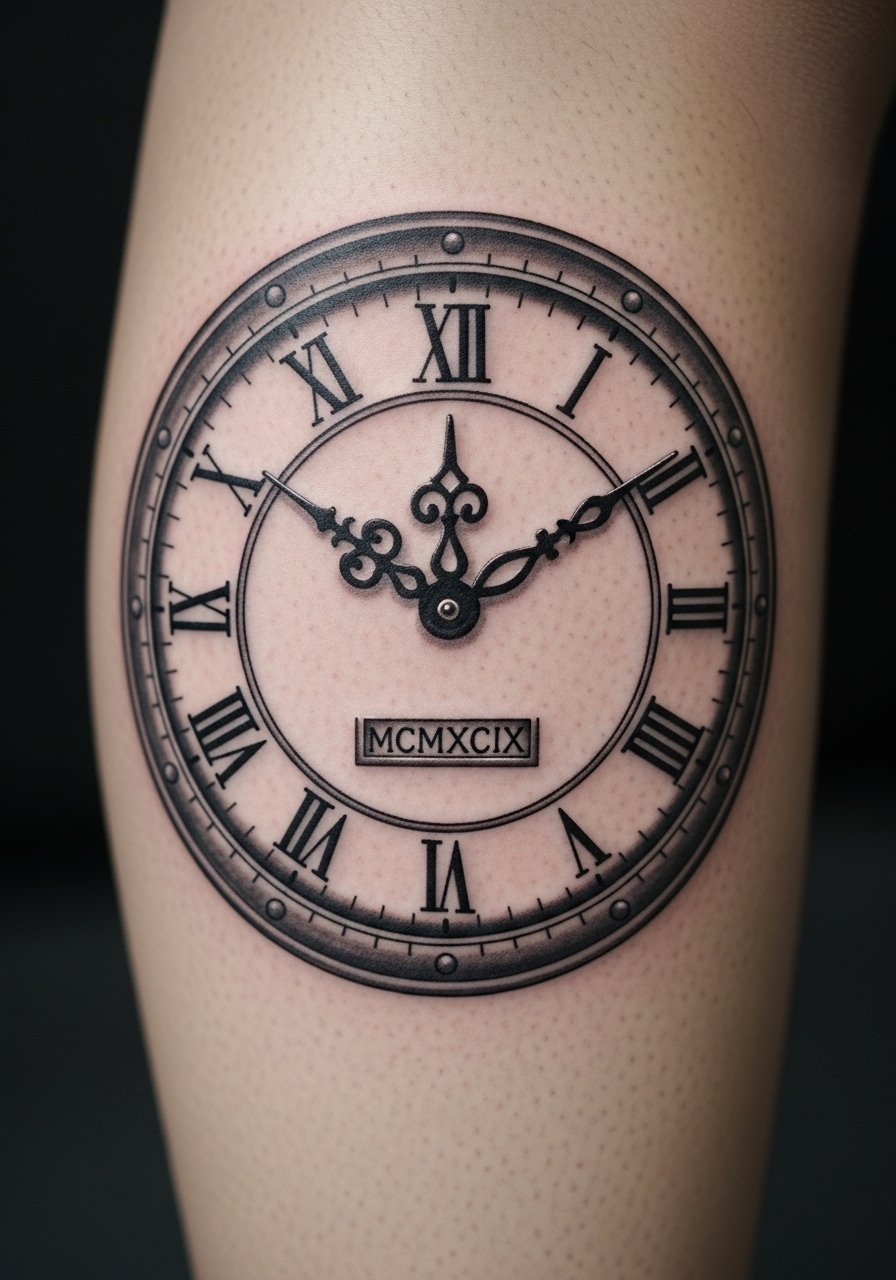
The calf is great for a larger clock face that reads from a distance. I suggest a six-inch composition that gives each Roman numeral room and prevents crowding in dense areas. Expect two to three sessions for full micro-realism shading. One common mistake is pushing too much tiny texture into the numerals themselves. For cool-weather wear, calf pieces look clean with mid-calf boots. For session comfort, bring loose joggers so you can roll the leg without pressure on the tattoo.
8. Arrow Piercing Roman Numerals on Outer Thigh
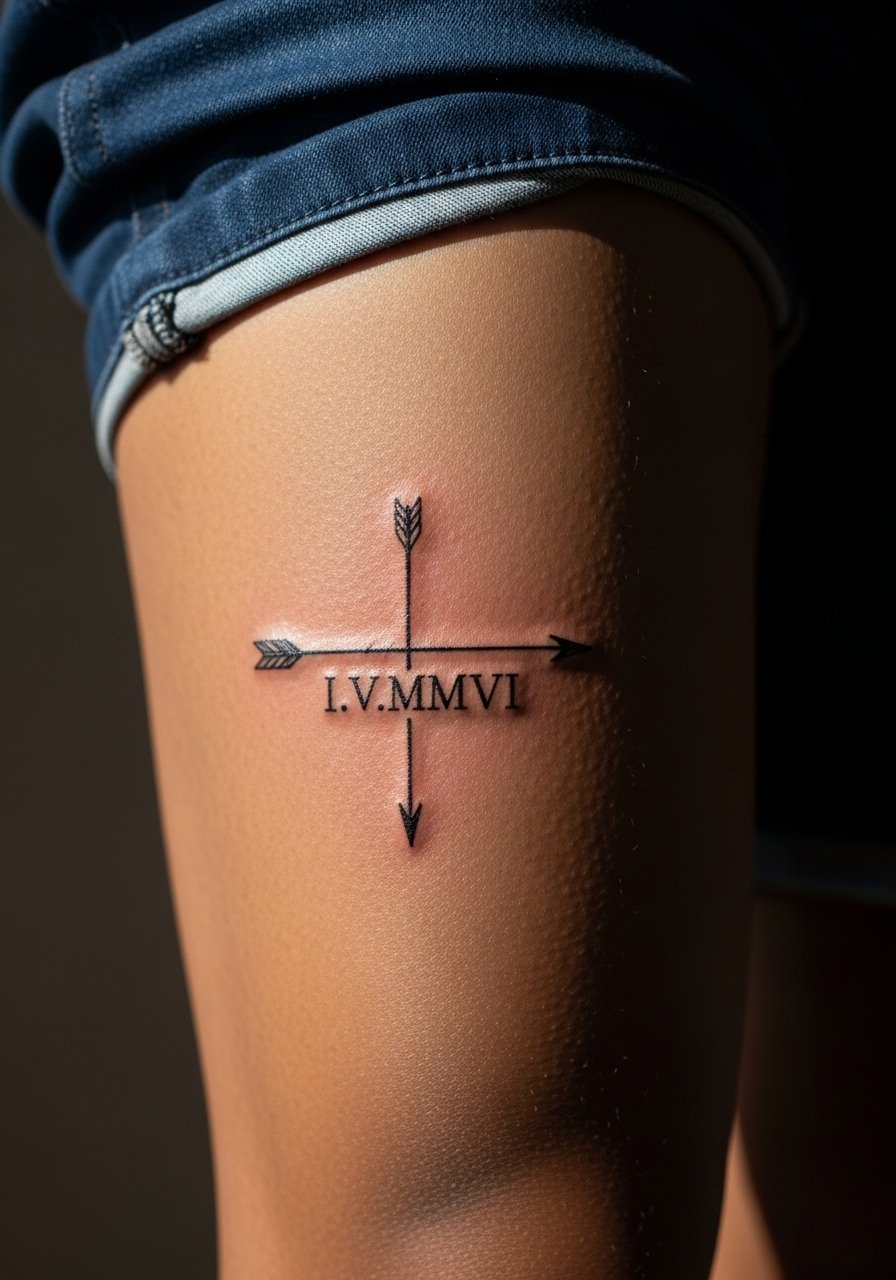
Thigh placements hide well and tolerate thin lines if sized properly. I recommend a four-inch linear composition so the arrow and numerals have negative space. The outer thigh is lower on the pain chart and often fits a single session. A frequent error is placing micro numerals where clothing rubs constantly. For showing it off, high-cut shorts or a linen skirt work well. For the appointment, wear loose shorts so the leg can be positioned comfortably.
9. Book Page with Roman Numerals on Inner Bicep
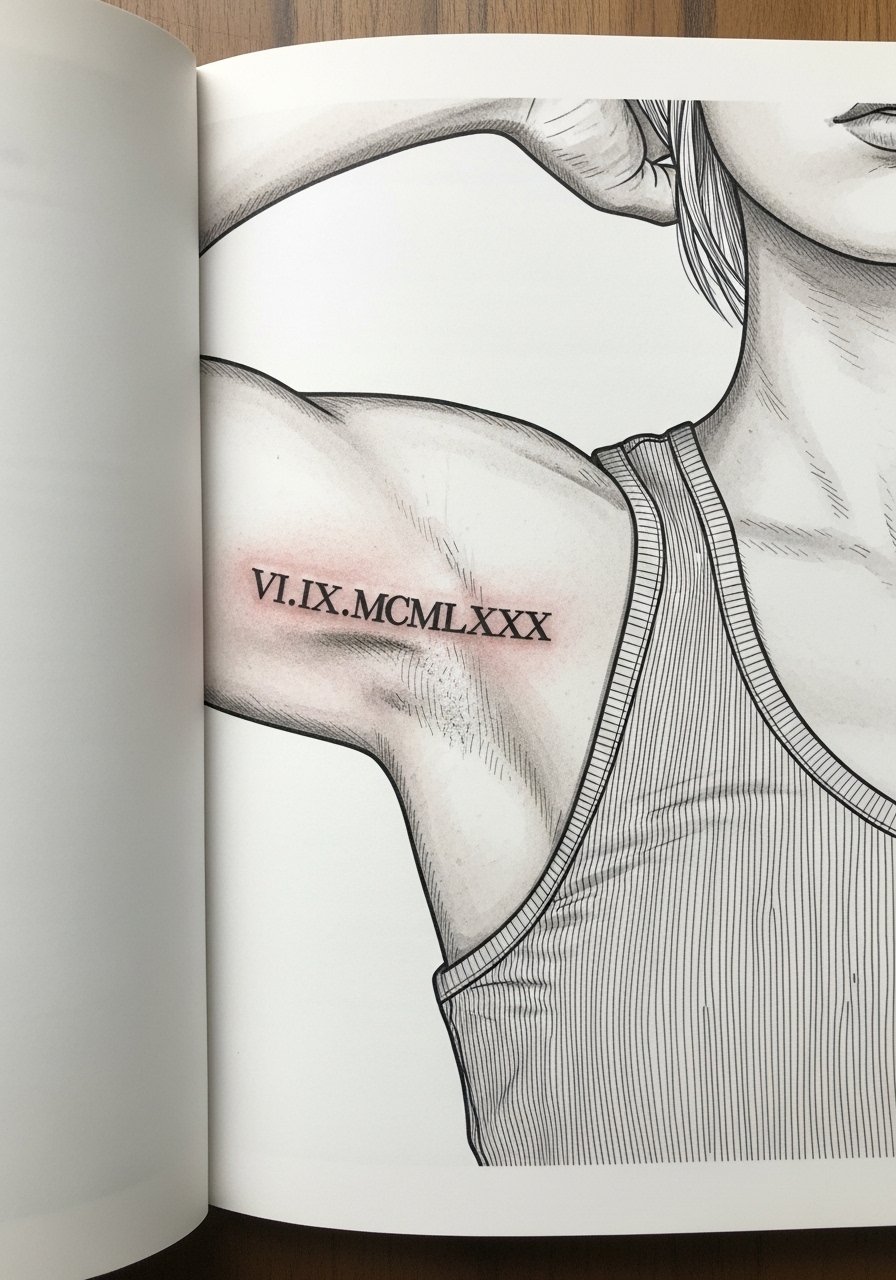
The inner bicep is a curved surface that flattens when the arm is bent. I tell clients to preview the stencil while flexing so the numerals do not distort when you move. One to two sessions cover the linework. The typical mistake is crowding several lines of text in a small page. This spot pairs nicely with rolled sleeves and a minimal leather cuff. Wear a sleeveless or loose button-down to the session so the artist has unobstructed access.
10. Anchor and Roman Numerals on Upper Chest
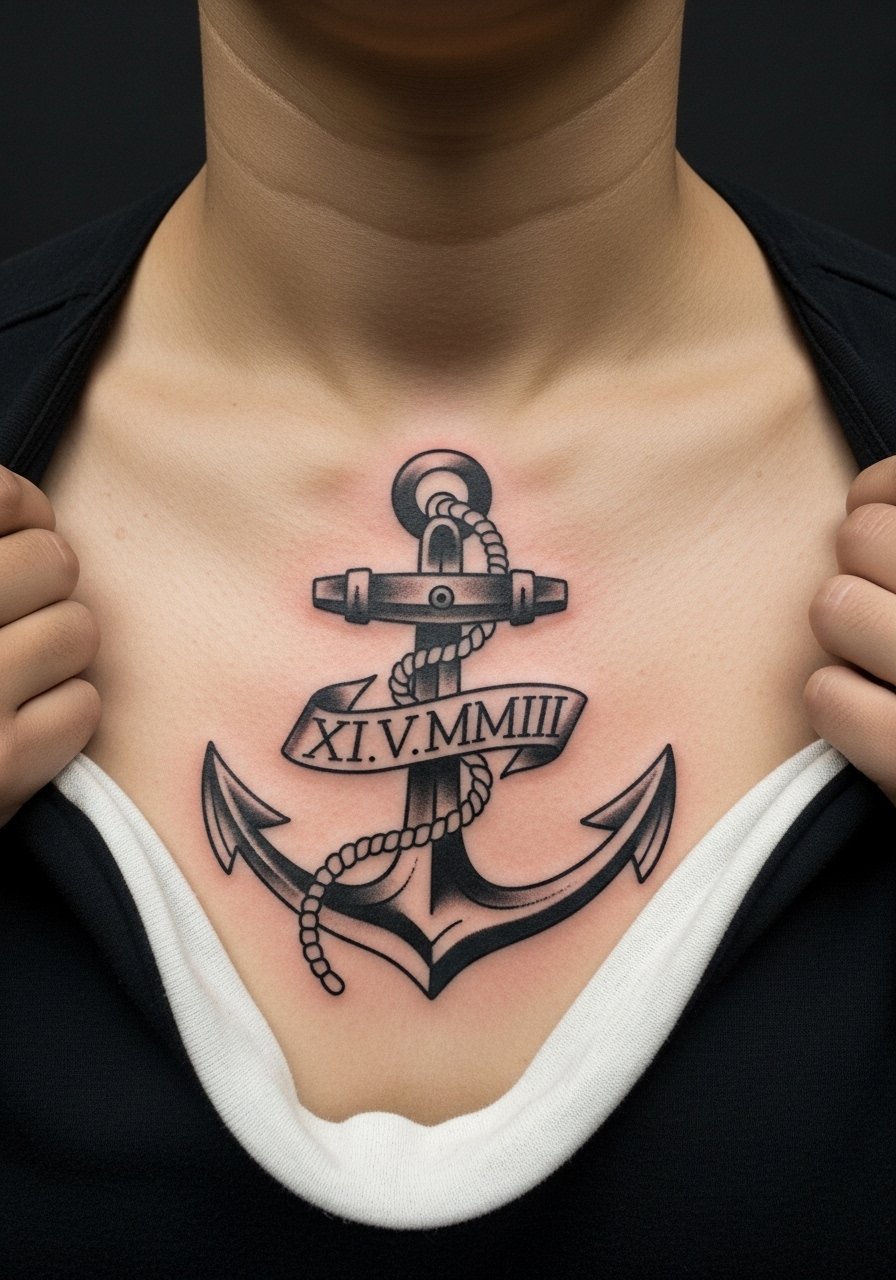
Chest placements show well under tees and swimwear. The upper pec handles bold lines and keeps numerals legible even as the skin moves with breath. I advise bold numerals with slight serif removal so they do not blur into shaded fills. Expect two sessions if you add gray wash. The common mistake is asking for tiny script on a curved pectoral. Pair this with V-neck tees for evenings out. For the appointment, wear an open-collar shirt you can pull aside for clear stencil placement.
11. Vine Wrapping Roman Numerals Along Spine
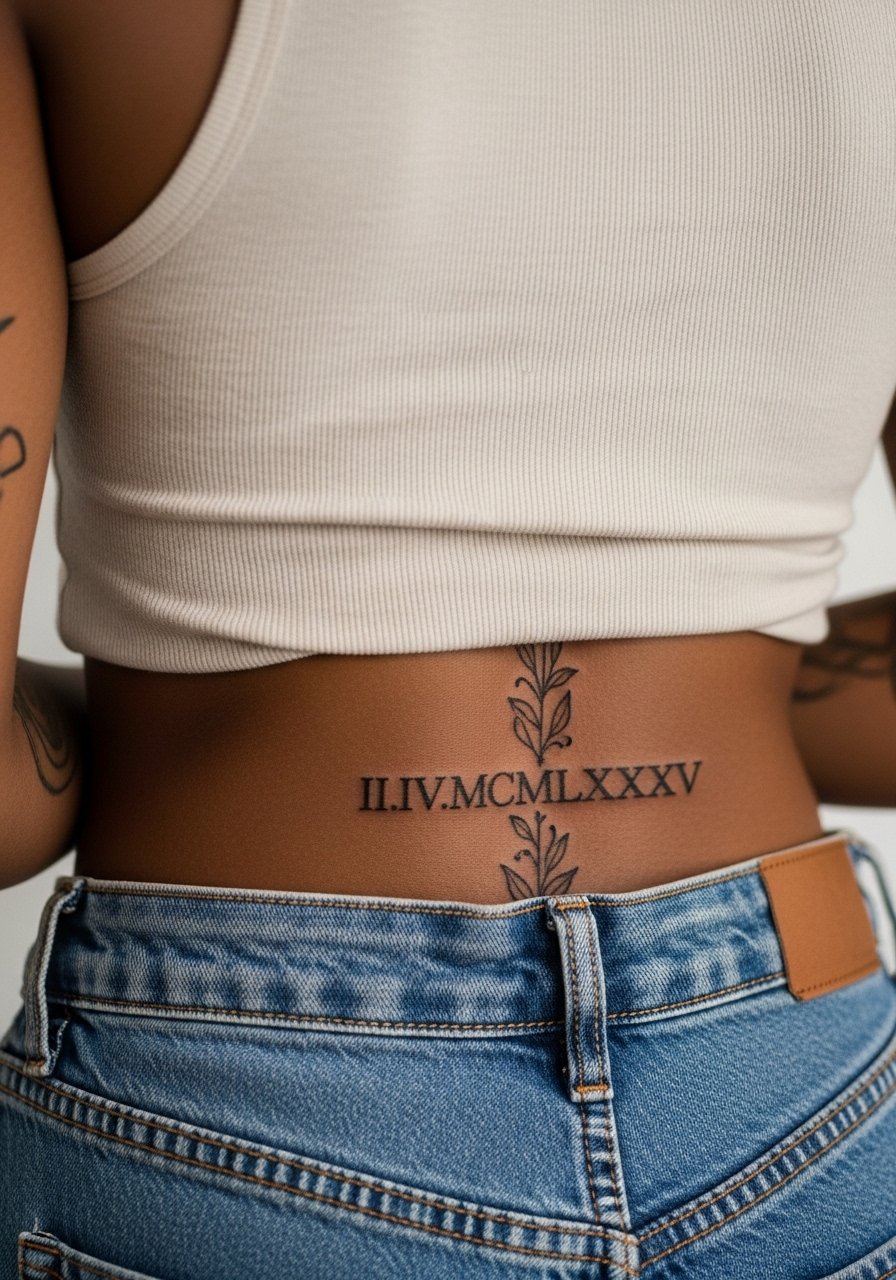
Vertical spine pieces can look elegant because the vertebrae give a straight guide for layout. Expect two sessions for a long six to eight inch design. Artists debate fine line on the spine because motion and weight change can soften very thin characters over time. Ask where the artist stands and how they space numerals. A mistake is compressing multiple dates too close together. An open-back dress or halter shows the vine nicely when you want to display it.
12. Globe with Roman Numerals on Side Neck
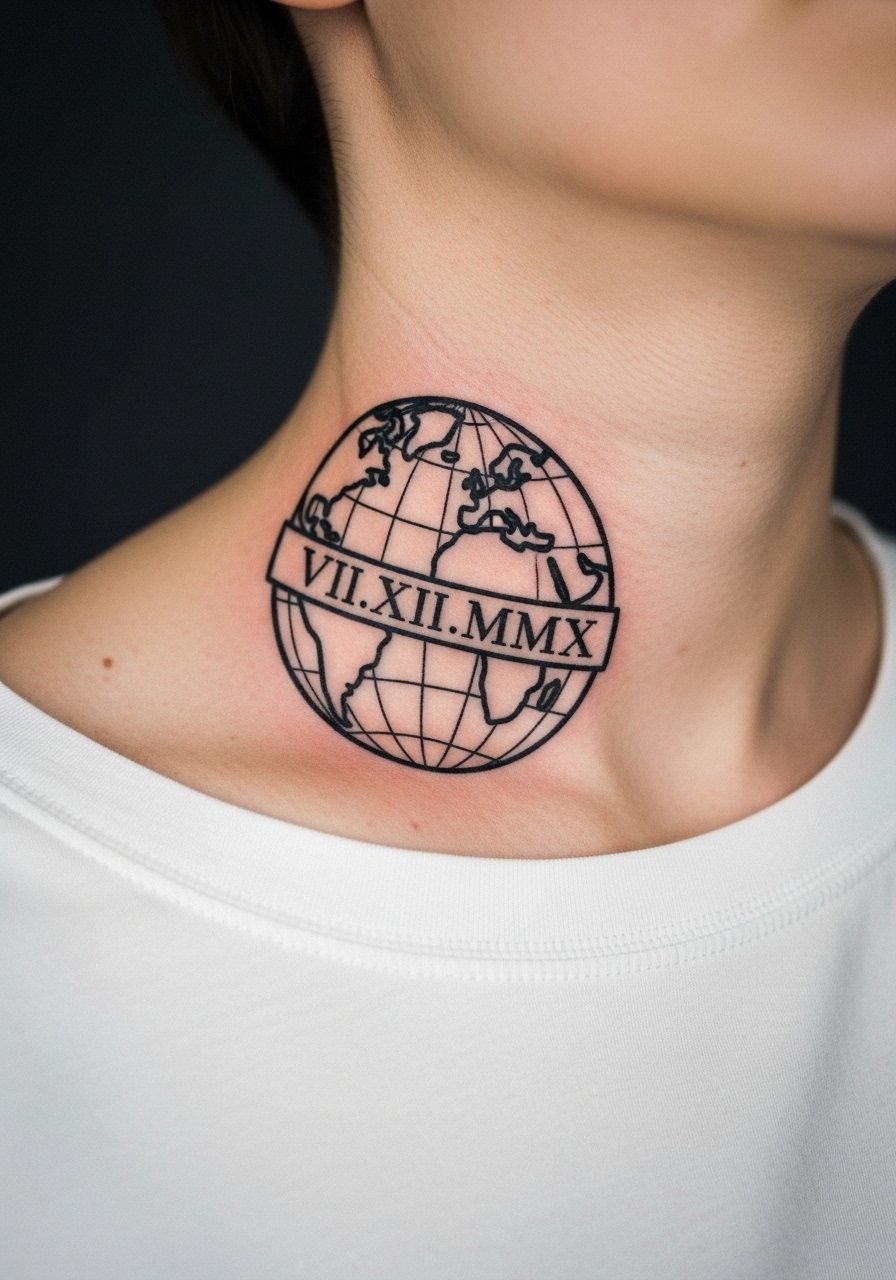
Side neck work reads strong at short distances and fares differently than arm pieces. Keep the globe small, around 2.5 inches, so it does not distort on the curve. Pain is higher on the neck and session time is usually one quick sitting. Some employers have visible tattoo policies, so think through placement. For a casual reveal, a v neck tee and hair up shows the piece without over-exposing it. Wear a high-neck shirt you can pull to the side for the session.
13. Constellation Map with Roman Numerals on Upper Shoulder
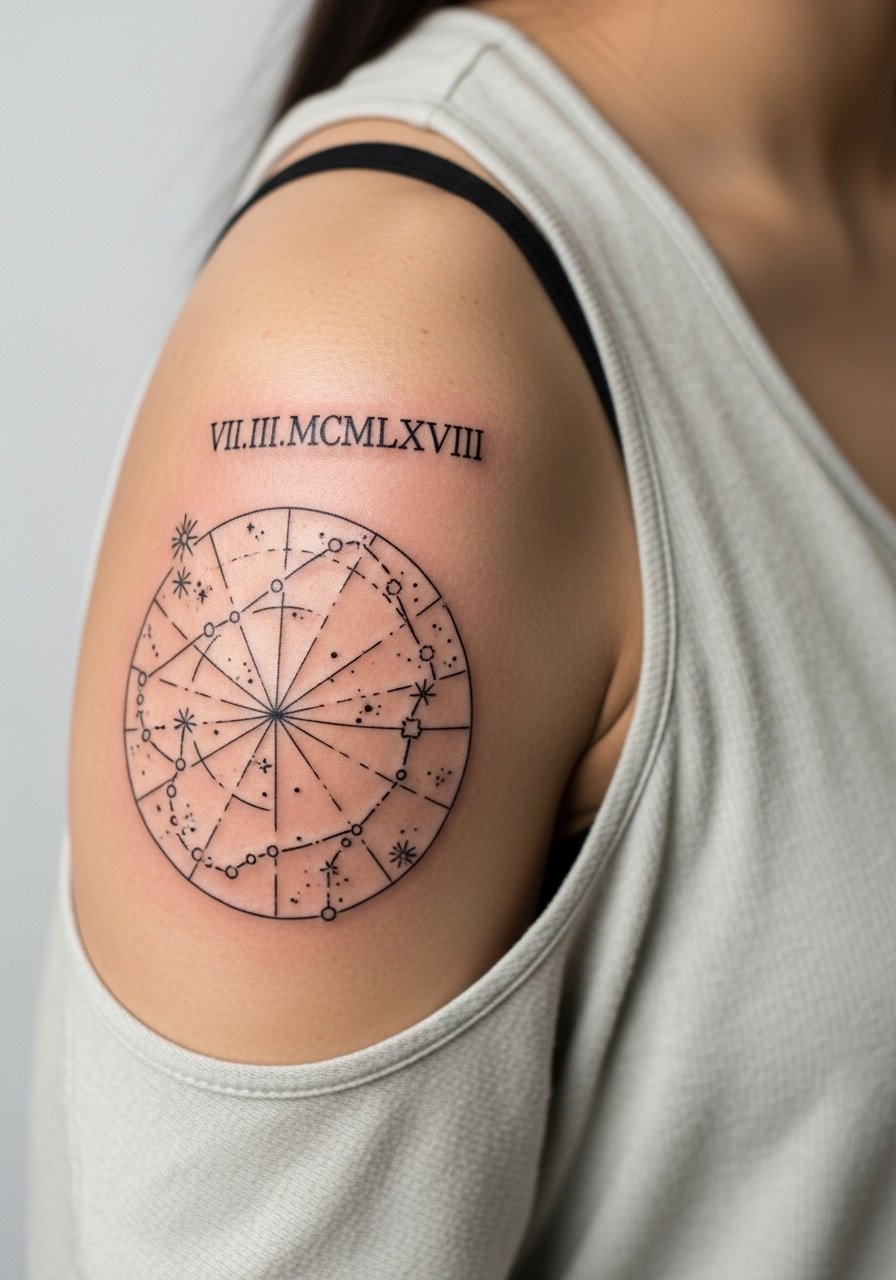
The constellation treatment weaves numerals into star patterns so they read as coordinates of memory. I like placing numerals as small anchors within star clusters to avoid losing them in dot work. One to two sessions depending on stenciling. A common mistake is overloading the shoulder with tiny stars which makes the numerals vanish. For showing off at festivals, a choker or a matte silver choker with hair up frames the upper shoulder nicely.
14. Negative Space Roman Numerals Cut Out of Black Field on Ribcage
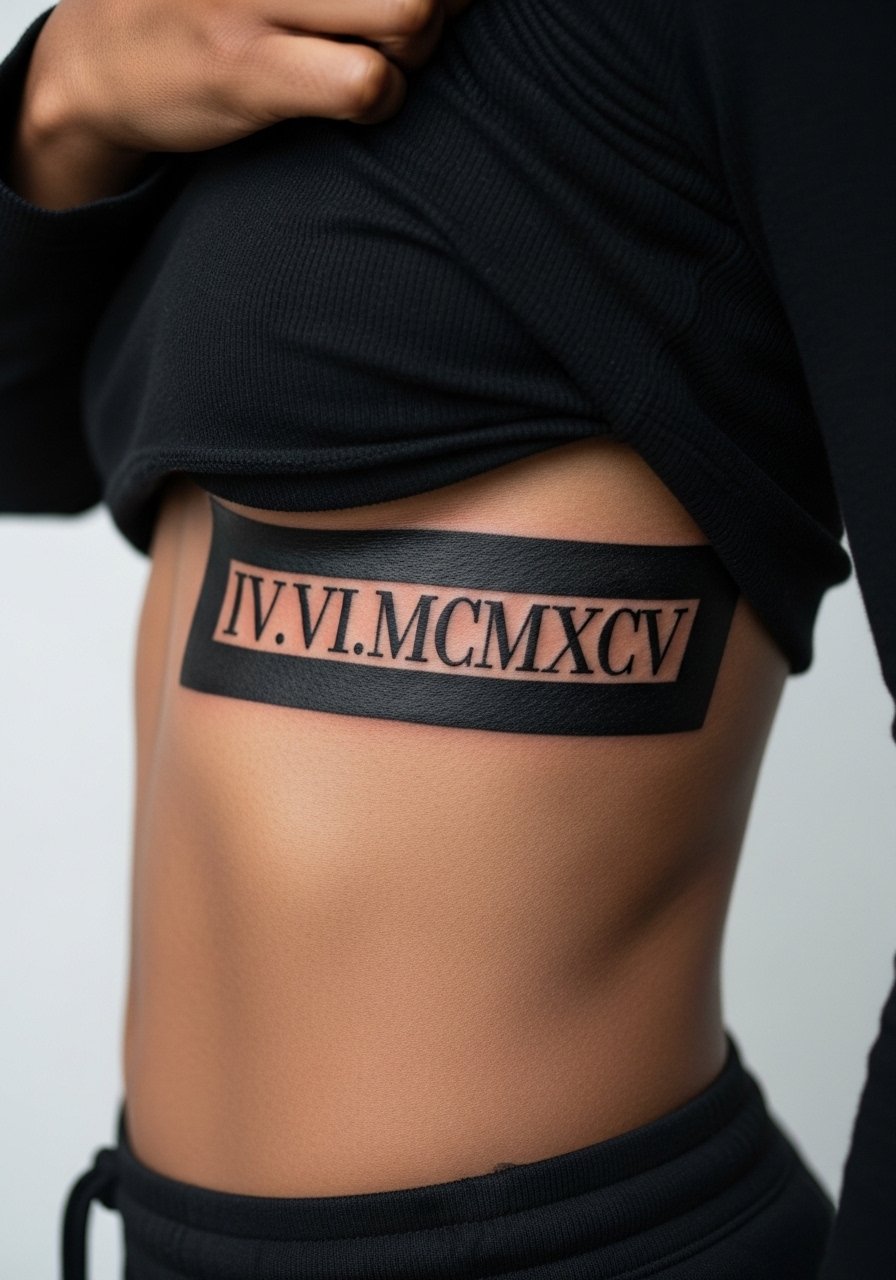
Negative space numerals solve legibility on curved rib skin by letting the black field do the work. This technique ages differently from linework and often reads longer because the contrast is strong. Expect one to two sessions and prepare for higher pain. Artists split on which heals cleaner, negative space or fine line, so ask their experience with this method. The mistake is making the cutout numerals too thin inside the black. For session wear, a fitted crop top that lifts slightly gives the artist clean access.
15. Layered Roman Numerals for Sleeve Elements
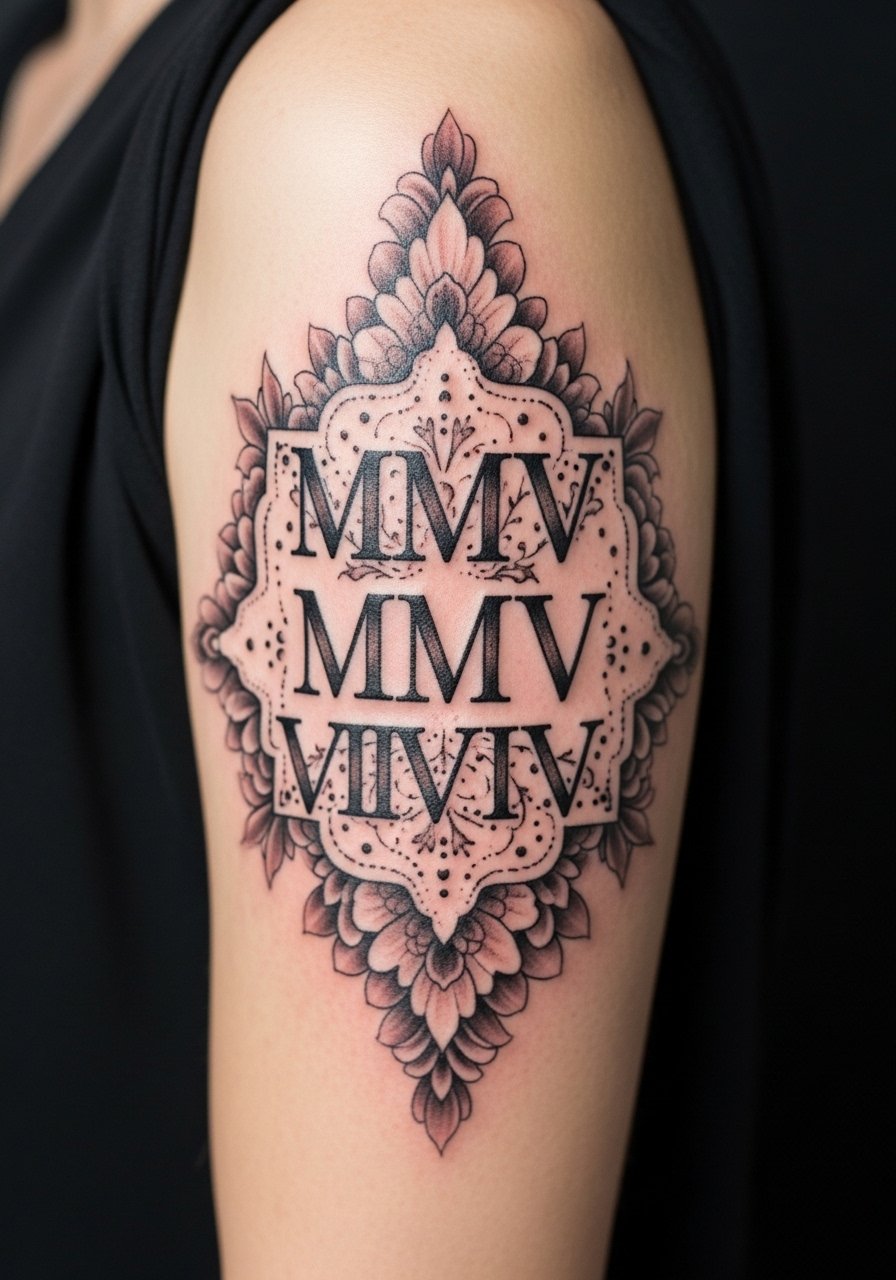
Layered numerals are useful for collectors who want several dates woven into a sleeve. I advise varying size and opacity so each date reads separately at a glance. This is a multi-session path because you are building depth. Common mistakes include choosing identical scale for all dates which makes them compete. During consultation, map placement with the artist and reserve a touch-up window. For the session, a short-sleeve button-up you can roll is convenient so the artist can work the full sleeve area.
16. Micro Roman Numerals on Fingers
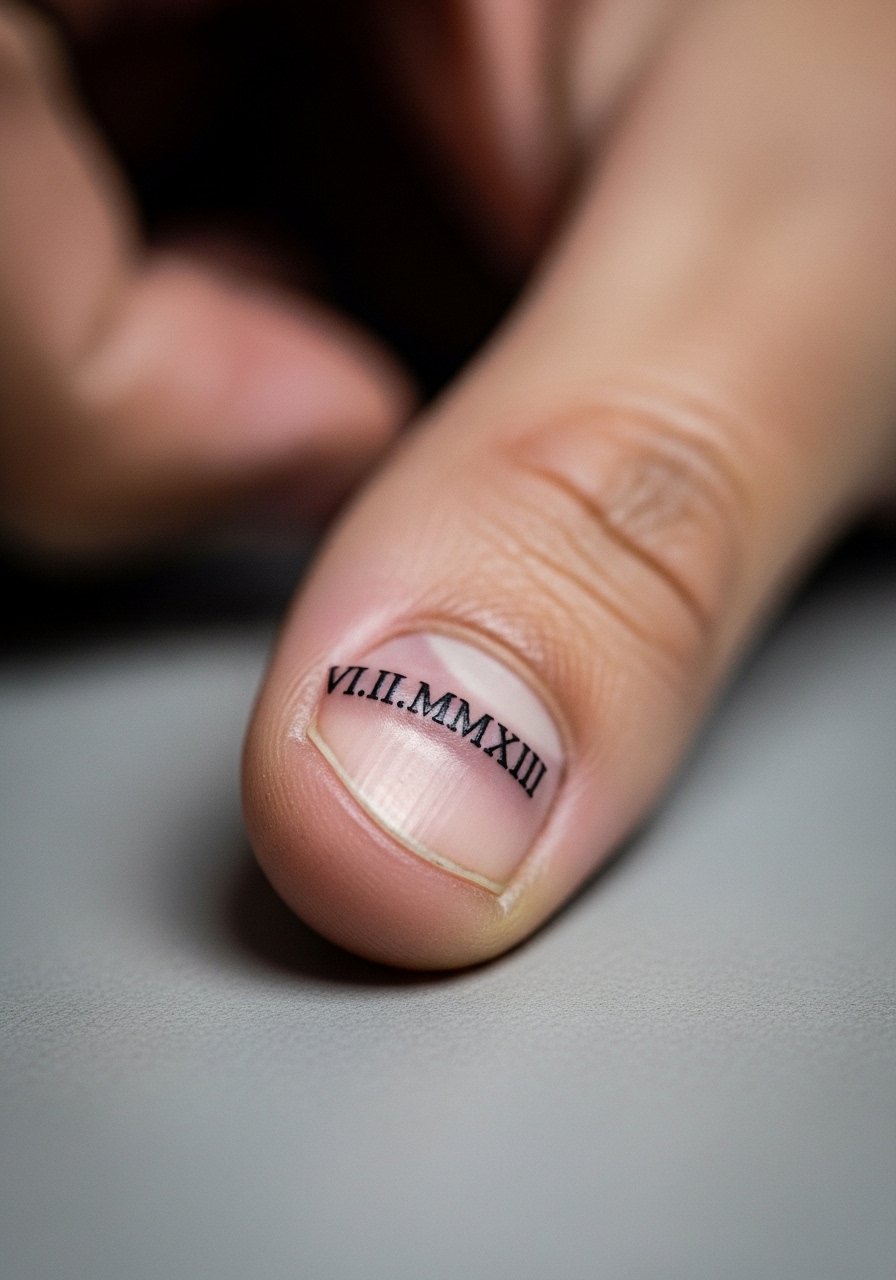
Finger numerals trend for discrete annotations but they face constant wash and friction. I usually tell people these need frequent touch-ups or to consider a slightly bolder stroke than they expect. Pain is sharp and the session is brief. The most common regret is picking finger size that does not survive daily hand washing. If you want a subtle reveal, expect upkeep. Pairing with thin stacking rings helps the finger piece read as intentional jewelry rather than a faded scratch.
17. Geometric Mandala with Roman Numerals at Nape
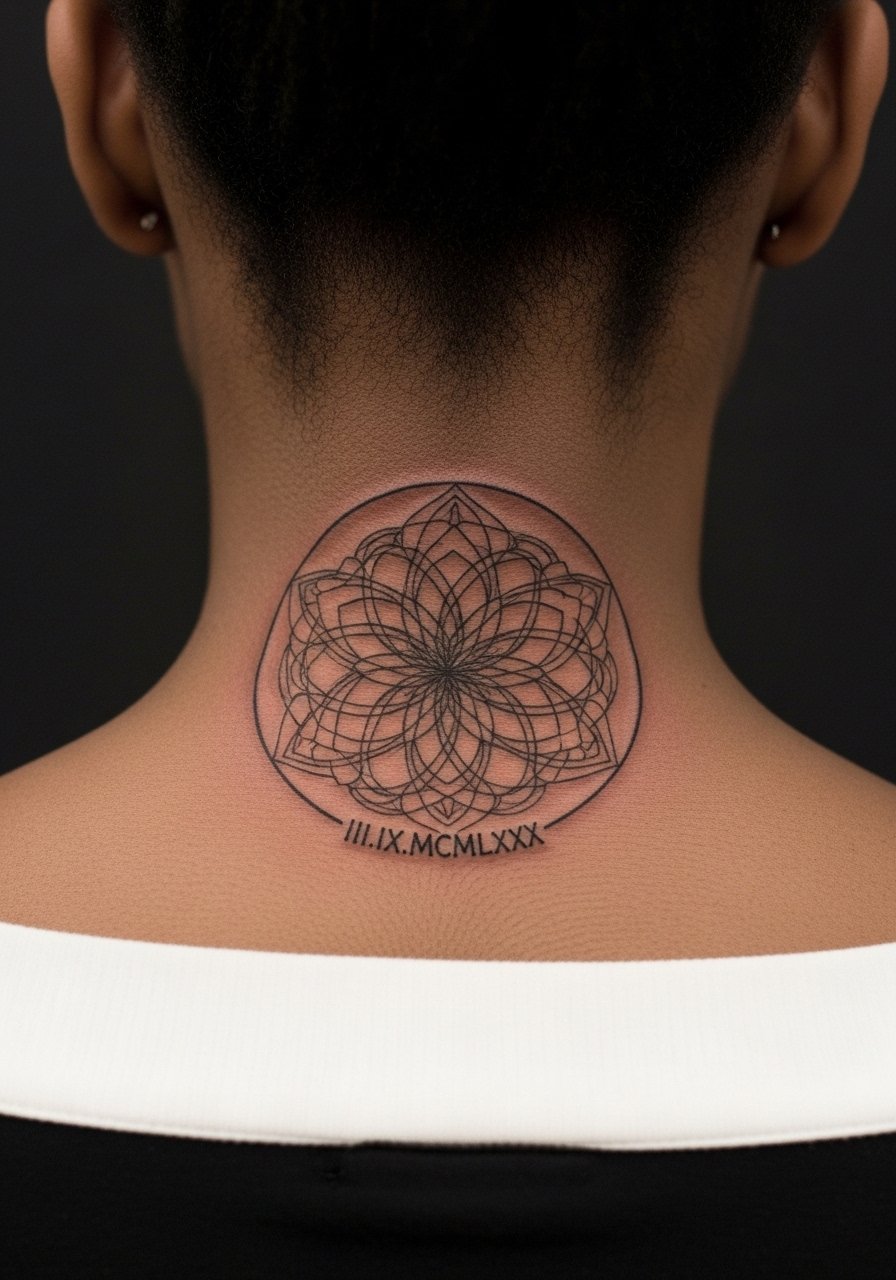
Mandala numerals at the nape combine symmetry with a small date anchor. The back of the neck heals well when the stencil is set with clear spacing. I advise keeping the numerals inside the mandala's negative band so they retain legibility. Sessions are usually one sitting. A mistake is cramming ornate numerals into a dense mandala. For reveal looks, wear collared shirts you can pull aside and a visible choker to frame the area.
18. Coordinates and Roman Numerals on Inner Forearm
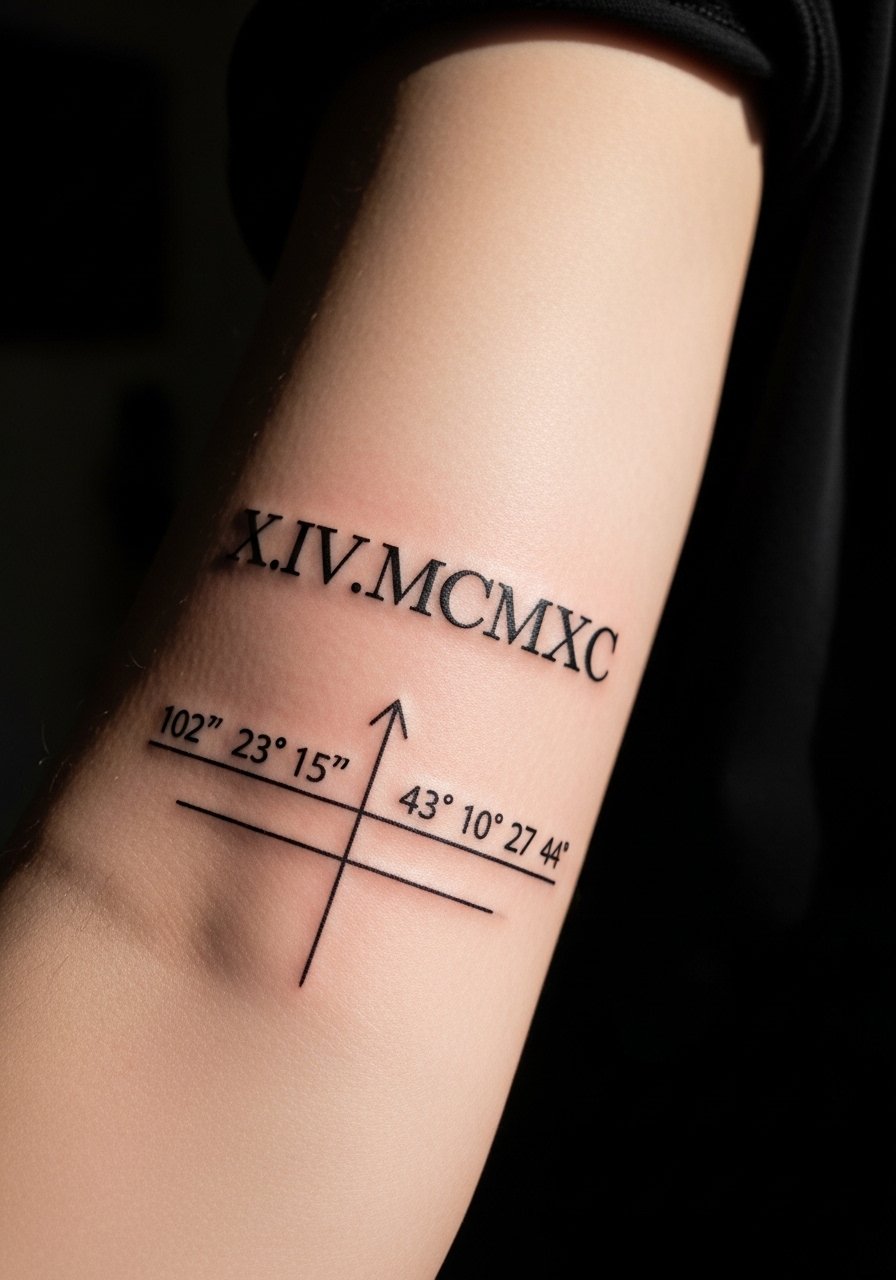
Inner forearm work is forgiving and the surface takes fine detail well if sized right. Combining coordinates in Roman numerals gives a crisp, almost architectural feel. I suggest testing the stencil across wrist flex to confirm no distortion. Expect one session for clean linework. A common error is making the numerals too small relative to surrounding script. For outfits, rolling sleeves and pairing with a minimal leather cuff keeps attention on the forearm piece. Wear a short-sleeve button-up to the appointment.
19. Locket Illustration with Roman Numerals on Sternum
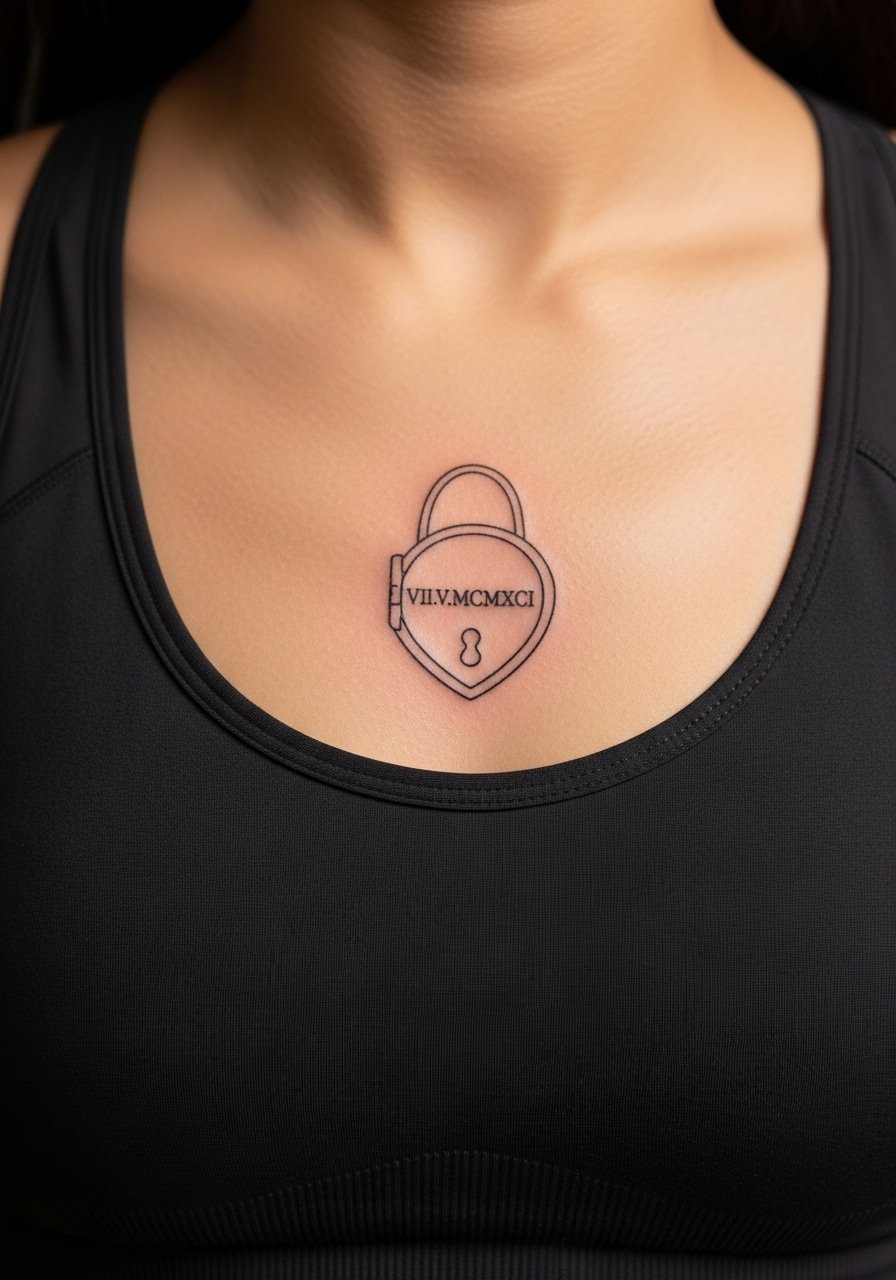
Sternum pieces need clear stenciling and a steady hand from the artist. This area is sensitive and can take longer to finish than expected. Keep numerals compact and inside a solid locket shape to protect edges from stretching. The typical mistake is asking for ultra-fine filigree that the sternum will not hold over time. For sessions, a fitted sports bra or bandeau is the safest option and helps the artist position the stencil accurately.
20. Roman Numeral Band with Barbed Detail Around Upper Arm
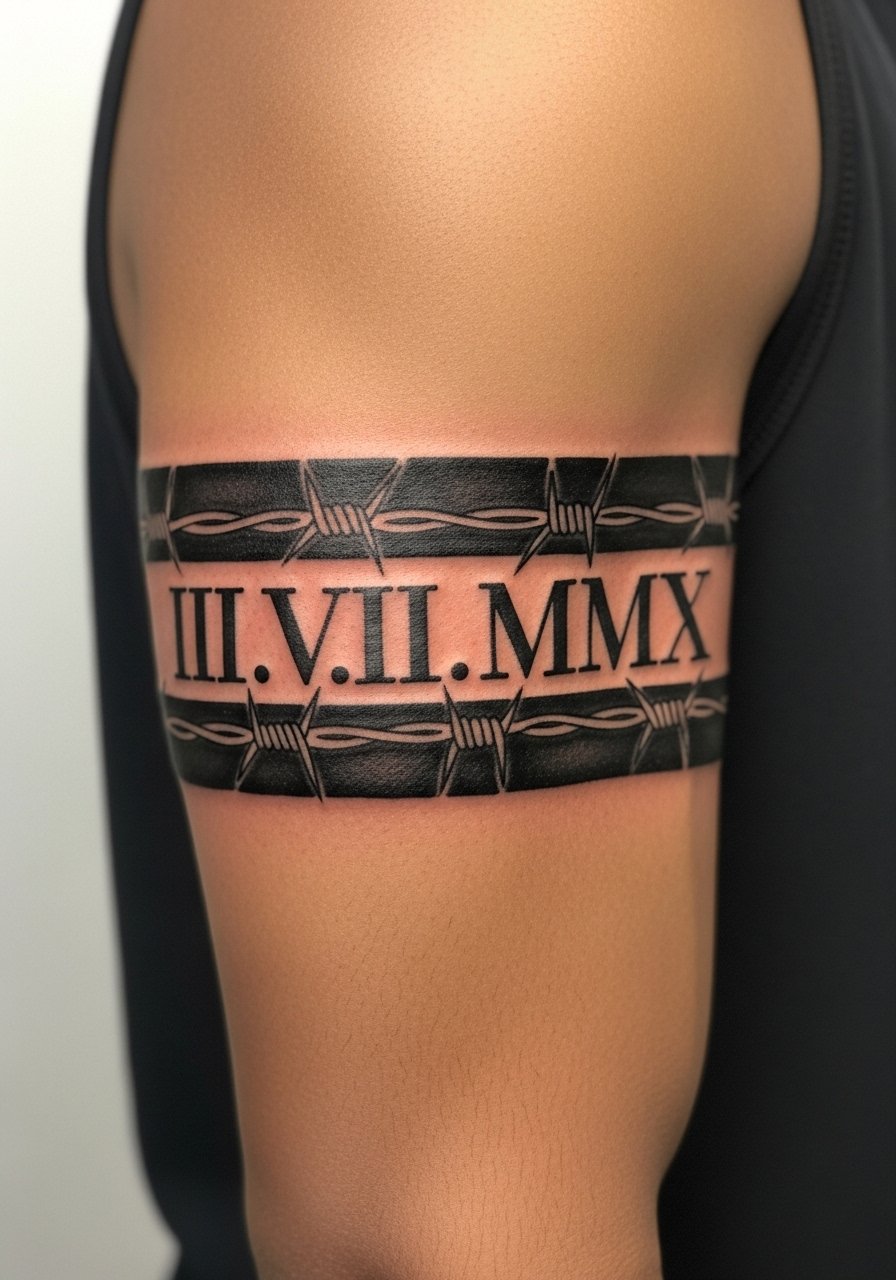
Arm bands read boldly and age predictably because the skin there moves less. I suggest thicker numerals for long-term legibility and a small gap between decorative elements and the characters. Expect a single session if you keep the band narrow. A common error is stacking too many embellishments into the band which blurs the numerals. For style, short sleeves or rolled cuffs let the band show without competing jewelry. Wear a loose T-shirt you can pull aside for the artist during the session.
21. Tiny Roman Numeral Behind the Ear
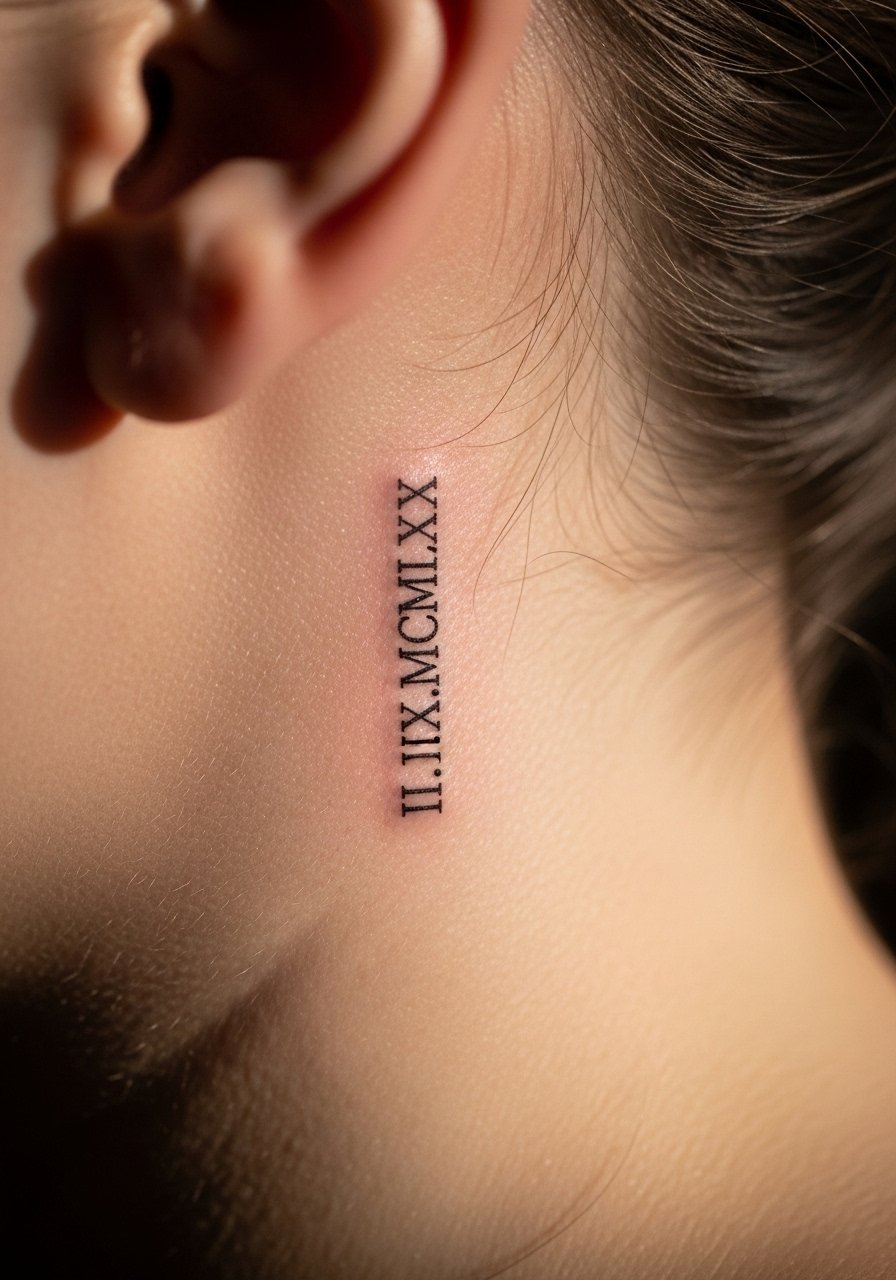
Behind the ear gives a whisper reveal in photos and at shows. The area requires precision and a small stencil test below the hairline so the numbers sit on flat skin. Pain is moderate and sessions are quick. Mistakes happen when artists place the numerals too close to the hairline which distorts visibility. For a subtle look, keep hair up and wear a simple stud earring. Mention your plan for visibility during consultation so the artist knows how much to enlarge the numerals.
22. Roman Numerals Carved into Column Motif on Upper Chest
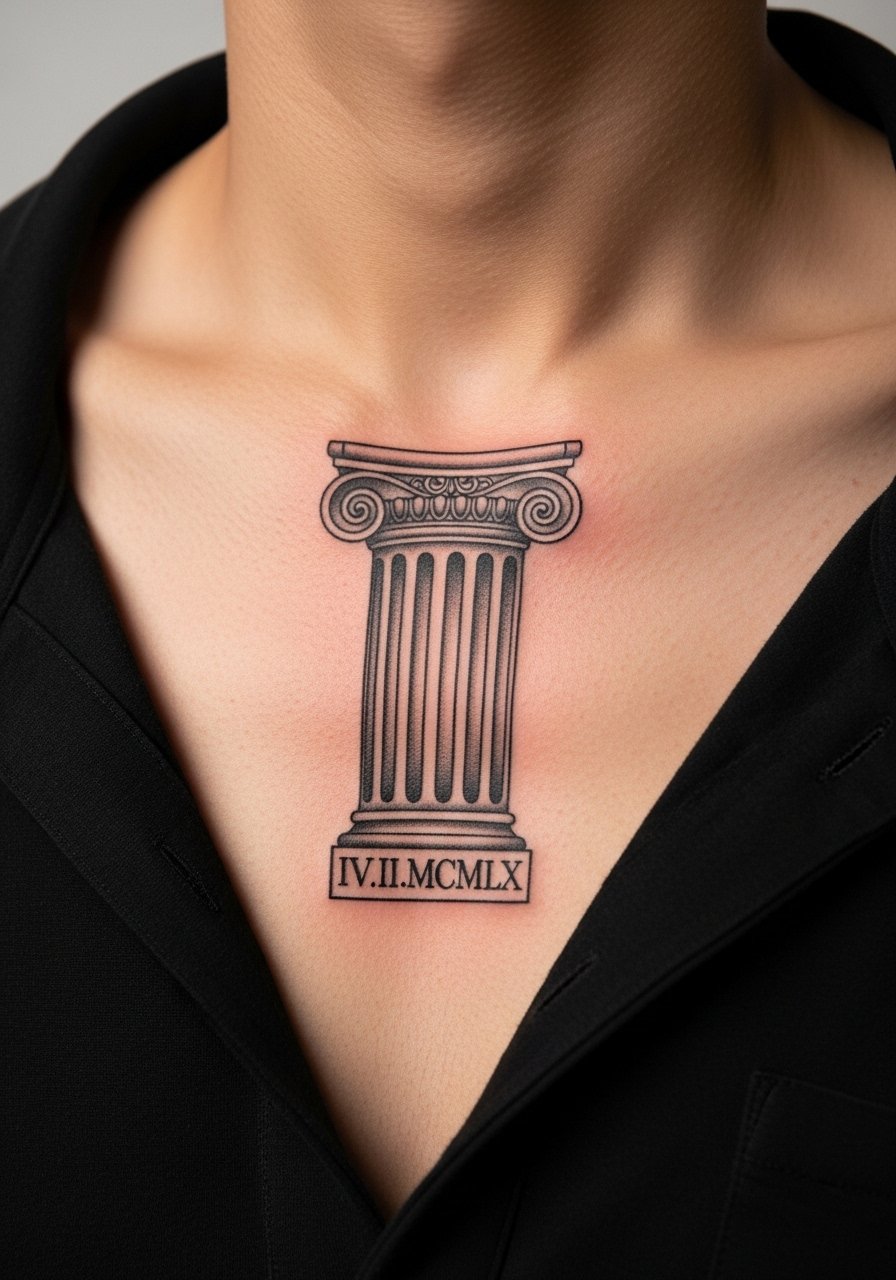
Architectural motifs give numerals a structural home and help small characters read like part of the design. The upper chest tolerates bolder numerals well. I advise giving the numerals a carved effect with shallow shading so they stay readable. Common mistakes include overly ornate serifs that blur in shaded areas. For outfits, an open-collar shirt or V-neck keeps the motif visible and balanced. For the session, a shirt that pulls aside but remains comfortable is ideal.
23. Wave Motif with Roman Numerals at Ankle
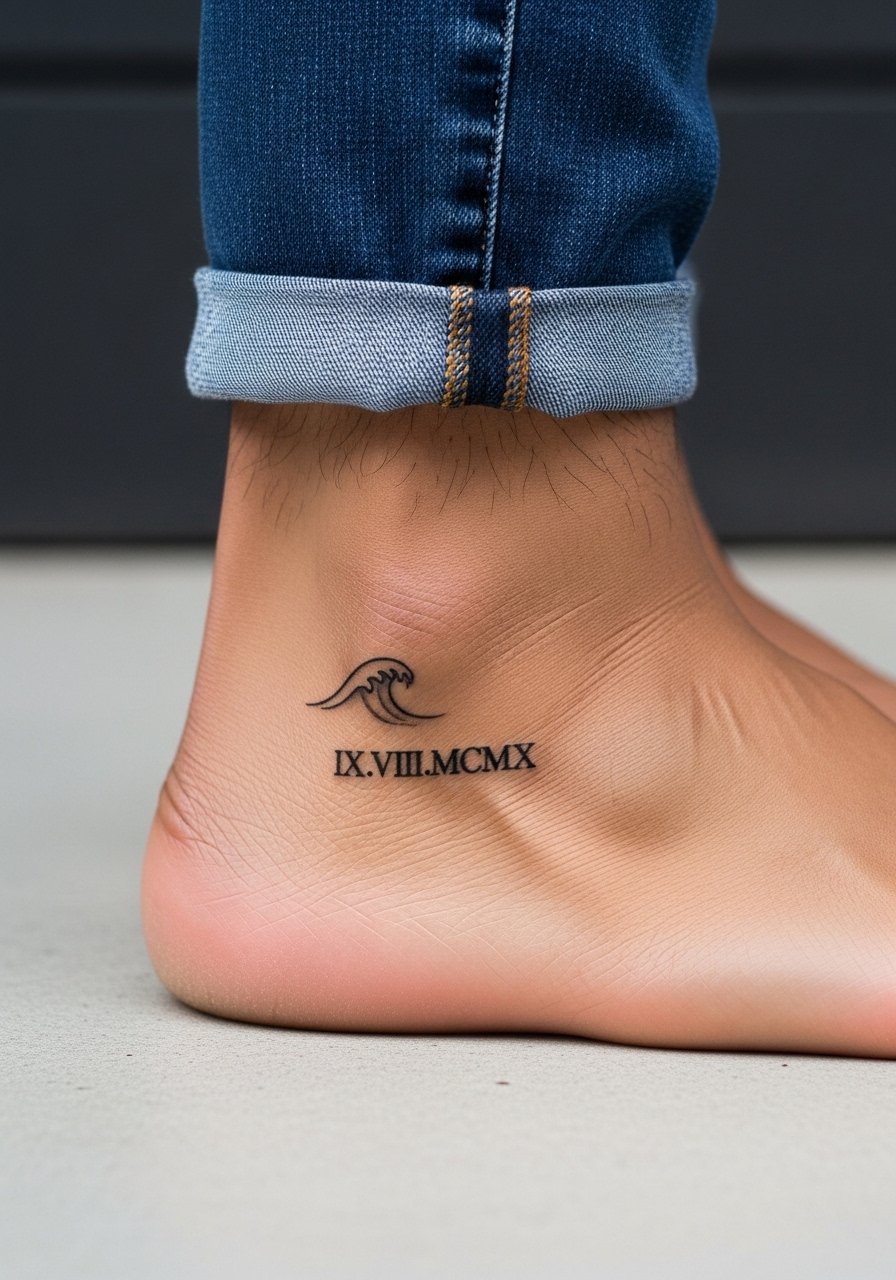
Wave motifs pair nicely with small numerals when the layout follows the ankle's curve. Keep the numerals on the outer-facing side so they photograph cleanly. This placement faces friction, so choose slightly heavier linework. People often request too-small characters that weather out in months. For seasonal showing, cuffed jeans or a midi skirt expose the ankle. Bring shorts to the appointment so the artist can position the limb without tight fabric.
24. Stone Texture Roman Numerals on Calf
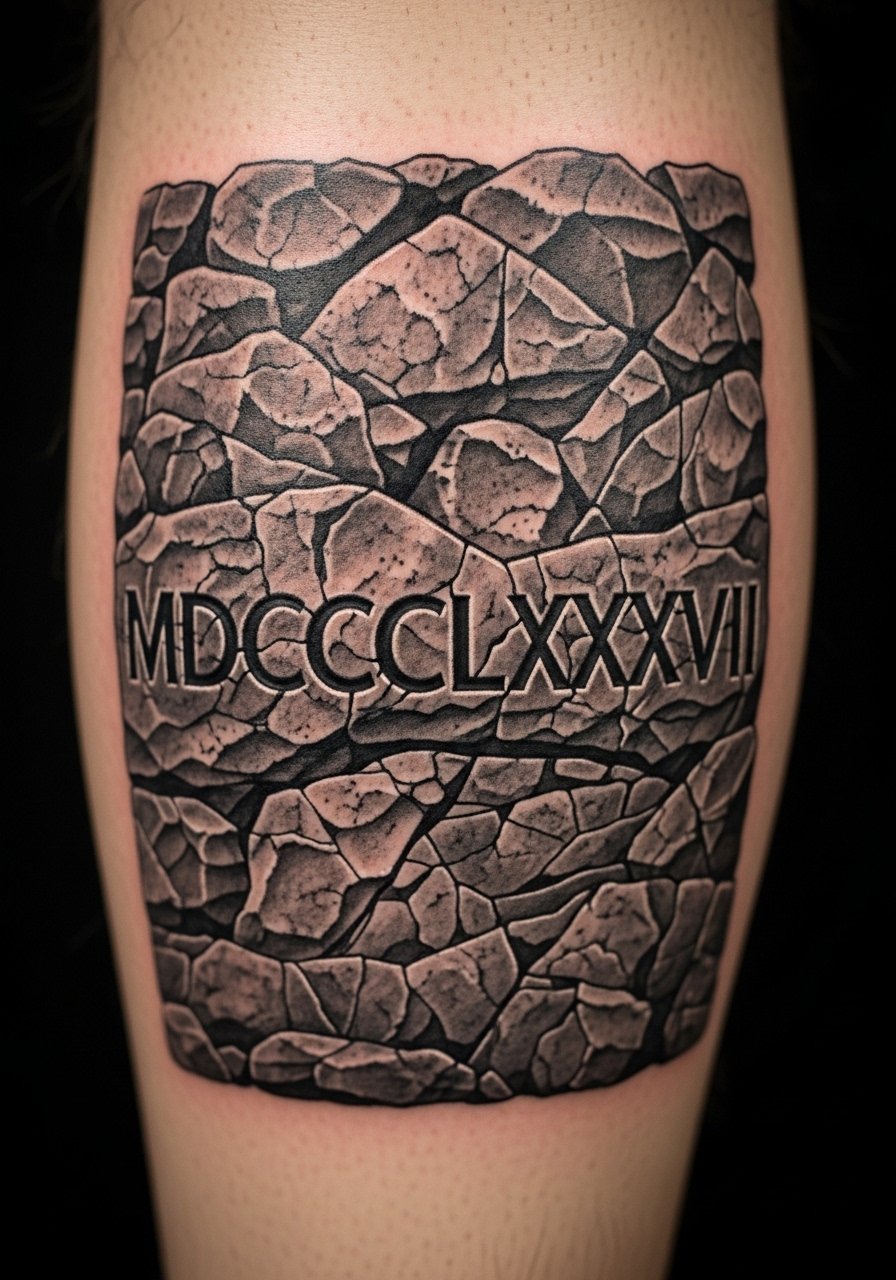
Textured stone gives numerals an engraved feel that reads well as the piece ages because shading supports the characters. This is a multi-pass session that can span two visits. A common error is trying to micro-detail the engraving too small. For display, tall boots or cropped pants frame the calf. Wear loose pants you can roll up for the session so the area is tension-free.
25. Adaptive Design: Roman Numerals on Prosthetic or Scar Area
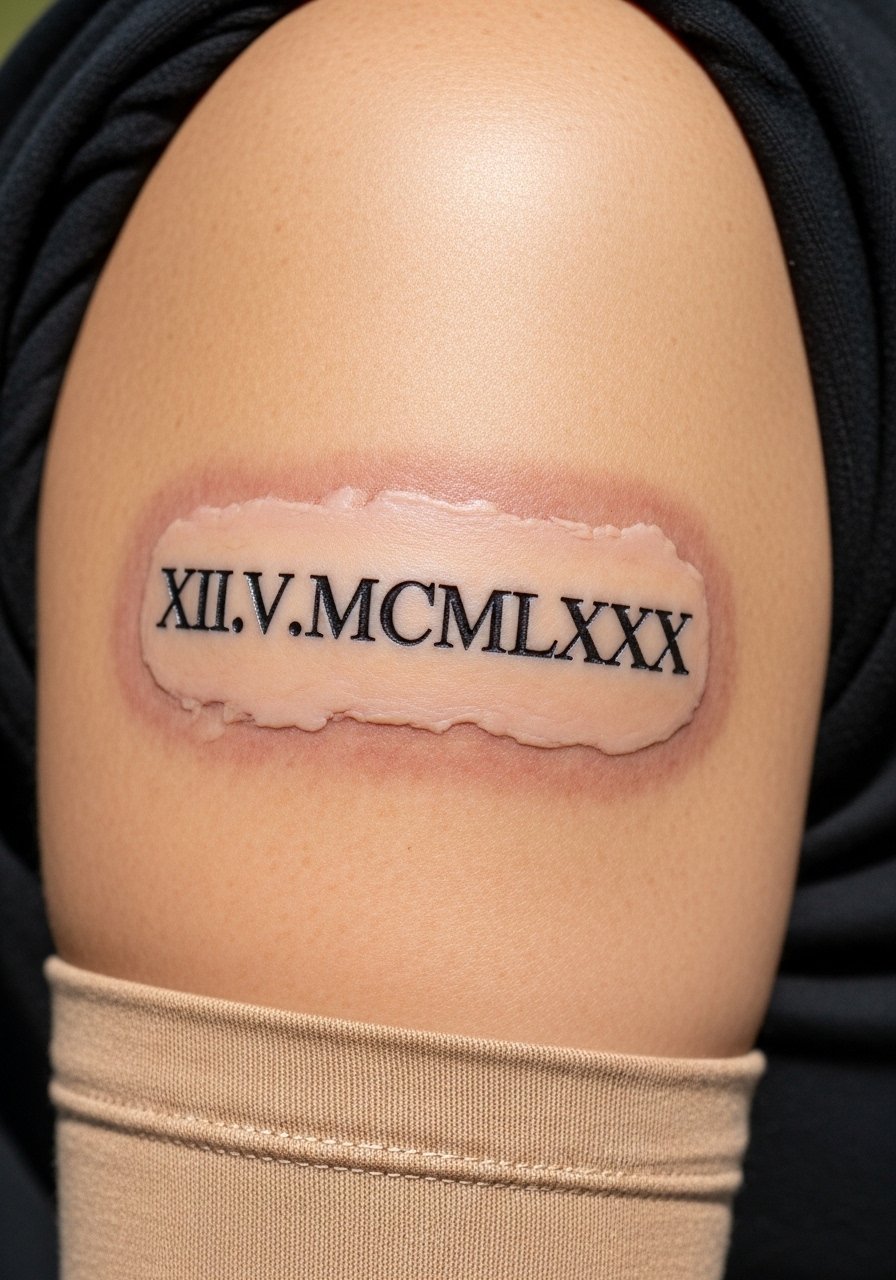
Adaptive designs require a consult that addresses material and texture differences. When working over scars or prosthetics, the numerals may need bolder outlines or negative space to read clearly. The session planning is more about testing stencils and healing strategies than speed. Mistakes include assuming scar tissue will accept ink like normal skin. Use discovery pathways such as community forums or convention spots to find artists with adaptive experience and discuss touch-up expectations in advance.
26. Vertical Roman Numerals from Collarbone to Shoulder
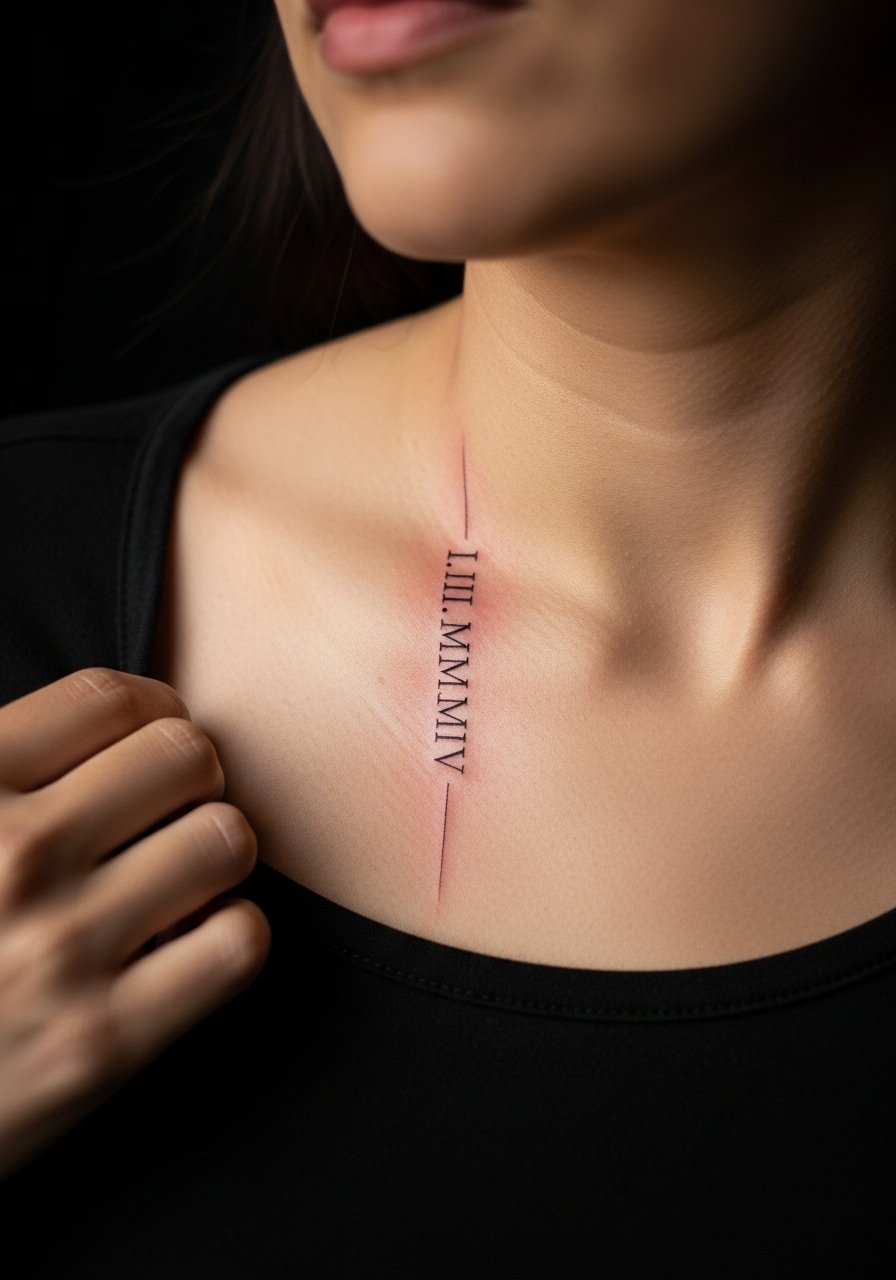
A vertical column from collarbone to shoulder reads architectural and suits elongated numerals. I recommend spacing each character with small gaps so movement does not collapse them visually. Pain is moderate and a single session commonly covers this scale. People often ask for tiny tight characters which do not survive the stretch across shoulder motion. For style, off-shoulder tops or halters highlight the vertical line. Wear a strapless bra or loose tank for the session so the stencil sits cleanly.
27. Layered Small Numerals Along Rib Curve for Multiple Dates
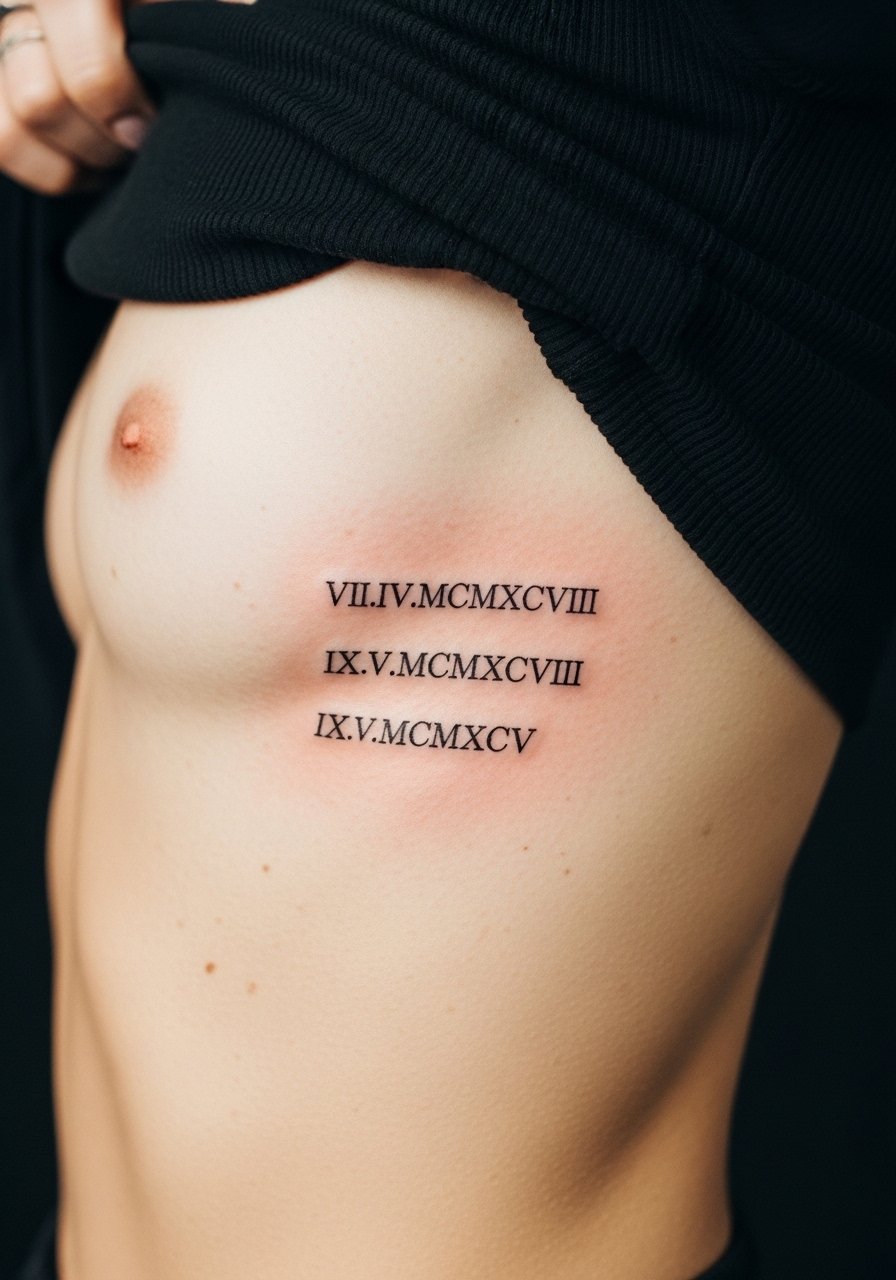
Stacking small numerals along the rib reads like a visual timeline, but the curve demands careful spacing. I suggest alternating sizes and using slight negative space separators so each date remains identifiable as the skin shifts. Expect two sessions and a touch-up window if you want crisp long-term results. The usual misstep is compressing all dates too close together. For session wear, a sports bra and loose shorts let the artist map the rib curve without obstruction.
Frequently Asked Questions
Q: How do fine line Roman numerals age compared with bolder blackwork on wrists and ankles?
A: Fine line numerals can look crisp for the first year but often need touch-ups by year two or three on high-motion areas like wrists. Bolder blackwork tends to soften into a readable shape later. If longevity matters, ask your artist to increase line weight slightly and plan a six-week touch-up window.
Q: Should I pick negative space numerals or outlined numerals for a ribcage piece?
A: Negative space cutouts in a black field hold contrast well on curves and can read longer than ultra-thin outlines. The trade-off is that large black fields are more visible during the first weeks of healing. Discuss both camps with your artist and request a small stencil preview before inking.
Q: What should I wear to a collarbone or sternum appointment to make stenciling easier?
A: Choose a strapless bralette or a wide-neck top you can pull aside. That gives the artist clear access without exposing more skin than necessary and helps place the stencil accurately.
Q: Are finger and hand numerals worth it if I want low-maintenance ink?
A: Finger and hand numerals need frequent touch-ups because of washing and friction. They are high-visibility and low longevity compared with forearm or chest placements. If you prefer lower maintenance, consider moving the numeral slightly inward where daily wear is gentler.
Q: How do I handle disputes about Saniderm versus dry healing for small numerals?
A: Artists and collectors split into two camps. One prefers protective film to reduce scabbing and mess. The other favors dry healing to avoid ink pooling in fine lines. Ask the artist which method they have consistent results with for tiny numerals and follow that workflow for the best chance of a crisp outcome.