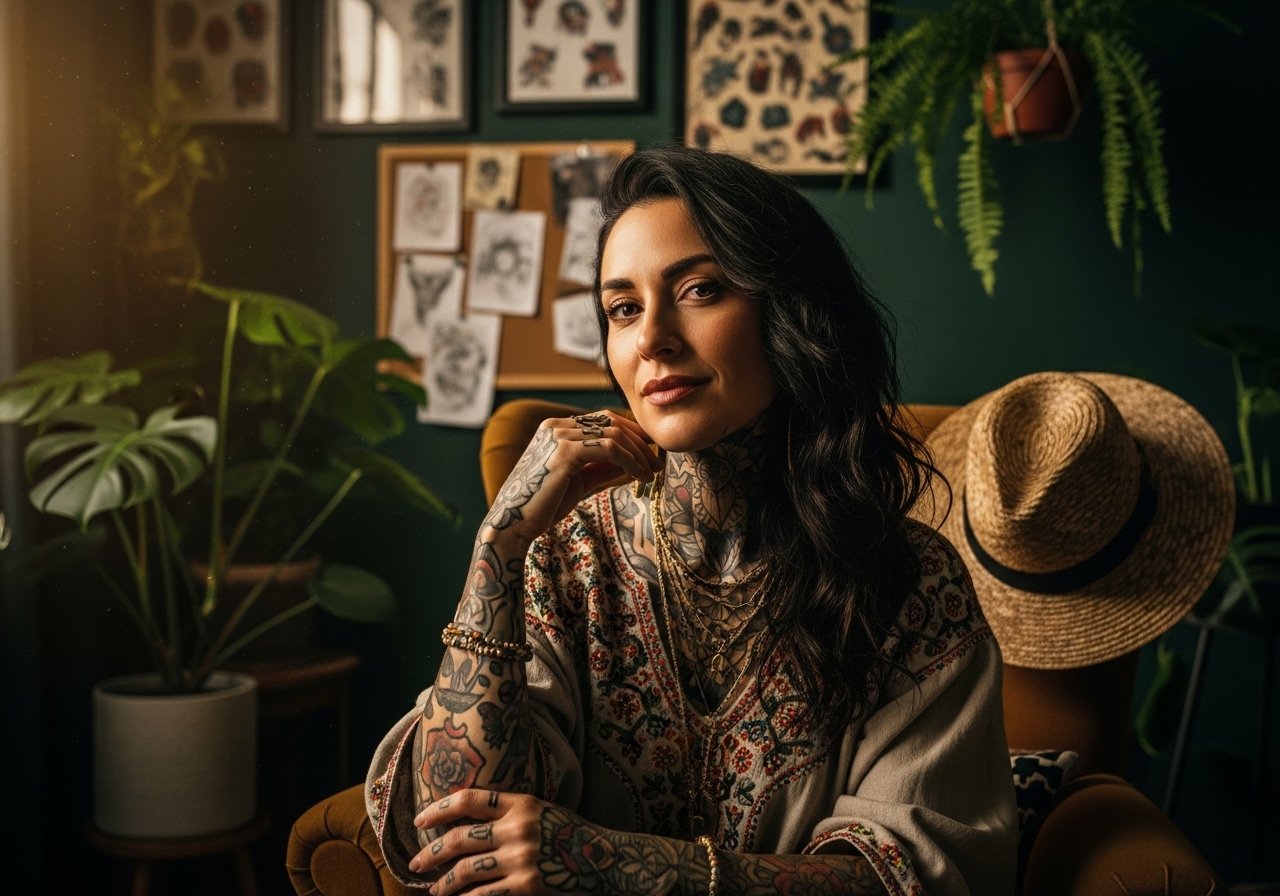
Fine line trends dominate feeds, but what holds up on real skin and in real life is a different story. Fine line wings fade on olive tones, tiny wrist pieces often cost more than people expect, and forearm ink can stretch after weight shifts. I looked for dainty dark angel options that feel personal and still look crisp after a few years, and the ideas below start with small, wearable choices and build toward bolder, aging-friendly alternatives.
1. Minimalist Dark Angel Portrait on Inner Forearm
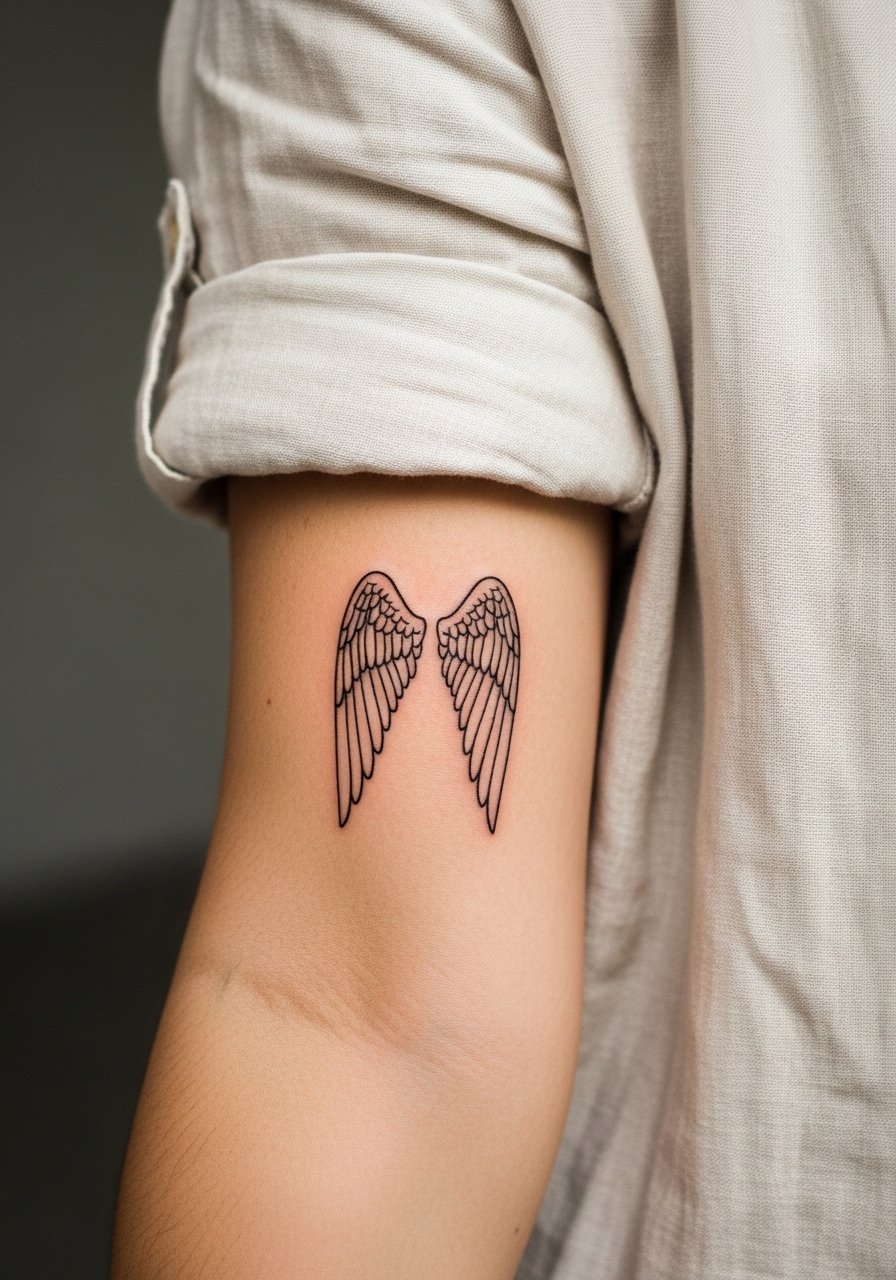
I see this placement every season because the inner forearm offers a flat canvas that keeps tiny portraits readable. Fair warning, forearm skin moves with muscle and weight change, so ask your artist to keep facial detail simple and focus on clean linework and light black and gray shading. The session feels gentle, usually a single one-hour appointment. Expect a touch-up at 12 to 18 months for fine line shading. During the appointment wear a loose button-up shirt you can roll back so the artist has full access.
2. Tiny Dark Angel Head Behind the Ear
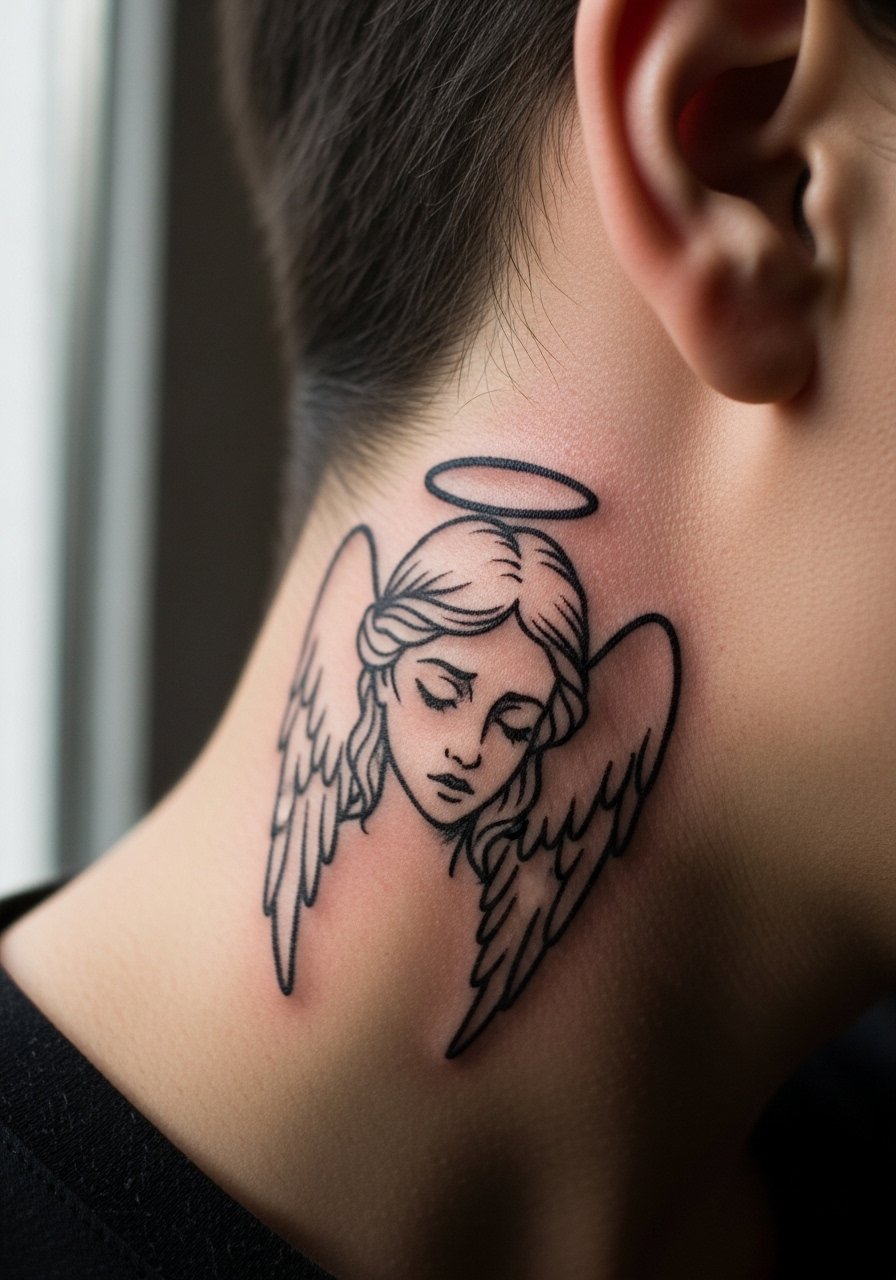
Behind-the-ear pieces are discreet and pain is usually low, but they require a practiced hand. Tell the artist you want clear, single-line contours rather than dense shading to avoid blotching on healed photos. Expect a short session under 30 minutes and light itching during healing. Because this spot can be covered by hair, it is good for professional settings. If you wear hair up often, mention that so the artist places the design where it reads well when exposed. For sensitive placements like this, choose an artist who shows healed photos in portfolios.
3. Dainty Dark Angel Wrist Portrait with Folded Wings
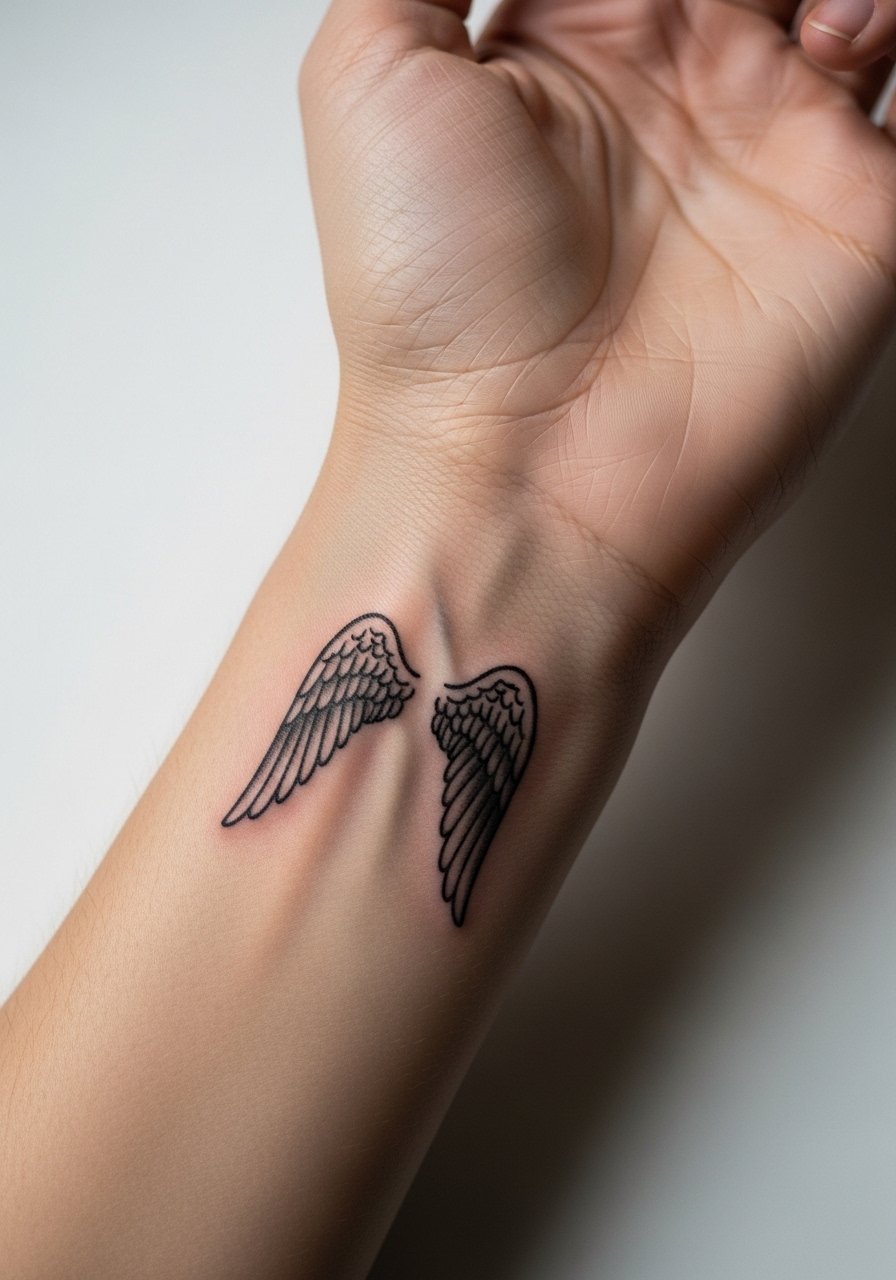
Wrist pieces look delicate but face heavy friction from watches and bracelets. The biggest mistake is going too fine on the outline. Ask for slightly thicker linework than your reference so the silhouette holds over time. Pain on the wrist is mild to moderate and the session is usually 30 to 60 minutes. Pair this placement with a thin silver chain bracelet on the opposite wrist when you want to show it off. Plan for a touch-up at year one if you spend a lot of time outdoors.
4. Fine Line Dark Angel Cloaked Figure on Inner Arm
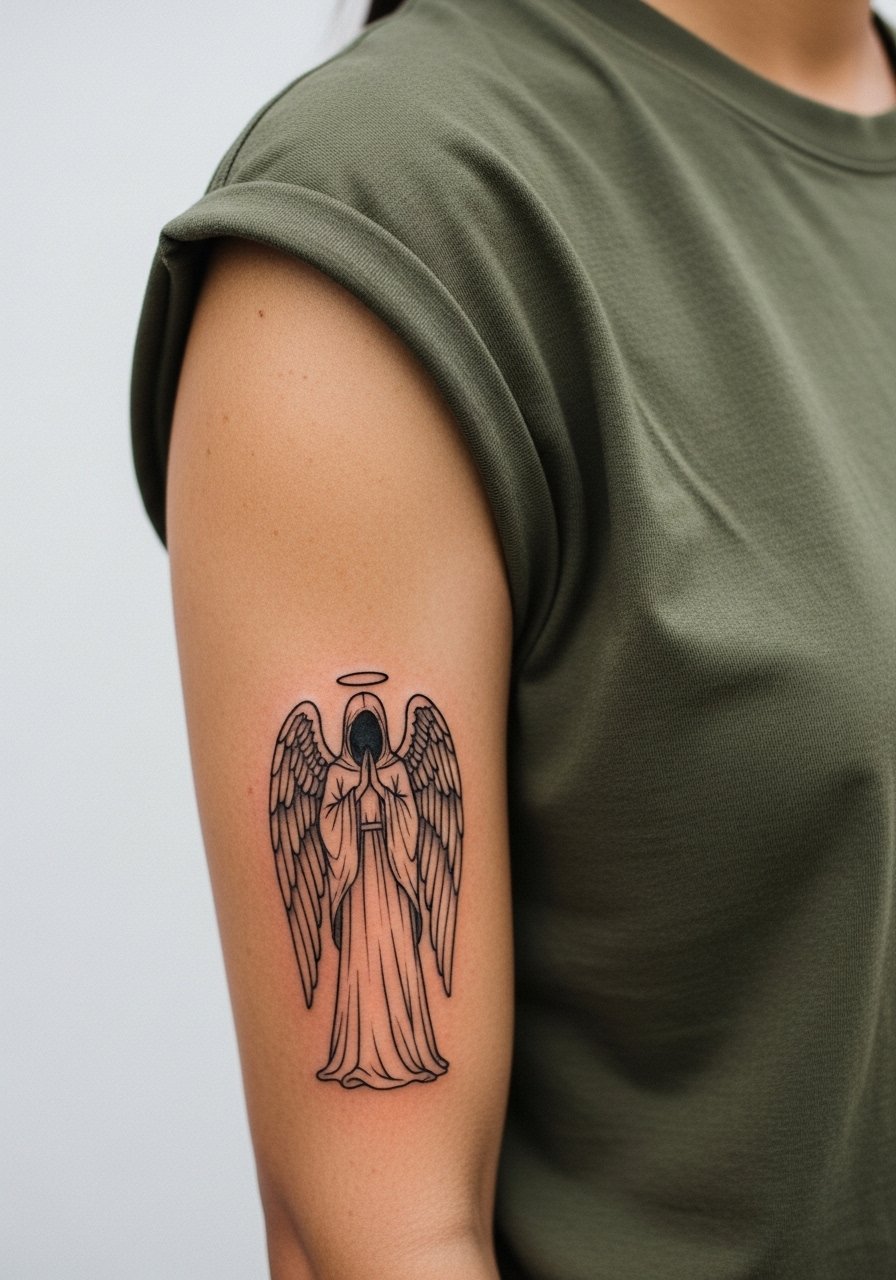
This is a quiet option that reads as personal rather than gothic. Artists are split on fine line work here. One camp says fine line holds if spacing and depth are precise. The other camp prefers slightly bolder outlines to prevent blur over time. Ask how your artist balances spacing with needle depth, and bring reference healed photos. The inner arm can stretch with weight change so expect modest distortion if you plan major body shifts. For showing it off, roll a linen button-up shirt sleeve to the mid-forearm.
5. Small Blackwork Dark Angel Silhouette on Collarbone
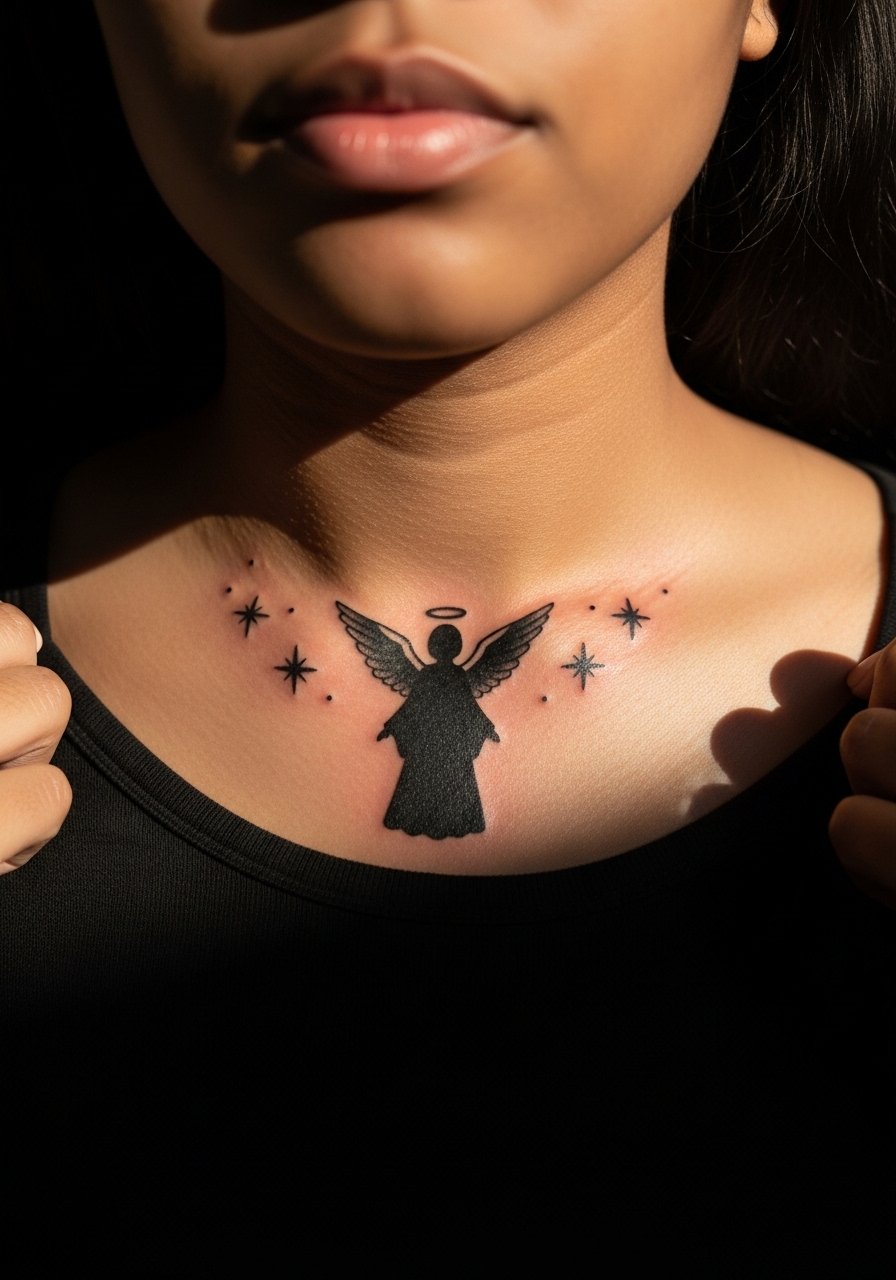
Collarbones photograph well and blackwork silhouettes keep contrast on darker tones. This placement asks for bolder fills so the wings stay graphic over time. The session takes about one hour and can be slightly tingly on the bone. A common mistake is tiny negative-space details inside the silhouette that fill in during healing. Request clean solid fills and plan to show it with strapless or off-shoulder blouses for evenings. Touch-ups for fills are rarer with solid blackwork than with fine line.
6. Tiny Dark Angel Head on Finger or Behind the Ear
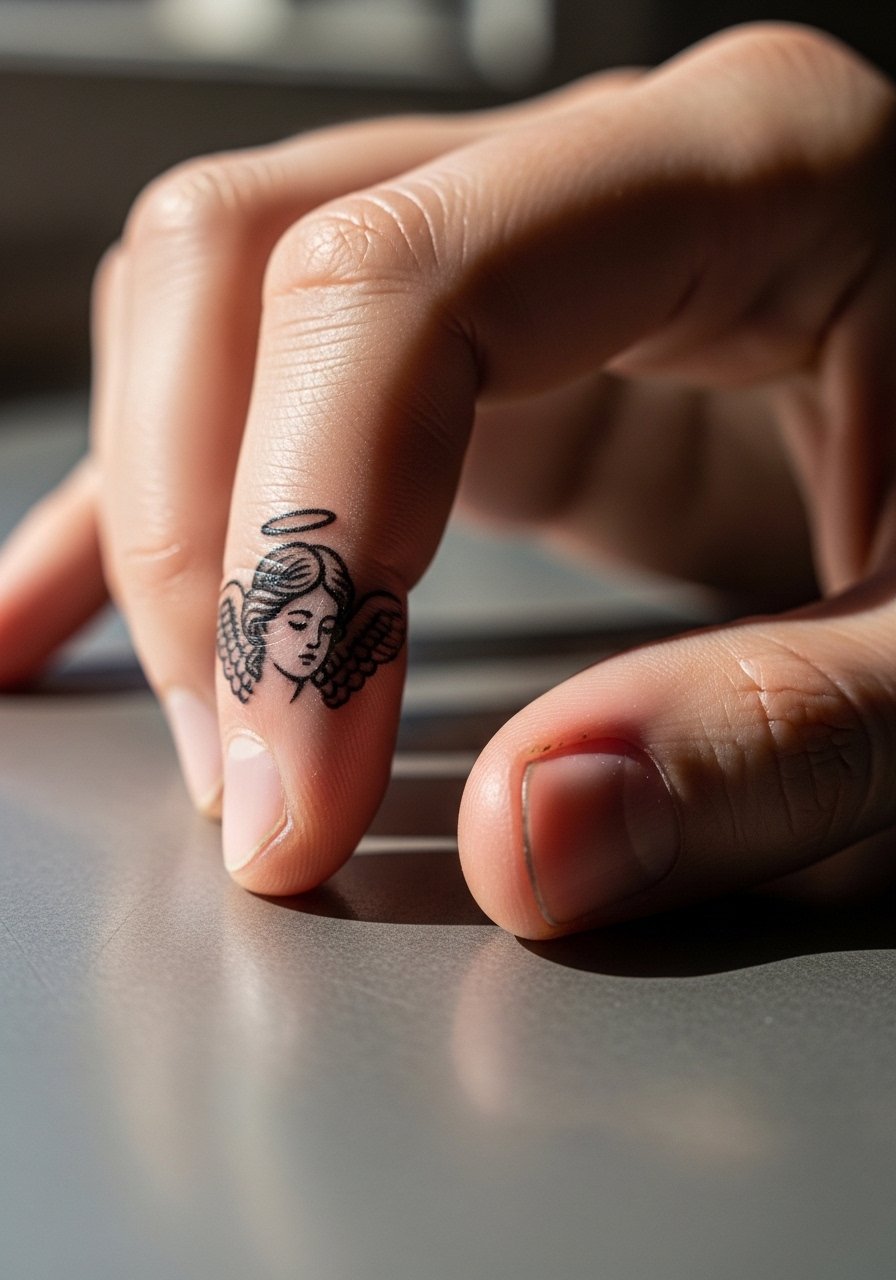
Finger pieces are a commitment because of constant washing and abrasion. The mistake is treating fingers like canvas for micro detail. For longevity, go for a simplified head silhouette and accept that annual touch-ups are common. The session is quick but the healing process requires extra care. If you want discretion, behind-the-ear is an alternative hiding spot. For appointments, skip rings and wear a sleeve you can push up freely.
Studio Day Picks
The first six ideas above include wrists, forearms, collarbone, and finger spots that need different prep than larger pieces, so a few specific items smooth out the session and the first week.
-
Tattoo Goo Balm. A thin balm many people prefer over heavier ointments for delicate linework on wrists and fingers because it hydrates without a greasy film.
-
Frida Skin Healing Cream. Lightweight cream that artists recommend for subtle shading areas like inner forearms and behind-the-ear placements.
-
Indie Black Ink Balm. Non-greasy option that helps prevent shine on small blackwork fills while the area heals.
-
Australian Tea Tree Salve. Useful for itch control on cloaked designs where scabbing can be more noticeable.
-
Aquaphor Healing Ointment. Thin layer for the first 48 to 72 hours helps protect fine line pieces in high-friction zones like wrists.
7. Ornamental Dark Angel Silhouette on Ribcage
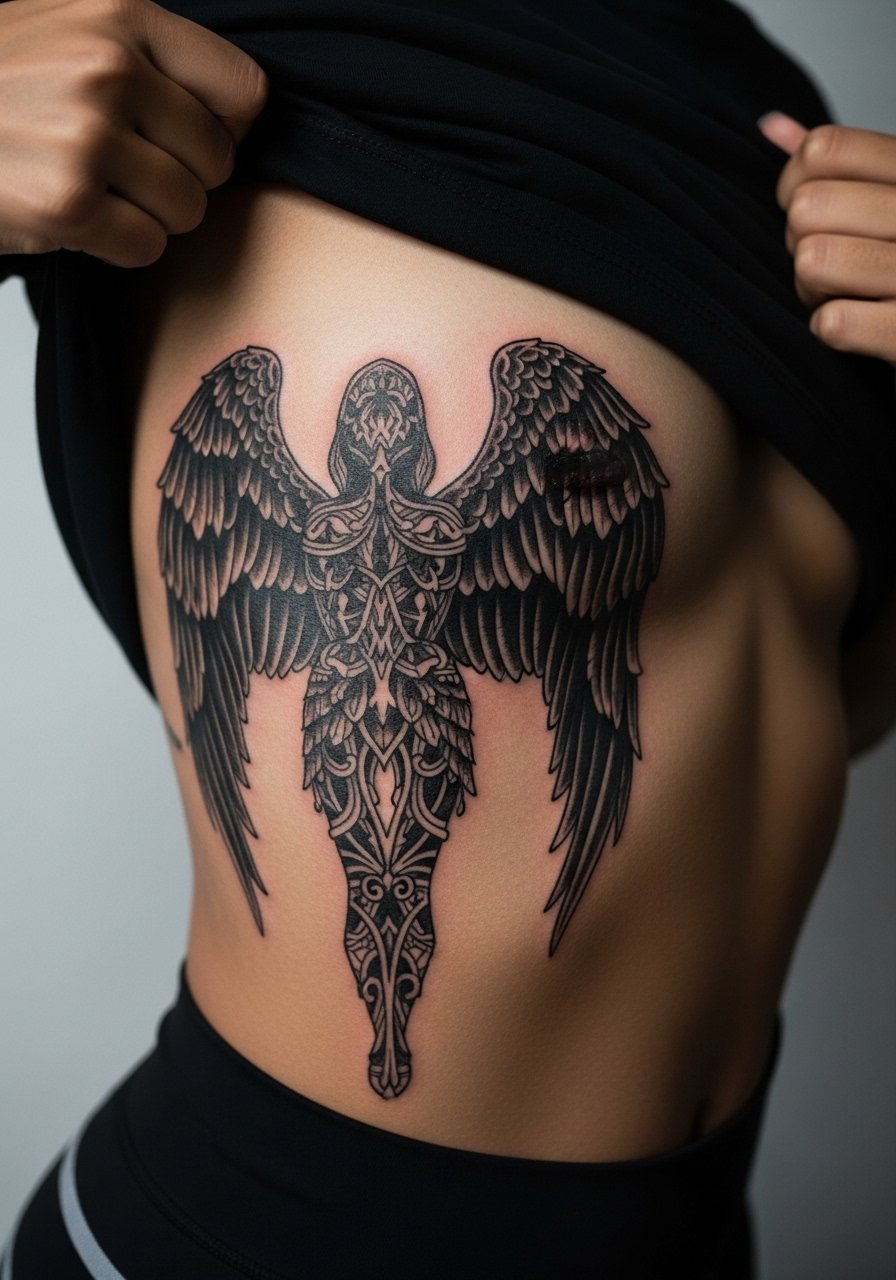
Ribcage tattoos age differently because the skin flexes with breathing and weight variation. Pain here is high but results can be dramatic. The common mistake is cramming dense ornament into a small rib tattoo. Instead, give the wings negative space to breathe. This one-hour to two-hour session can require longer breaks. Expect some distortion if you plan large weight changes. Ask about needle depth and spacing during consultation and bring images showing healed rib work.
8. Neo-Traditional Dark Angel in Flight on Outer Forearm
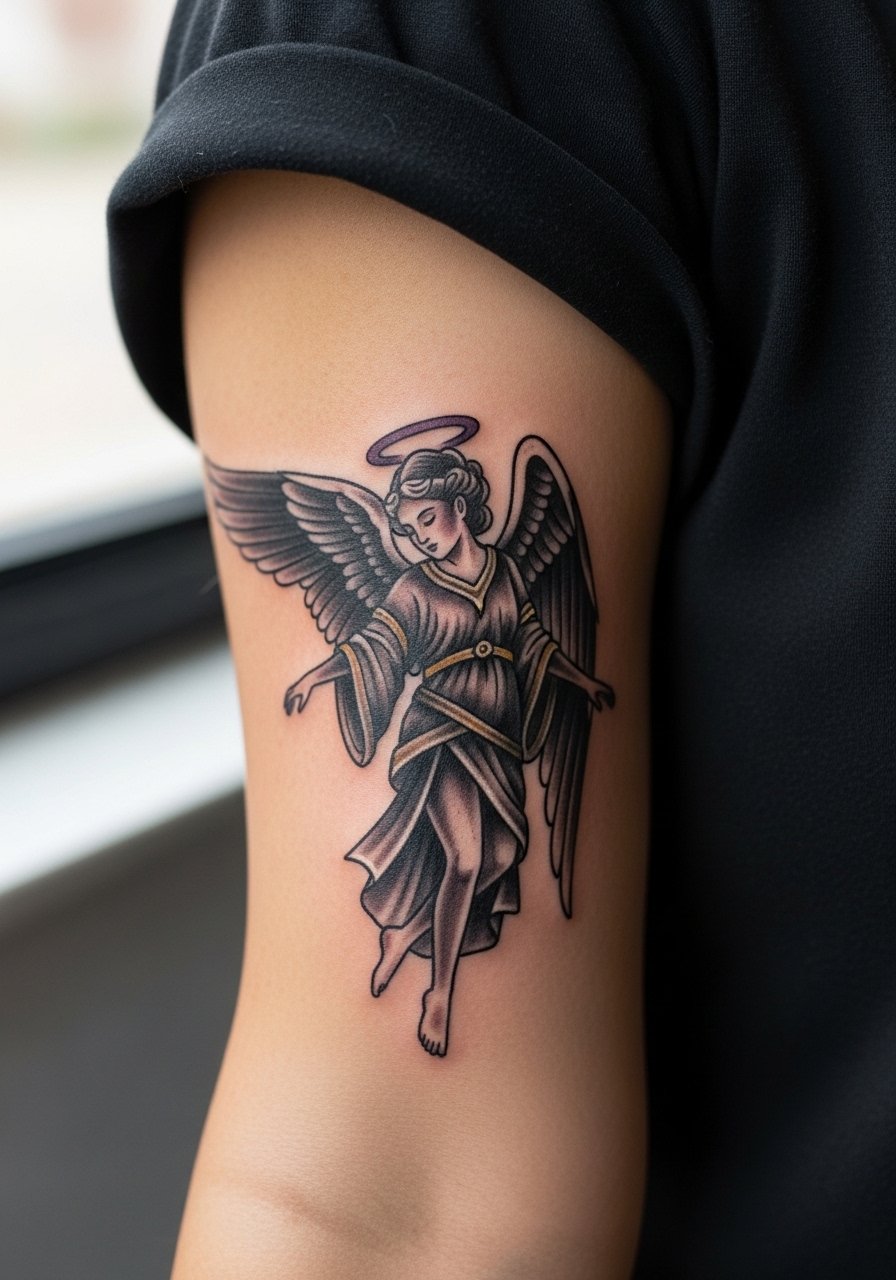
Outer forearm is forgiving for motion and detail. This style uses deeper saturation and subtle color which helps the angel read longer than pure fine line. Tell the artist you want bold wing anchors with feather stippling so that the purple accents sit as accents not fades. Sessions run one to two hours and the area tolerates longer work. For casual showing, pair with rolled sleeves or an olive tank top. Touch-ups on color accents are often done at year two.
9. Micro-Realism Dark Angel on Calf
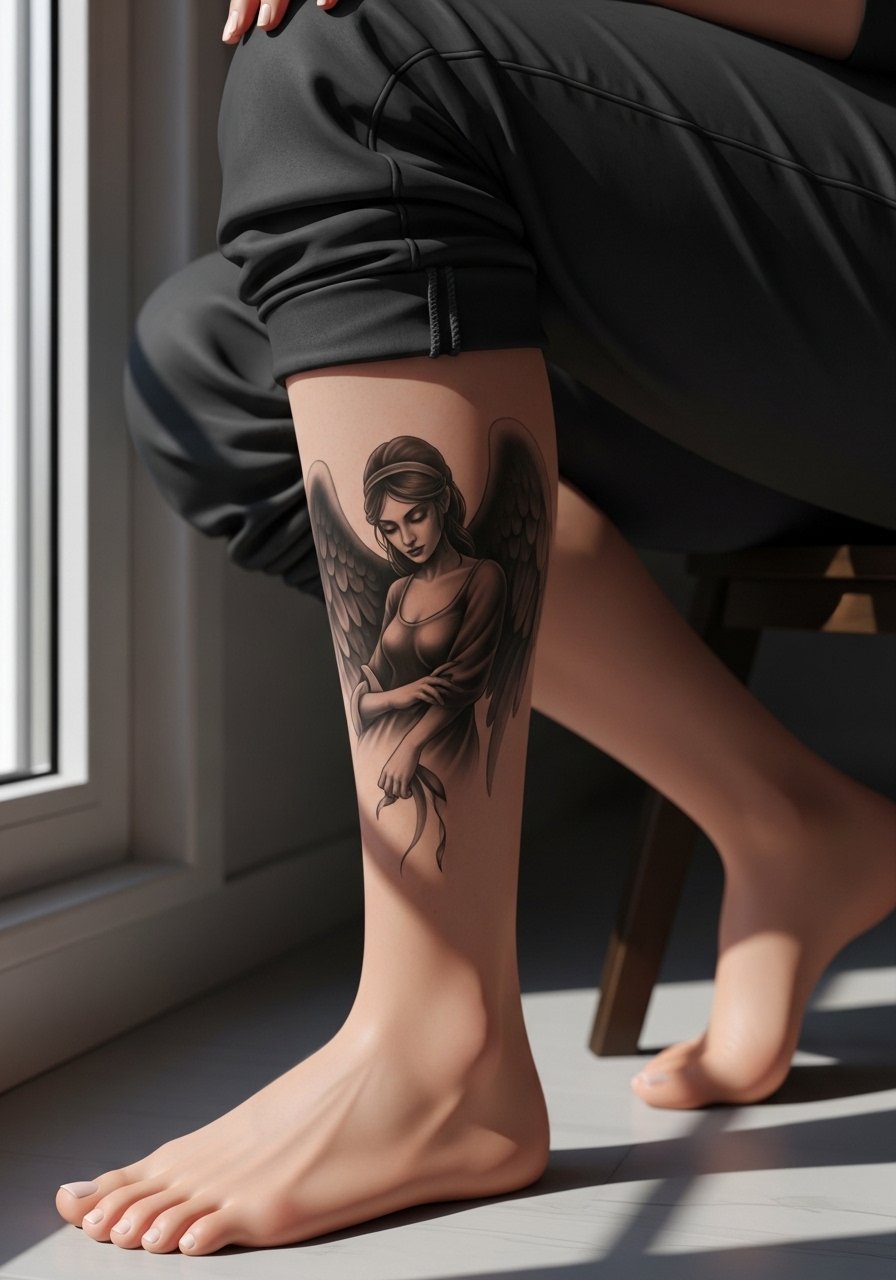
Calf pieces take well to micro-realism because the skin is stable and less exposed to constant sun. The session can be two to three hours and may require two appointments for shading depth. A common mistake is asking for too much facial detail in a very small size. For longevity, increase the scale slightly to let gradients breathe. Show it with cropped joggers or midi skirts when you want visibility. Expect very good color retention with black and gray here.
10. Dainty Dark Angel Ankle with Single-Line Wings
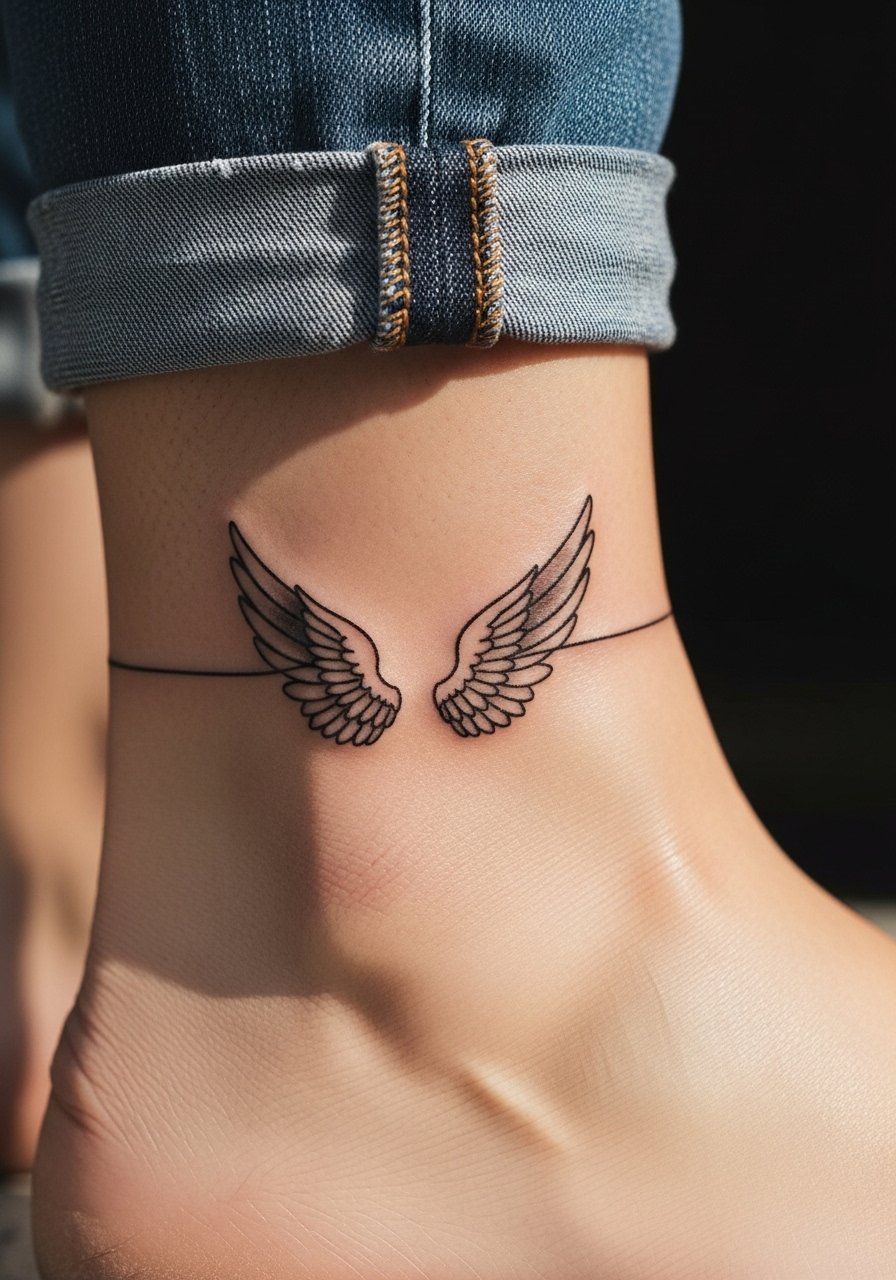
Ankle tattoos are exposed to rubbing from shoes and socks, so fine lines can fade faster. The mistake is requesting ultra-fine detail that will blur under friction. Ask for slightly increased line weight and solid anchor points, and plan for a touch-up at year one. For showing off, cuffed straight-leg jeans or strappy ankle sandals work well. Wear loose pants or shorts to your appointment so the artist can roll the leg up without pressure.
11. Tiny Dark Angel Head Behind the Ear with Personal Eyes
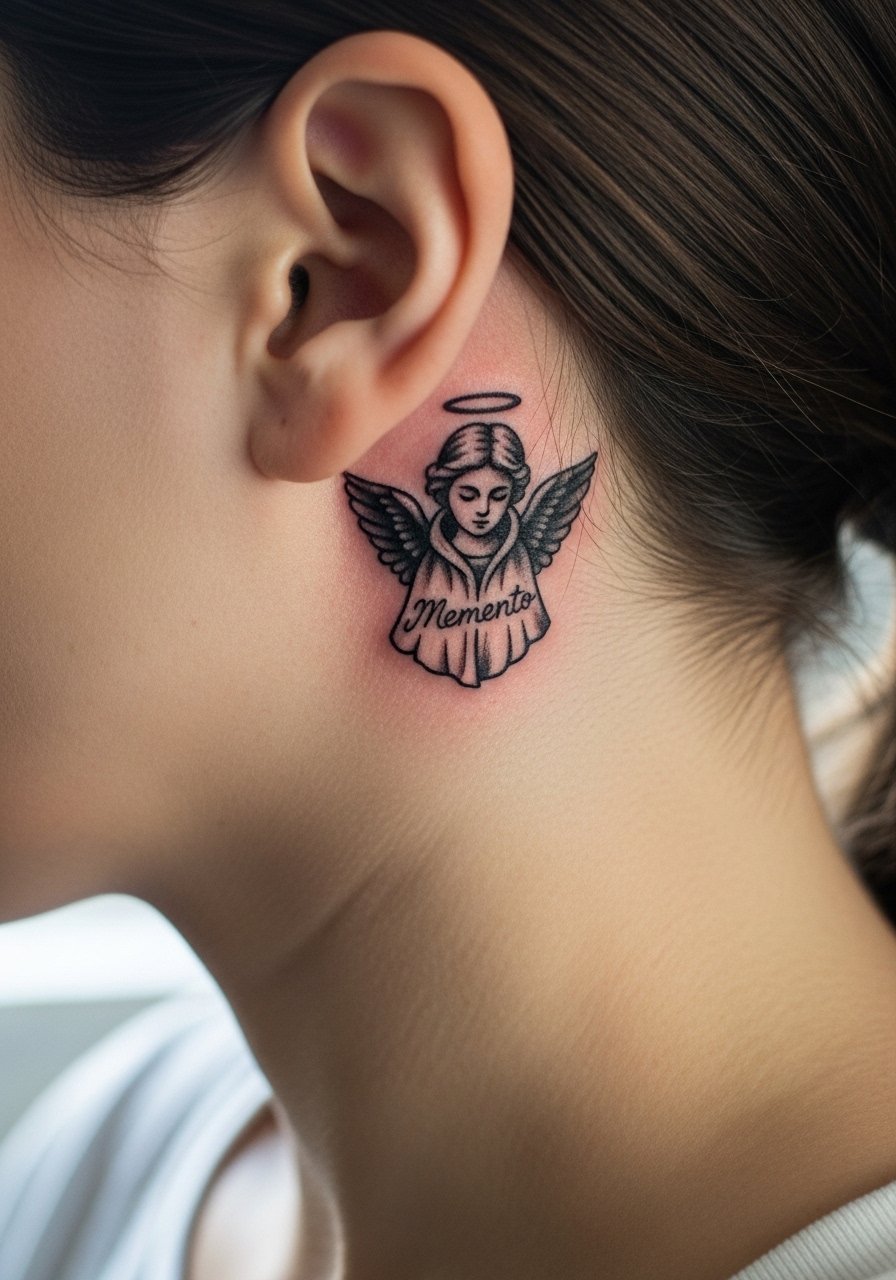
Small portrait tweaks like incorporating a loved one’s eyes create personal resonance. The risk is over-detail in a tiny area. Tell the artist which facial element you want emphasized and keep the rest suggestive. This placement is low visibility and low session time. If you often pin your hair back, confirm placement because frequent exposure changes how healed photos look. For the session, tie hair back and wear an easy top.
12. Blackwork Guardian Figure on Shoulder Blade
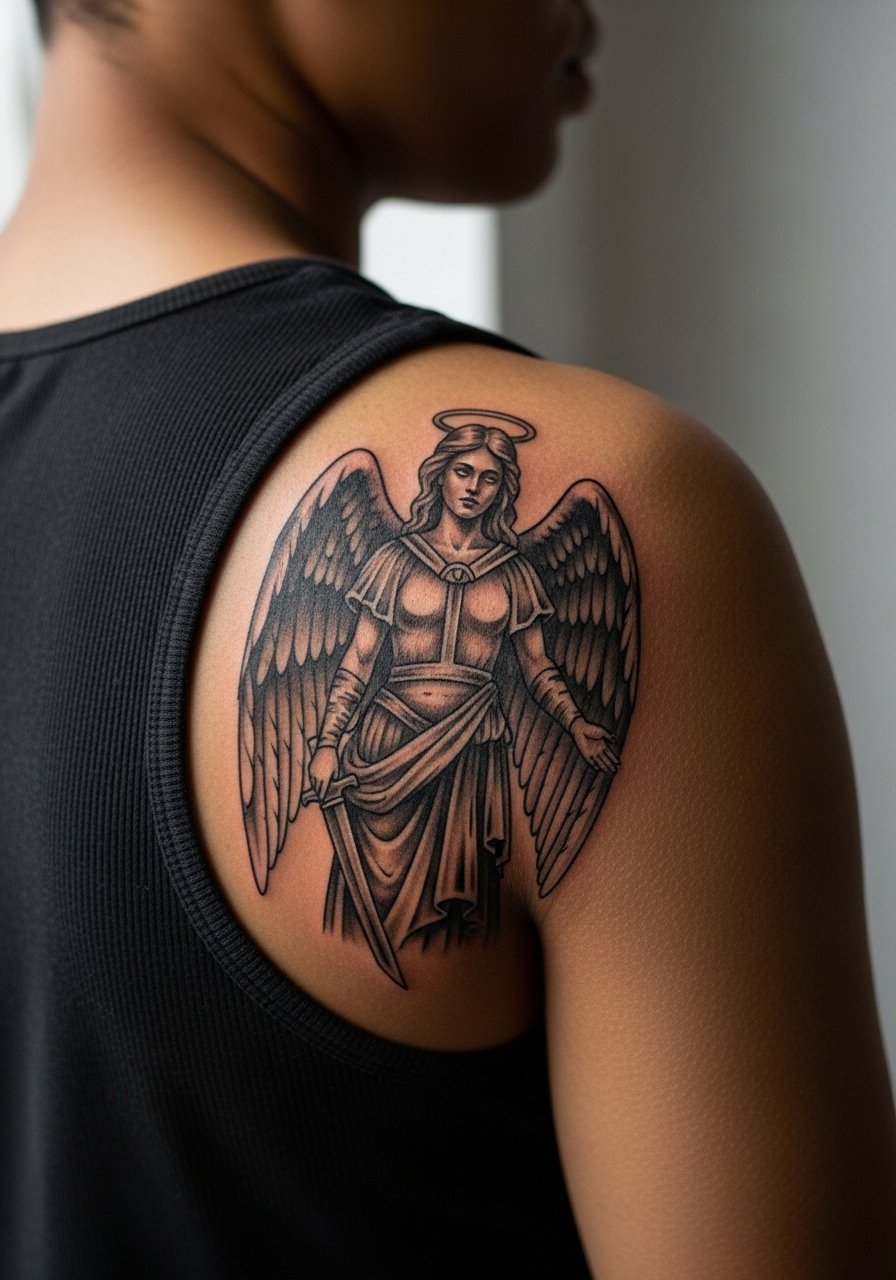
Shoulder blade pieces age well because the area gets less daily sun than forearms. This design benefits from deep saturation and contrast so the wings keep shape as the years pass. Sessions can be two hours and may need touch-ups for fine shading. For showing off, opt for off-shoulder sweaters or backless tops. Mention any plans for large weight change during consultation, because the cloak silhouette can alter with significant shifts.
13. Watercolor-Style Dark Angel on Thigh
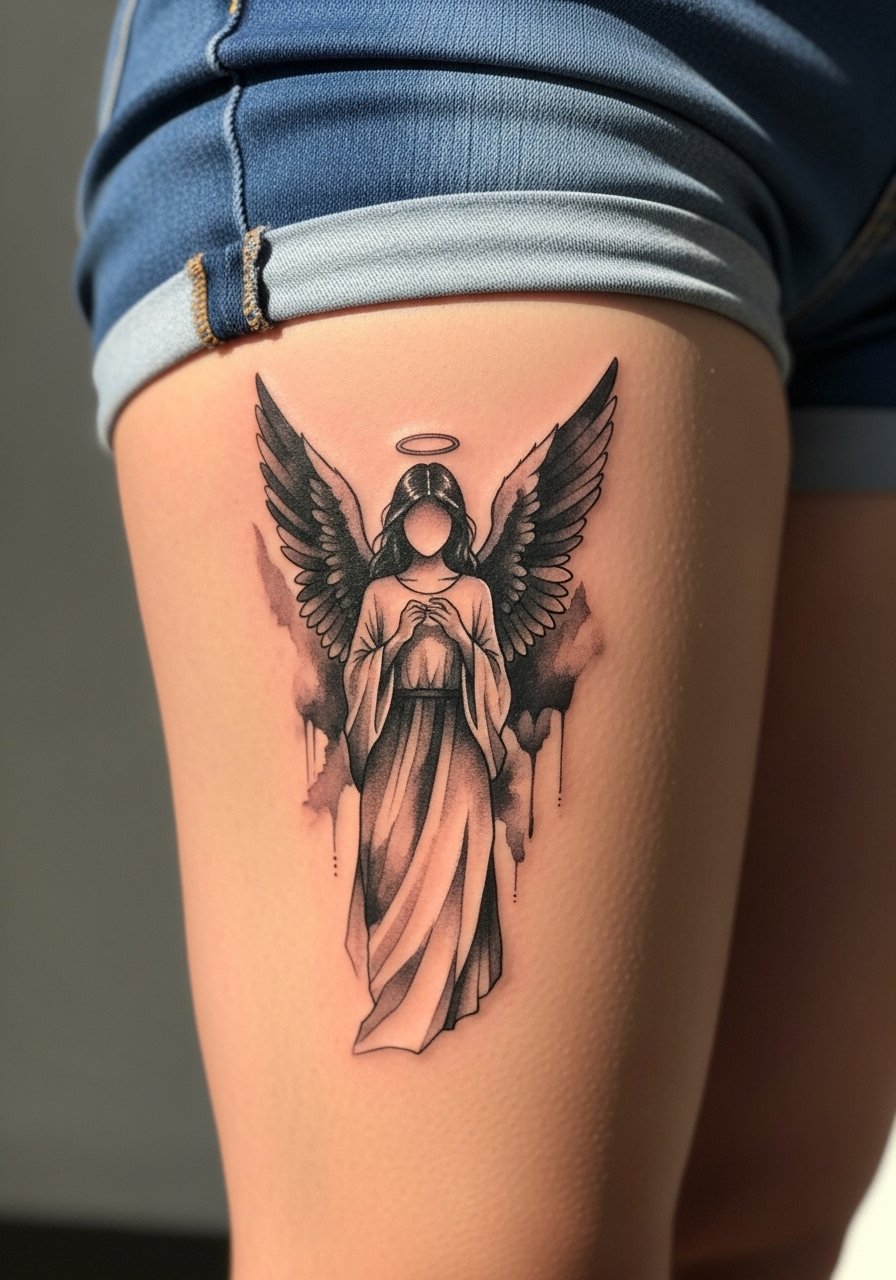
Watercolor looks delicate but often fades faster than saturated blackwork. If you want a watercolor thigh piece, ask the artist for a hybrid approach that anchors washes with black and gray outlines so the shape remains. Thighs are forgiving for larger compositions and sessions are typically one to two hours. For summer reveal, pair with high-waisted shorts or a thigh-slit skirt. Expect touch-ups for the wash areas after two to three years.
14. Stipple-Shaded Dark Angel on Ribcage with Cloak Flow
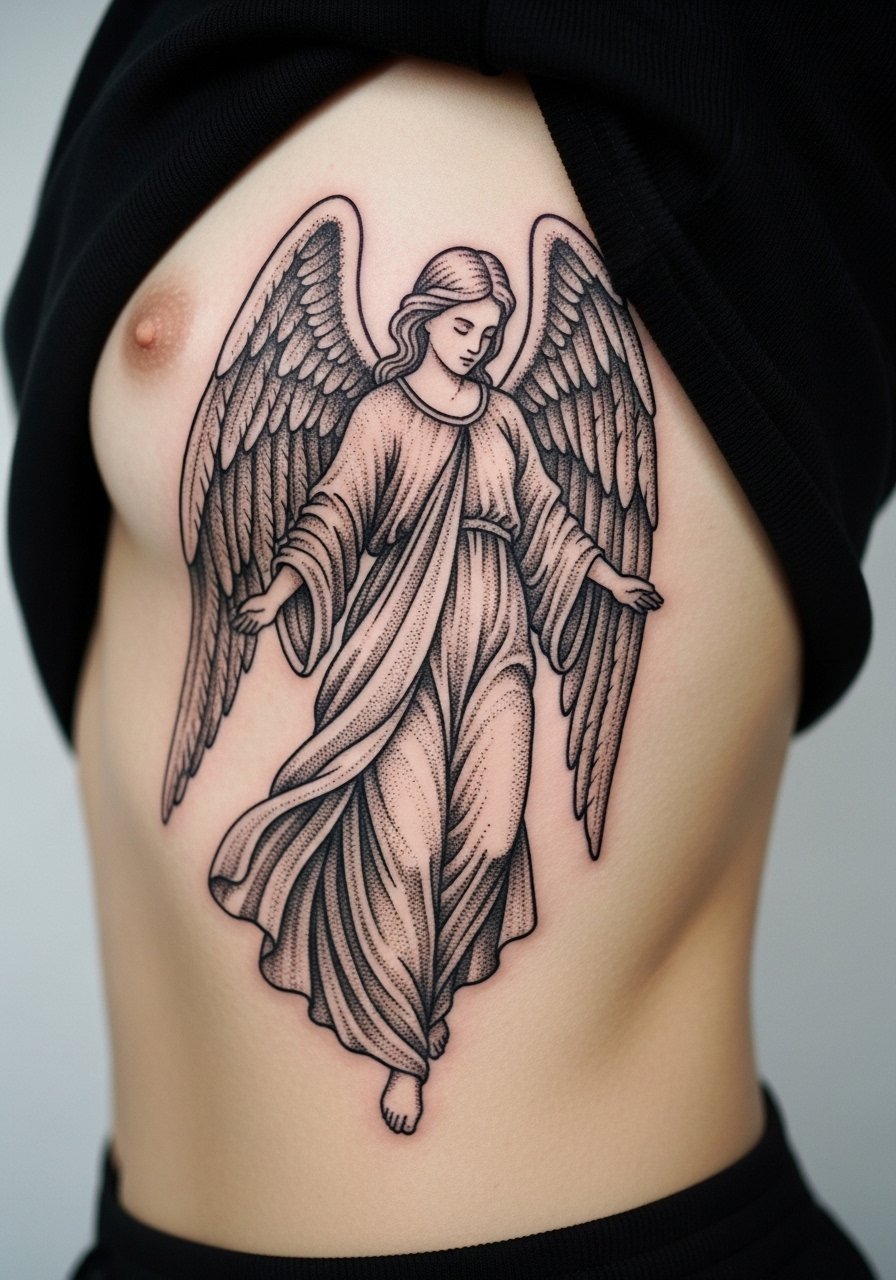
Stipple shading reads beautifully on ribs if spaced out. The ribcage is high-pain and the skin flexes, so keep denser stippling away from tight folds. Artists disagree on fine line here. One camp says the skin stretch blurs lines within two years. The other camp says careful depth and spacing keep fine line readable. Ask which camp your artist falls with before booking. Sessions are longer, often split. Expect touch-ups at year two if you want crisp stippling.
15. Tiny Dark Angel Portrait on Finger Side
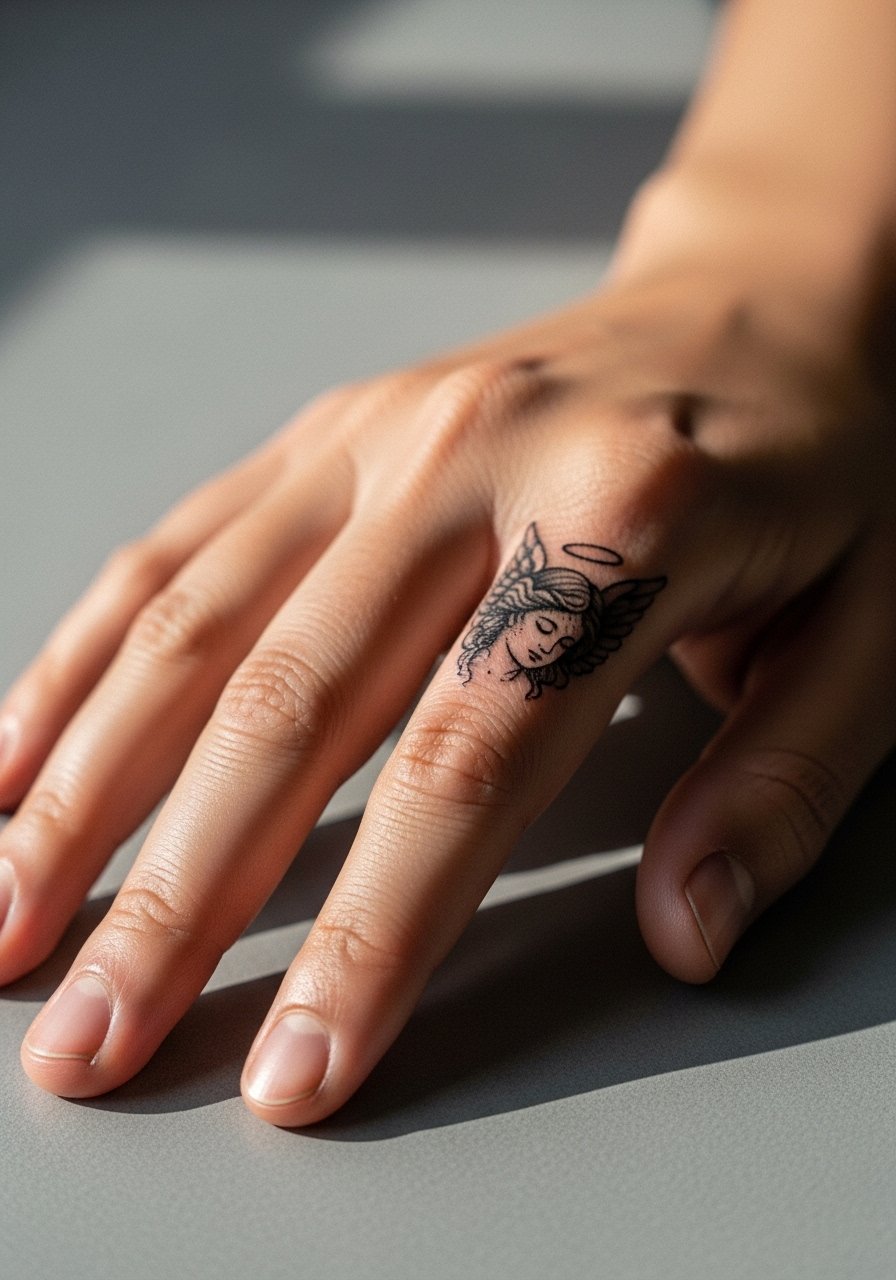
Side-of-finger placements face constant abrasion so plan for longevity. The common error is pushing for micro shading where it cannot last. Go for simple line silhouettes that can be refreshed. Sessions are brief and healing is fussy because hands get wet frequently. Skip rings during the appointment and avoid heavy use of that finger for the first week. Annual touch-ups are likely for this location.
16. Cloaked Dark Angel Messenger on Upper Arm
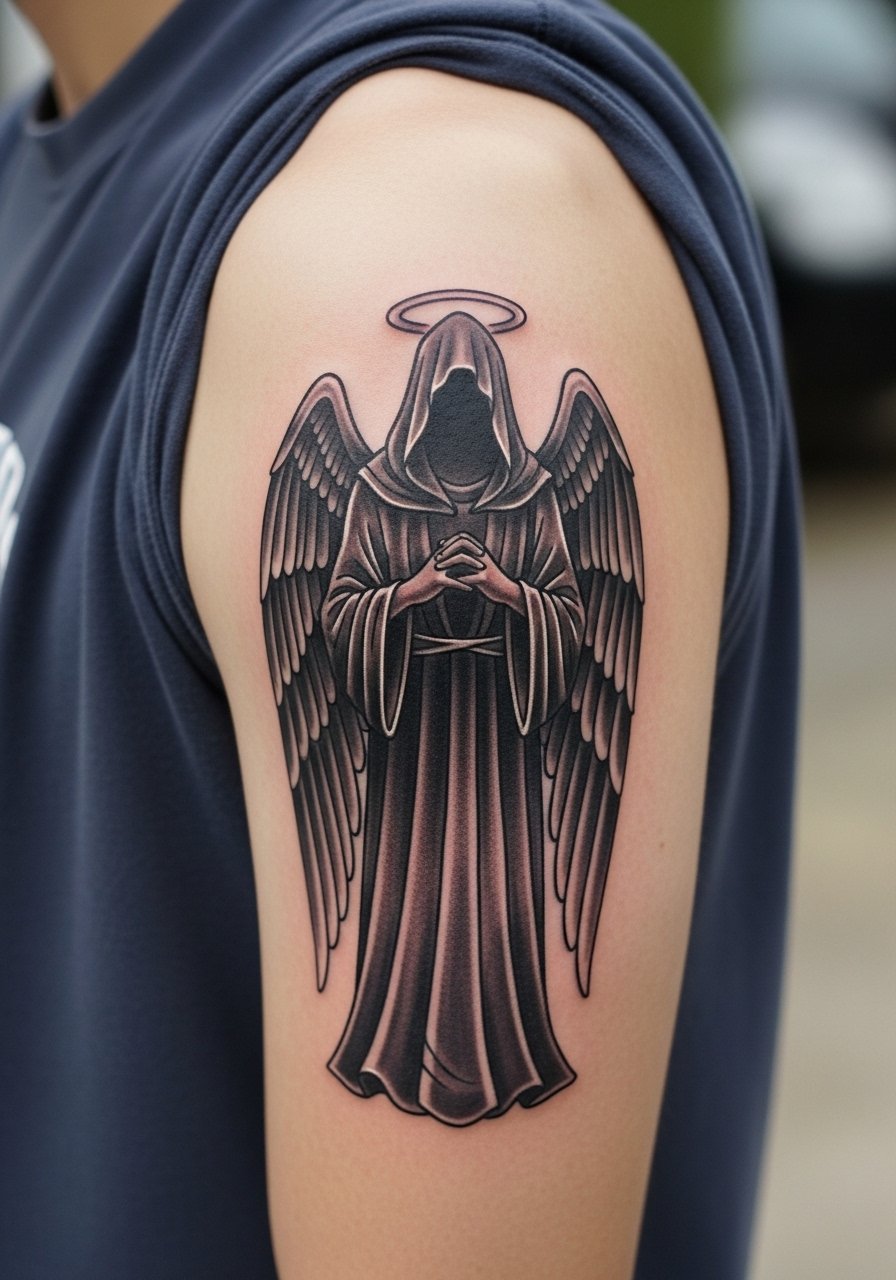
Upper arm is a great spot for neo-traditional motion and color pops. The canvas tolerates more seating for shading and color saturation so the cloak reads dramatically. The session can be two to three hours and usually needs two passes for color depth. Tell the artist you want strong anchor lines with stipple for texture, not heavy solid dots in fine areas. Sleeve shirts that roll up naturally work for the session. Expect color touch-ups at year three if you wear a lot of sun.
17. Decorative Winged Dark Angel on Lower Back
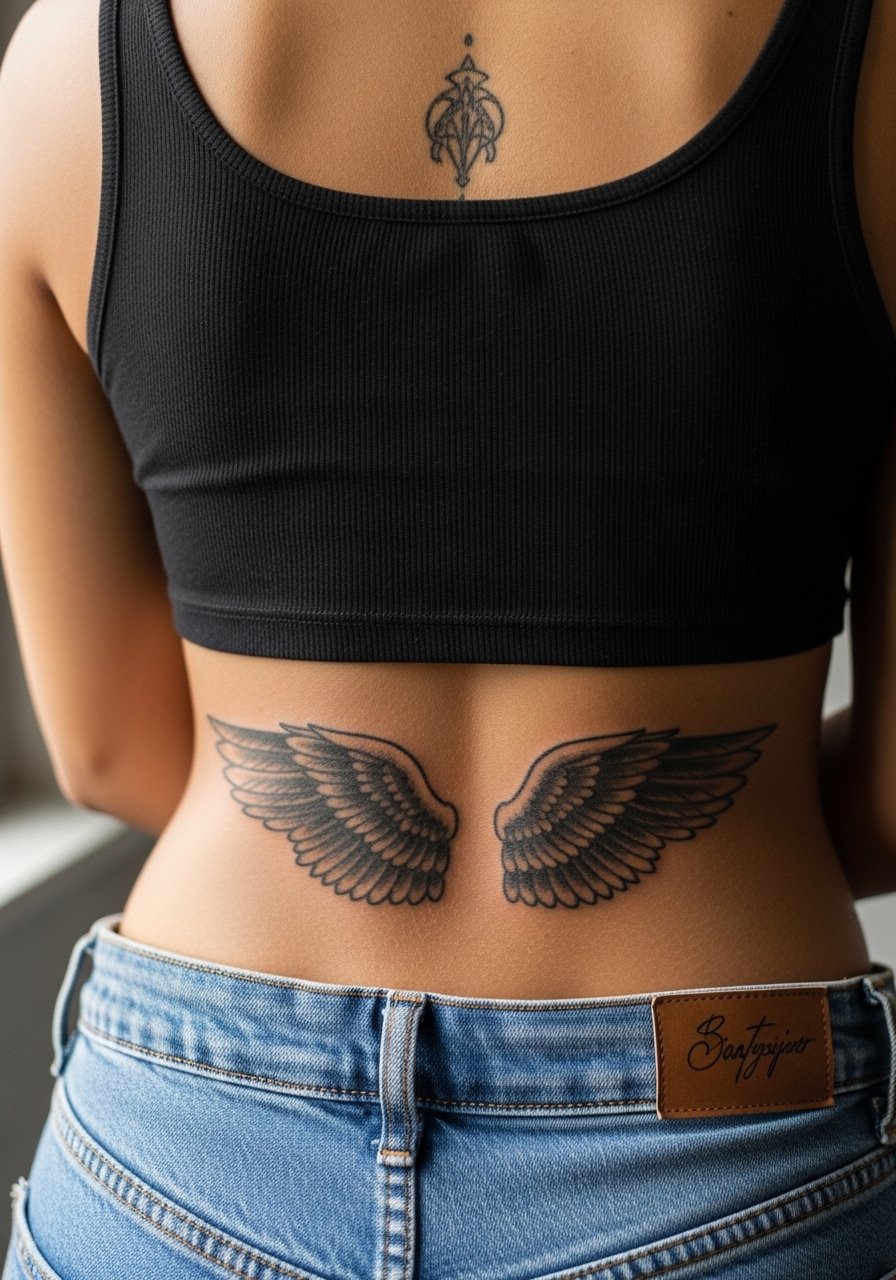
Lower back allows graceful wings that follow body curves. Avoid tiny filigree in areas that rub against waistbands. The session is moderate length and healing is straightforward if you avoid tight waistbands for two weeks. If you wear low-rise or fitted belts often, position the design higher or choose a design with clean negative space along the belt line. For reveal moments, pair with crop tops or back-baring dresses.
18. Minimalist Dark Angel Chest Accent Above Sternum
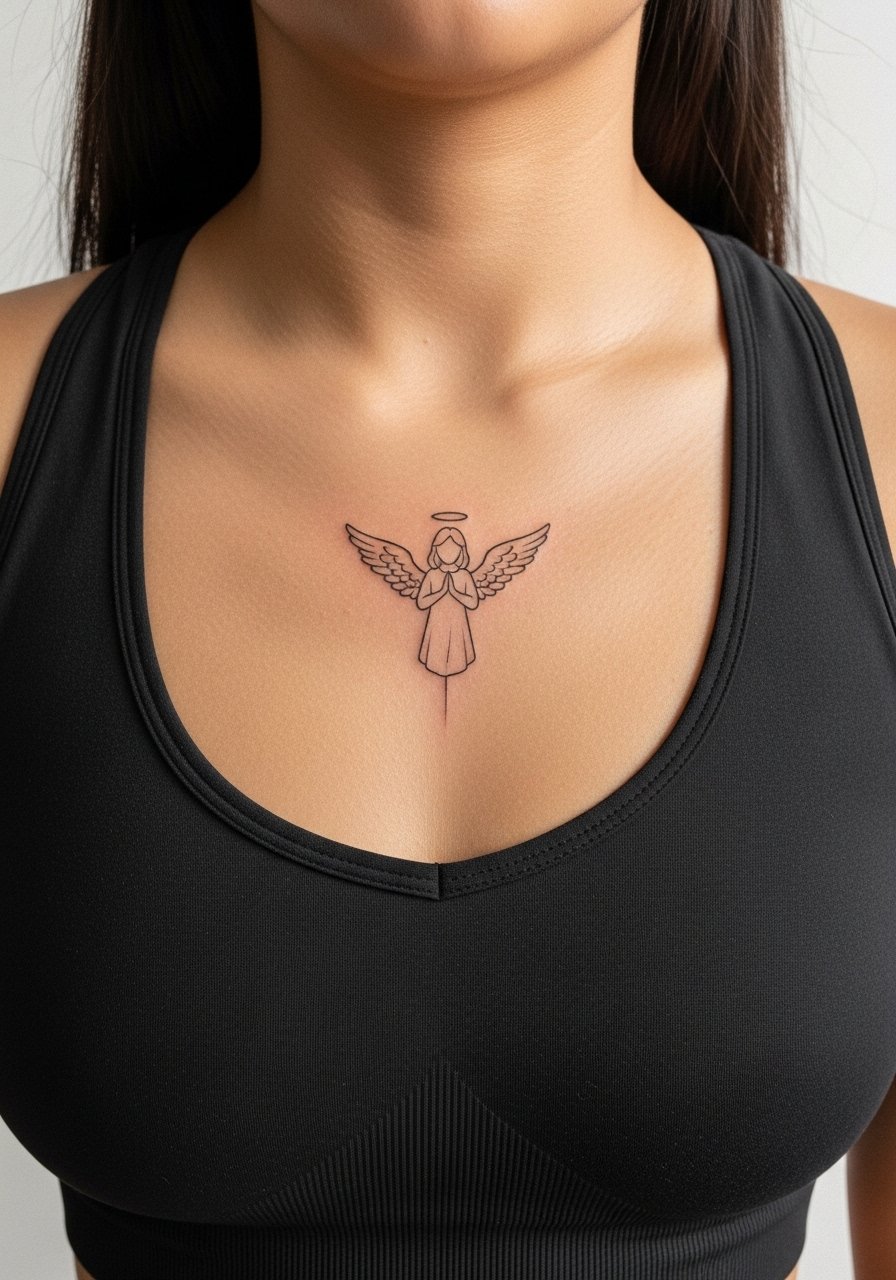
Sternum-adjacent placements need a plan for clothing access during the session. Pain is moderate but not extreme for small pieces. The main mistake is packing too much detail into a narrow center of the chest. Keep the head small and the cloak open so the composition breathes. For the appointment wear a fitted sports bra you can pull down slightly. Consider how necklaces will sit and pick a neckline that frames the design.
19. Tiny Dark Angel with Star Motif on Collarbone
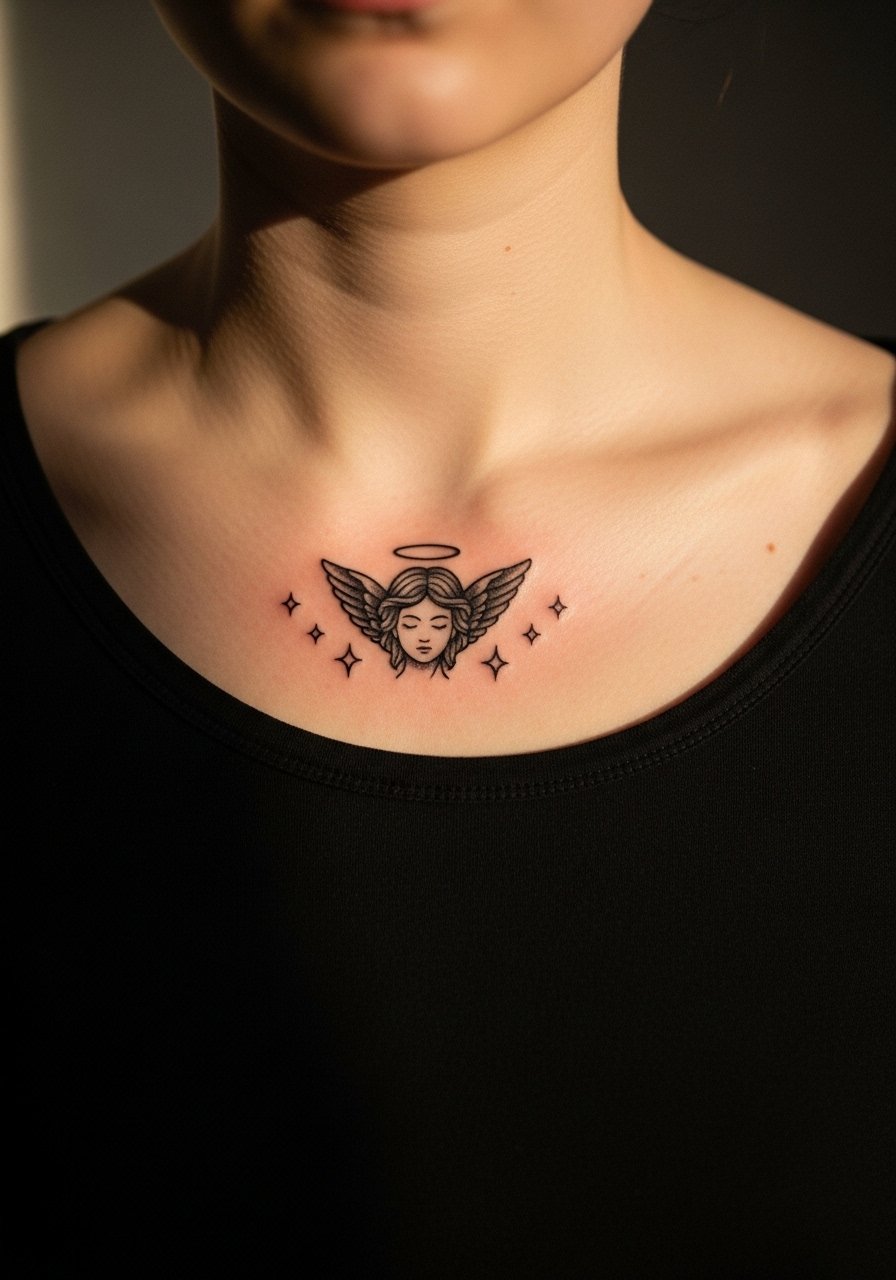
Pairing a small angel with tiny stars adds personal symbolism without heavy weight. Collarbones prefer bold outlines over fragile filigree, especially on darker tones. Sessions for this scale are short and healing is usually quick. For evenings out, pair the piece with a strapless midi dress or open collar shirts to frame the ink.
20. Ornamental Dark Angel Ribcage Silhouette for Darker Skin
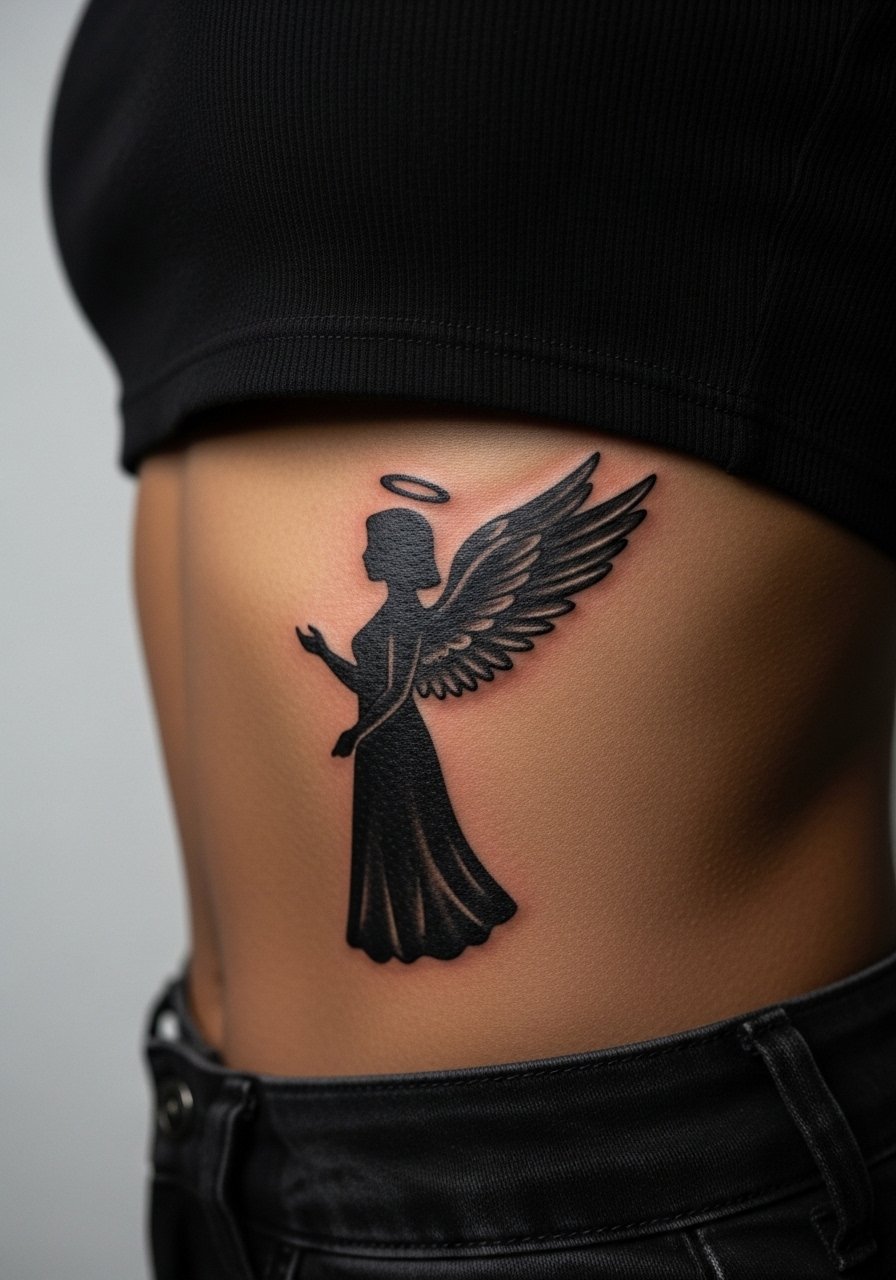
On darker skin tones, thicker lines and bold fills keep details readable in photos. The ribcage tolerates solid blackwork well, and anchoring the cloak with negative space keeps the silhouette clear. Sessions are longer and you should discuss contrast options with the artist. For this spot, choose a design that leans on solid shapes rather than tiny hairlines. Bring healed examples that match your skin tone.
21. Neo-Traditional Dark Angel in Flight on Outer Thigh
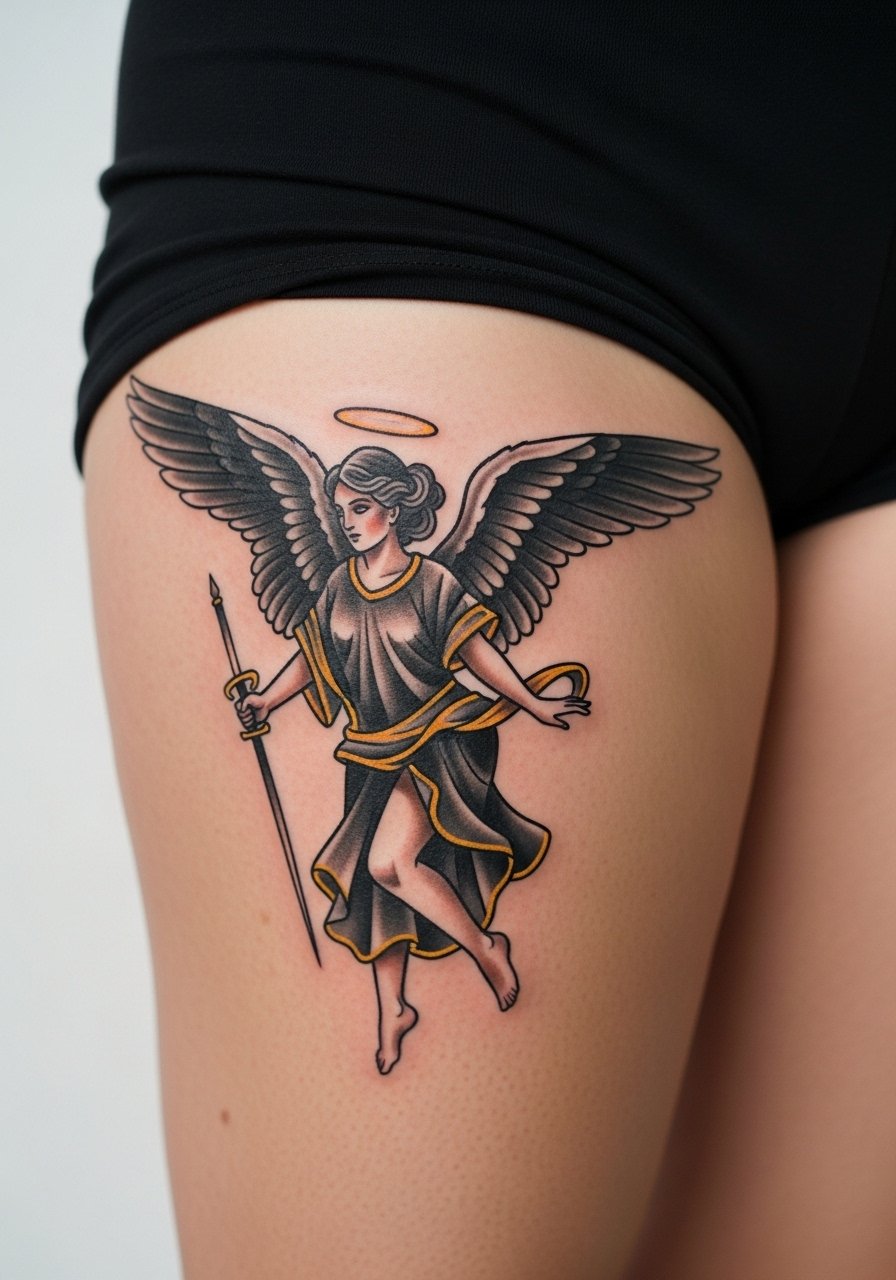
Thighs are forgiving for scale and hold gradations well. This style benefits from larger wings and motion that follows muscle curves. Sessions are comfortable and often done in one or two longer appointments. When you plan revealing outfits, pair with high-waisted shorts or skirts. If you plan to lose or gain a lot of weight, discuss how the cloak will flow across changes so the composition keeps its shape.
22. Micro-Realism Dark Angel on Calf with Shadow Effects
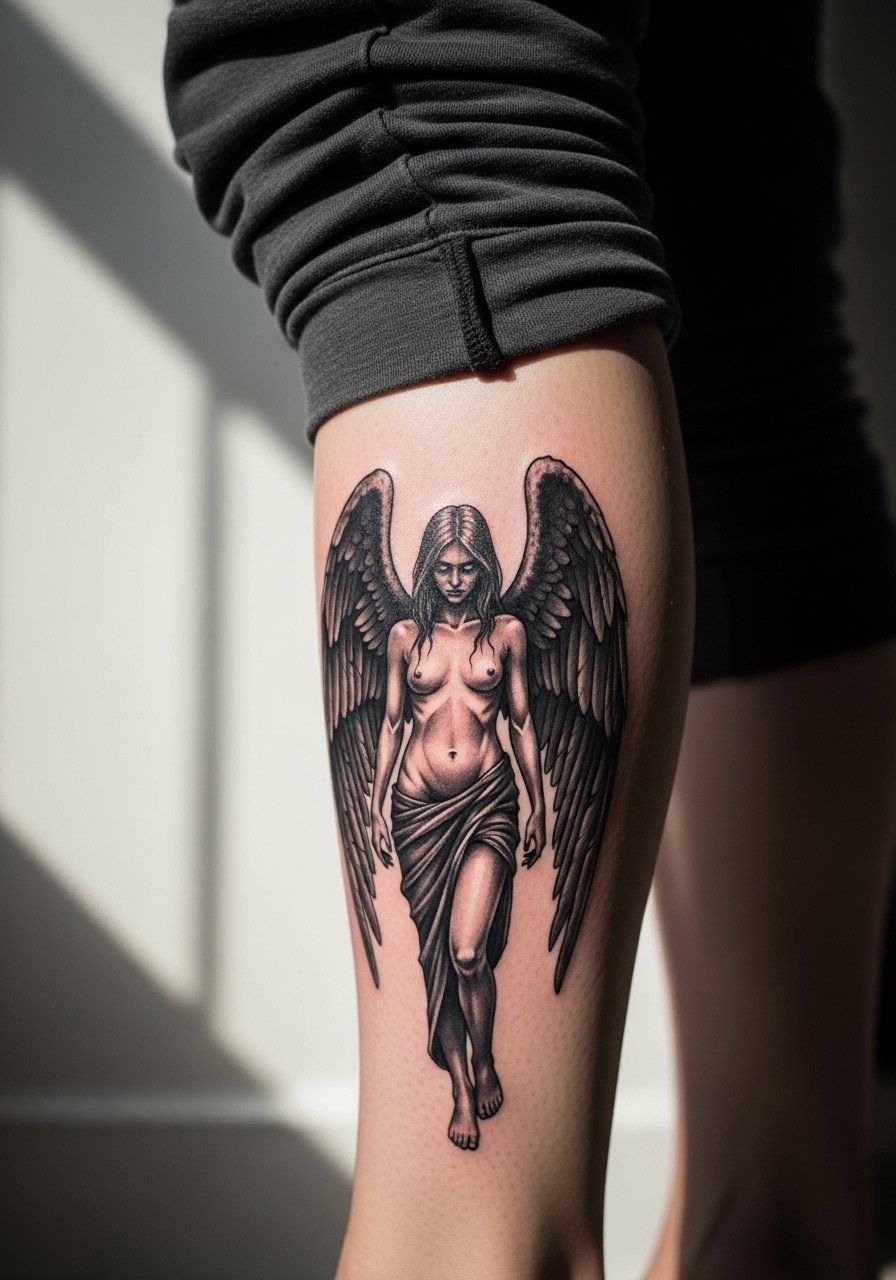
Micro-realism needs room to breathe so push scale slightly larger than your initial thought. The calf offers that room and keeps gradations crisp. Sessions are longer and may be split. A mistake is requesting tiny facial realism at a size that cannot keep tonal separation. For casual display, cropped joggers or midi skirts highlight the art. Black and gray here can last a long time if you protect the skin from frequent sun.
23. Tiny Cloaked Dark Angel on Neck Side
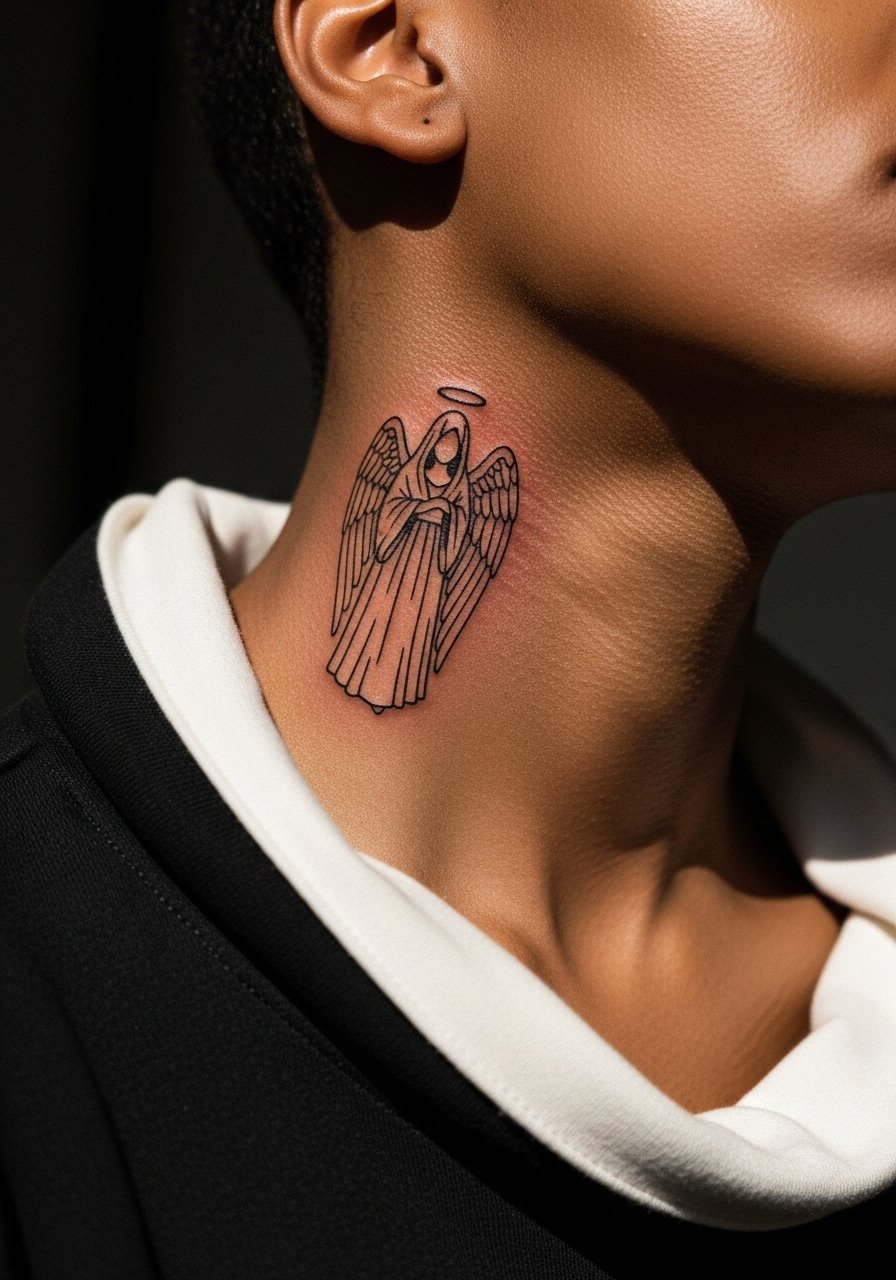
Neck pieces are visible and can affect professional presentation depending on your field. Fine line here must be balanced with a touch of thickness so it reads in photos. Pain is moderate and the healing area is sensitive. For consultation, discuss visibility and future career considerations. Wear hair up and a loose wide-neck top to the appointment so the artist has clear access. If you need discretion, ask about placement slightly lower or behind the ear.
24. Tiny Dark Angel Calf Accent with Starfield
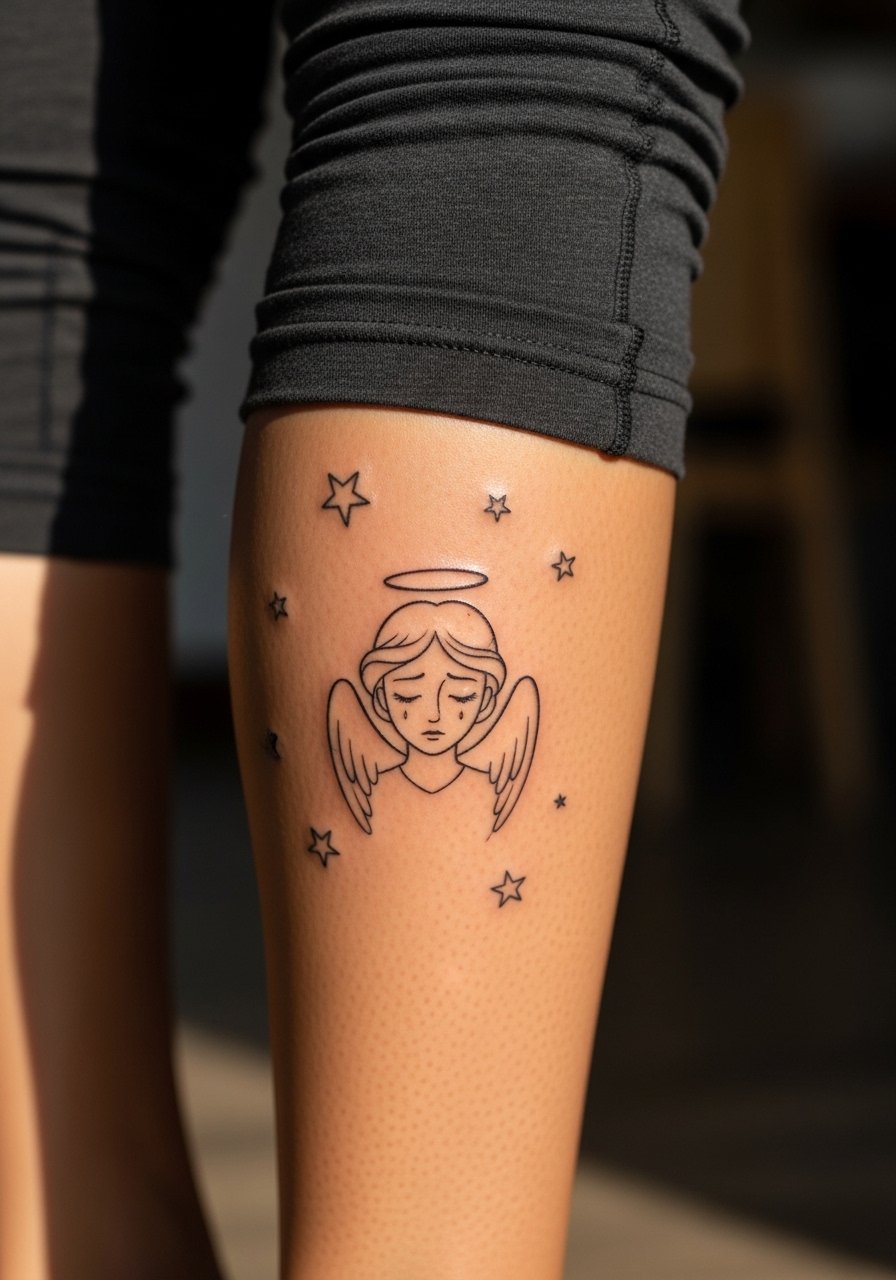
Adding tiny stars around a calf angel creates a motif that reads from a distance. Calf skin holds black and gray gradients well so keep shading modest and focused. Sessions are comfortable and easy to schedule. For visibility, pair with midi skirts or cropped joggers. Mention any plans for future leg work so the artist can plan spacing and flow with potential sleeves.
25. Ornamental Dark Angel on Shoulder Cap
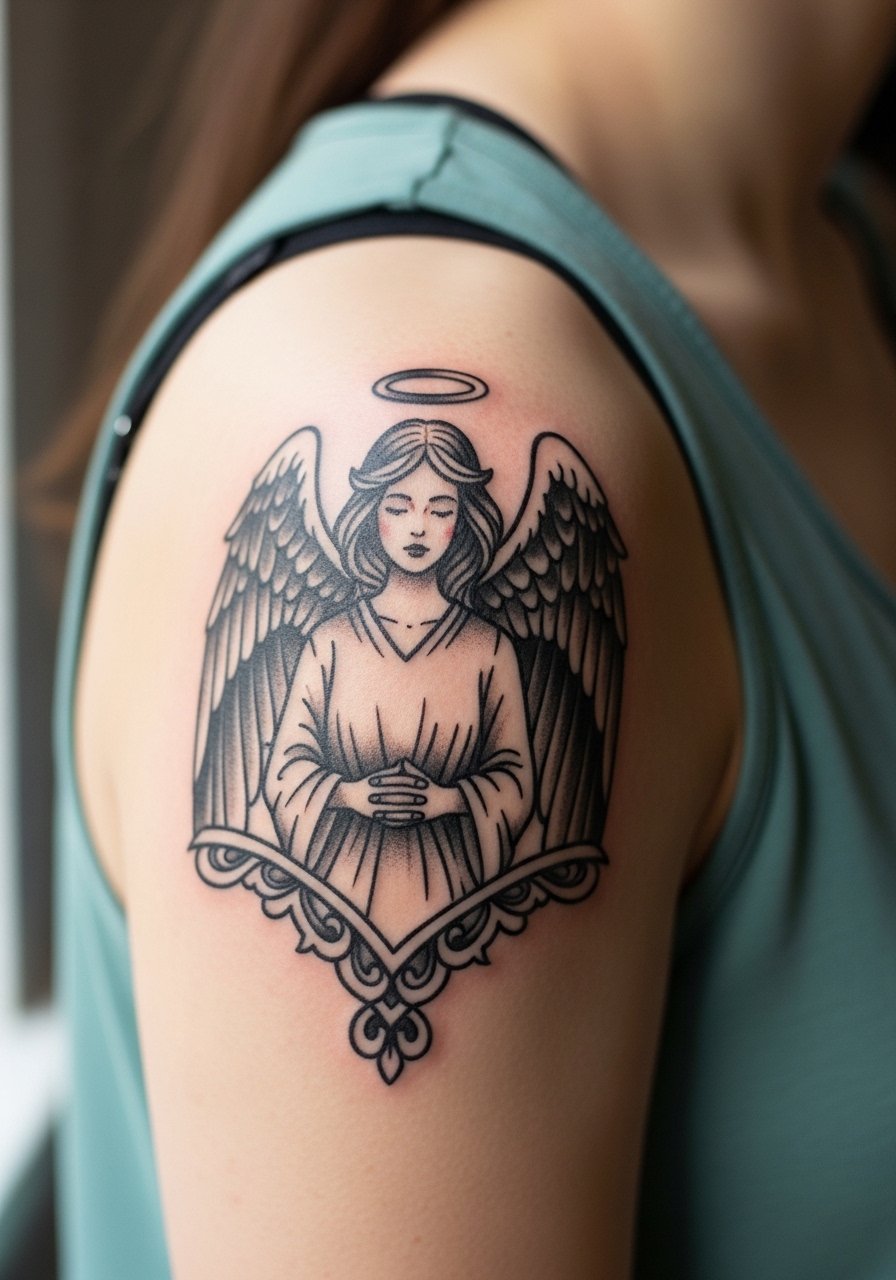
Shoulder cap allows compact designs that peek from sleeveless tops. The area ages well and tolerates higher saturation. Mistakes include over-detailing small feathers that will lose separation. Ask for strong anchor lines and clean negative space edges. Sessions are short and you can wear a loose tank for the appointment. For showing off, pair with sleeveless or off-shoulder tops.
26. Tiny Dainty Dark Angel Ankle with Hidden Placement
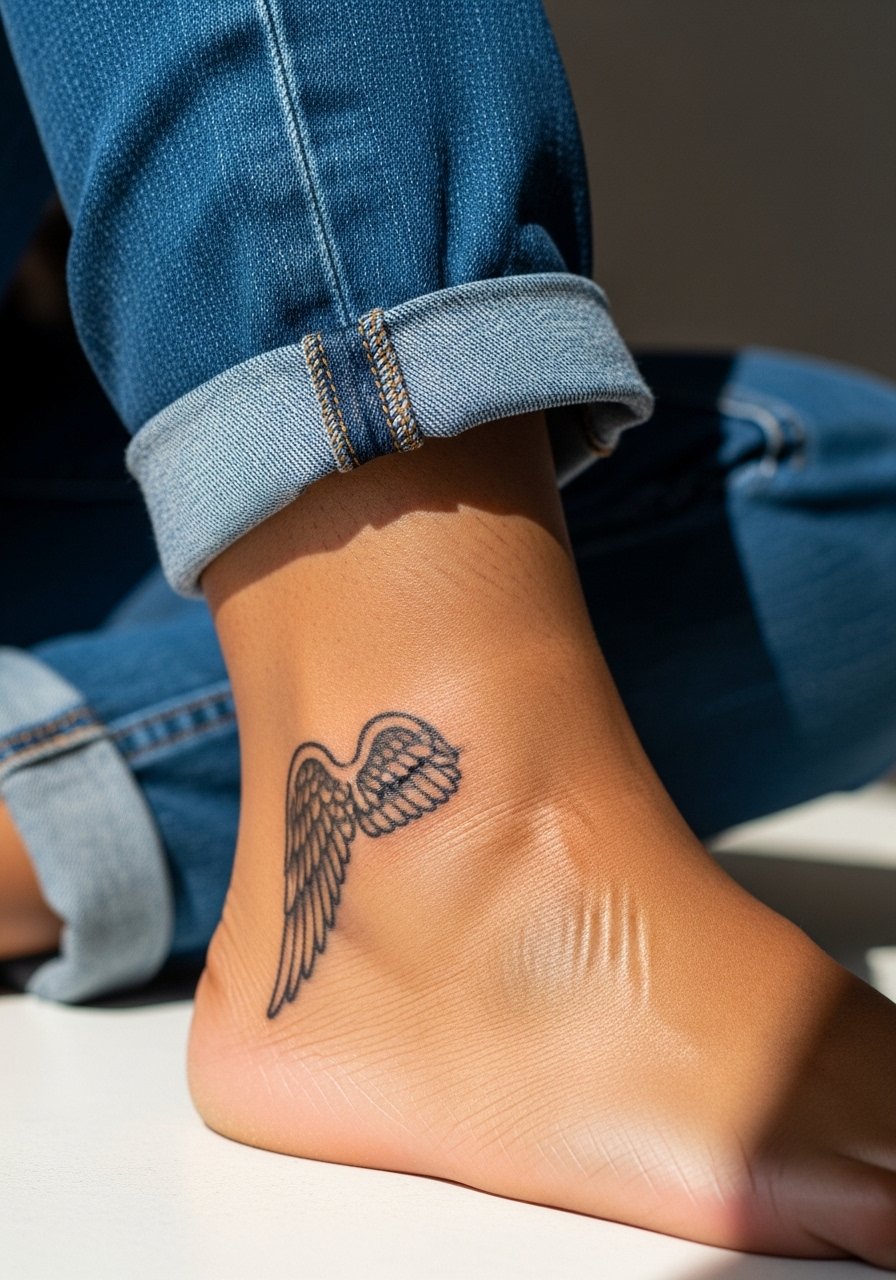
Hidden ankle placements are great for a seasonal reveal. Keep the linework bold enough to survive daily socks and shoes. The big mistake is pushing too many interior lines into a very small shape. Sessions are quick and healing is straightforward if you avoid tight shoes for a few days. For showing off, choose strappy sandals or cuffed pants. Wear loose pants to your appointment so the artist can access the area easily.
27. Small Cloaked Dark Angel Over the Heart
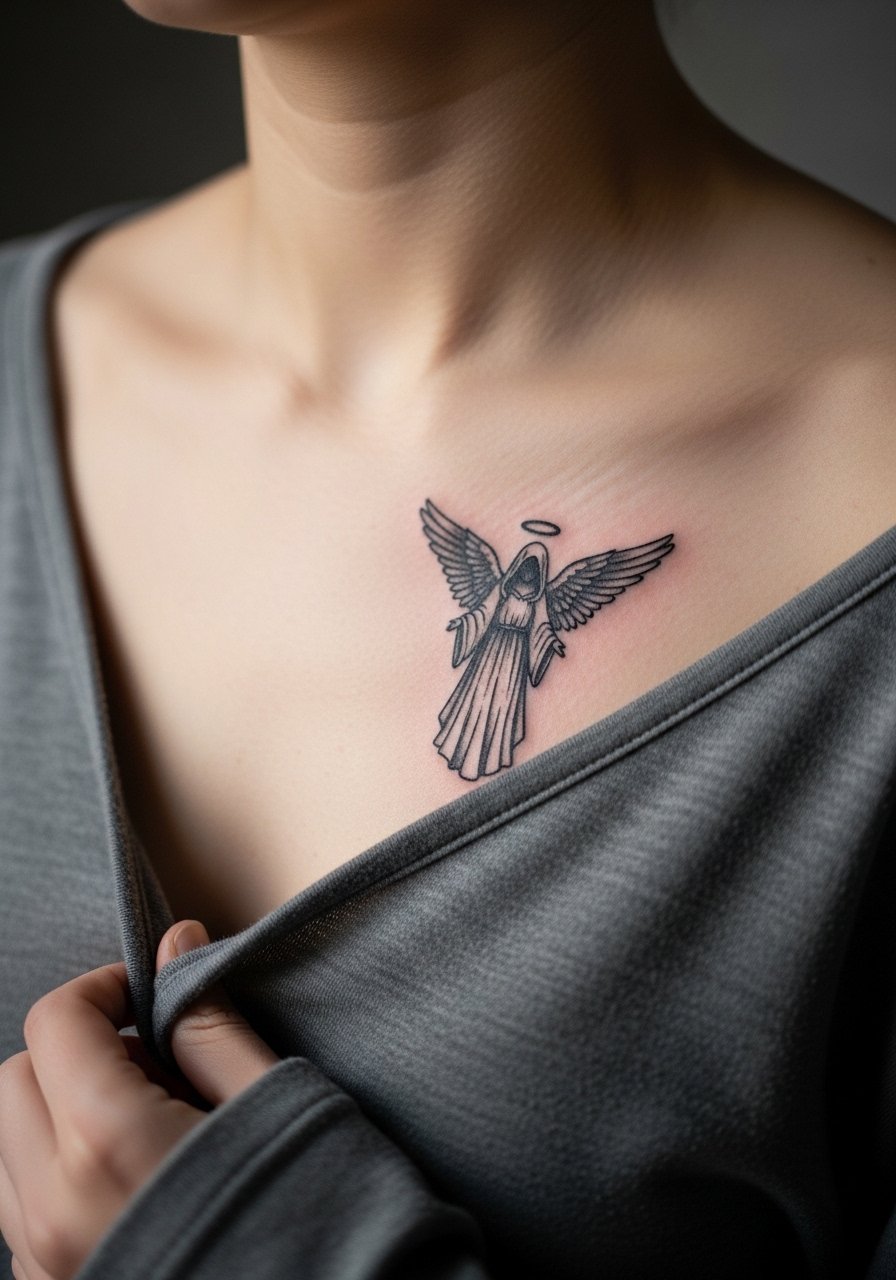
A design over the heart reads intimate and memorial when desired. Keep scale modest to avoid breathing interference and to make the piece wearable. The session is short but healing requires attention to avoid chafing from clothing. One common error is requesting dense shading near the center line that scars more noticeably. For the appointment wear a fitted sports bra or a wide-neck top you can adjust. If you want the piece subtle, a small cloaked silhouette holds up well.
Frequently Asked Questions
Q: Will fine line dark angel tattoos blur on olive or darker skin tones faster than blackwork?
A: From what I have seen, ultra-fine hairlines can lose crispness faster on medium and darker tones because contrast matters more. Black and gray fills or slightly thicker anchors tend to hold up better. Ask your artist to show healed examples on similar skin tones and plan a touch-up at year one if you favor very thin lines.
Q: How do I decide between a tiny wrist angel and a small collarbone silhouette if I worry about professional visibility?
A: The wrist is easier to see and can be covered with long sleeves or a watch, but it gets more wear. The collarbone can be hidden by regular shirts and shows mainly with low necklines. Think about how often you want it visible day to day and bring both options to your consultation so the artist can advise on scale and line weight.
Q: If I want a watercolor wash, how can I make it last longer on a thigh piece?
A: Hybrid approaches help. Ask the artist to anchor washes with black or gray outlines and keep the wash areas larger so the color has room to age gracefully. Thighs hold washes better than wrists or ankles because they get less constant abrasion and sun exposure.
Q: Should I be worried about weight changes affecting a cloaked ribcage or forearm angel?
A: It depends on placement. The ribcage and inner arm can change appearance with weight shifts. If you foresee major body changes, choose placements like the shoulder blade or calf that are more stable or design with flowing lines that tolerate distortion.
Q: How soon should I schedule a touch-up for a dainty fine line angel?
A: A realistic schedule is to check healed photos at six to twelve months and expect touch-ups within one to two years for very fine work. If you live outdoors or wash the area often, plan earlier checks.
Q: Are there healing methods artists disagree on that I should know about?
A: Yes. Two camps often appear. One group prefers protective film systems for cleaner first-week healing and less scabbing. The other group favors dry healing to avoid trapping moisture which they say helps saturation. Ask your artist which method they use and why so you pick consistent aftercare that matches their approach.
Q: Where can I find artists who do dainty dark angel styles without over-gothic heavy shadows?
A: Search hashtags like #DarkAngelTattoo and #FineLineAngel on social platforms, filter portfolios by healed photos, and use apps that list local studios. Also look at custom design shops on platforms that let you filter by style. Trust your instincts when you see healed images that match the level of shadow you want.