
The cleanest hand flower pieces are the ones planned like jewelry. You think about daily wear, how a bracelet will sit, how typing rubs the knuckles, and whether the linework will still read in five years. These ideas focus on delicate, low-contrast floral work that reads soft on the skin while admitting the realities of hand placement. Below are designs, what to ask your artist, and small outfit choices that frame the ink without shouting.
1. Tiny Single Blossom on the Side of a Finger
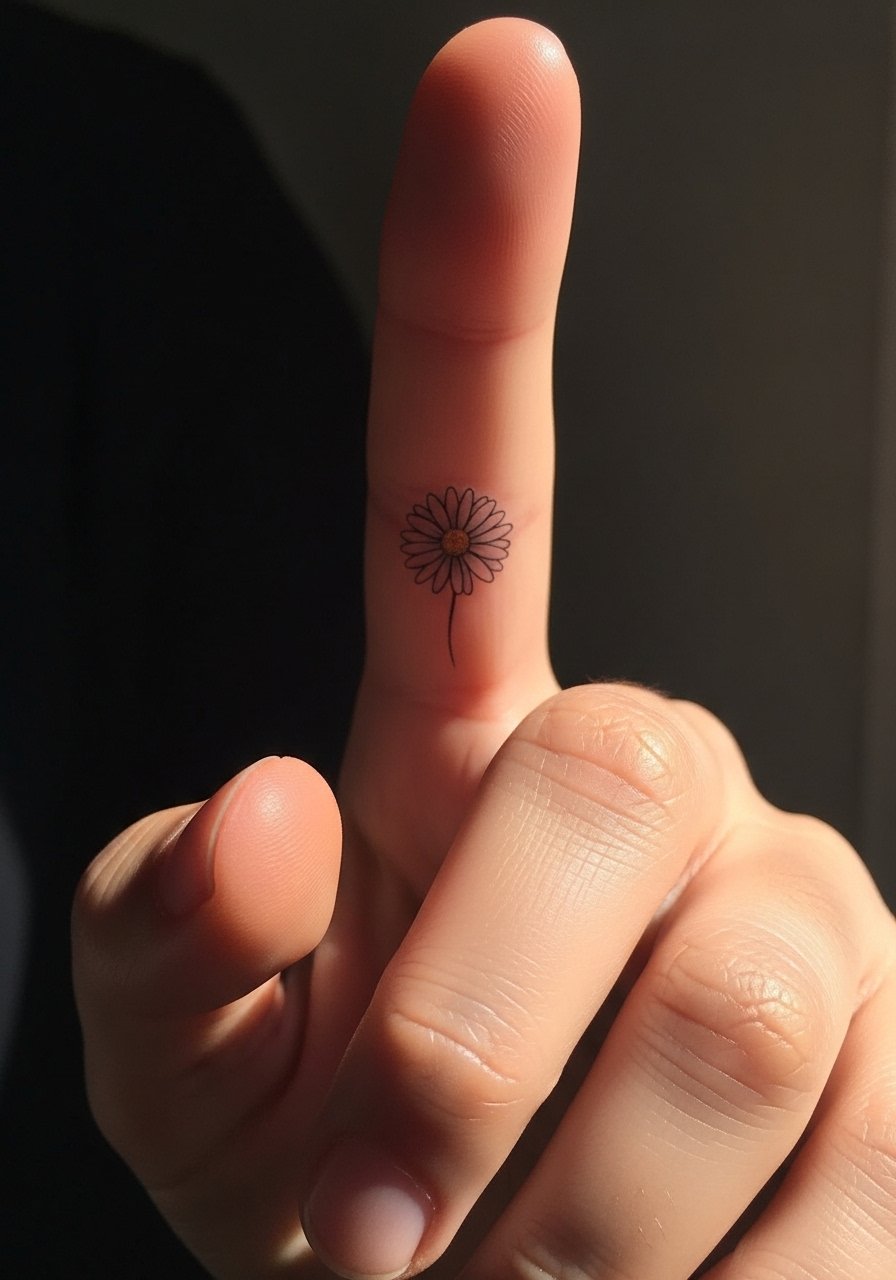
A single tiny blossom tucked on the finger side is practical and quiet. Tell your artist you want slightly bolder linework than a micro dot because the finger skin moves a lot and will spread the thinnest lines. Common mistakes include asking for hair-thin detail that vanishes by year two. Expect a sharp look at six months, then softening by year three, with likely touch-up at year two. For showing this off, stacked dainty rings work best, and I like a thin chain midi ring that sits above the blossom so the tattoo reads like jewelry. Pain is brief and intense, and blowout risk is moderate on the sideways finger edge.
2. Mini Rose on the Web of the Hand
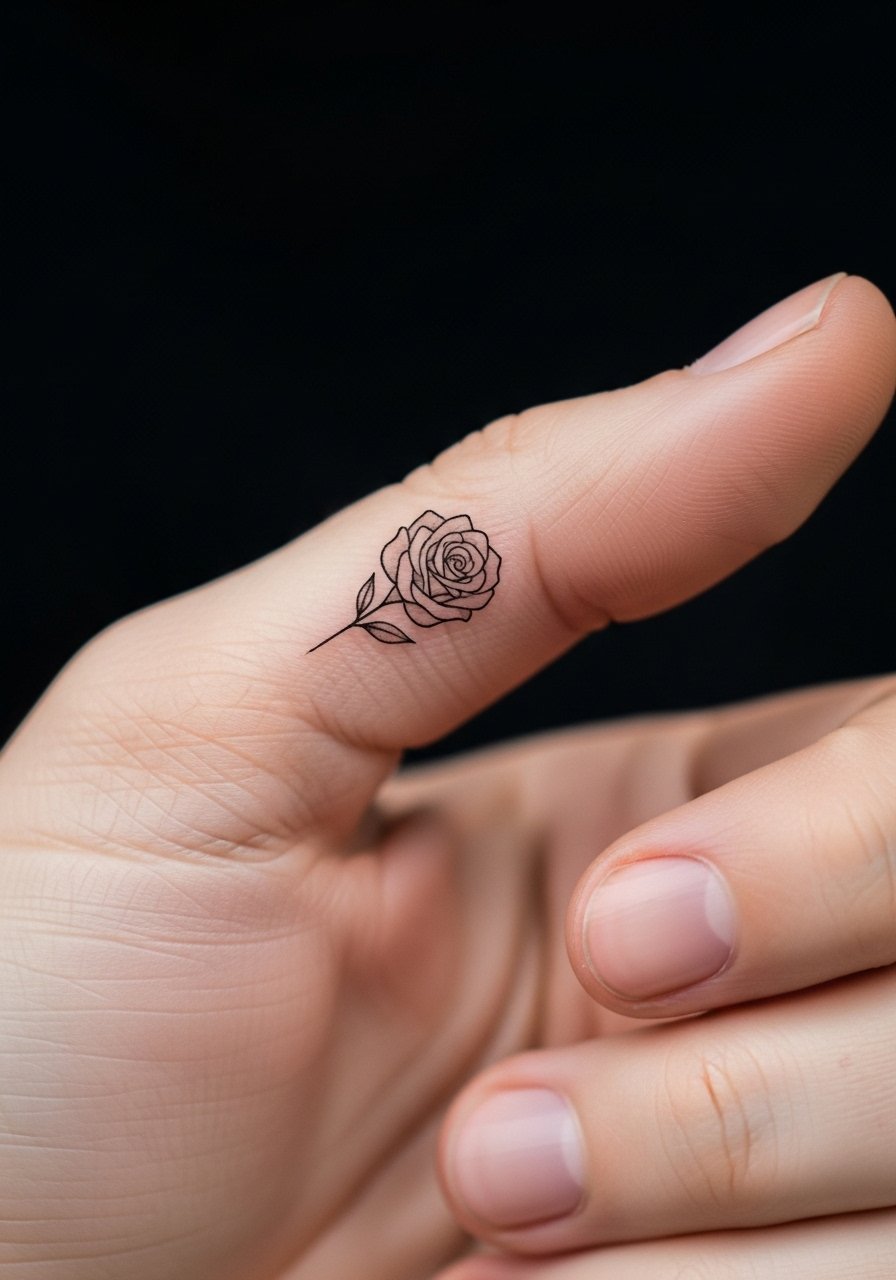
A micro rose in the web space reads intimate and balanced when kept compact. In consultation, ask for a tightened silhouette with minimal interior stipple shading, not dense saturation, so it holds without turning mushy. The biggest mistake is asking for tiny petals filled with gray wash, which merges under the thin skin there. Expect crispness at six months and gradual softening around year two. For the session wear, a short-sleeve shirt that can be pushed up keeps the area exposed. Pair the finished piece with a minimal leather bracelet so the overall hand reads crafted rather than covered.
3. Knuckle Bud Cluster, Low-Contrast
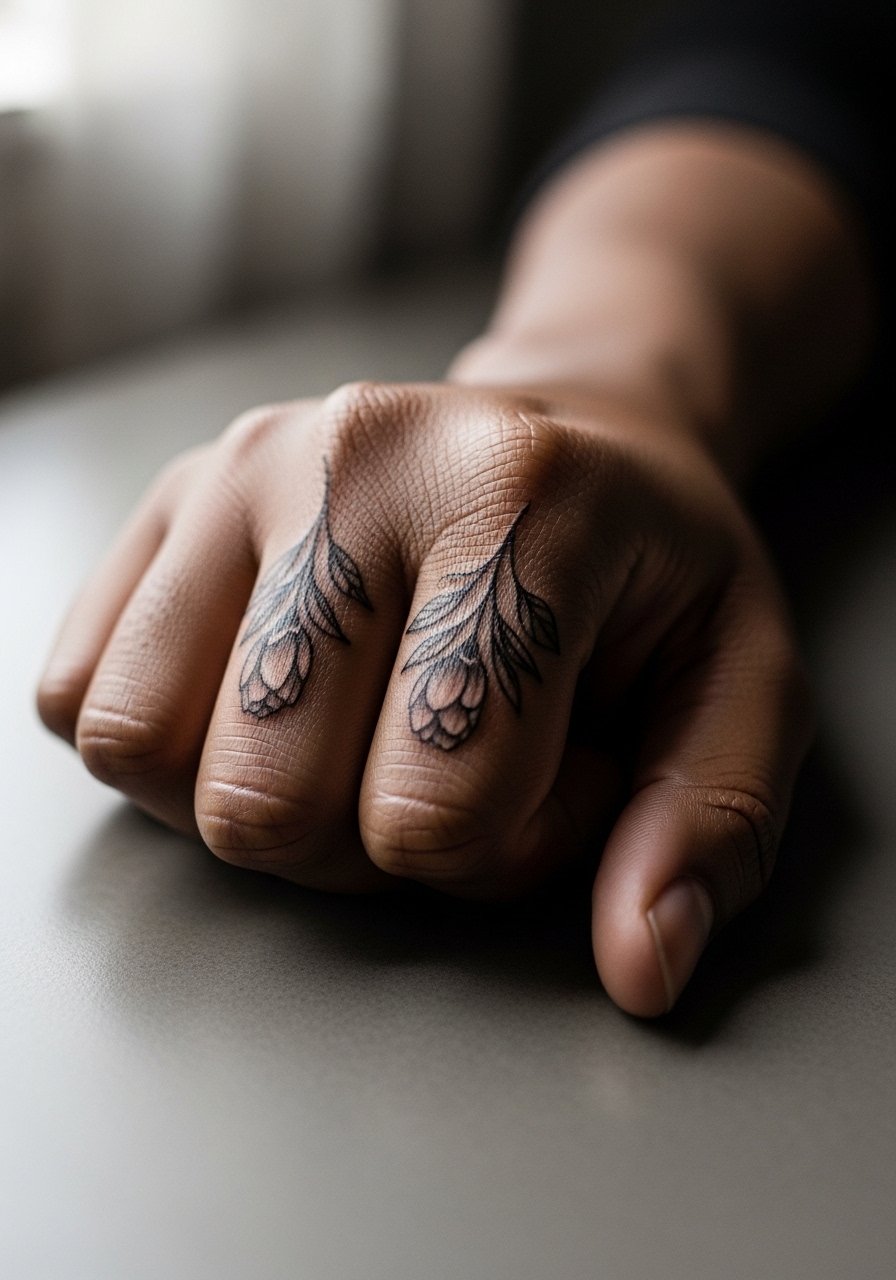
A knuckle cluster needs breathing room. I often recommend spacing each bud so letters or neighboring designs do not compete. Tell your artist to keep linework slightly thicker than micro lines to resist blowout from constant bending. Mistakes include crowding tiny details right over the knuckle creases. Expect touch-ups sooner than on the forearm, often around year two. Styling-wise, short sleeves and a slim stackable ring set help the top-of-hand work look intentional. Pain is sharp with each digit move, and healing may scab in high-friction spots.
4. One-Leaf Stem Along the Side of the Thumb
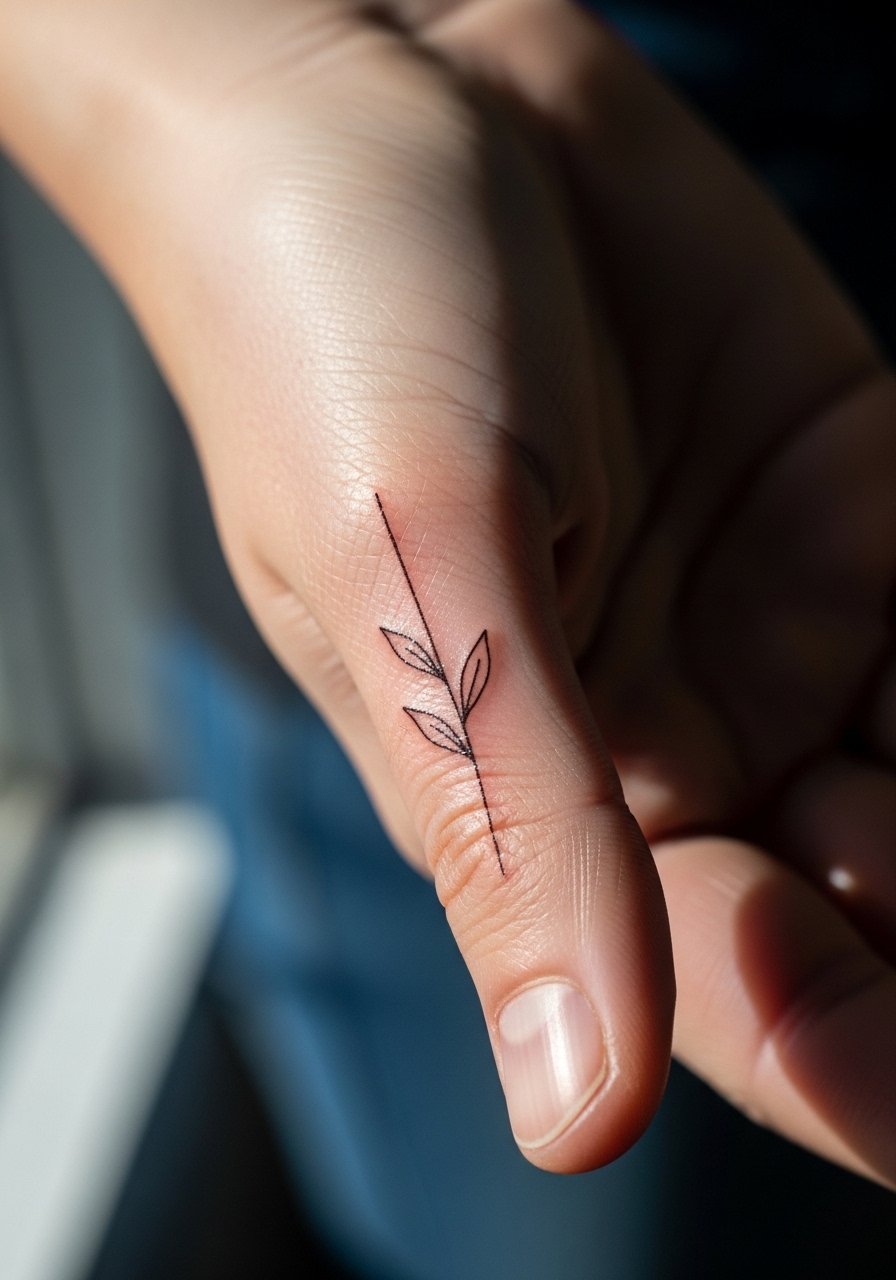
A vertical stem along the thumb side plays well with natural hand lines. Ask for slightly curved linework that follows your thumb's contour so the piece moves with the hand. A common error is too thin a stem that fades into a gray smudge. This placement tends to need a touch-up at year two because of washing and friction from grips. For session comfort, wear a short-sleeve cotton tee so the artist can position your hand naturally. Expect a quick session and localized soreness when gripping things after.
5. Micro Anemone on the Back of the Hand
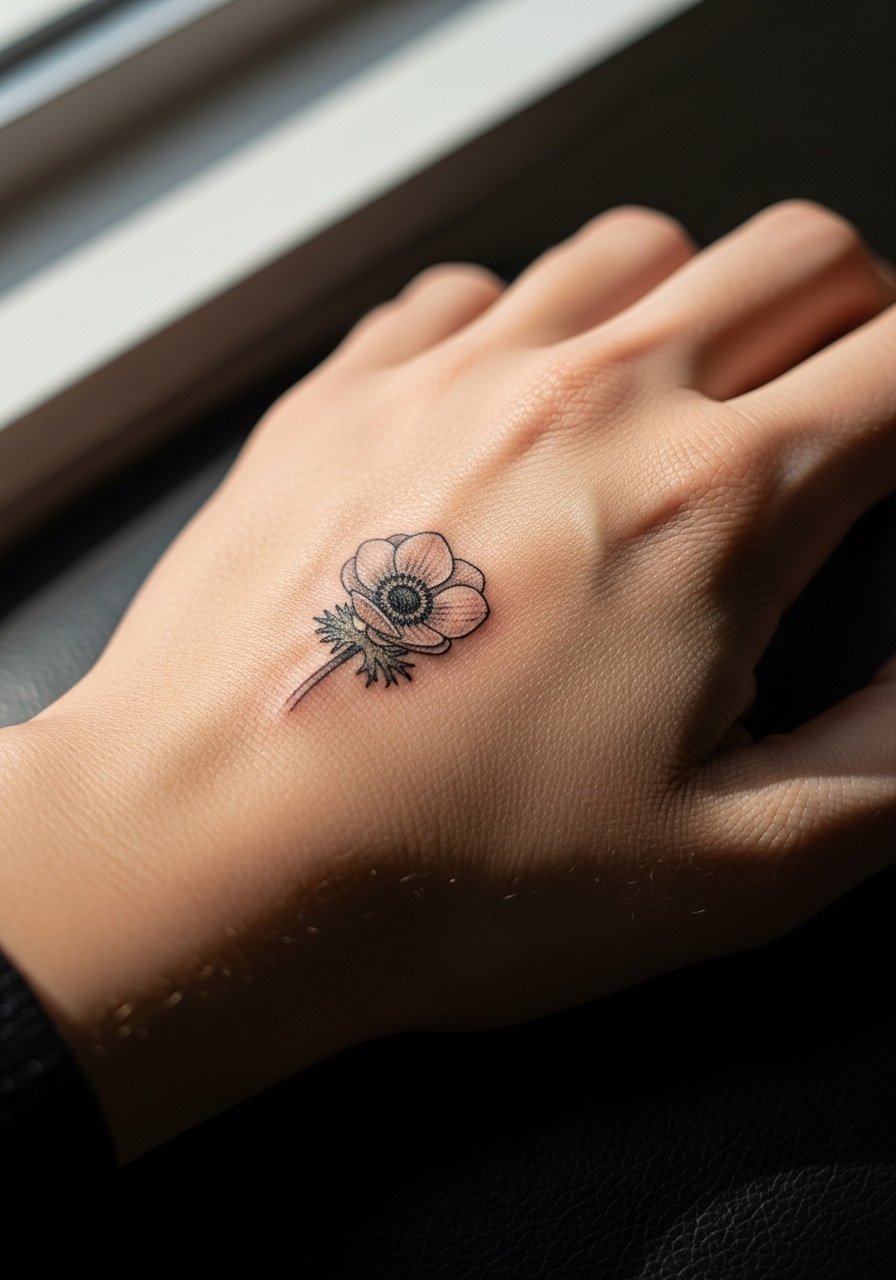
The back of the hand is a visible place that ages differently than the wrist. If you want longevity, ask for simple outlines and light stipple instead of heavy shading. Artists split over fine line on the hand. One camp says thin linework on this canvas blurs quickly due to movement and sun exposure. The other camp argues that with slightly bolder line weight and spacing, it can last clean for years. Name where they stand in the consultation and request examples from healed portfolios. For showing it off, a minimalist watch strap frames the hand without covering the bloom.
6. Crescent of Tiny Flowers Curving Around the Wrist
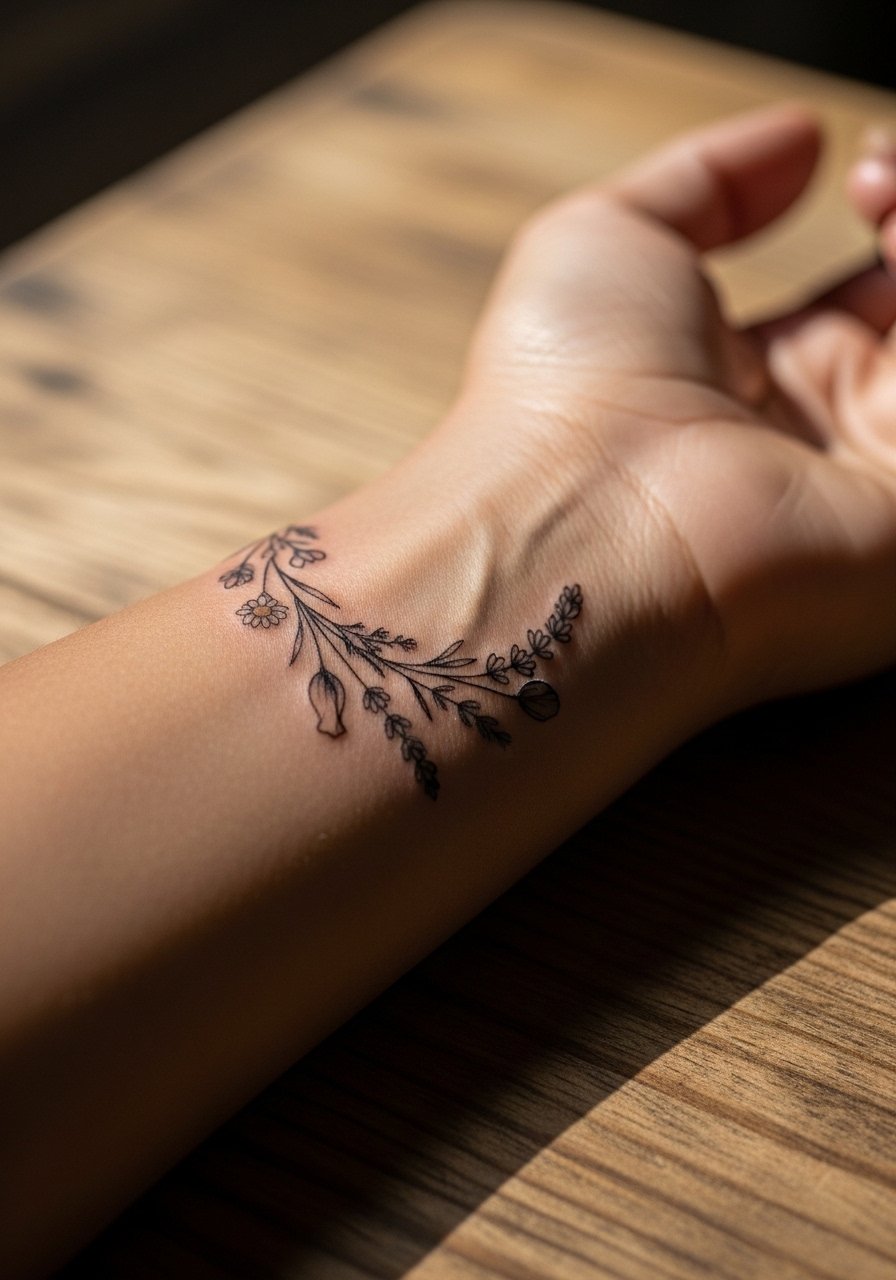
A wrist curve works like a bracelet when scaled right. Tell your artist you want negative space between blooms so the cluster does not merge into a solid band after a few years. The common mistake is compressing too many elements into a narrow band. This design typically heals predictably but will need touch-up where the skin bends. For evening wear, pair it with a delicate bracelet that sits beside the line without rubbing. Session time is short and pain is low to moderate.
Studio Day Picks
The wrist and web-of-hand pieces above face extra friction from jewelry and daily tasks, so a few small kit items smooth the session and the first week.
-
Stencil transfer paper kit. Lets you preview the exact placement on fingers and wrist before committing, which is essential for tiny floral layouts.
-
Topical numbing cream. Applied as recommended it takes the edge off knuckle and thumb sensitivity without affecting linework.
-
Thin protective film roll. Keeps finger and back-of-hand pieces clean during the early healing window when washing and friction are constant.
-
Fragrance-free body wash. Cleanses the hand area without irritating delicate linework while baths and showers resume.
-
Aquaphor healing ointment. Thin layers in the first days lock in moisture for fine line pieces without stalling scab formation.
7. Tiny Pom-Pom Flowers Across the Fingers
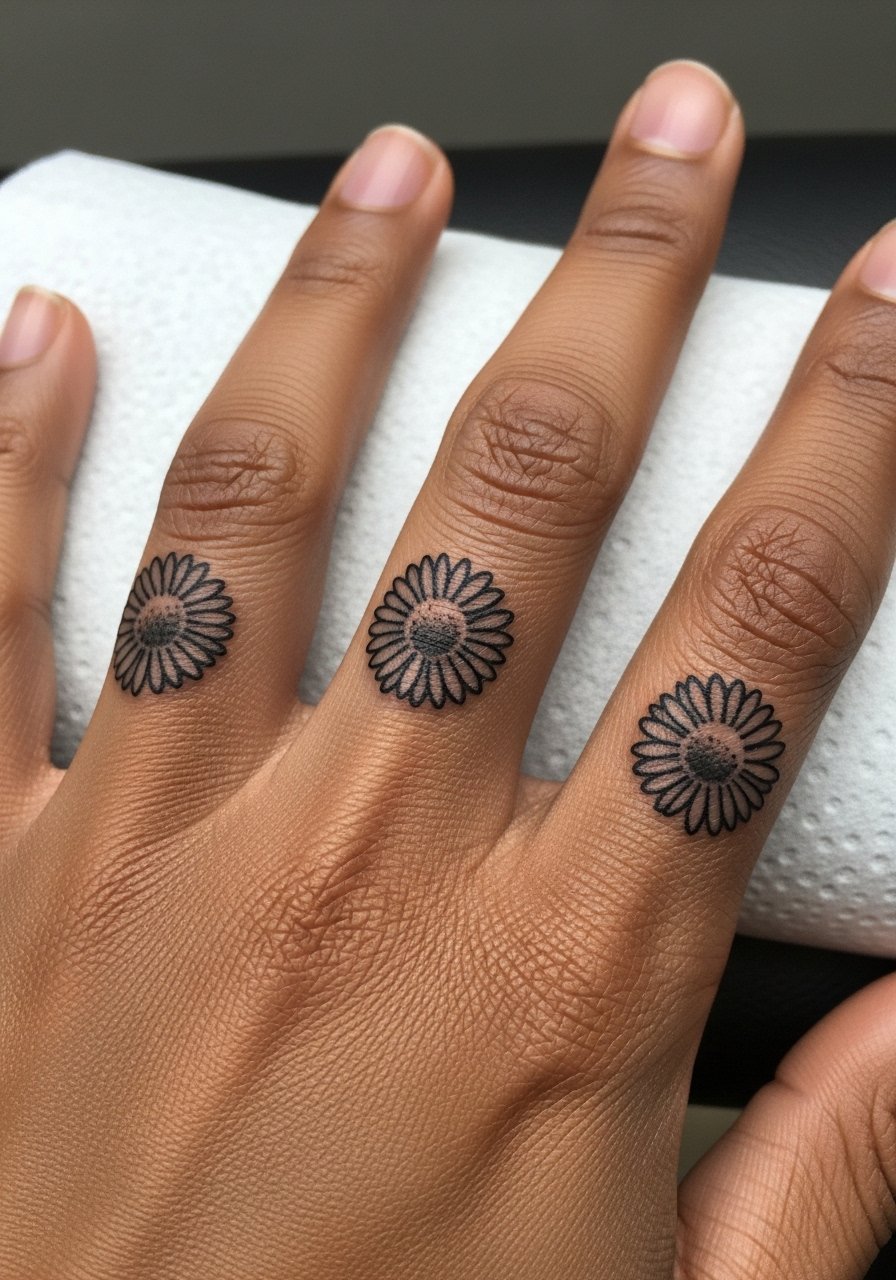
A run of pom-pom flowers reads playful and symmetrical when spacing is even. Ask for slightly larger petals than you think you need so the flowers do not disappear into knuckle creases. Mistakes include aligning the blooms directly over heavy crease lines which accelerates blurring. At six months this looks crisp and at two years you can expect softening. Pair this style with thin stackable rings that let the flowers peek through. Sessions are quick but precise, and touch-up is common for finger work.
8. Micro Lily on the Thumb Pad Edge
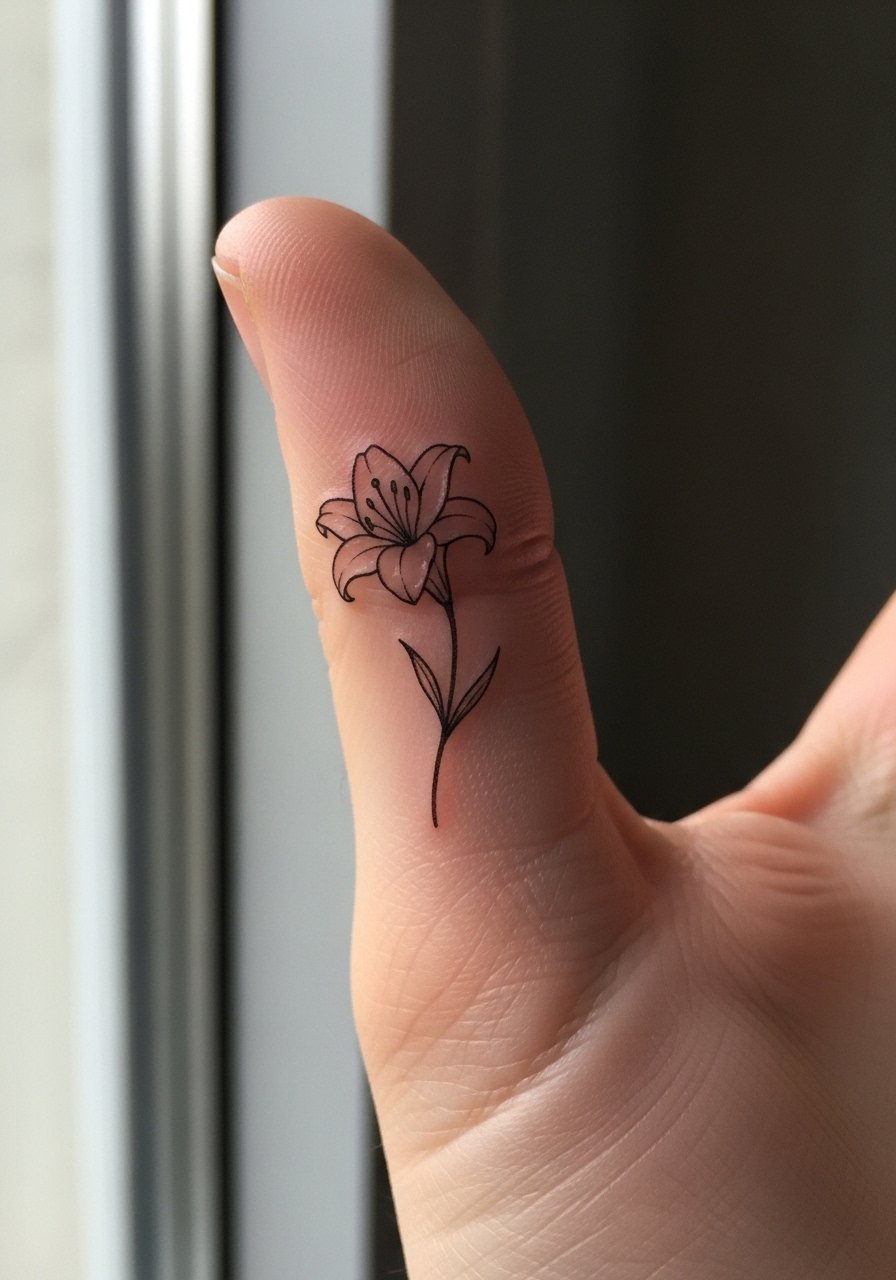
The pad edge is a high-wear surface so the design must be simple. Tell your artist you prefer bold contour lines and minimal interior detail. A usual error is requesting detailed texture that will break down under constant contact. Expect the first year to be the sharpest and plan for a touch-up around year two. For session day, wear a short-sleeve shirt you can roll up easily. Grip soreness lasts a few days when the pad is used for pushing or holding tools.
9. Small Bouquet Across the Back of the Hand
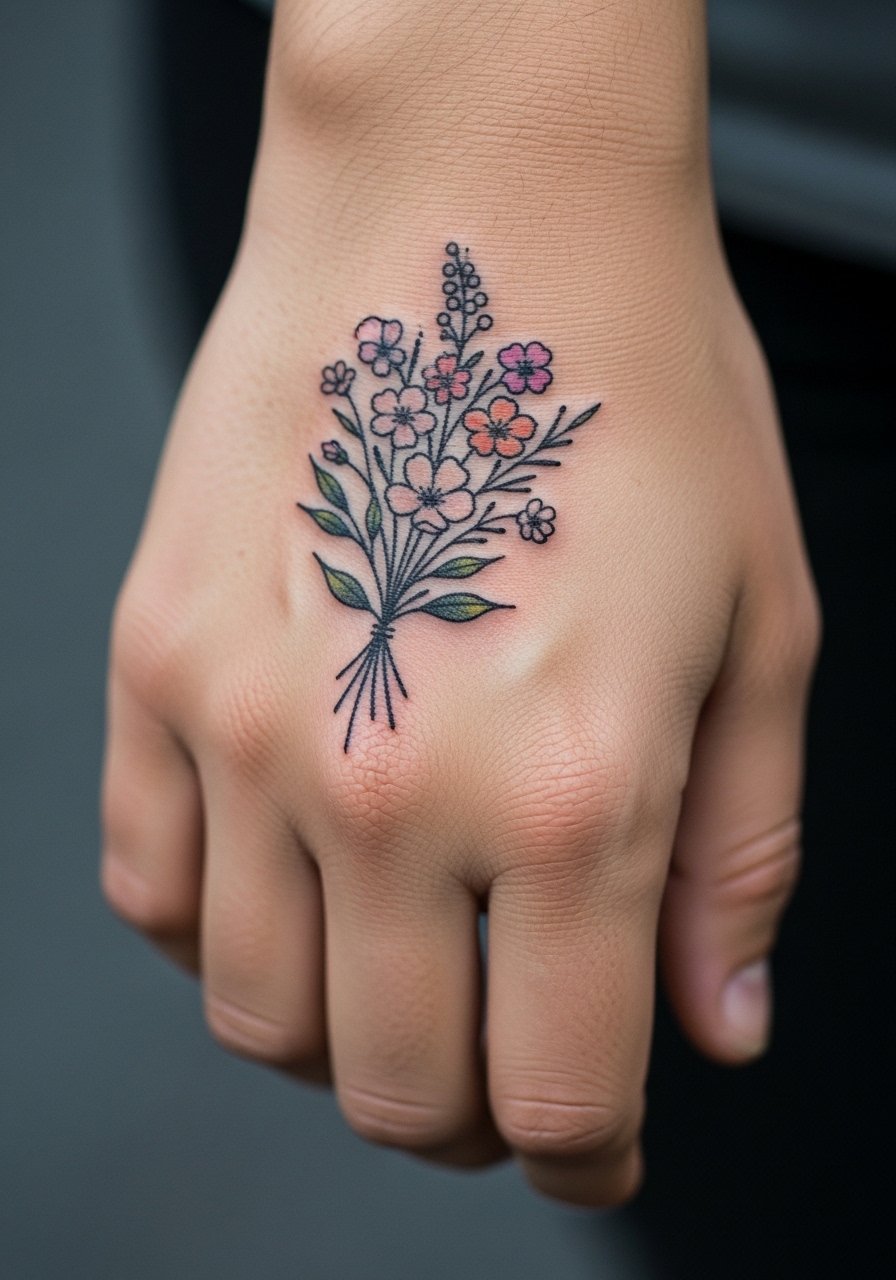
A compact bouquet can be arranged diagonally across the hand to follow tendons and avoid creases. Ask for negative space and minimal shading to prevent the cluster from becoming a grey patch. The common mistake is packing too many stems into a small area. Longevity is fair, but expect touch-ups around year two for contrast restoration. Style with a slim leather cuff that complements the bouquet without rubbing it daily. Pain is moderate and healing needs careful hand hygiene.
10. Wrist-Crested Garland That Peeks Under a Sleeve
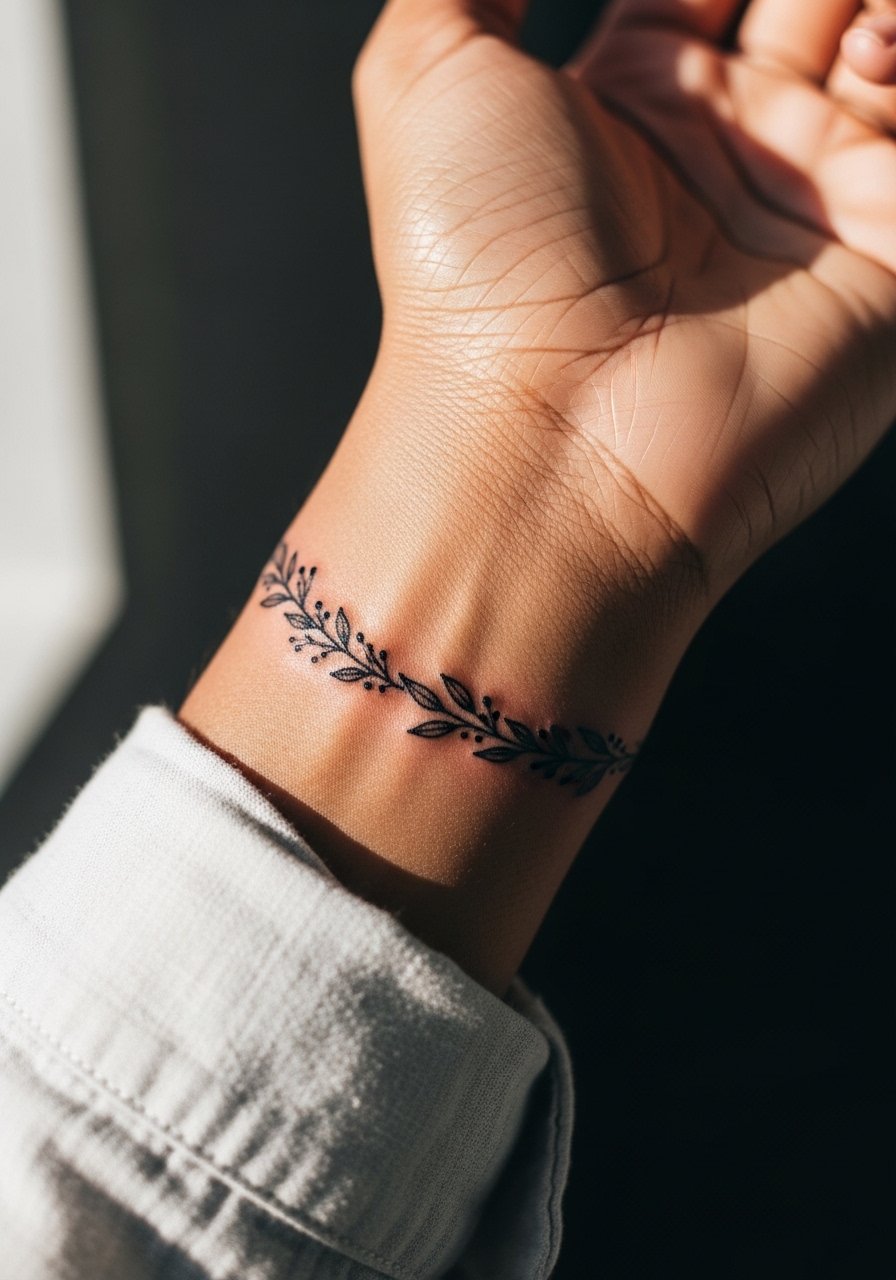
When a garland sits near the sleeve line, think about how clothing will hide or reveal it. Ask for a scalloped composition so the piece still reads when only partially visible. The mistake is a continuous dark band that ages into a shadow on the wrist. Expect even healing but plan touch-up where the skin folds. For show-off outfits, roll sleeves with a linen button-down so the piece reveals itself subtly. Session time is short and pain is mild.
11. Delicate Vine That Trails Down the Thumb Side
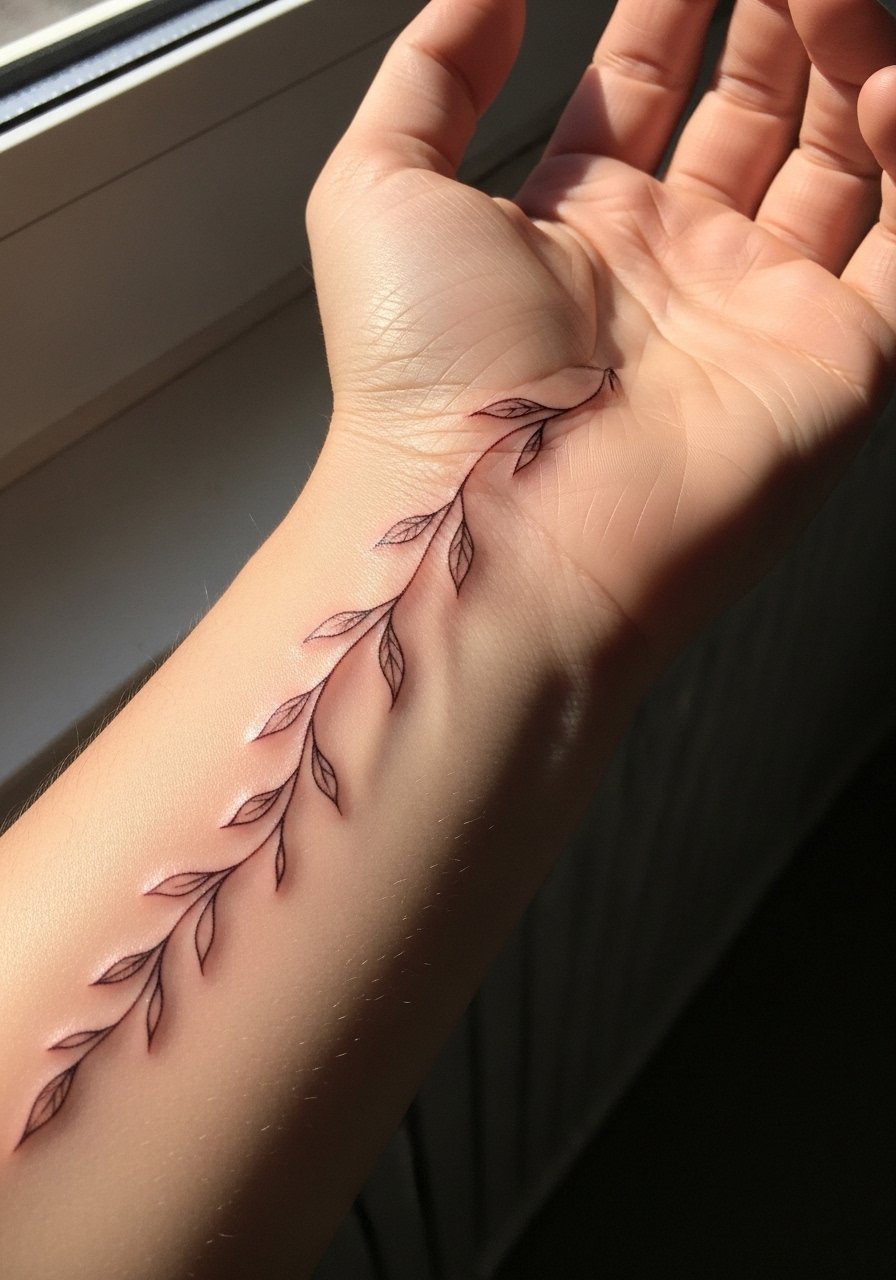
A trailing vine looks elegant when it follows natural curves. Tell the artist you want slight spacing between nodes so the vine does not blur into a single strand. A mistake is too dense leaf clusters that flatten over time. This piece usually needs a touch-up at year two for clarity. For the session, a racerback tank keeps the shoulder and wrist free and makes it easier to position the arm. Expect light soreness when gripping after, and avoid tight gloves during healing.
12. Tiny Sunflower Nestled by the Wrist Bone
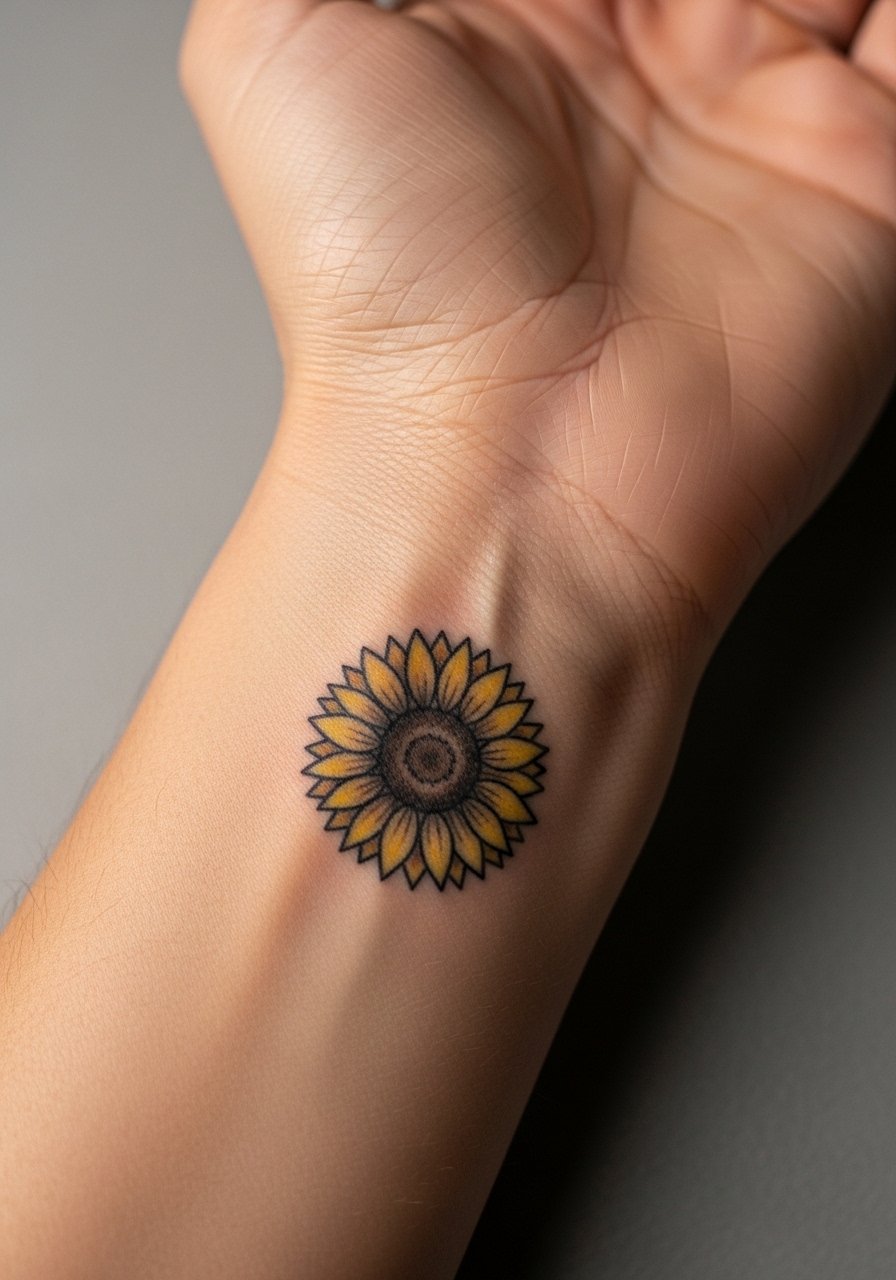
A sunflower near the wrist bone benefits from clear negative space around the petals. Ask for defined petal tips and avoid heavy center shading. The error is asking for dense center saturation that will darken with time. Heals predictably and usually needs touch-up sooner if exposed to sun often. Pair with a thin chain bracelet that sits just below the bloom so the tattoo reads as intentional garnish. Pain is low and session time is short.
13. Single Stemmed Tulip Along the Side of the Hand
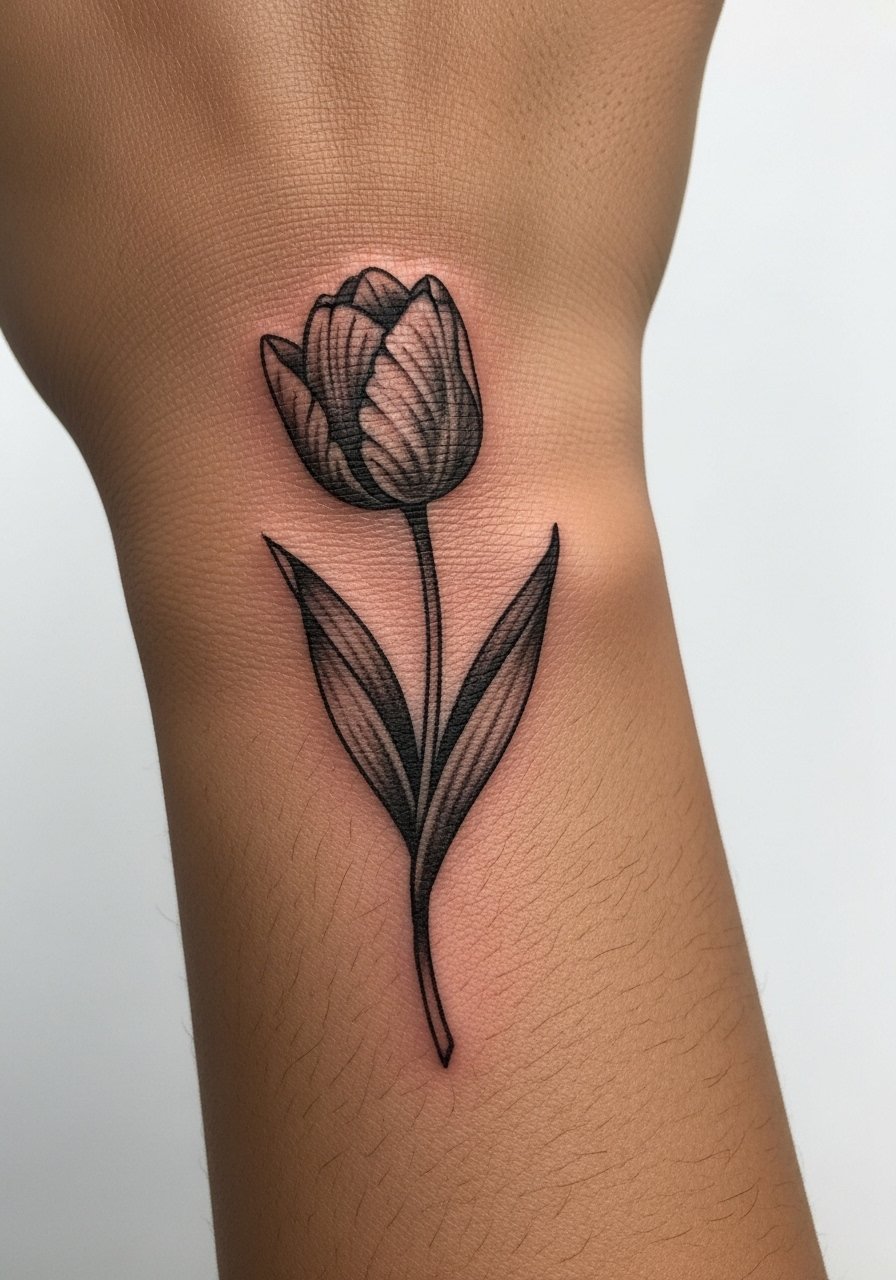
A side-of-hand tulip should hug the bone slightly so it does not get flattened by palm pressure. Tell the artist to angle the stem to avoid major crease lines. People often request micro petals that disappear faster than expected. This placement wears quickly with frequent use, so anticipate a touch-up at year two. For styling, a delicate cocktail ring balances the side placement visually. Expect short, sharp pain and localized scabbing near the base of the thumb.
14. Petite Floral Chain Between Two Fingers
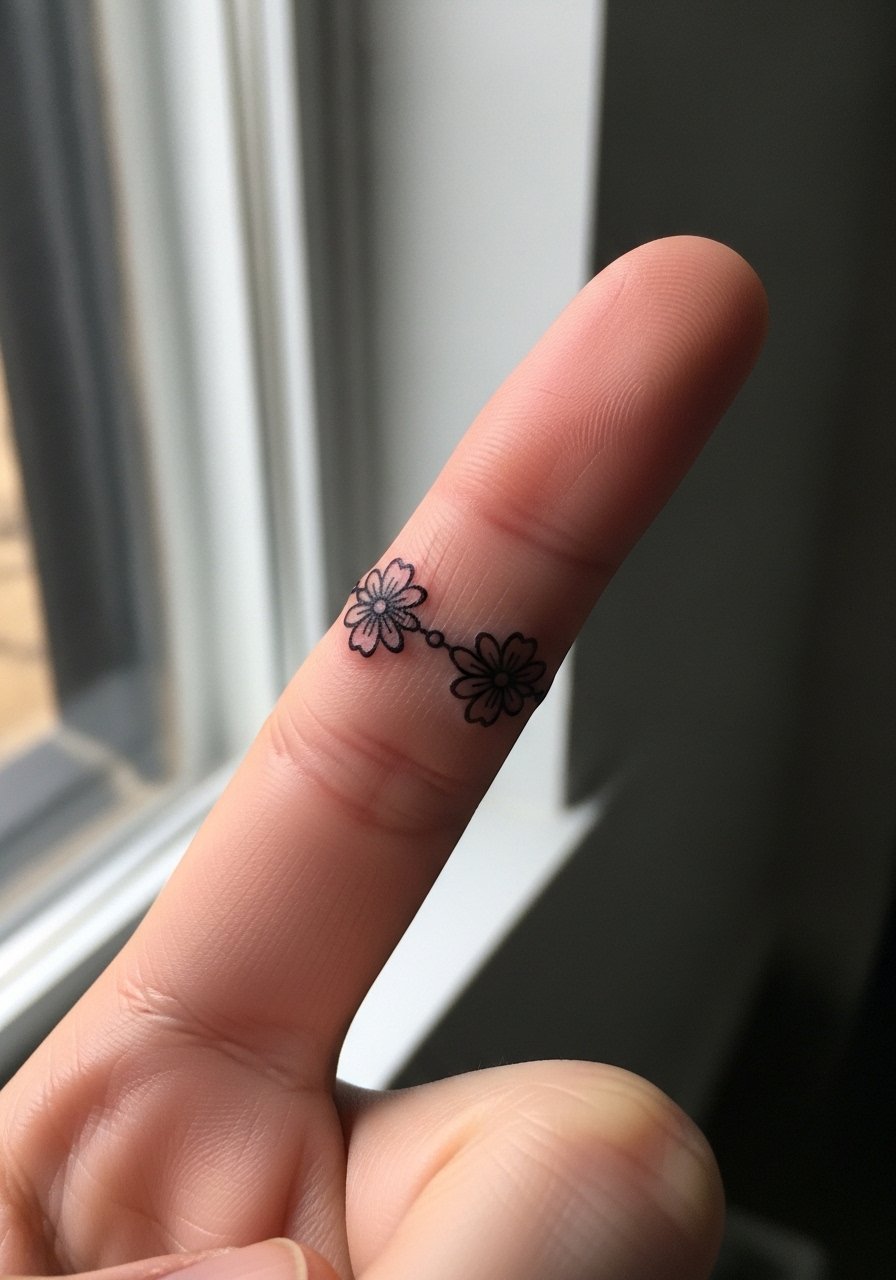
Inter-finger chains require exact centering so the design does not drift with finger use. Ask your artist to place the chain slightly off-center toward the thicker finger to reduce rubbing. Common mistakes include placing too many details in a narrow band. Expect rapid wear and possible fading from handwashing. For showing it off, a slim adjustable ring can sit nearby without crowding the ink. Sessions are short and precision is the priority.
15. Little Camellia at the Base of the Thumb
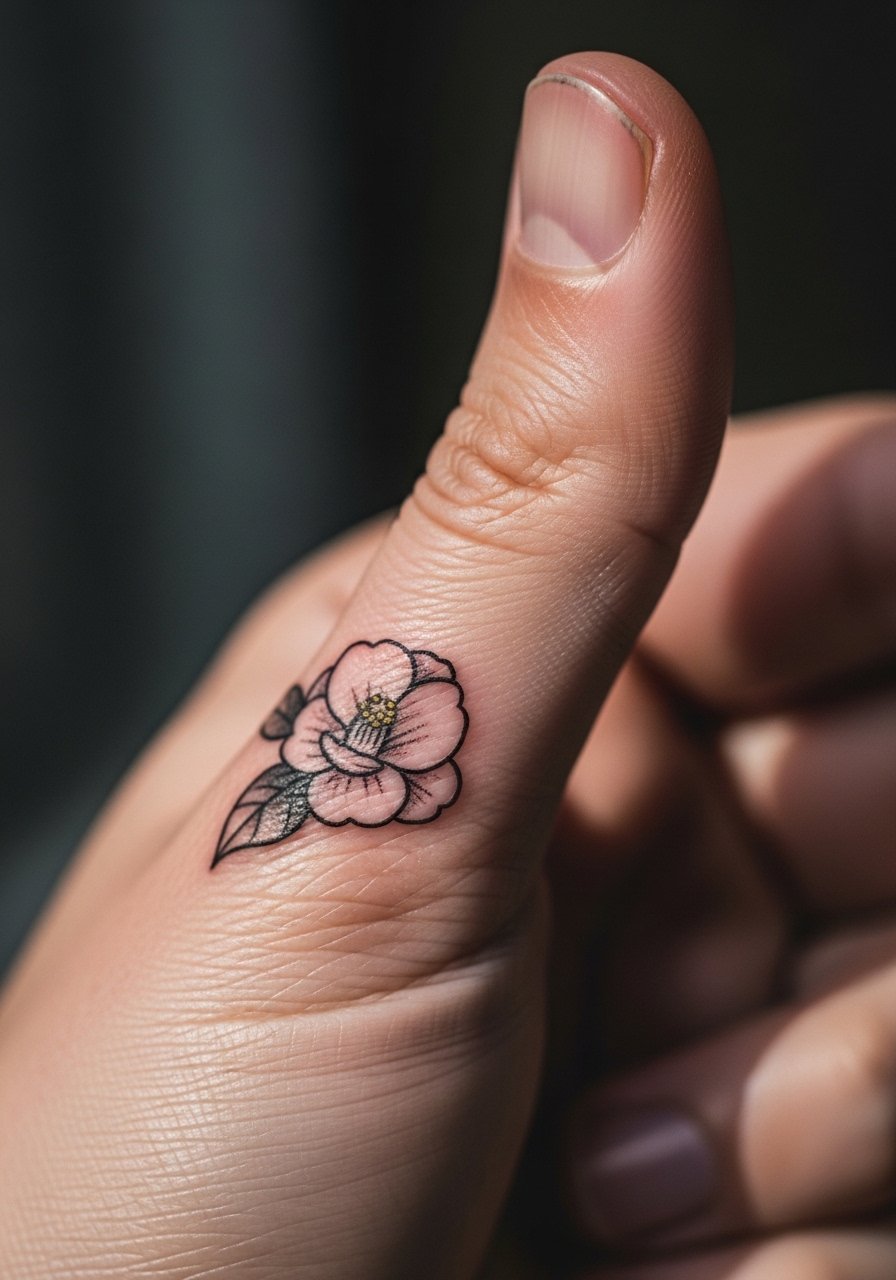
A camellia at the thumb base benefits from a compact silhouette and minimal interior detail. Tell the artist you want petal outlines with soft stipple rather than heavy black fill. A frequent error is asking for interior texture that fills and blurs under palm pressure. Expect touch-ups sooner than upper-arm work, often the second or third year. For session day, wear a zip-up hoodie you can slide your arm out of for access. The healing window includes extra hand washing, so plan accordingly.
16. Single-Line Floral Motif Along the Wrist Crease
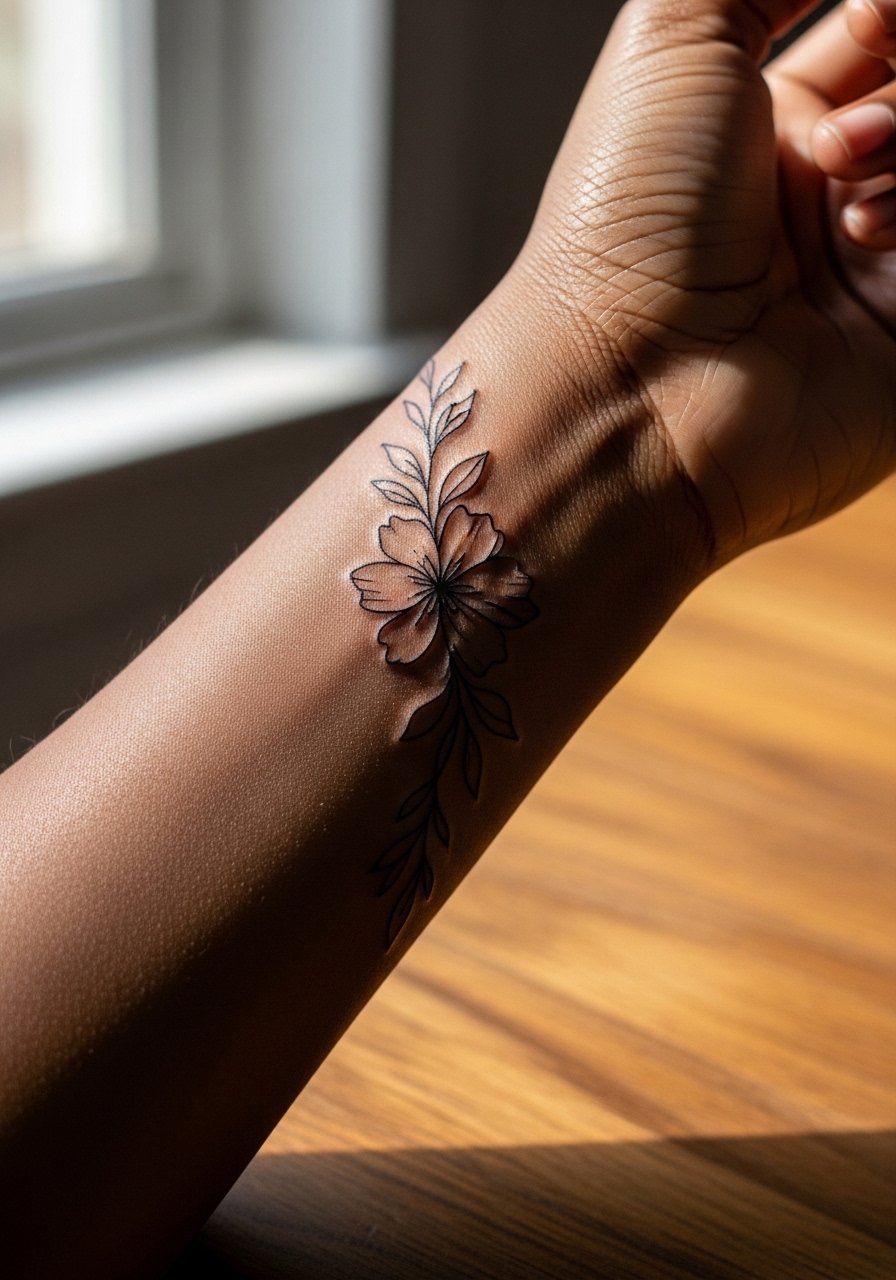
Single-line florals read modern but need room to breathe. Ask for small breaks in the line where petals meet skin creases so the design stays legible. The common mistake is an uninterrupted thin line that becomes a smudge after movement. Expect touch-ups for restoration of contrast around year two. Pair the piece with a slim watch band so the tattoo peeks out rather than getting rubbed constantly. Pain is mild and session time is brief.
17. Micro Bouquet Tattooed on the Web of the Pinky
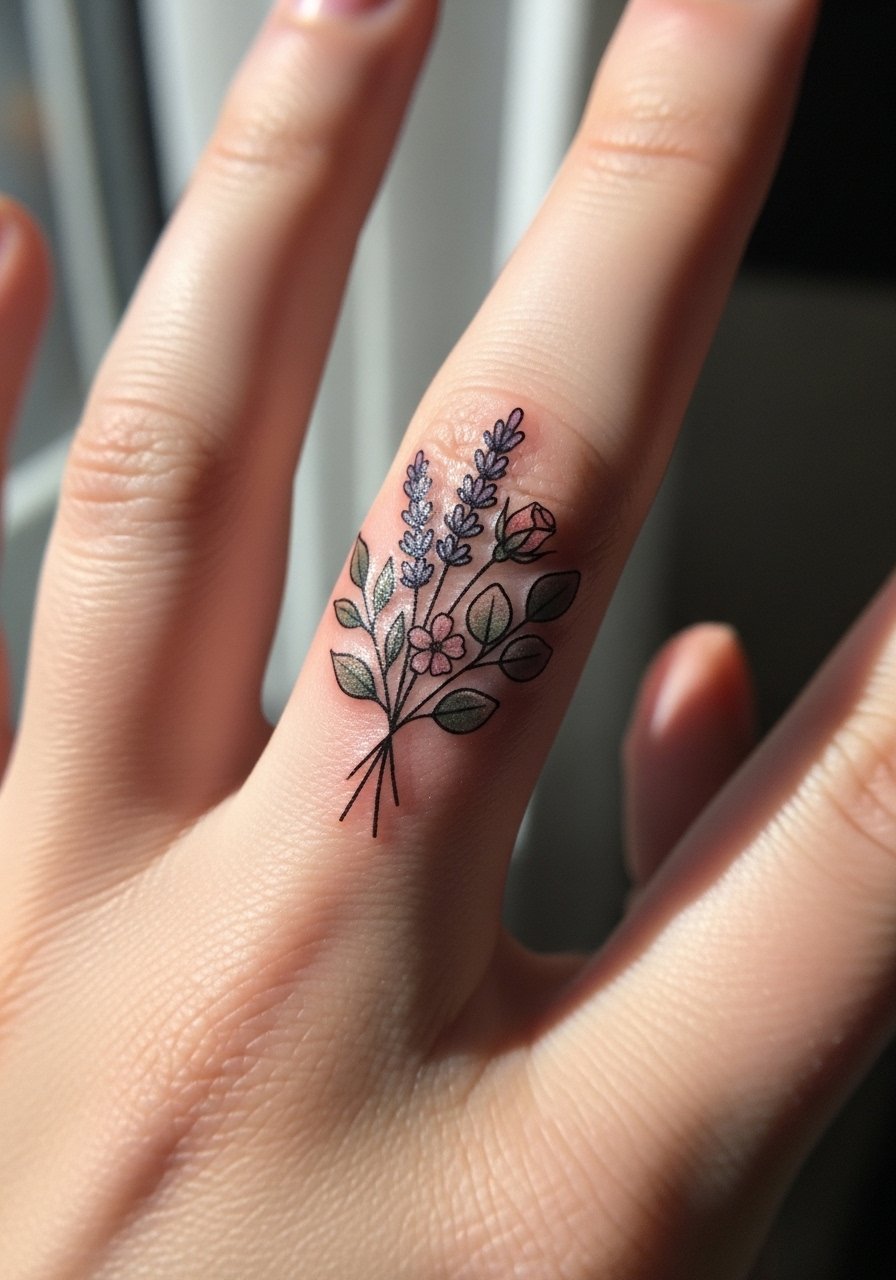
Small bouquets in webbing spaces need simple stems and open centers. Tell your artist to avoid dense shading and to focus on clear outlines. People often ask for complex center textures that do not survive the motion in that zone. Expect early blurring and a likely touch-up between year one and year three. For wearing detail, a slim stackable ring complements without rubbing the web. Sessions are quick but require careful hand positioning.
18. Tiny Orchid Near the Base of the Index Finger
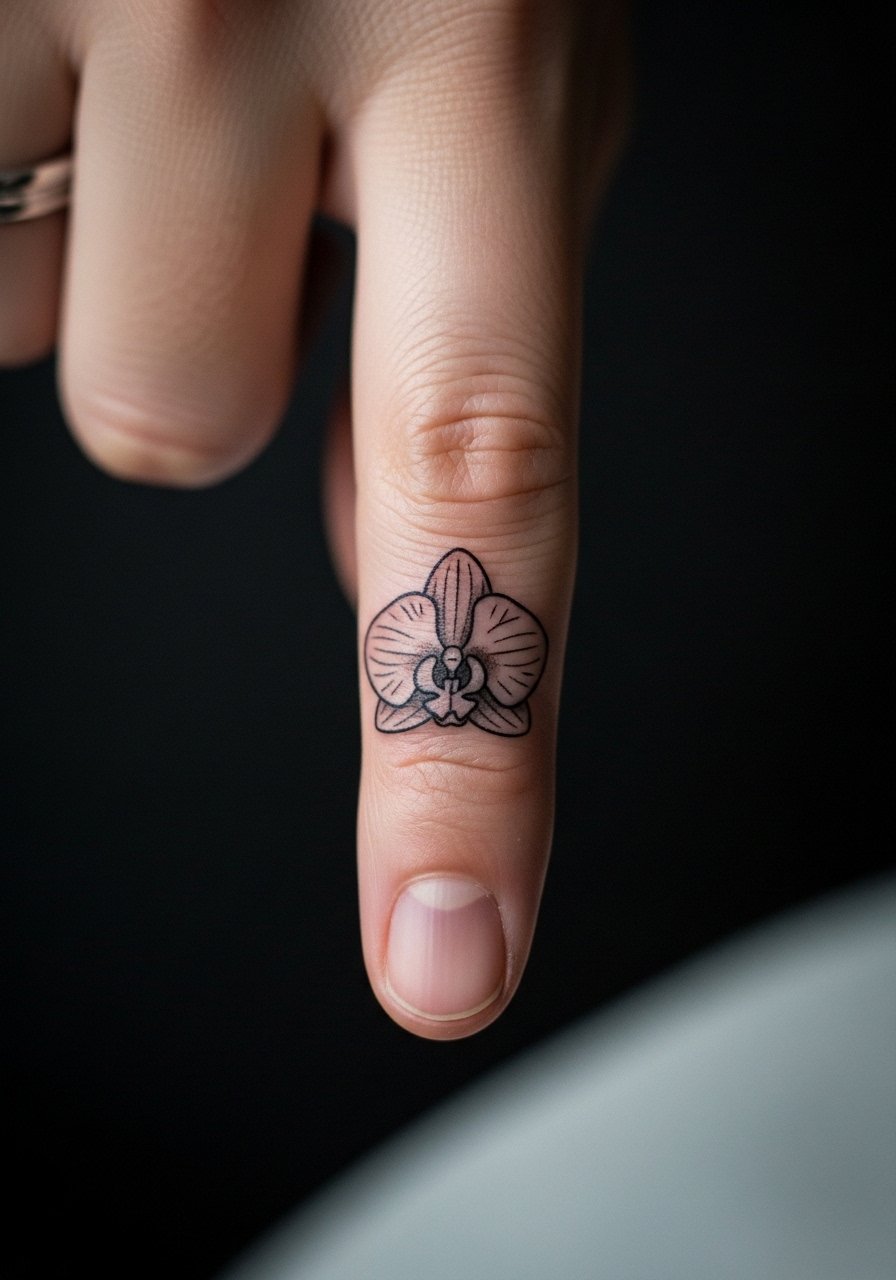
An orchid motif reads elegant when simplified. Ask for defined petal edges and sparse interior dots rather than full grey shading. The common mistake is overdetailed inner petals that fill in with time. This placement fares better than knuckles but still often needs a touch-up around year two. For show-off looks, pair it with a thin bracelet chain that draws the eye along the hand without obscuring the flower. Pain is focused and fades quickly after the session.
19. Mini Daisy Row Along the Top Edge of the Hand
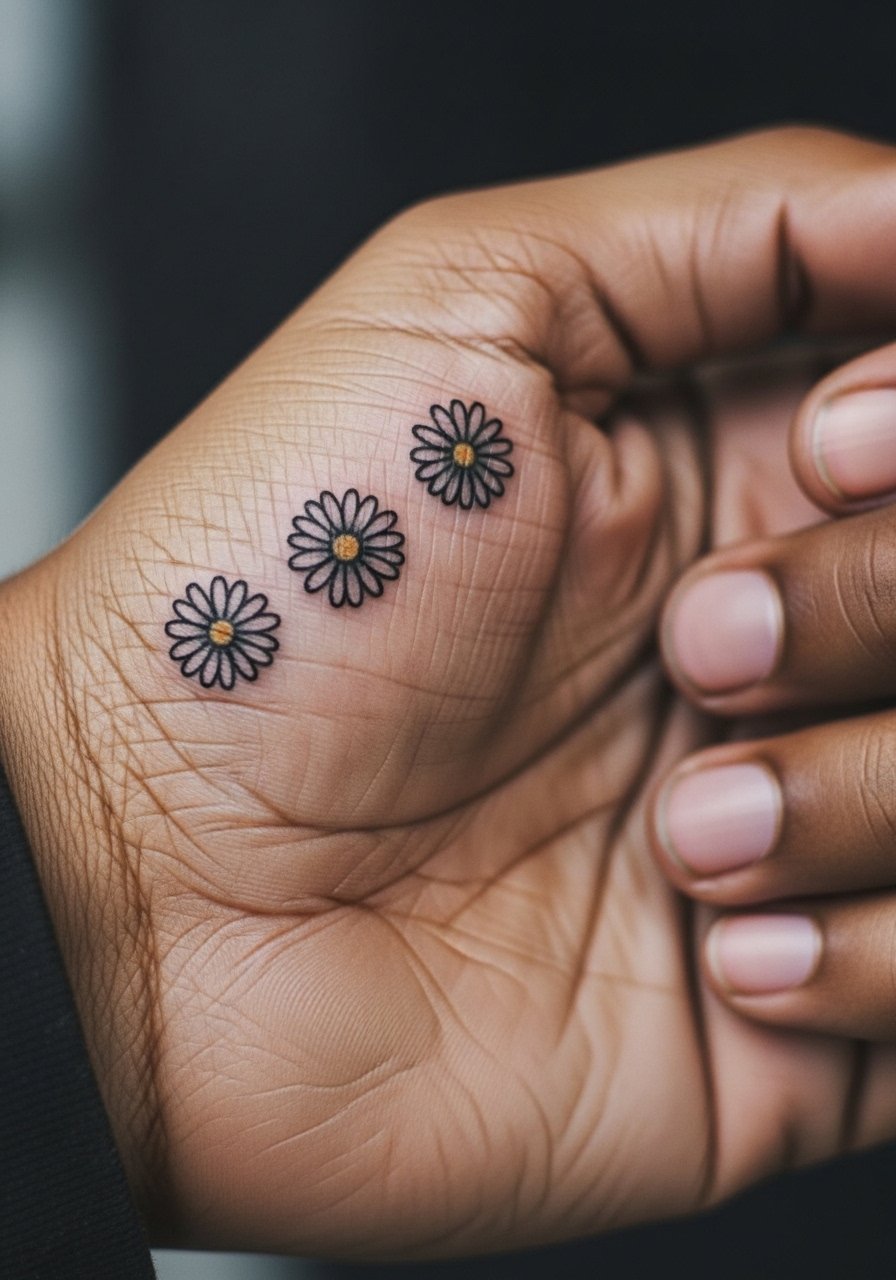
A row of daisies creates rhythm but needs spacing so petals do not merge. Tell your artist to scale petals for skin movement and to leave small gaps between flowers. A mistake is compressing the row into a narrow line that ages into a blur. Expect touch-ups most commonly after repeated sun exposure. For styling, a stackable ring set on adjacent fingers balances the composition. Soreness is mild and brief.
20. Tiny Forget-Me-Not Cluster by the Wrist Tendon
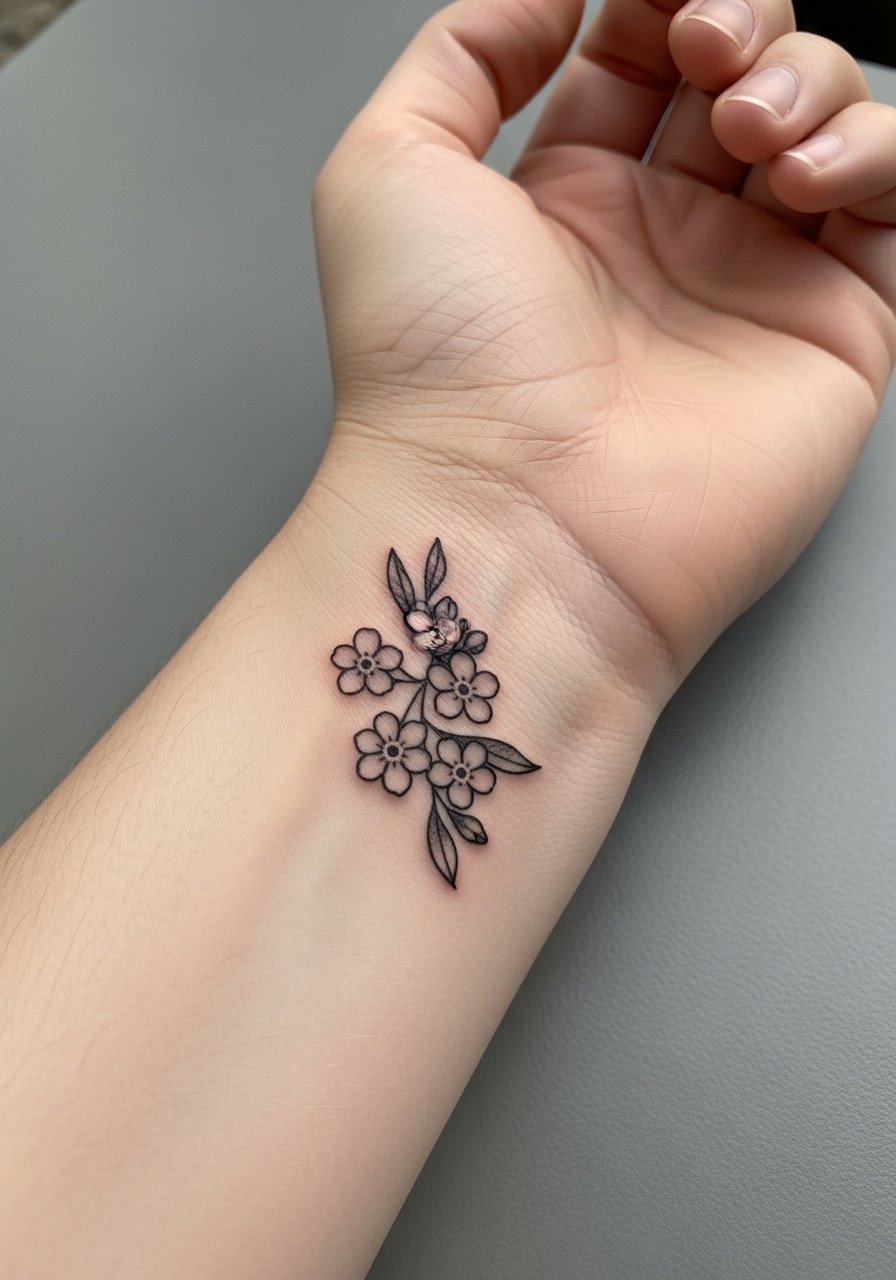
Clusters near tendons need asymmetry so they follow movement. Ask for offset placement and light stippling only. People often pick symmetrical clusters that look stiff on a moving surface. Longevity is fair; plan for touch-ups if you frequently use your hands outdoors. Pair with a delicate watch worn slightly above the cluster to avoid direct rubbing. The session is quick and the pain is usually described as sharp then fading.
21. Micro Peony on the Lower Thumb Side
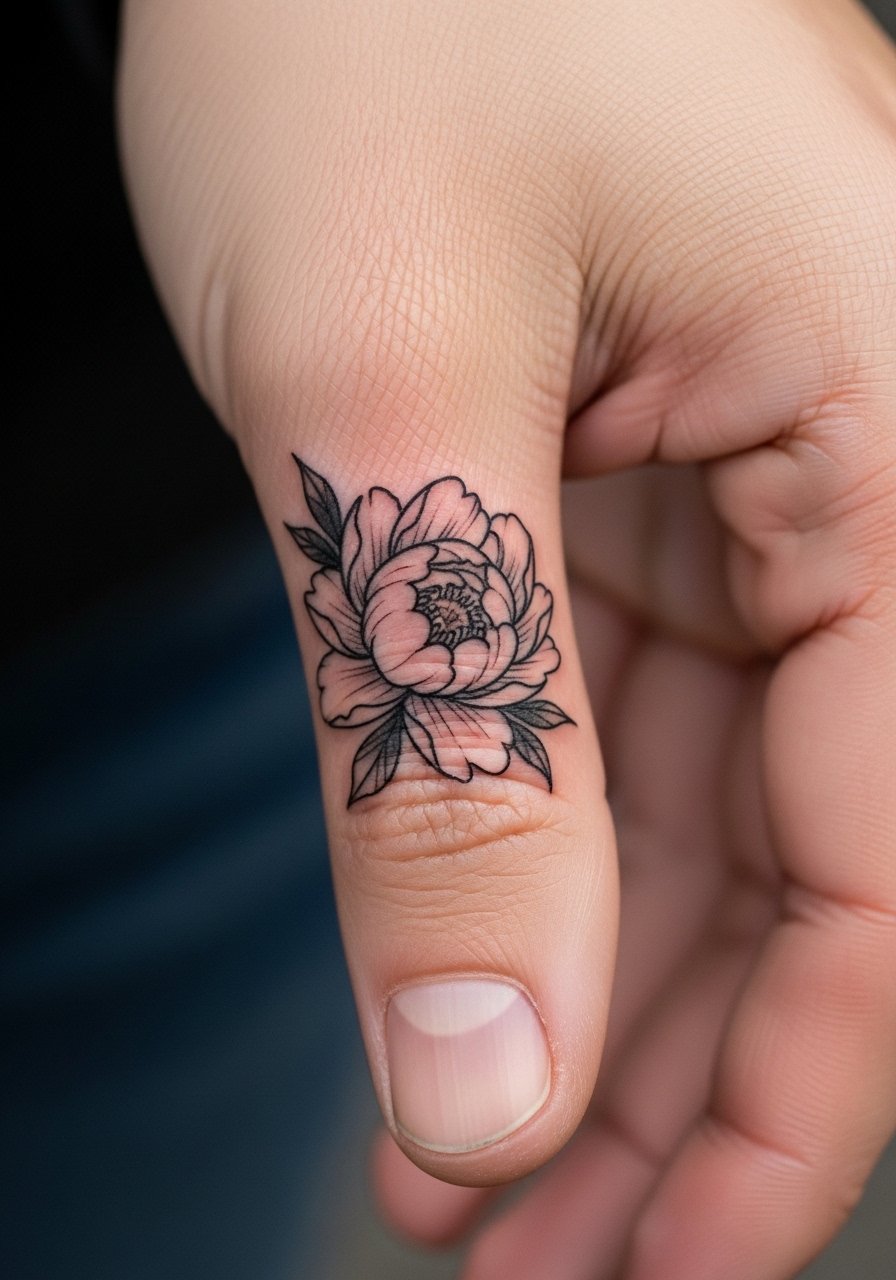
Peonies in miniature need simplified petal architecture. Ask your artist to prioritize clean outer edges and avoid dense inner shading. The common error is overfilling the blossom which blends into skin texture. Expect the first year to look best and a touch-up possible by year two. For outfits, a thin leather strap bracelet can sit below the tattoo for balance. Pain is localized and healing is straightforward with careful hand movement.
22. Single Tiny Blossom Just Above the Knuckle
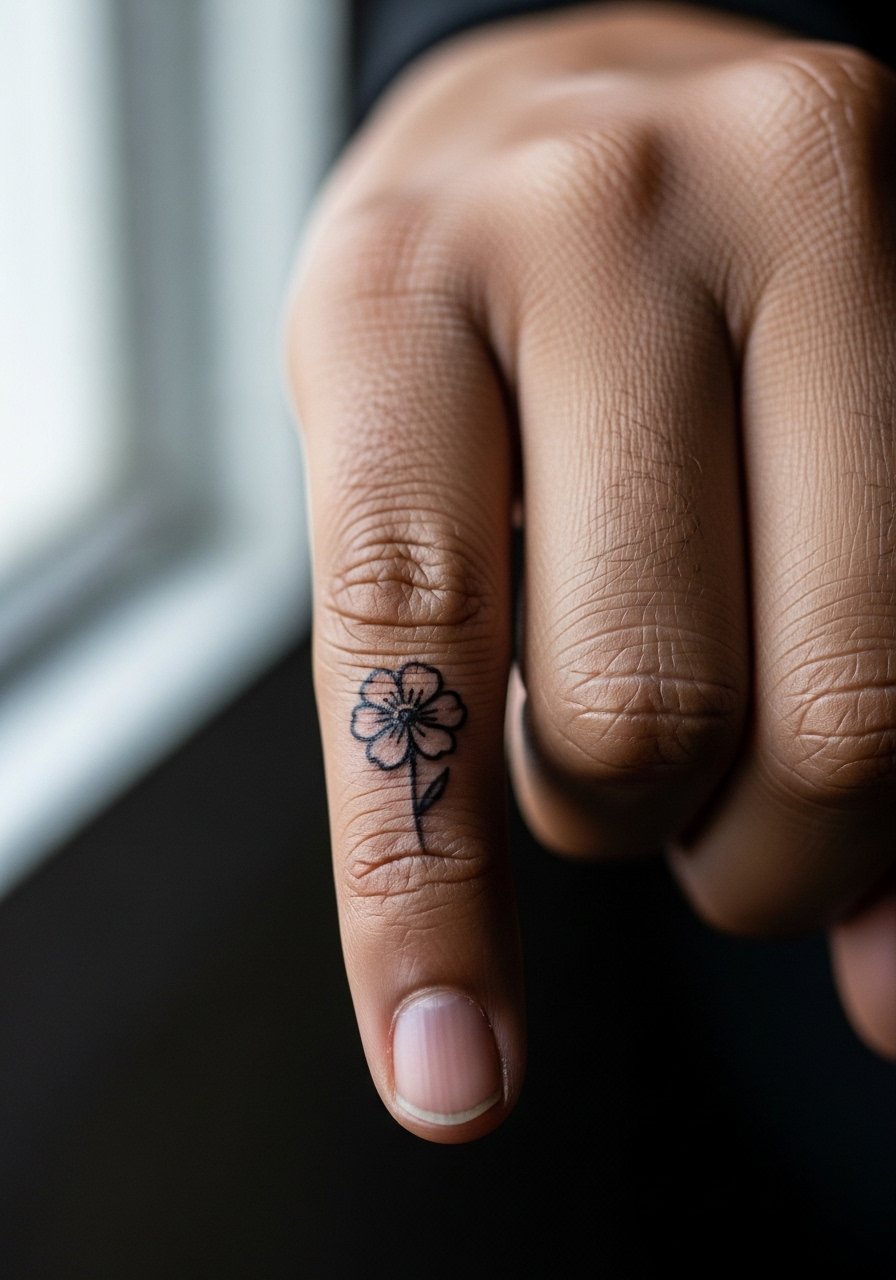
A single knuckle blossom should avoid the middle of deep crease lines. Tell the artist to place it slightly higher or lower so it does not sit directly on the fold. Mistakes include centering the design on a crease which accelerates fast fading. Plan for touch-up within a couple of years. For showing it off, a minimalist ring on the same finger draws attention to the tiny bloom. Expect sharp but short pain during the session.
23. Tiny Wildflower Cluster Along the Side of the Palm
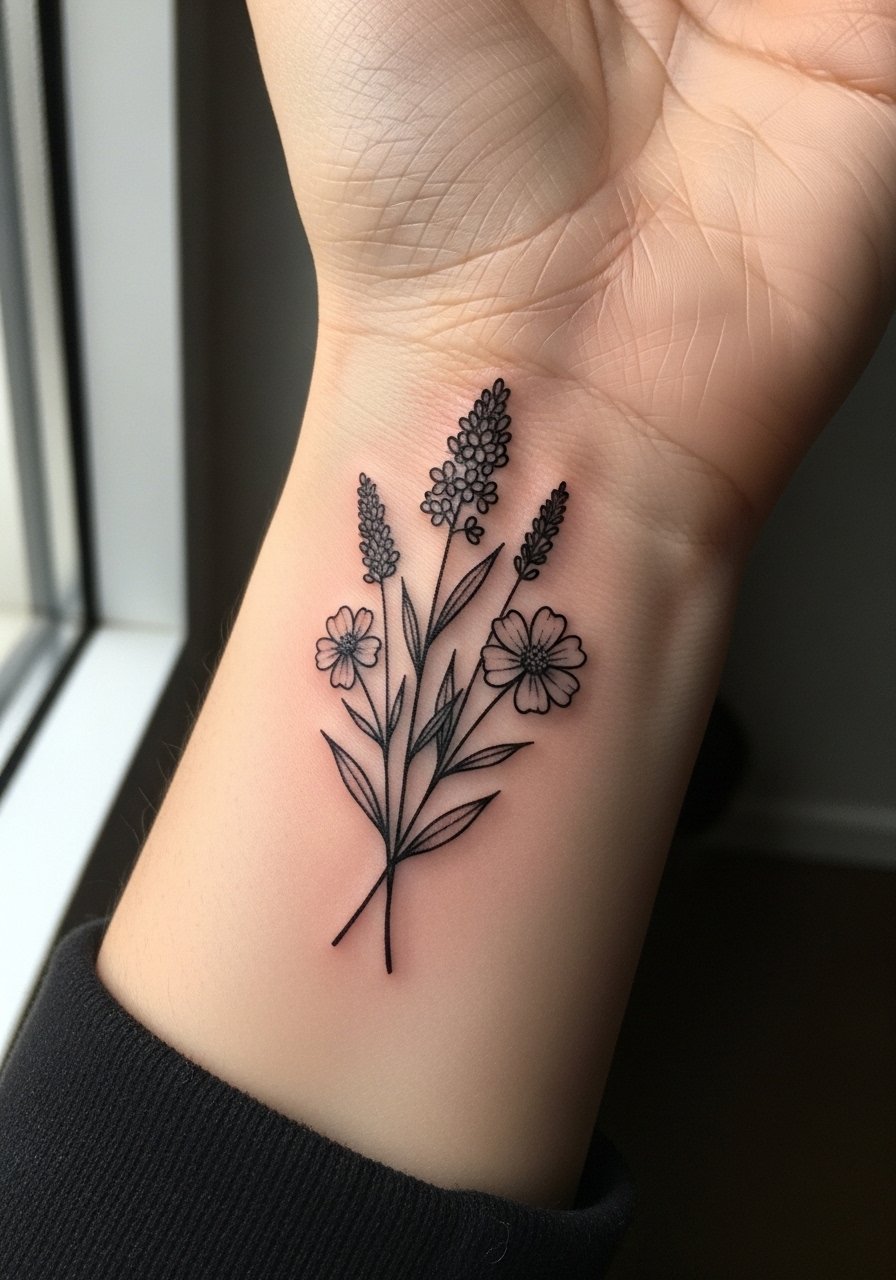
Side-of-palm placements are high friction, so simpler is better. Ask for bold yet minimal outlines and keep interior detail sparse. A common mistake is picking a dense composition that disappears under palm use. Longevity is poor compared with the back of the hand, so know a touch-up is likely. For session comfort, consider a loose button-down shirt you can slide your arm out of easily. Healing may involve extra scab care due to frequent contact.
24. Micro Floral Accent Along the Wrist Fold
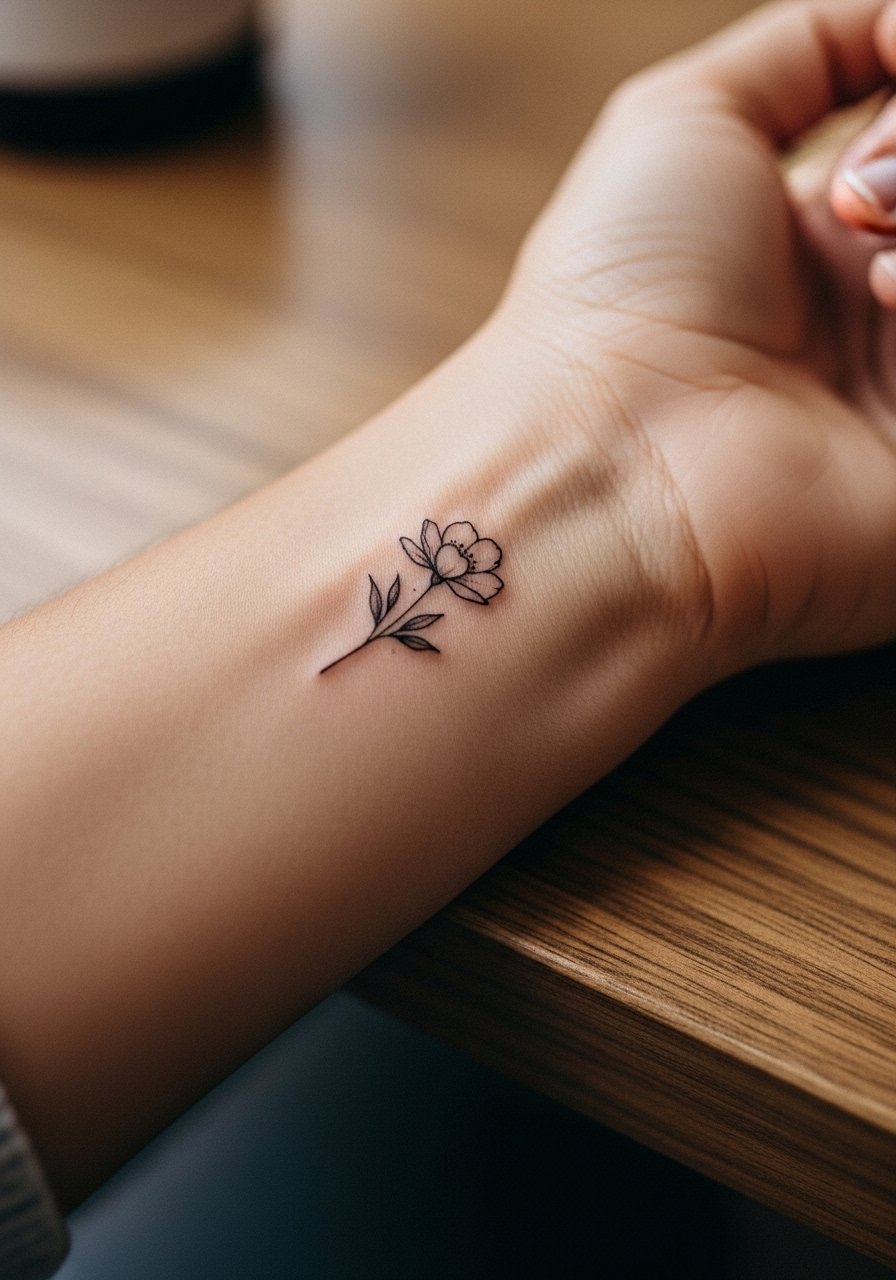
A floral accent at the wrist fold should be offset so bending does not compress the design. Ask the artist for slightly heavier outlines where the fold occurs. The mistake is expecting micro detail to survive constant bending. Expect the design to soften fastest at the hinge point and plan for a touch-up. A slim bangle worn higher on the forearm avoids rubbing the crease. Pain is mild and healing is predictable with the right aftercare.
25. Petite Blossom Cluster on the Thumb Knuckle
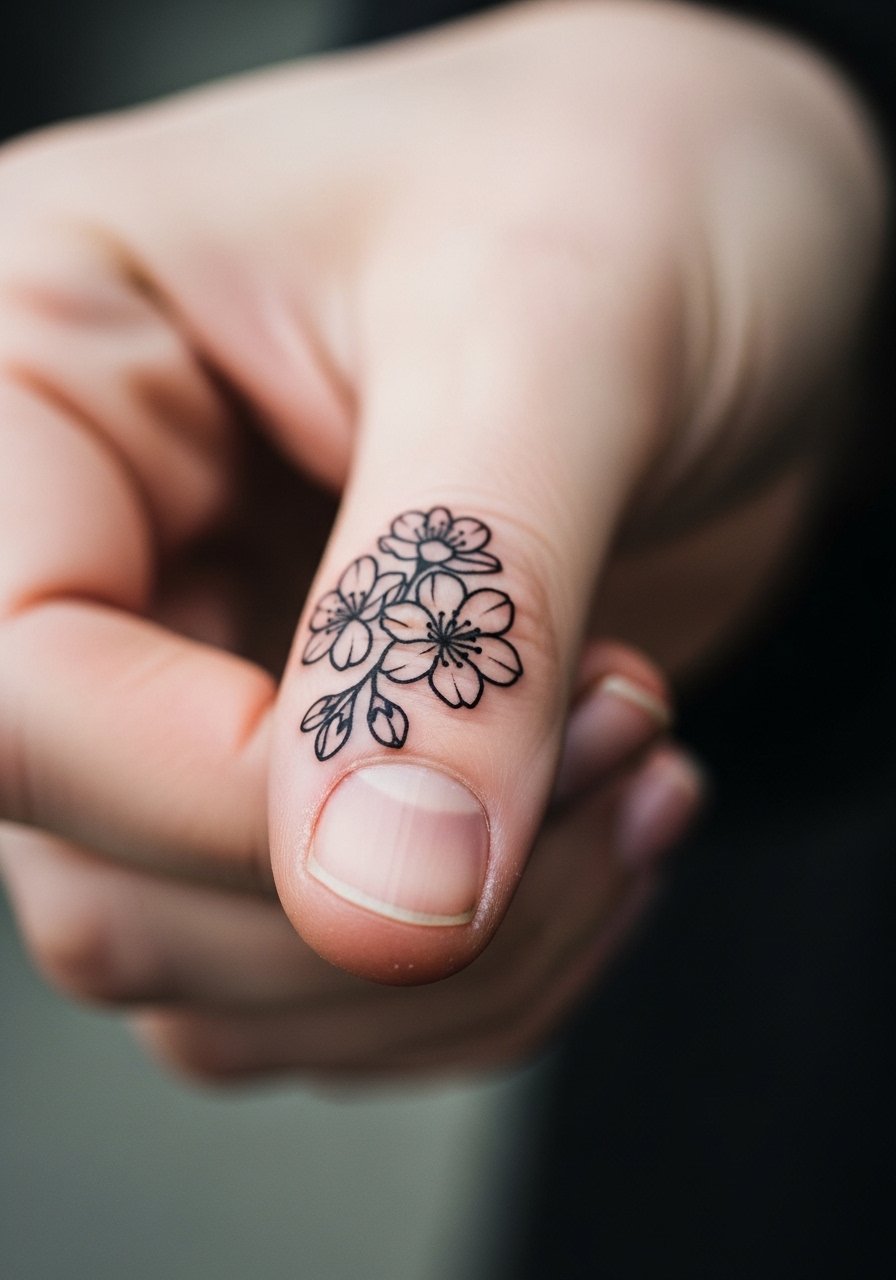
Thumb knuckle clusters need bold outlines and simplified centers. Tell your artist you prefer open petal tips and minimal interior shading. People make the mistake of packing tiny dots into the centers which disappear under motion. This is a high-wear area and touch-ups are common. For styling, a thin stacked ring on the adjacent finger helps the thumb look intentional. Expect sharp pain as the surface is thin and moves constantly.
26. Tiny Poppy Pinned Near the Wrist Side
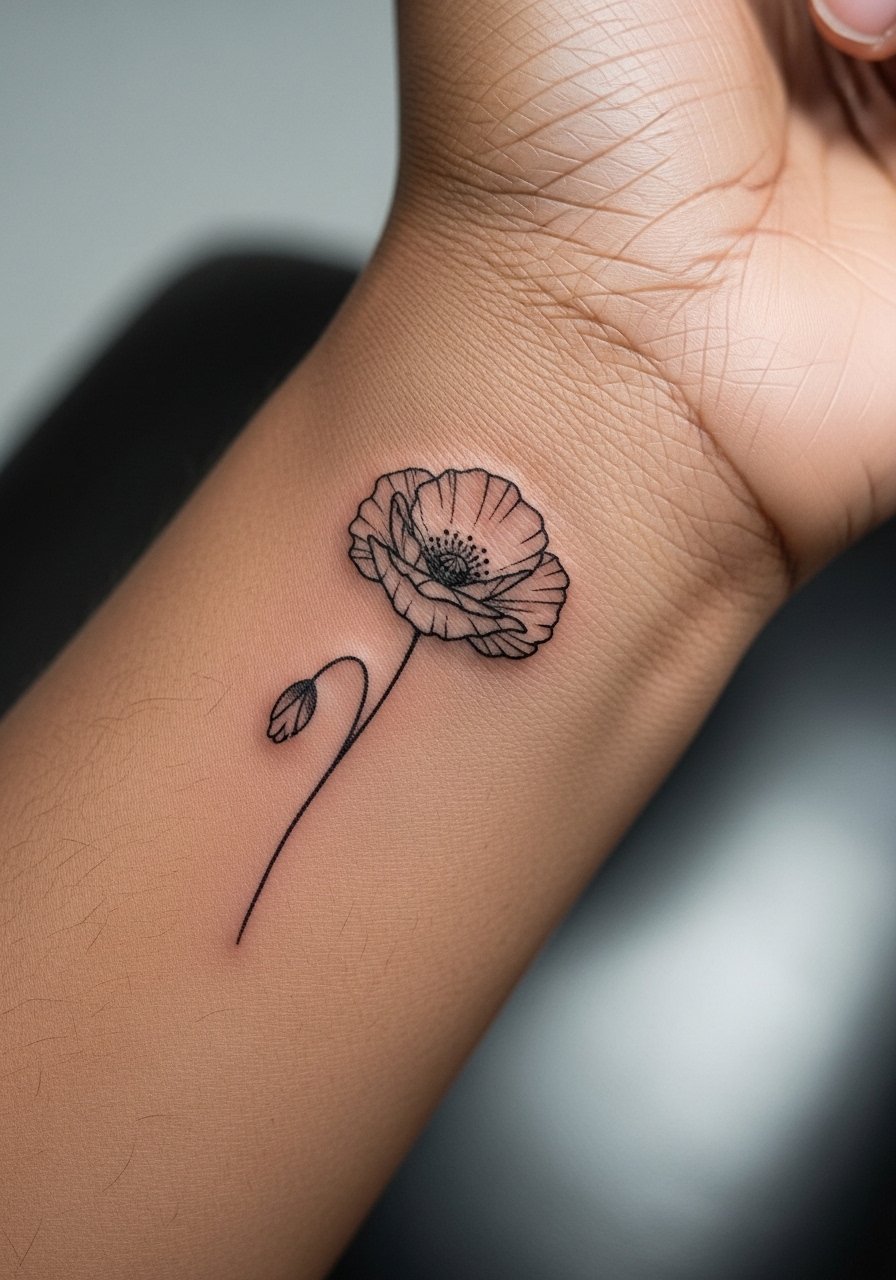
A poppy near the wrist side benefits from a single stem and negative space. Ask for slightly bolder contours and sparse interior dot work rather than full shading. The mistake is adding heavy black that will age into a shadow with movement. This holds moderately well but plan for a touch-up at year two or three. For show-off moments, a thin cord bracelet keeps the area framed without abrasive metal. Pain is mild and healing is routine.
27. Little Flower Dot Work Accent Under the Thumb
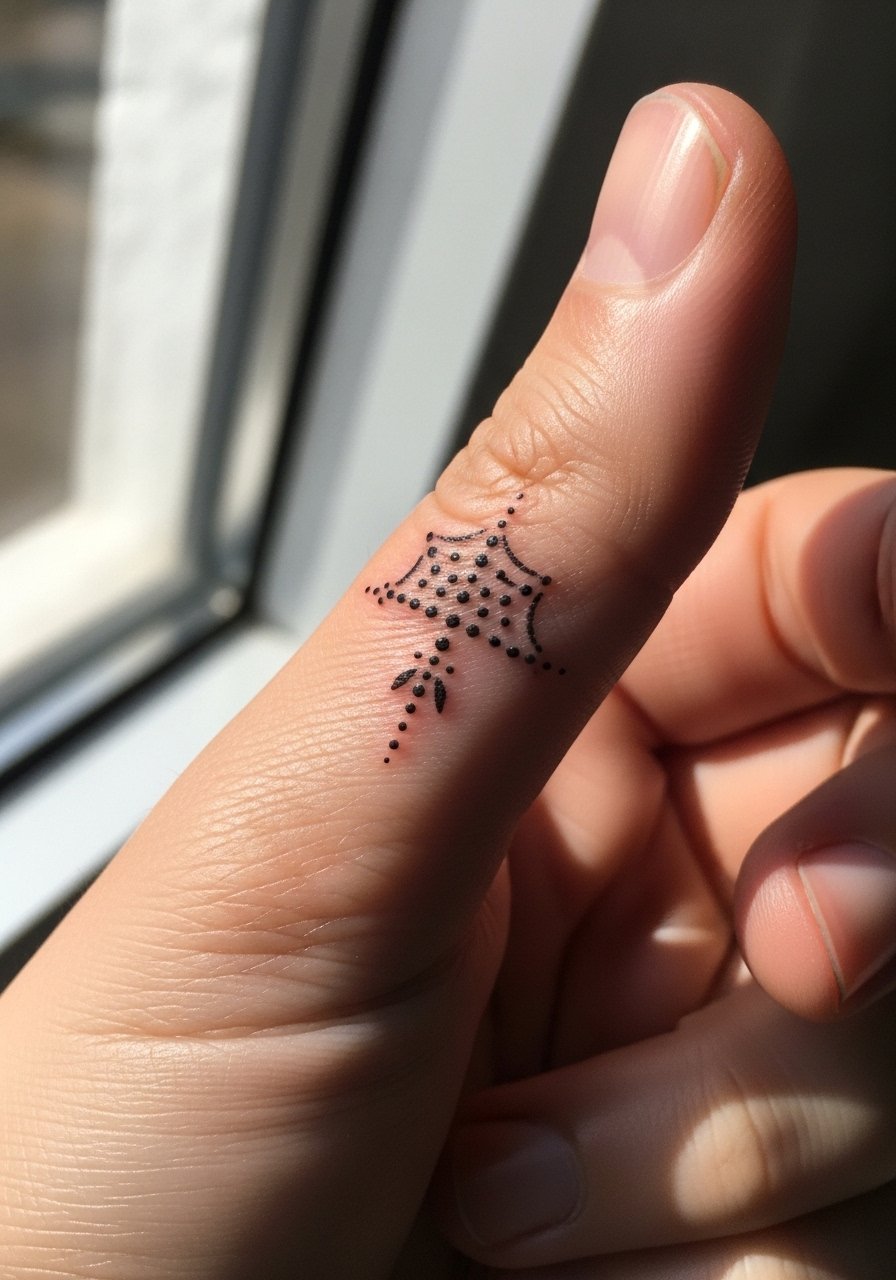
A dot work accent under the thumb is discreet and modern when spacing is open. Tell the artist you prefer larger dot spacing to prevent a muddied appearance later. The common error is asking for dense stipple that flattens into a grey patch. Expect the sharpest contrast at six months and a likely touch-up by year two. For session wear, a loose sleeve shirt is easiest to get the hand positioned. Pain is short and the area heals well with careful movement.
Frequently Asked Questions
Q: Will a fine line flower on my knuckle blur faster than one on the back of the hand?
A: Yes, knuckle work sits directly over creases and bends, so the risk of early softening is higher. Ask for slightly thicker contour lines and clear spacing, and plan for a touch-up sooner than you would for the back-of-hand pieces.
Q: Are palm or very inside-hand flowers worth it given durability concerns?
A: Palm and deep web placements wear fastest. One camp says the palm rejects fine detail almost always. The other camp keeps these pieces very simple and reports better longevity. If you choose this area, accept that touch-ups and fading are probable.
Q: How should I dress to keep a fresh hand tattoo from rubbing for the first week?
A: Keep jewelry minimal and avoid tight gloves. A soft long-sleeve that can be pushed up or a short-sleeve cotton tee during the day helps prevent unnecessary friction while you heal.
Q: Do certain florals age better on darker skin tones?
A: Bold outlines and clear negative space tend to show better across skin tones. Softer stipple can read beautifully on darker skin, but ask to see healed examples from the artist on a range of tones before booking.
Q: How often will I need touch-ups for tiny finger flowers?
A: Expect touch-ups around year two or sooner depending on daily wear and sun exposure. Fingers are among the highest touch-up frequency zones for delicate work.
Q: Should I be worried about job or career implications for hand floral tattoos?
A: Hand tattoos remain visible and some workplaces are more conservative. Think about your career path and ask the artist about placement options that can be masked by rings or sleeves if needed.