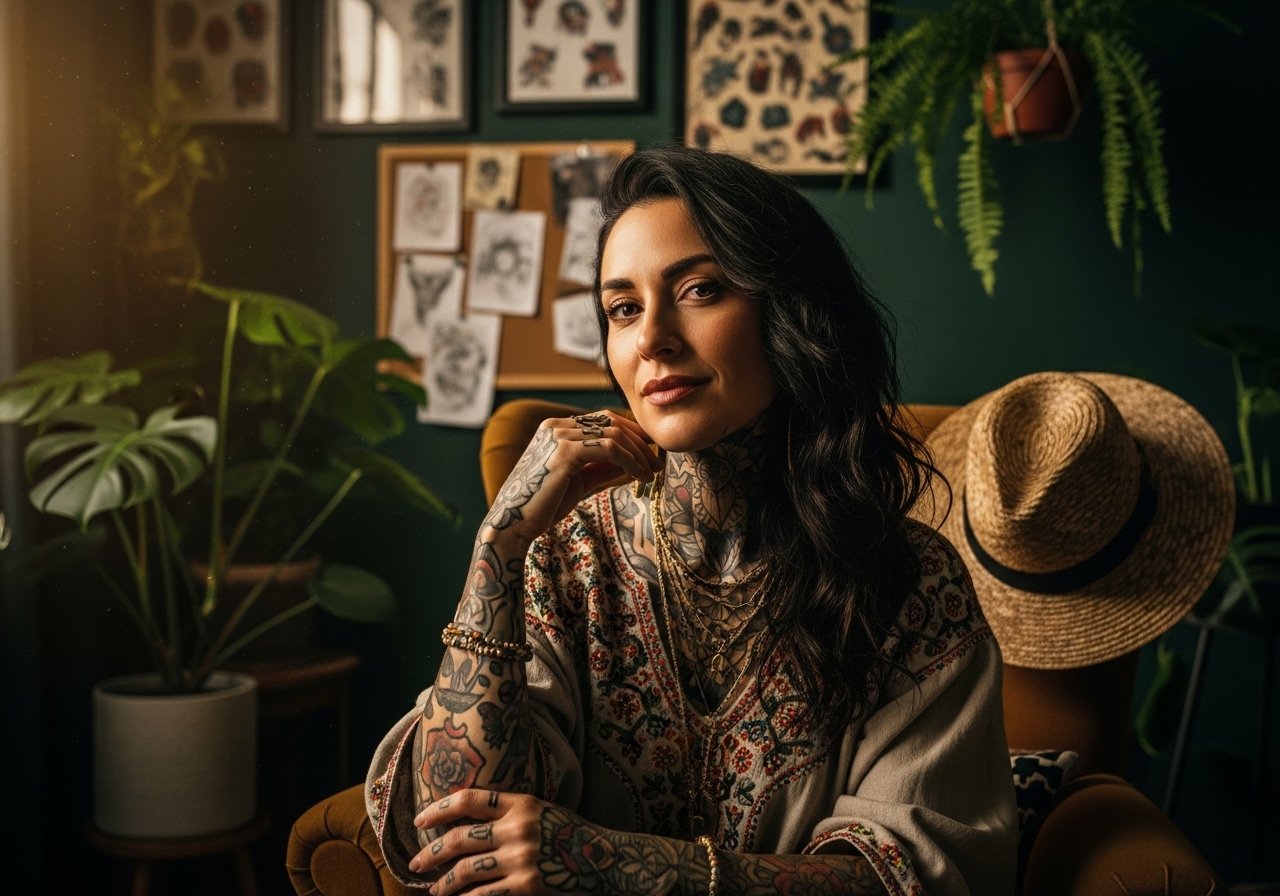
Fine line tattoos are all over feeds right now, and the gap between what trends and what lasts is wider than most people expect. I have seen delicate script and single-line portraits look beautiful fresh, then soften into a whisper by year two when placed on high-friction areas. Read on for 21 minimalist "she is art" ideas that balance the fresh photo moment with real-world longevity, styling tips for showing them off, and what to say in your consult.
1. Fine Line "She Is Art" Script on the Inner Wrist
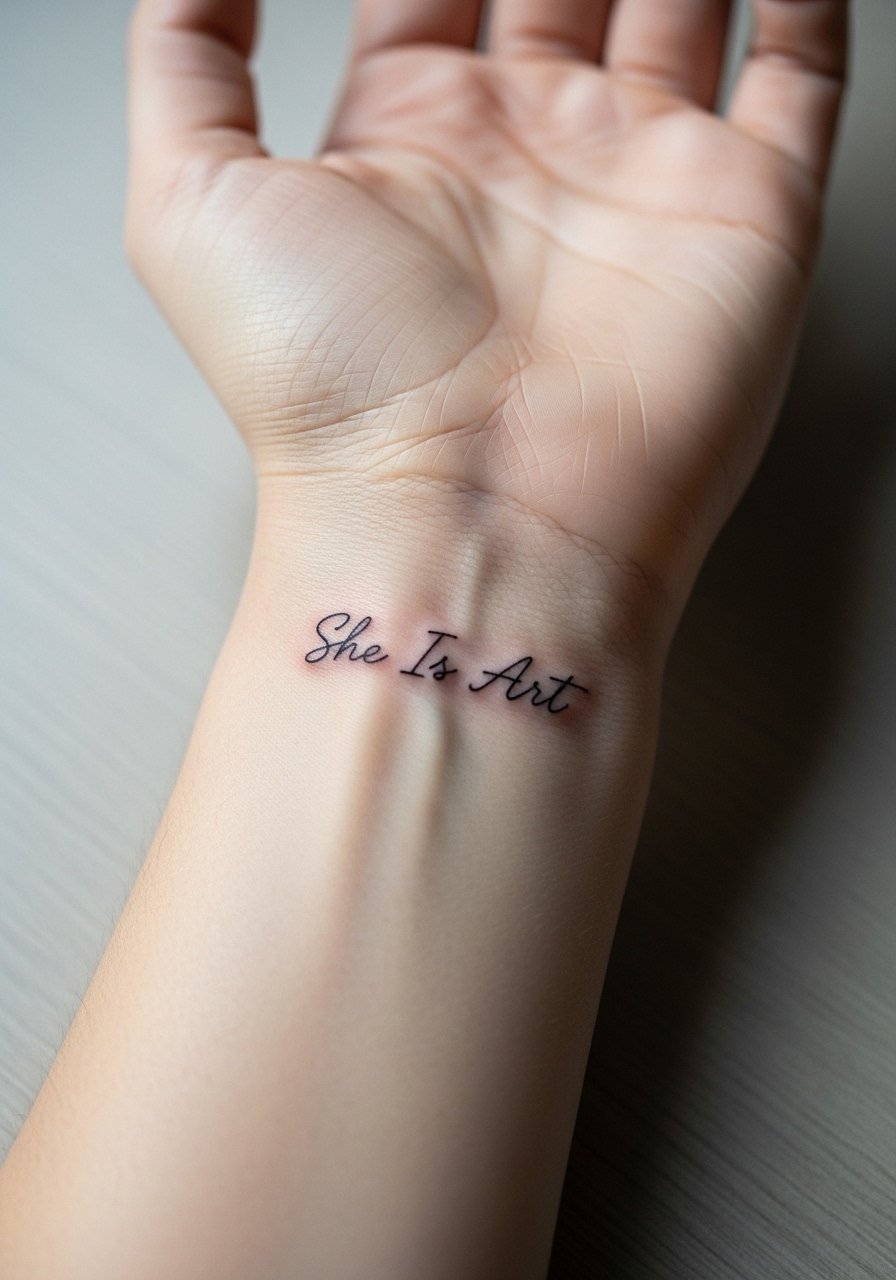
The inner wrist is a classic for text because it reads personal and private when needed. Expect a low to moderate pain level and a one-session appointment for a 1-2 inch script. My advice in consultations is to ask your artist for a slightly bolder single-needle weight than the thinnest option, since ultra-fine lines on wrists tend to soften faster with constant washing. One common mistake is asking for tightly spaced cursive without allowance for natural skin movement; give letters a little room and the script will age cleaner at six months and at two years. For showing it off, pair the piece with a thin gold chain bracelet on the opposite wrist and wear a sleeveless top to let the ink read without crowding.
2. Single-Line Geometric Woman Silhouette on the Outer Forearm
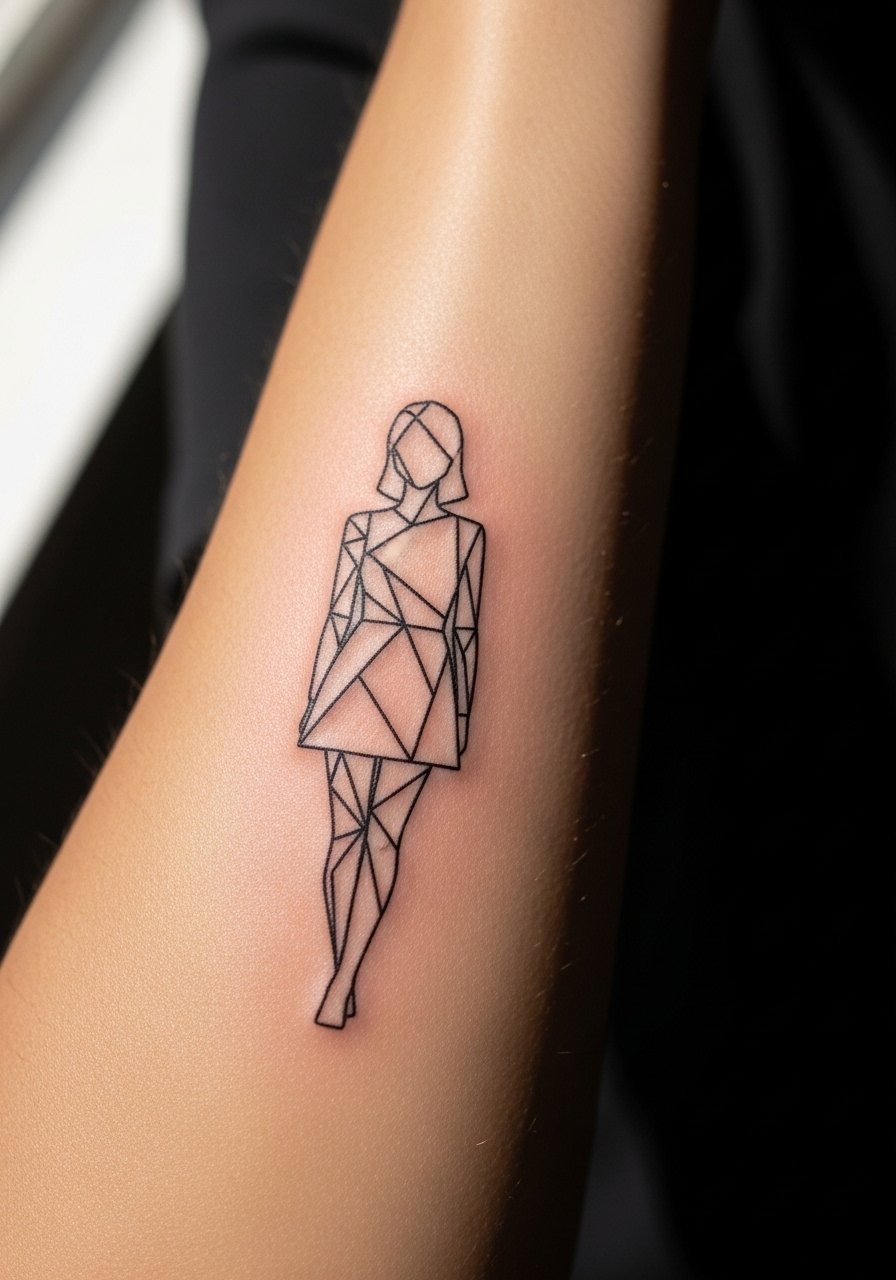
Outer forearm work holds up well because the surface is stable and easy to protect during healing. This three-inch silhouette works well as blackwork with confident negative space. During the consult, bring references that show the exact single-line thickness you want and tell the artist where you expect clothing to sit so the piece does not disappear under cuffs. The typical session is one appointment under two hours and the pain is on the mild side. A frequent error is compressing too many details into a continuous line. Space lets the silhouette breathe and keeps the linework from merging at year two. For everyday wear, rolled sleeves on a cotton button down shirt frame the forearm without competing for attention.
3. Dotwork Female Portrait at the Collarbone
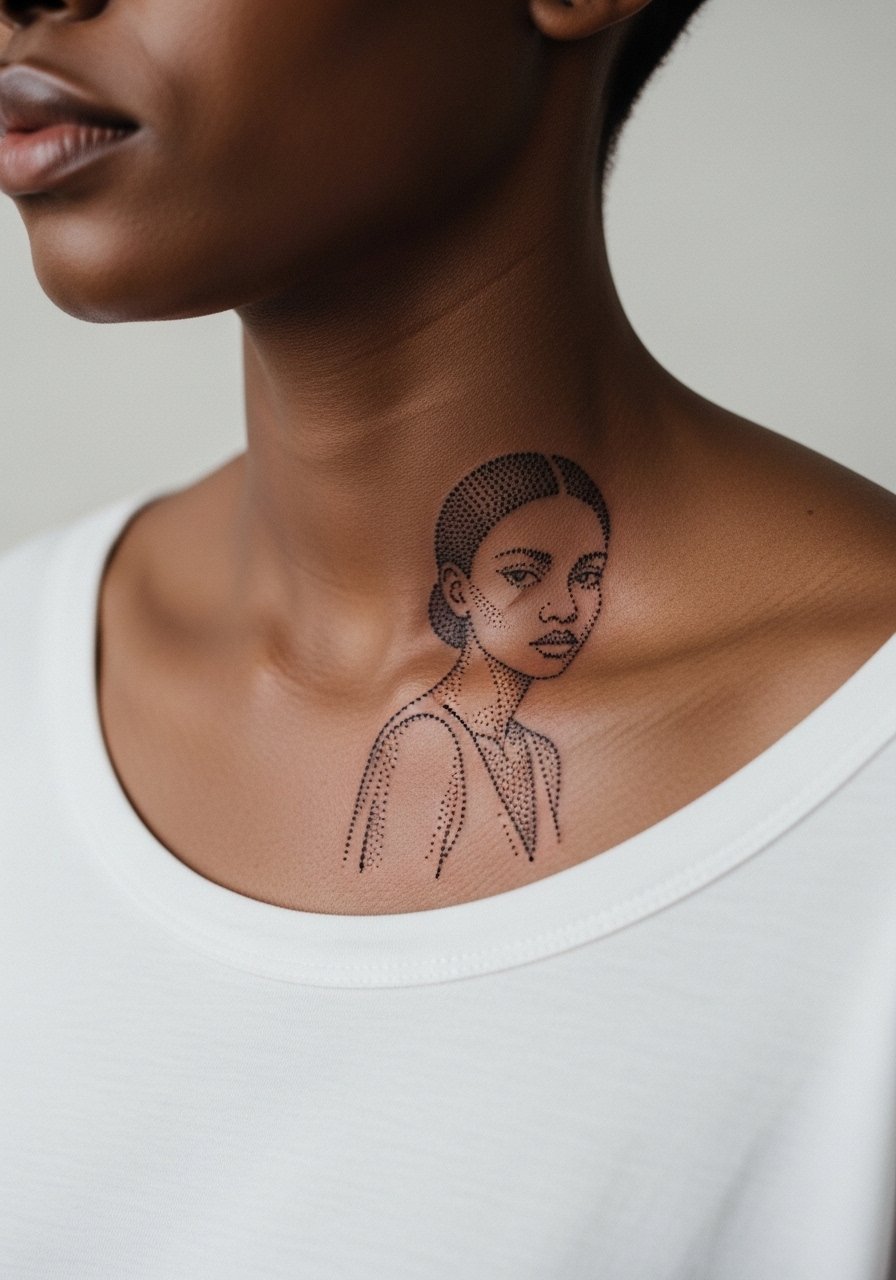
Collarbones are show-off placements that photograph beautifully with a subtle choker or an off-shoulder top. Dotwork portraits here use stipple shading to create depth without heavy saturation. The session usually runs under two hours and the pain ranges from 4 to 6 out of 10 depending on how close to bone the work goes. One mistake is asking for high contrast stippling against very dark skin without planning negative space first. For better contrast, request a mix of negative space and dotwork to let the portrait read over time. Pair this with an off shoulder top women and a delicate choker necklace when you want it to peek just above fabric.
4. Negative Space "Art" Symbol with Female Outline at the Ankle
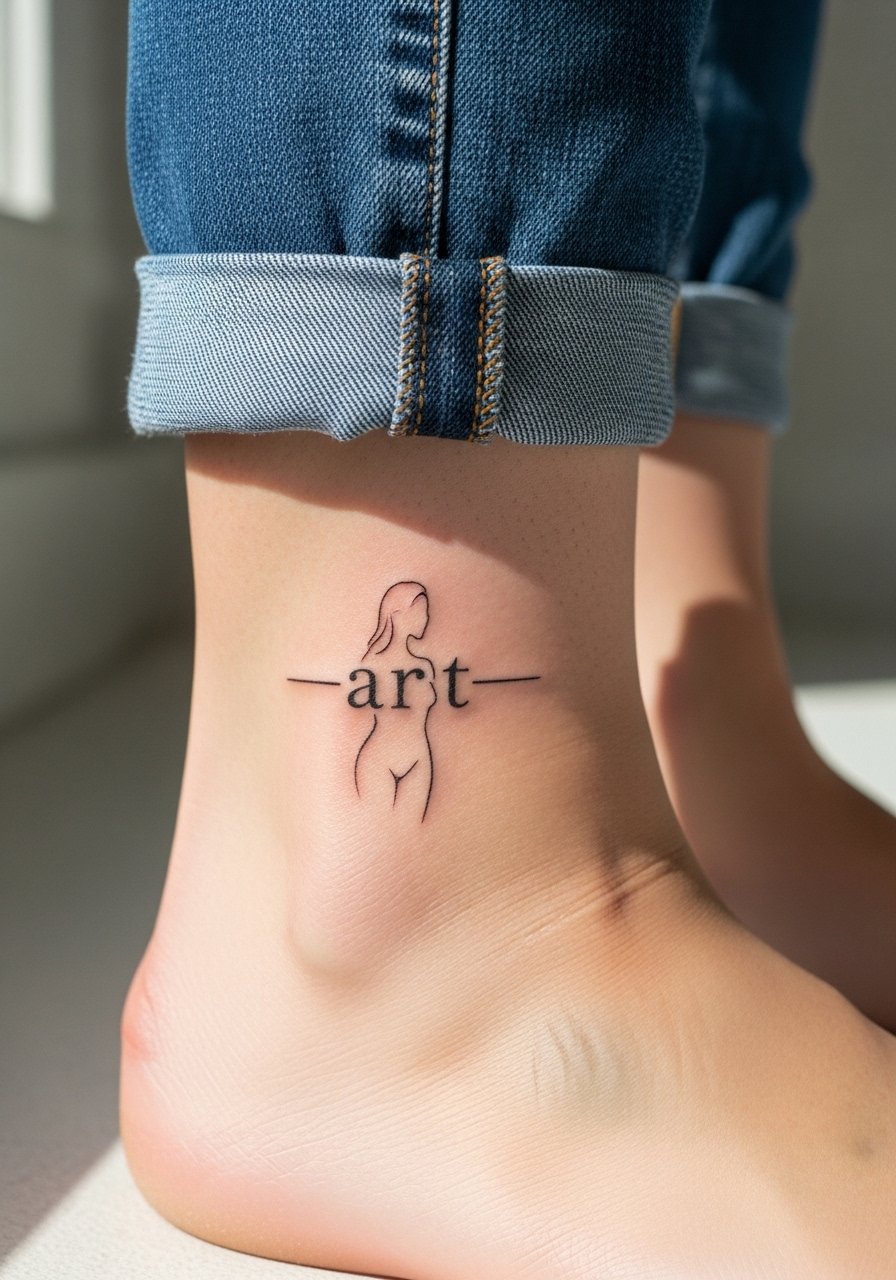
Ankle tattoos are charming but face more friction from socks and shoes. A 1.5-inch negative space motif keeps the look discreet. During the consult, ask your artist to account for footwear and sock lines so the symbol sits where it will be visible. Many people assume tiny ankle work will last unchanged. In reality, the first six months are critical for protecting the area from rubbing. I recommend cuffed straight-leg jeans or a cuffed ankle jeans for showing it off once healed, and a thin ankle bracelet gold if you like layering jewelry.
5. Ultra-Fine Brushstroke Woman on the Ribcage
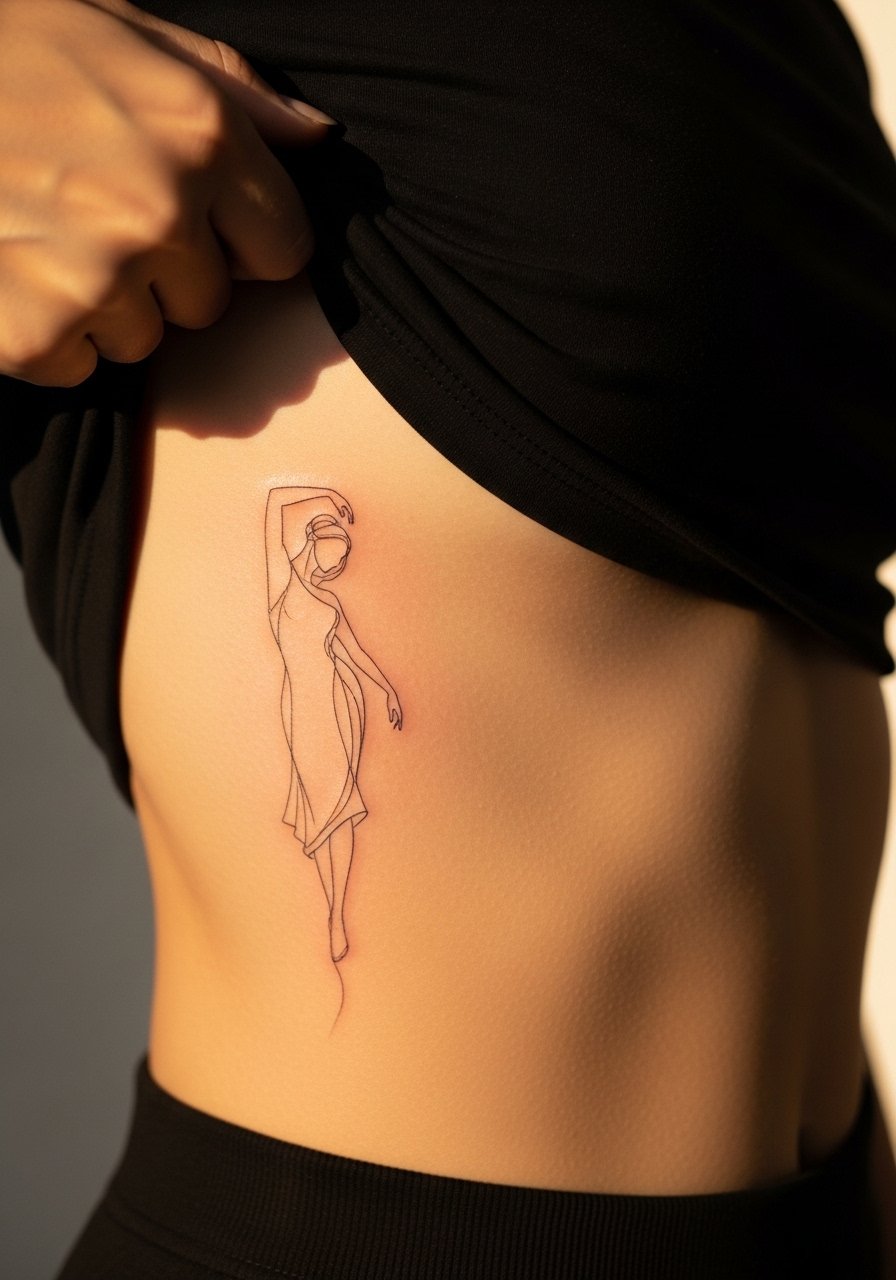
Fair warning, the ribcage rates high on most pain charts. The result is worth it for people who want a private, vertical piece that reads like a sketch along the curve of the body. This style thrives at about four inches tall and often needs one to two sessions for perfect flow across the ribs. There is a well known split among artists on fine line ribs. One camp says the skin stretch blurs lines within two years. The other camp argues that with precise needle depth and spacing, the lines settle fine. Ask your artist which side they fall on and what spacing they recommend. If you want to wear crop tops or high-waist bikinis to reveal it, choose a crop top ribcage that sits comfortably without digging into the area during the first month of healing.
6. Abstract Continuous Line "She" That Becomes an Arrow on the Shoulder
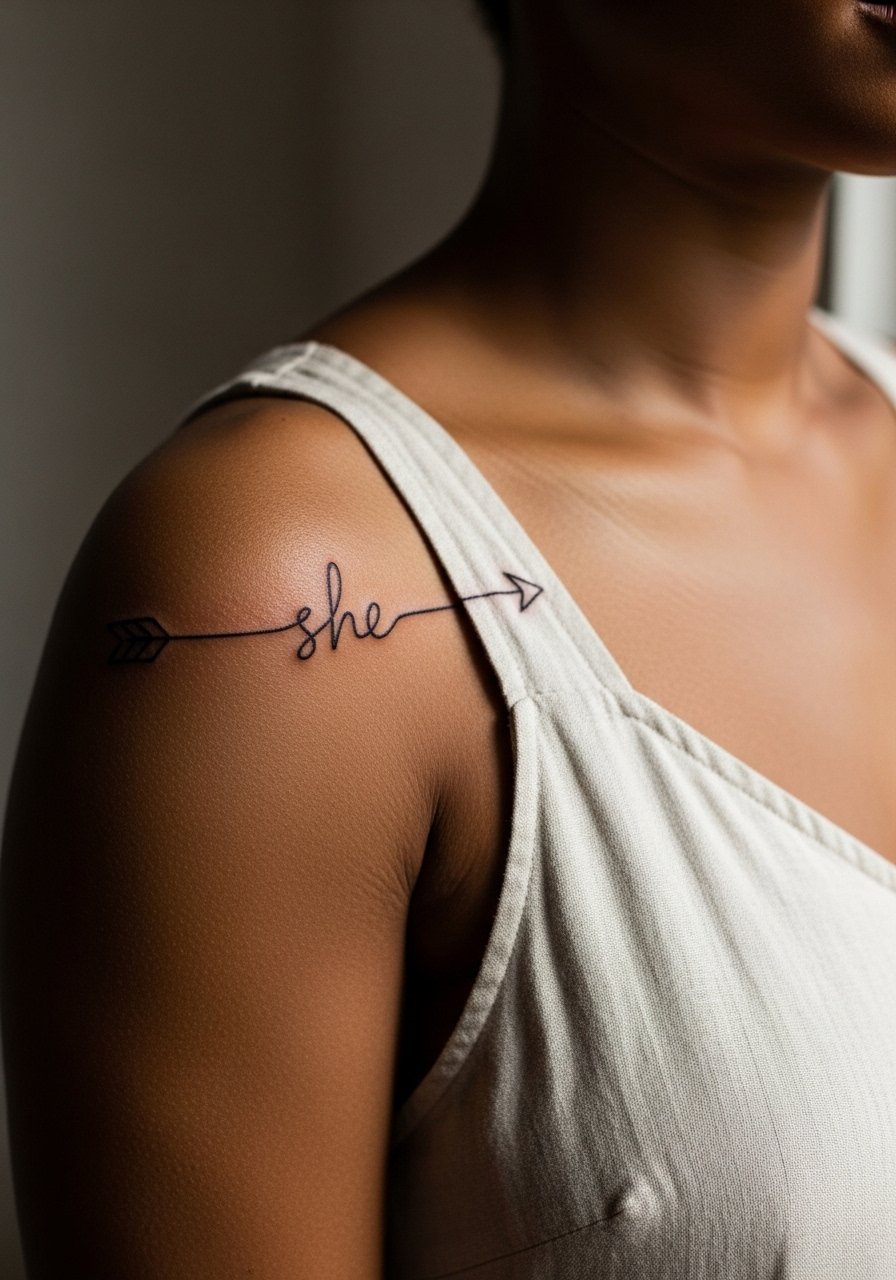
Shoulder placements are forgiving and photograph well with summer dresses. A two to three inch continuous line design reads boldly without heavy saturation. In the chair you will feel mild to moderate discomfort and most single-session pieces finish under an hour and a half. One mistake is compressing directional elements too tightly so the arrow loses clarity once the arm moves. Tell your artist you want the arrow to align with natural muscle flow so it still reads when you lift your arm. Pair the finished piece with a sleeveless linen dress and an asymmetric earring for a curated look.
Studio Day Picks
These first shoulder, rib, wrist, forearm, collarbone, and ankle pieces ask for slightly different prep and one small kit smooths the session and first week.
-
Stencil transfer paper kit. Helpful to preview the line placement on the wrist and collarbone before the needle hits skin.
-
Topical numbing cream. Useful for rib and shoulder sessions when sensitivity is a real concern.
-
Thin protective film roll. Keeps ankle and wrist work cleaner during the first few days of high movement.
-
Fragrance free gentle body wash. Cleanses healing areas without irritating dotwork or fine line pieces.
-
Aquaphor healing ointment. A thin layer in the initial days locks in moisture for fine line work while you follow your artist's aftercare plan.
7. Micro Geometric Heart with "Art" Initial on the Inner Bicep
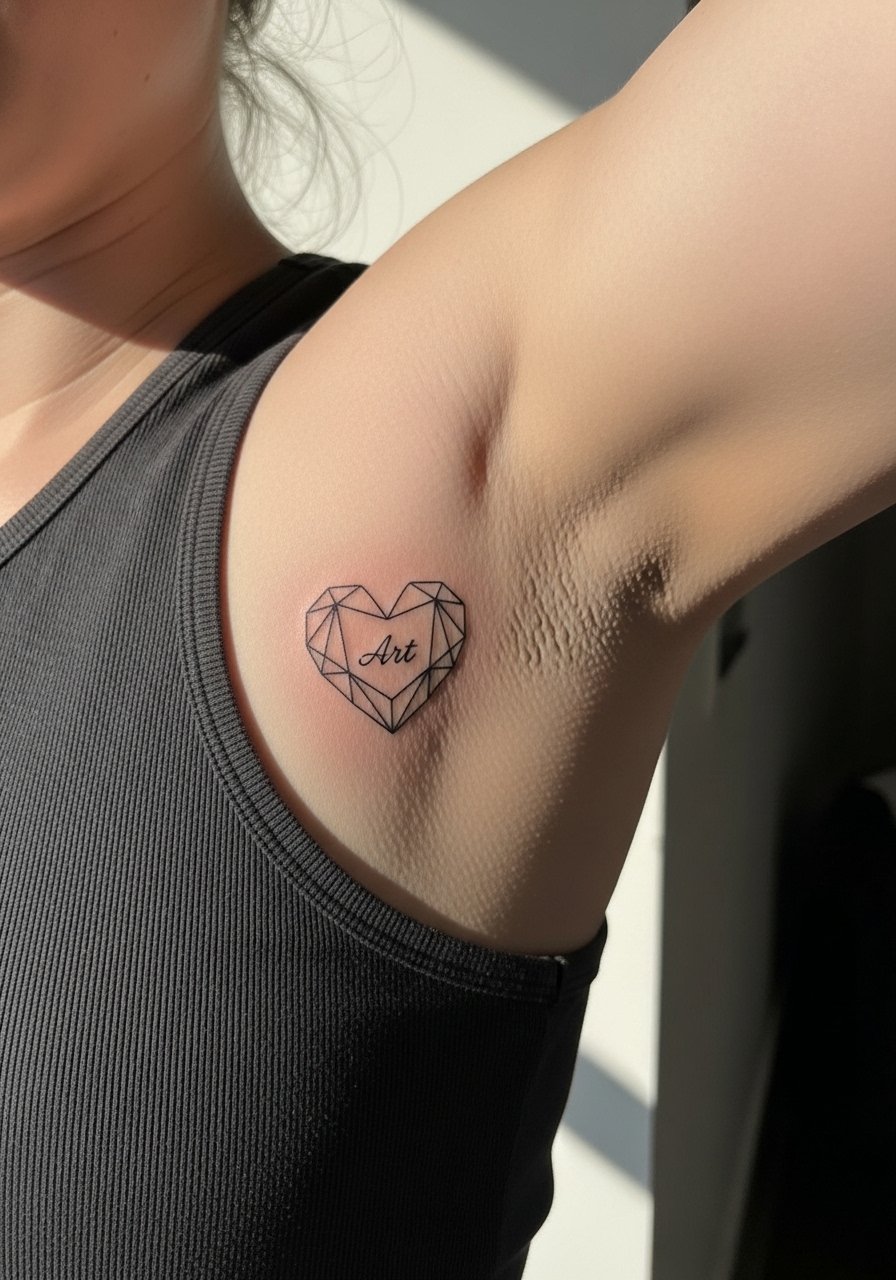
Inner bicep tattoos are intimate and sit where you can reveal them or keep them private. The session is short and the pain is moderate because of soft tissue. For a tiny geometric heart with an initial, keep the size near one inch so details stay crisp. A typical mistake is choosing complex fills at this scale which end up muddy after a year. When you consult, bring the exact font and sizing for the initial so your artist can scale it to the heart proportion. For appointment day wear, a loose tank top lets the artist access the area without pulling at fabric, and it minimizes irritation during the first few stretches.
8. Single Needle Female Muse Outline on the Outer Thigh
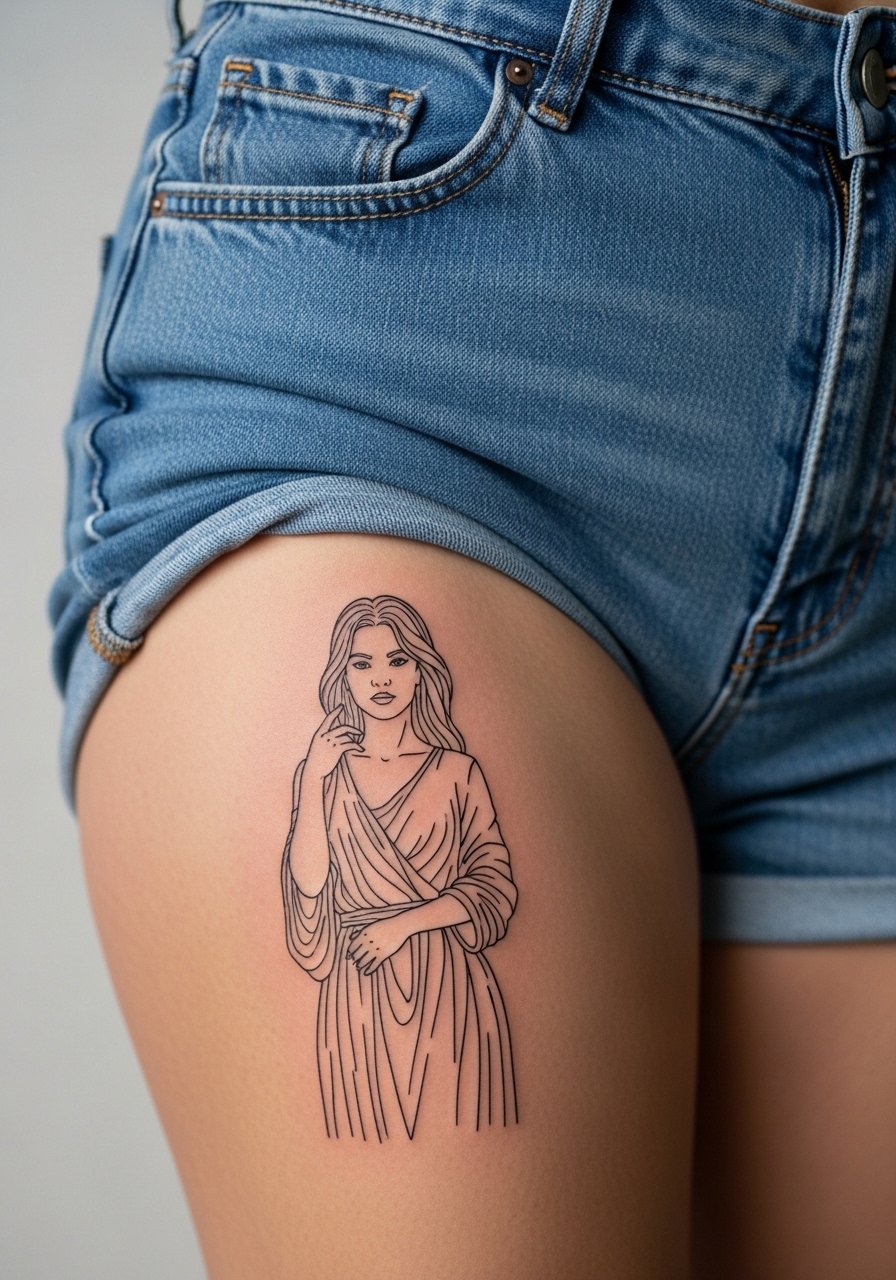
Thigh placements are forgiving for subtle linework and age predictably because friction is lower than other spots. A clean three-inch single-needle muse outline will likely finish in one session and the pain is generally mild. People sometimes pick thigh for its private reveal and then forget to plan for how clothing will frame it. If you plan to show it with skirts, try a high slit skirt so the design flows naturally when you walk. Also let your artist know if you expect weight fluctuations so they can recommend placement that minimizes distortion over time.
9. Subtle Shadow "She Is" Text with Paint Drip at the Upper Spine
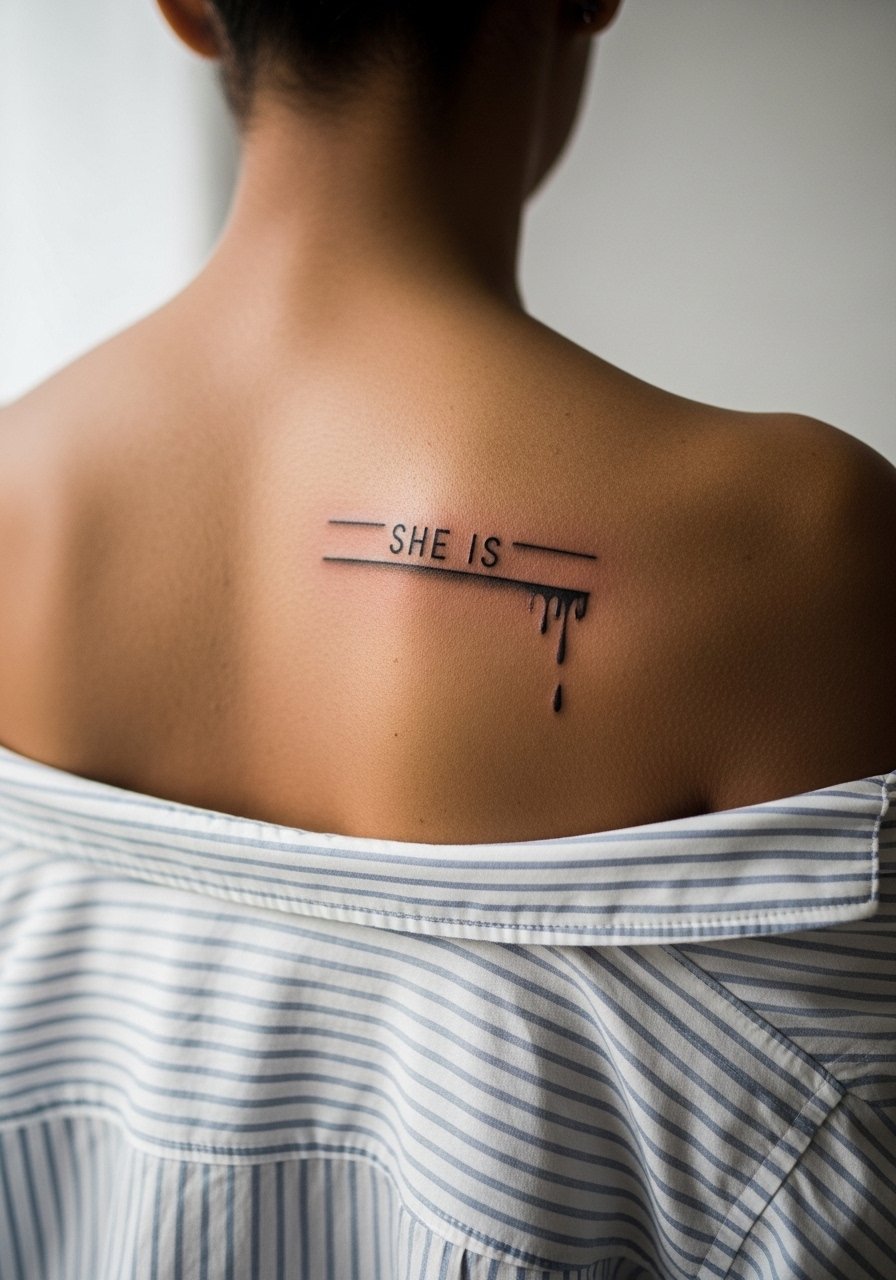
Upper spine text works best when spaced across about four inches, and the paint drip adds a creative twist that keeps the phrase feeling artful. Expect moderate discomfort near the spine and plan for one to two sessions depending on shading. One common error is stacking text too densely so the shadowing fills in and reads like a blur at two years. Ask for a light shadow with discrete drips to preserve negative space. For showing this off with dresses or evening wear, a loose open button shirt worn backward or a low-back dress will let the piece read without competing jewelry.
10. Fine Line Palette and Brush Symbol on the Outer Calf
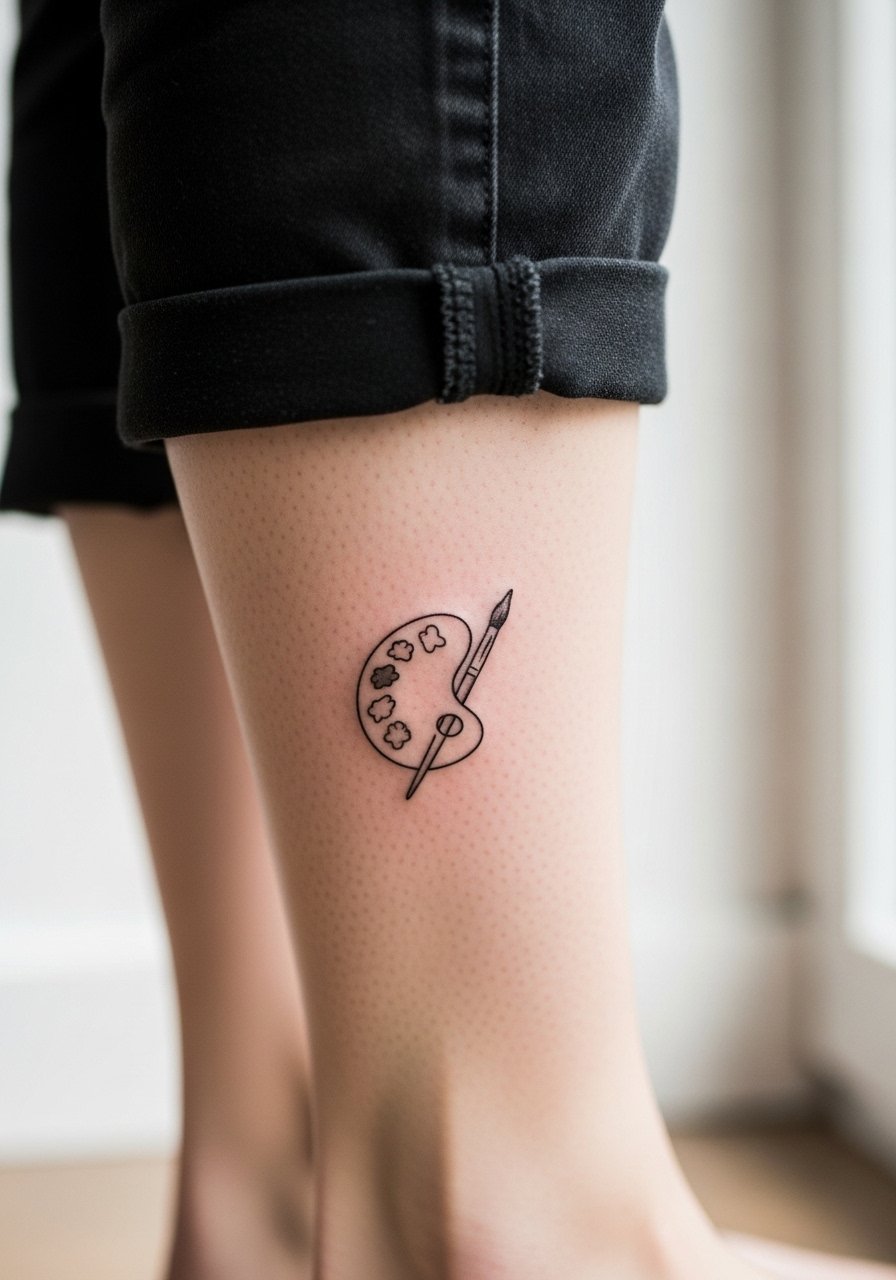
Calf placements are sturdy and wear well with regular exposure and movement. A two-inch palette and brush in fine line is a neat nod to creative identity and usually completes in a single session. People sometimes request very thin single-needle strokes at this scale, then wonder why the image fades faster than expected. Request a single-needle outline with slightly increased weight for longevity while keeping the feathered effect inside the palette. For casual styling, cropped trousers or midi skirts show the design and keep it visible without constant friction.
11. Pencil-Sketch Woman Face on the Side of the Neck
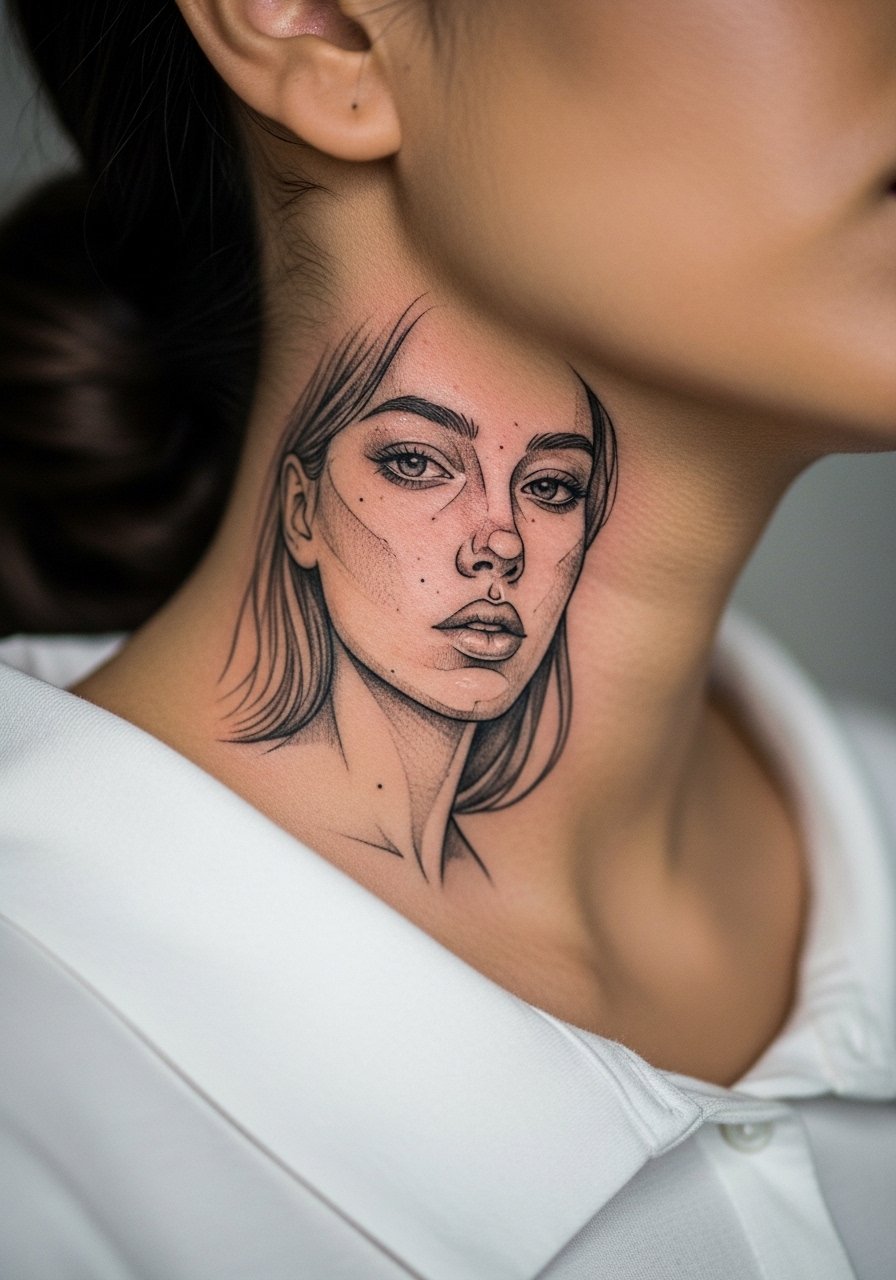
Neck tattoos are visible and demand consideration for career and long-term visibility. A 1.5-inch pencil-sketch face on the side neck reads intimate and requires precise single-needle work. The session can feel more intense because of nerve density. One mistake is choosing too much fine detail for such a small neck piece. Ask your artist to prioritize the face contour and reduce internal micro-details so the portrait maintains structure at six months and at two years. For session wear, a wide-neck shirt that you can shift aside keeps the area private during transport and public appearances.
12. Hidden Geometric "Art" Inside a Female Form on a Ring Finger
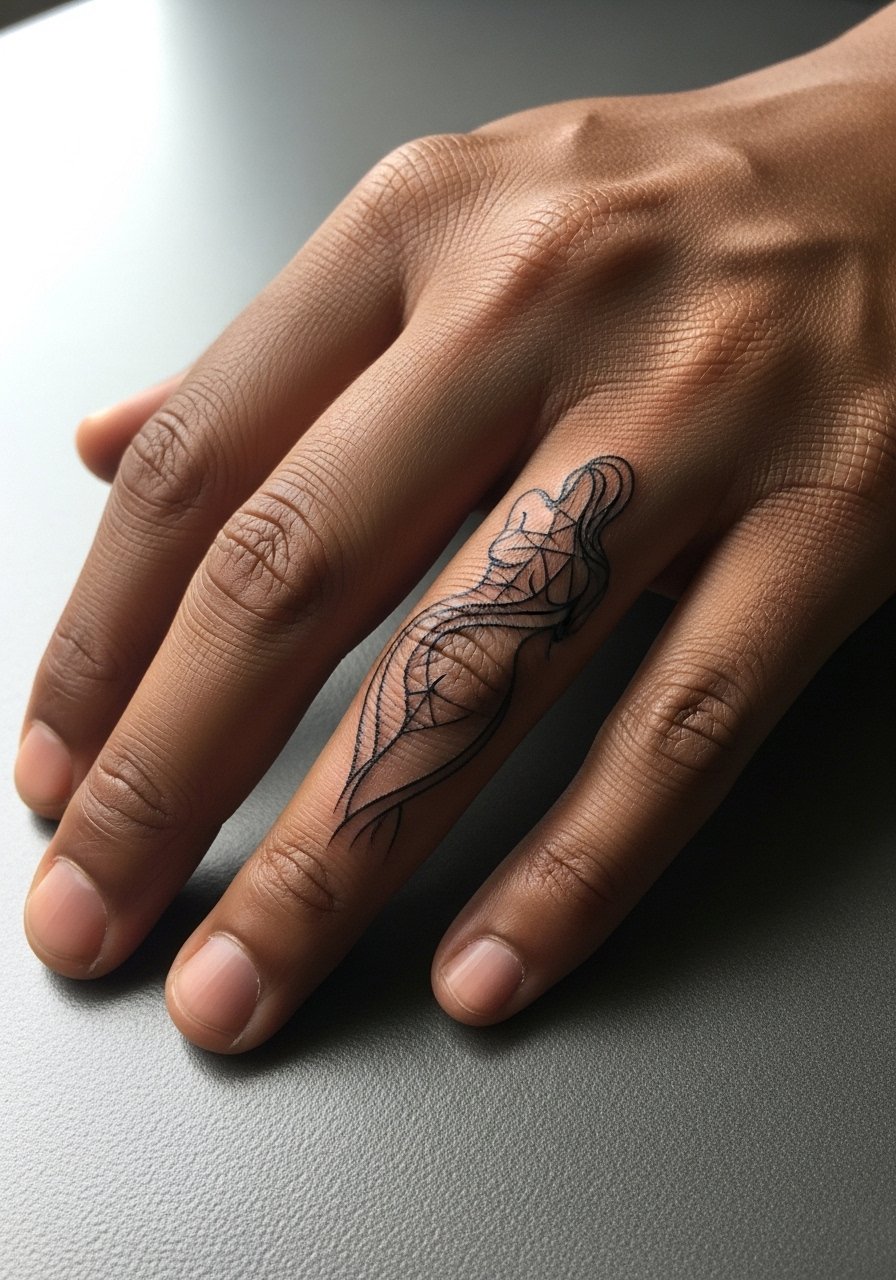
Finger tattoos are tiny commitment pieces that face constant washing and friction. A 0.75-inch geometric motif needs boldness at the outline to survive daily use and still require touch-ups in the first year. A common error is choosing ultra-fine detail on a fingertip. Tell your artist you want clean linework with a spare interior so the symbol reads in small photos and in person. For showing off, a simple stack of thin bands on adjacent fingers works better than heavy rings that press into fresh ink.
13. Dotwork Canvas Frame Around "She" on the Inner Wrist
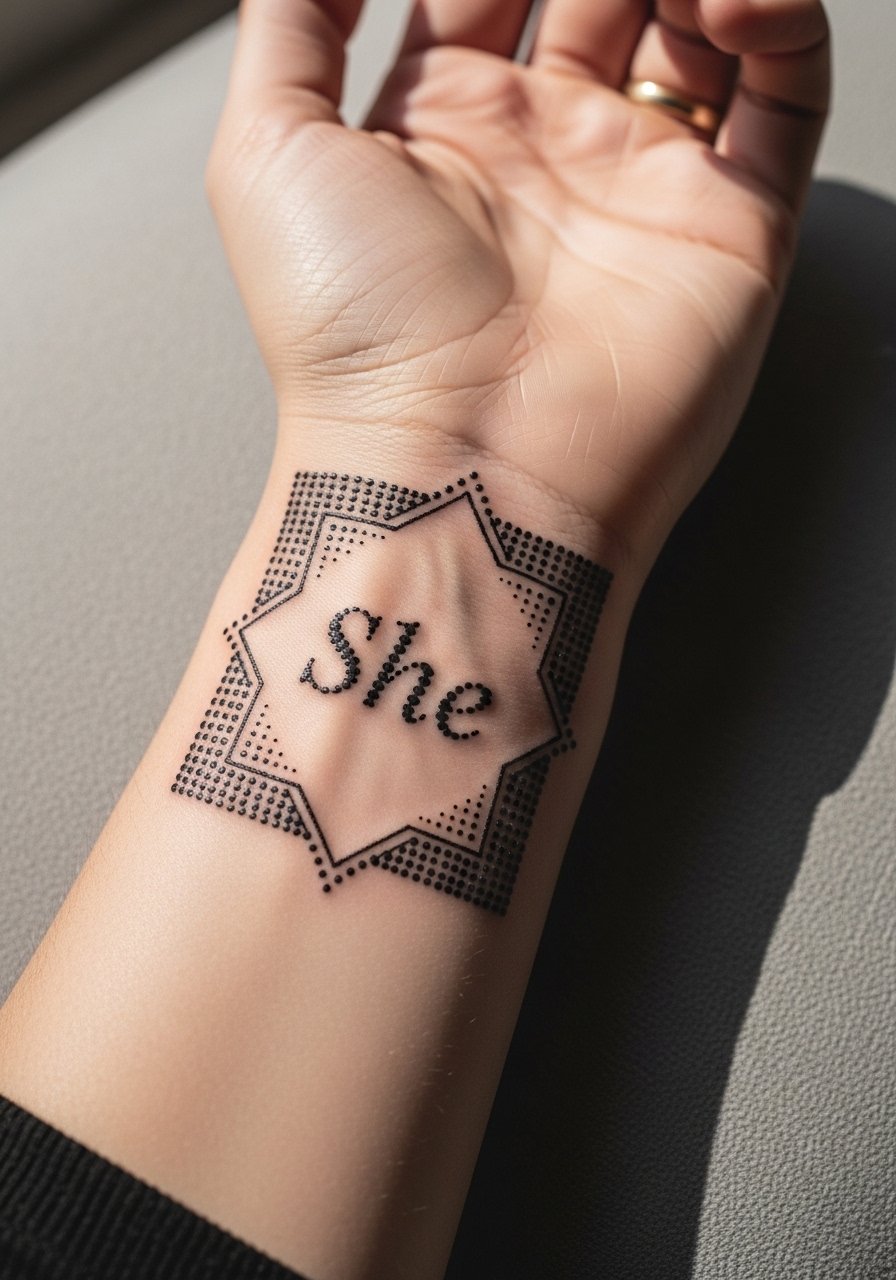
A framed wrist mantra gives the text room to breathe and adds subtle texture without heavy fills. Dotwork at two inches is low pain and typically a single session. Avoid dense dot shading right up against letter edges because compact dots can merge at year two. Instead ask for a soft stipple that graduates outward. This piece pairs well with a linen cuff bracelet or a thin chain on the opposite wrist so attention stays on the framed text.
14. Micro-Realism Palette on the Inner Arm
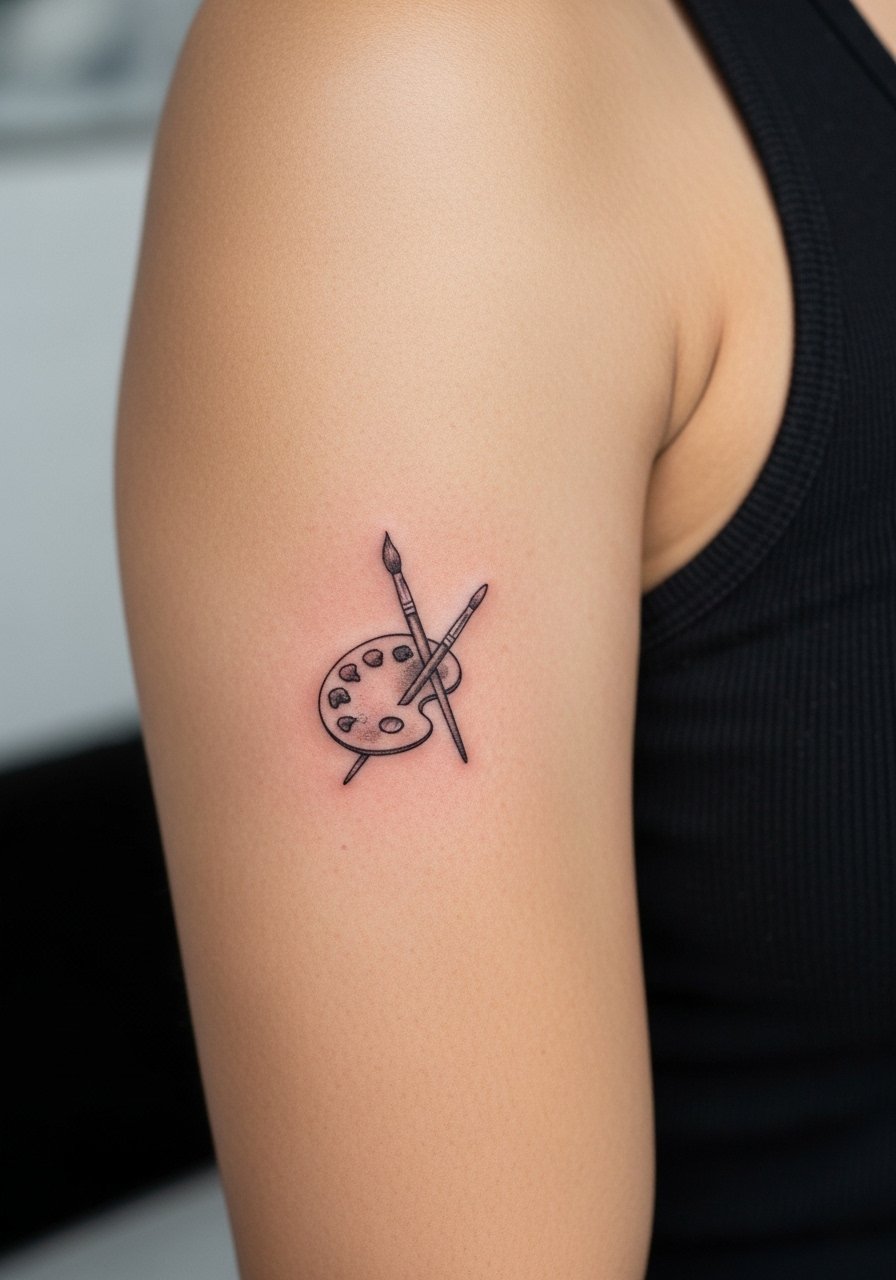
Inner arm placements sit out of the sun and are great for small symbols. A one-inch micro-realism palette takes fine single-needle work and the pain is mild. The real mistake people make is overloading the tiny icon with texture that will not survive motion and washing. Ask for a clean outline with selective tiny dots for suggestion rather than full shading. For the session, a loose tank top keeps the area accessible and comfortable.
15. Minimalist Brushstroke Spine Accent That Evolves Into Script
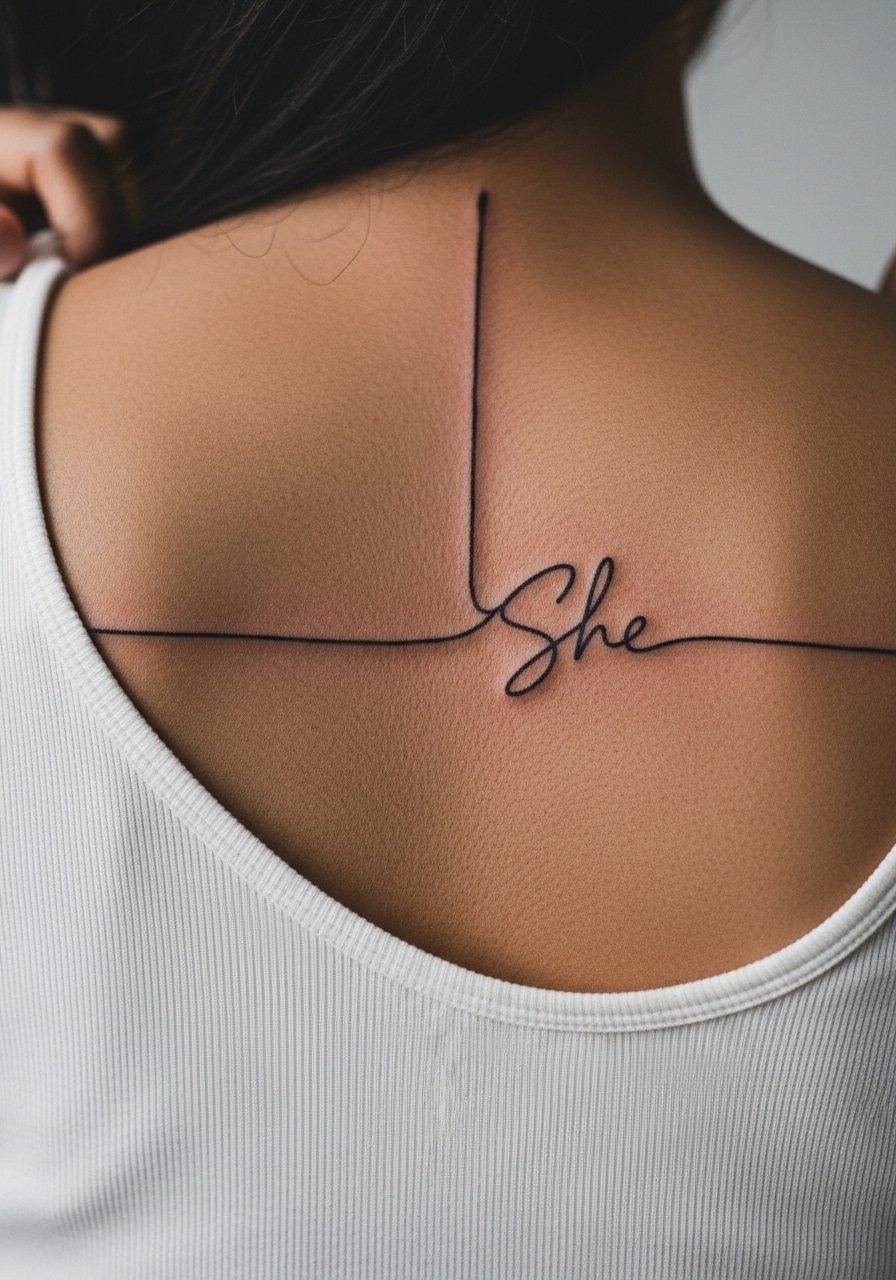
Spine pieces require mindful spacing because movement and posture affect how a line reads. This mix of brushstroke and script benefits from a taller scale and usually needs one session. A frequent error is going too small, which causes the script section to blur with time. Ask your artist to plan for the spine curvature and to place the script where natural gaps in vertebrae create breathing room. Wear a loose button-down shirt on the trip home so the friction from clothing is minimal while the area settles.
16. Micro Geometric Heart with "Art" Initial on the Inner Bicep (Second Placement Idea)
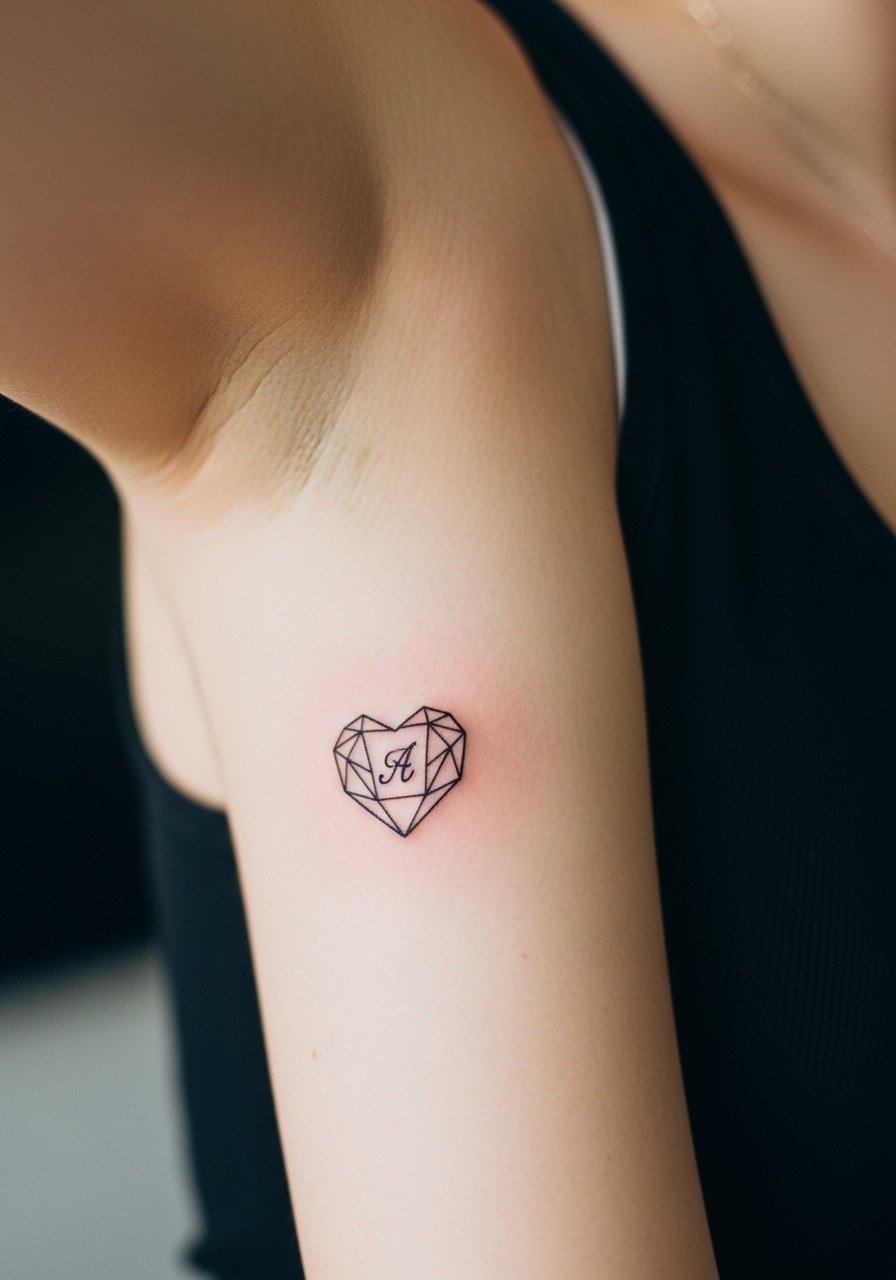
This repeats the inner bicep idea with a slightly different composition and sizing for people who want a companion piece. The same rules apply. The pain is moderate and the session is brief. If you plan a paired set, discuss symmetry and spacing with your artist so one does not overpower the other once healed. The micro heart benefits from a little negative space around the initial. For session comfort, choose a tank that lets the artist work without tugging and keeps the area clean.
17. Hidden "Art" Motif Framed Inside a Female Form on the Thigh
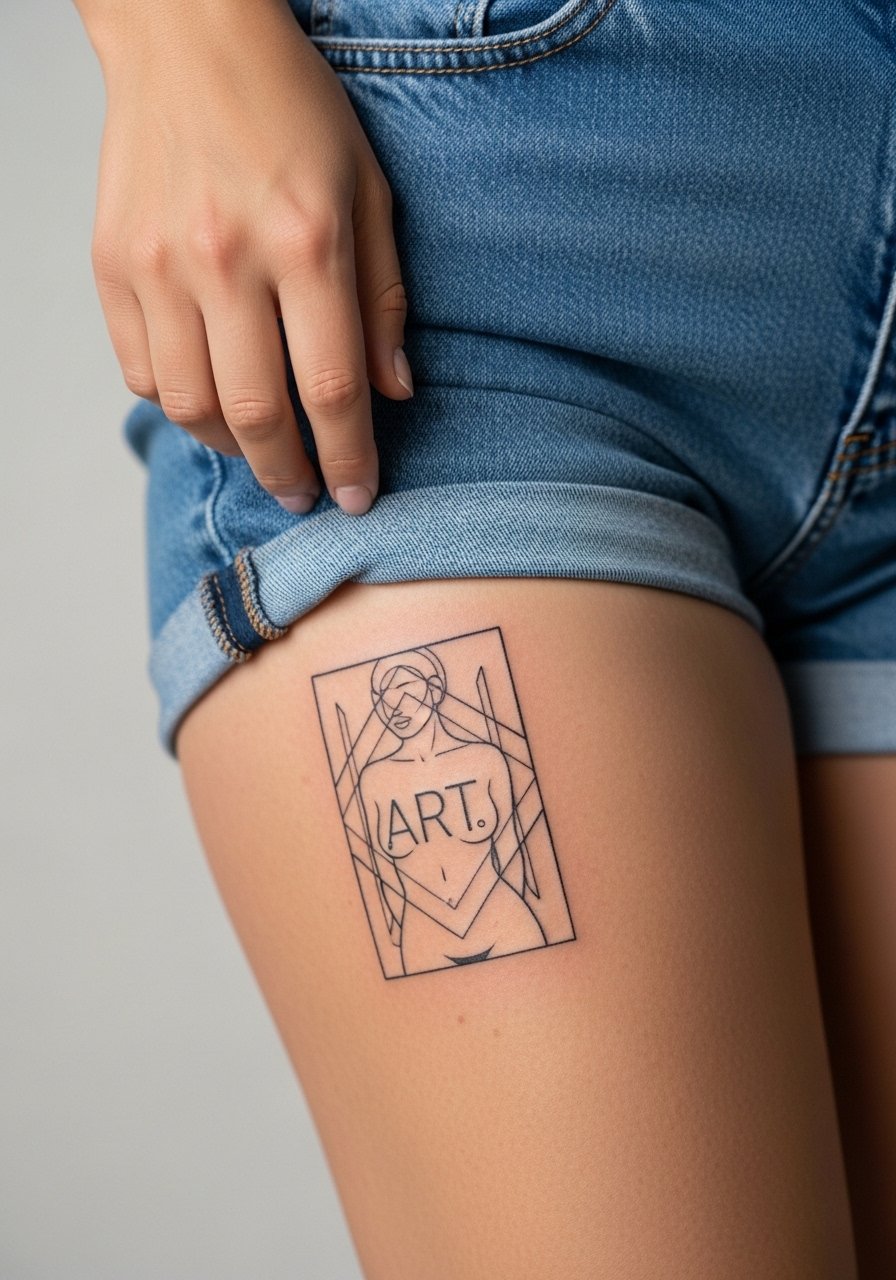
Hidden motifs on the thigh are great for collectors who want intimate additions that do not dominate. Outer thigh is low friction compared with inner thighs and keeps detail safe longer. A three-inch hidden motif will usually finish in one session and feels mild to moderate during the process. If you expect seasonal weight change, ask your artist where to place the piece so the composition will hold. Pair it with shorts or a denim short shorts when you want a curated reveal.
18. Single Needle Muse Outline on the Side Rib with Negative Space
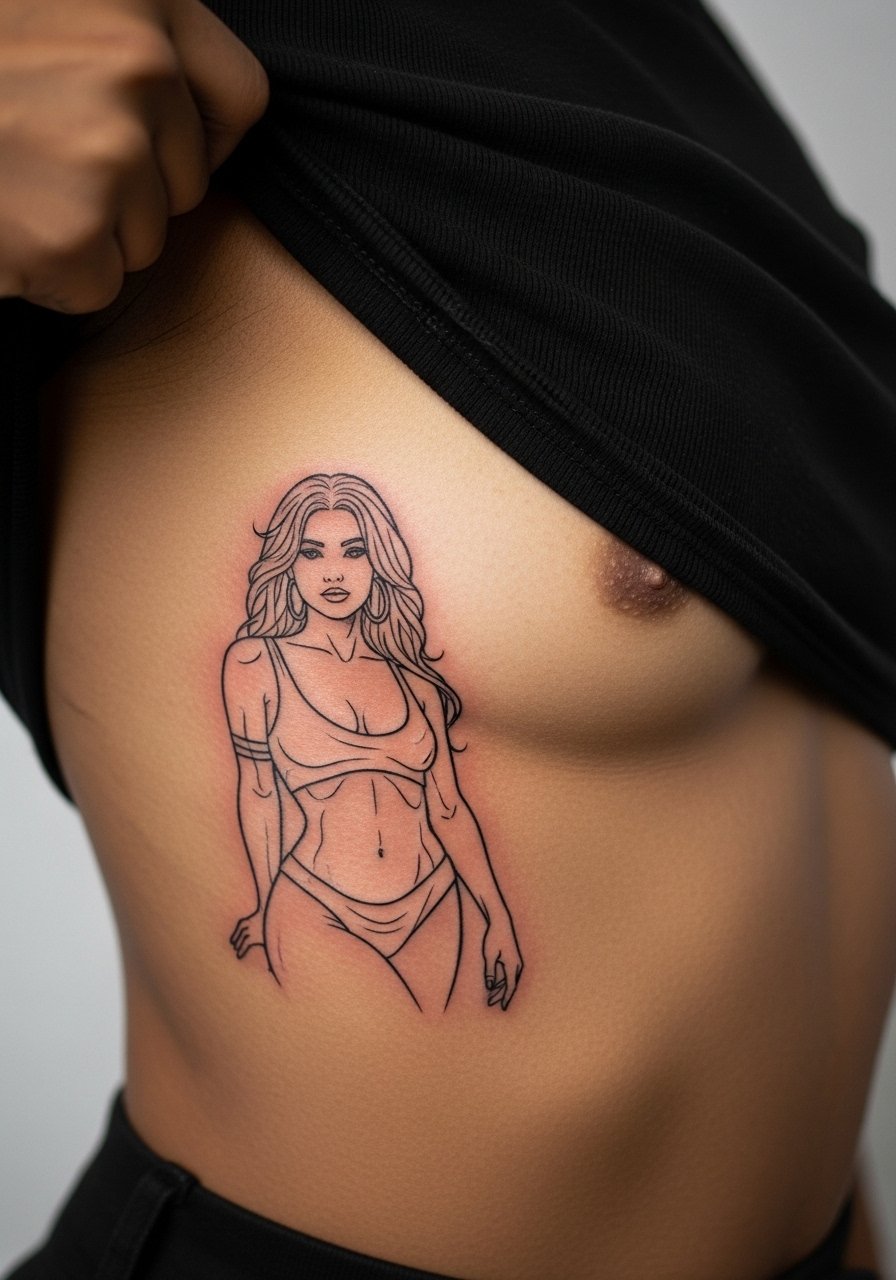
Again the ribs come with higher pain, but negative space helps the design age more predictably by avoiding dense fills that can blur. For a side rib muse, plan for one to two sessions depending on length. The main mistake is packing too much internal detail into a narrow vertical space. Ask the artist to prioritize silhouette and negative space for longevity. If you prefer revealing swimwear, a high waist bikini lets the piece peek out without constant chafing.
19. Minimal Brushstroke Contour on the Collarbone That Works in Negative Space
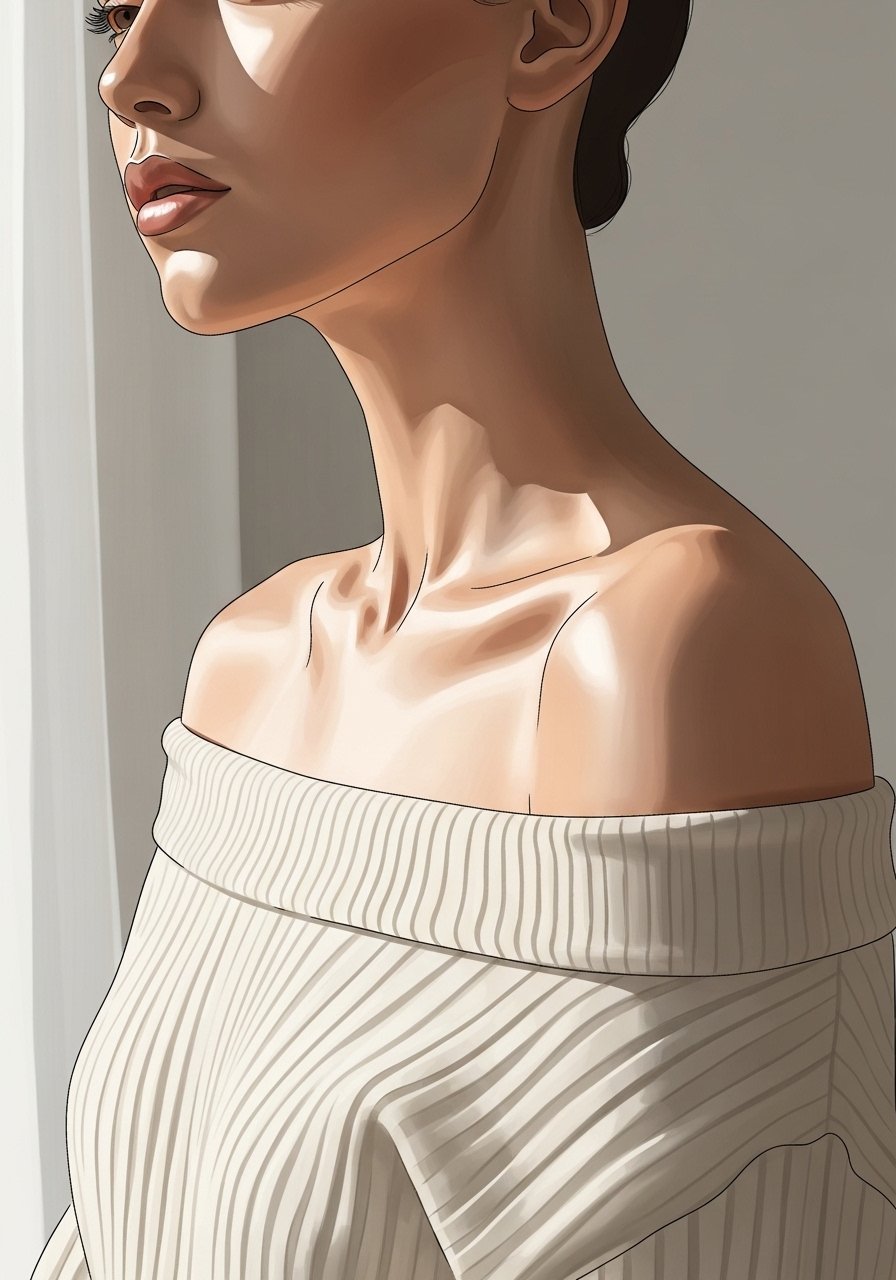
This contour sits elegantly across the collarbone and benefits from negative space to pop against skin tones. A two-inch brushstroke finishes in a single session and the pain is on the lower side because of soft tissue near the shoulder. A common error is asking for too faint a stroke. A touch more saturation at the outline preserves the form as the piece matures. Pair with an off shoulder top women for evenings when you want it to peek just above fabric.
20. Tiny Script "She" Hidden Inside a Geometric Frame on the Finger Base
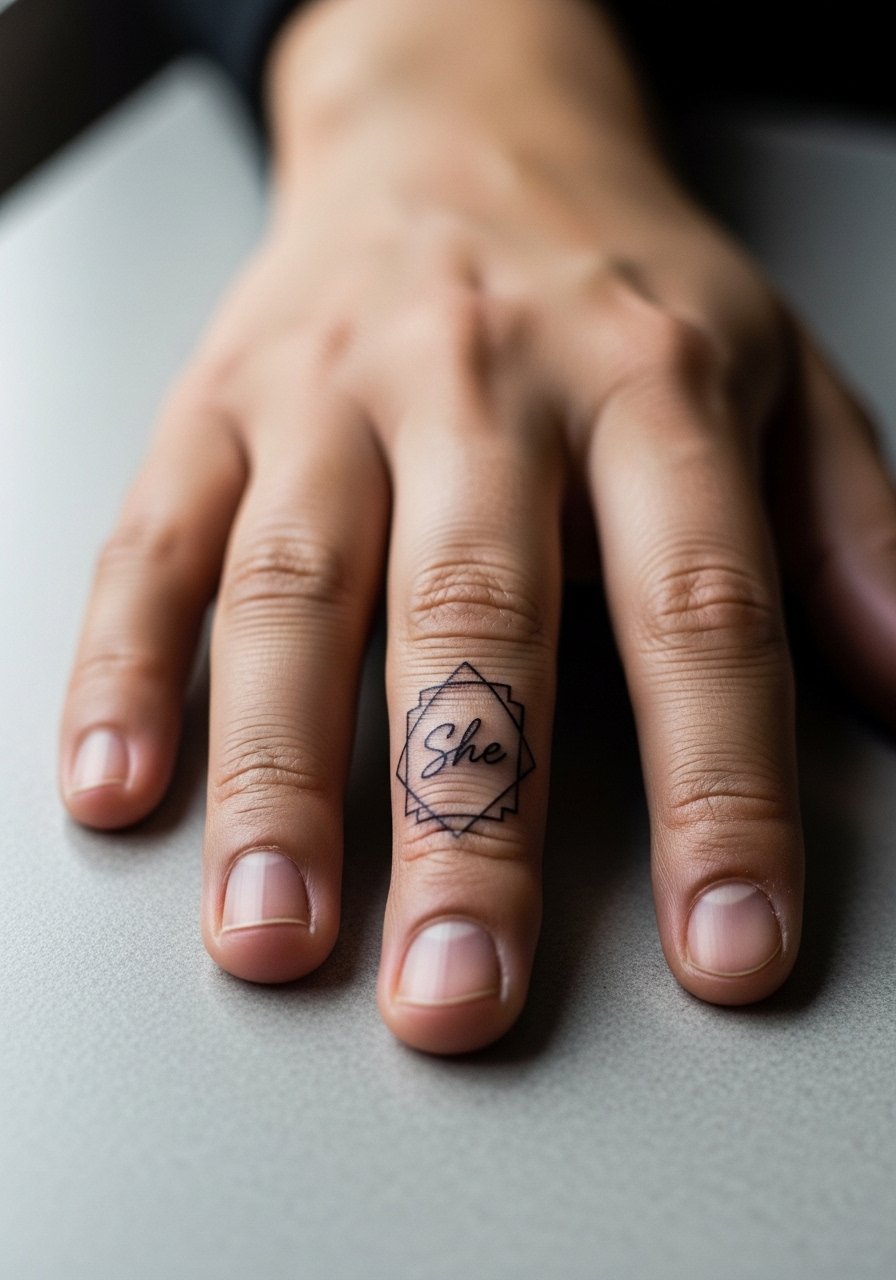
Finger-base tattoos are discrete and can be integrated into ring stacks. The skin there moves a lot and the first year often requires touch-ups. Keep the script compact and surround it with a simple geometric frame so the edges remain defined. Ask for slightly bolder linework than you would on a forearm. Avoid full interior fills at this scale. For styling, thin bands layered beside the tattoo work well without pressing into the ink.
21. Negative Space Female Form That Starts as "She" and Continues into an Abstract Line Down the Calf
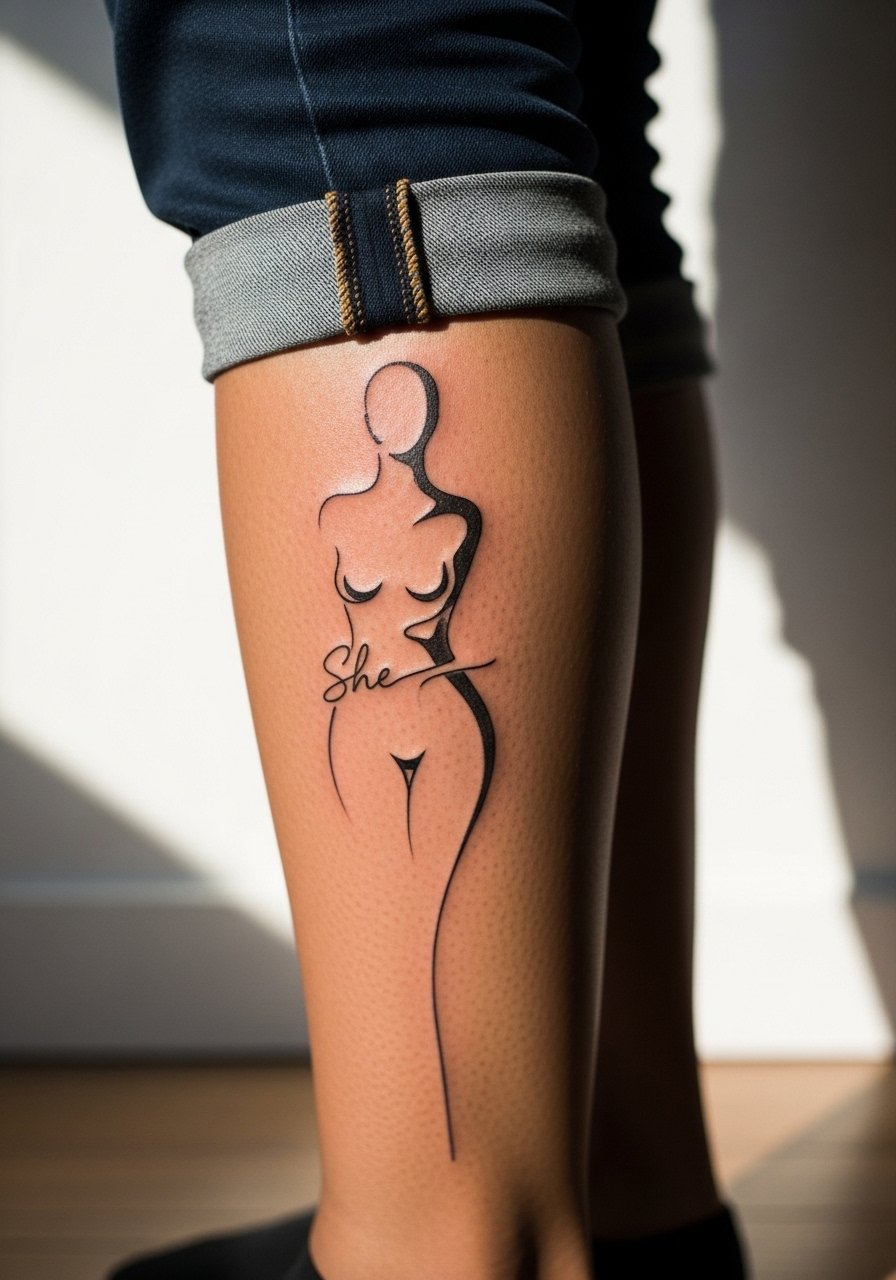
A longer calf design that starts as script and continues into abstract linework combines readability with movement. Expect one session for a two to three inch vertical piece and mild discomfort. The main mistake is compressing the script at the top so it loses clarity from a short viewing distance. Tell your artist you want the word to retain legibility while letting the line breathe as it flows down the calf. Cropped trousers or midi skirts keep this composition visible and protected during daily movement.
Frequently Asked Questions
Q: Will fine line script on my wrist blur faster than a bolder script on the forearm?
A: From what I have seen, wrist script tends to need touch-ups sooner because washing and sun exposure are constant. A slightly heavier single-needle weight and careful placement away from creases will extend clarity. If you want less maintenance, consider moving a similar script to the inner forearm.
Q: I have darker skin. Do dotwork portraits read differently and what should I ask for in consults?
A: Dotwork can look beautiful on darker tones when the artist plans negative space and contrast intentionally. Ask for a mix of stippling and open areas so the portrait keeps depth without relying on tiny mid-tone dots that can sink into darker skin over time. Mention skin tone up front so the artist can adapt spacing.
Q: How long should I expect between touch-ups for a minimal finger or wrist piece?
A: Realistically, expect a touch-up in the first 12 to 24 months for finger or wrist work. Both placements see a lot of movement and washing. The exact timing depends on your skin, sun exposure, and how you care for the piece while it heals.
Q: Should I use numbing cream for a rib or shoulder session?
A: Numbing cream can take the edge off for sensitive spots like ribs. Use it only after checking with your artist since some prefer clients without topical agents. If you plan to use it, mention it when booking so the artist knows what to expect for skin response.
Q: Where do I find an artist who understands minimalist fine line "she is art" work without naming anyone?
A: Search hashtags like #MinimalistTattoo and #FineLineTattoo on Instagram, check local Reels on TikTok by city, and use booking apps that filter by "fine line." Reddit threads that ask for local recommendations and convention location tags are good discovery pathways. Look for healed photos in portfolios rather than fresh shots so you can judge longevity.