
The stencil sits on the wrist, the client breathes, and the first pass of the needle proves whether the idea will read as quiet elegance or a smudge in three years. Fine line lotuses look gorgeous at the appointment, but their longevity depends on placement, line weight, and how you protect the area in the first months. Below are 21 minimalist lotus flower tattoo ideas, each with what to ask your artist, how it will age, and small styling moves that make the design read like it belongs to you.
1. Single-line Minimalist Lotus Outline on the Inner Wrist
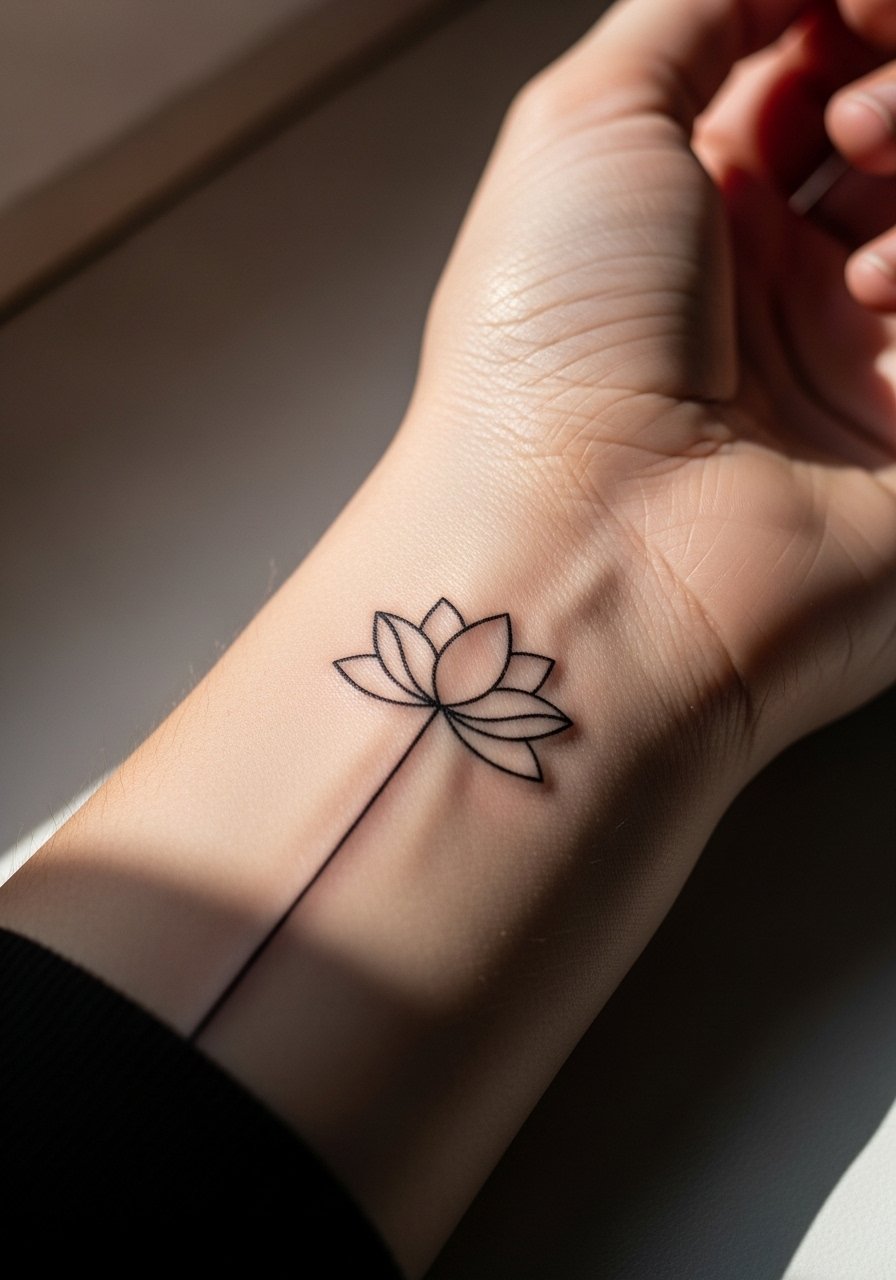
When you pick a single continuous-line lotus for the inner wrist, fair warning, the wrist is a visible spot where fine line shows wear faster than tucked placements. I recommend asking your artist to leave a hair of extra spacing between petals so the linework has breathing room as it settles. Expect a short session, low to moderate pain, and touch-up potential at year two to three for very fine executions. A common mistake is making the whole design too small, which invites blurring. For the appointment wear a sleeveless top or easy-rolling sleeves and show it off with a thin cuff—try a thin gold cuff bracelet that sits opposite the tattoo so the wrist still feels delicate.
2. Fine Line Lotus with Budding Stem on the Inner Forearm
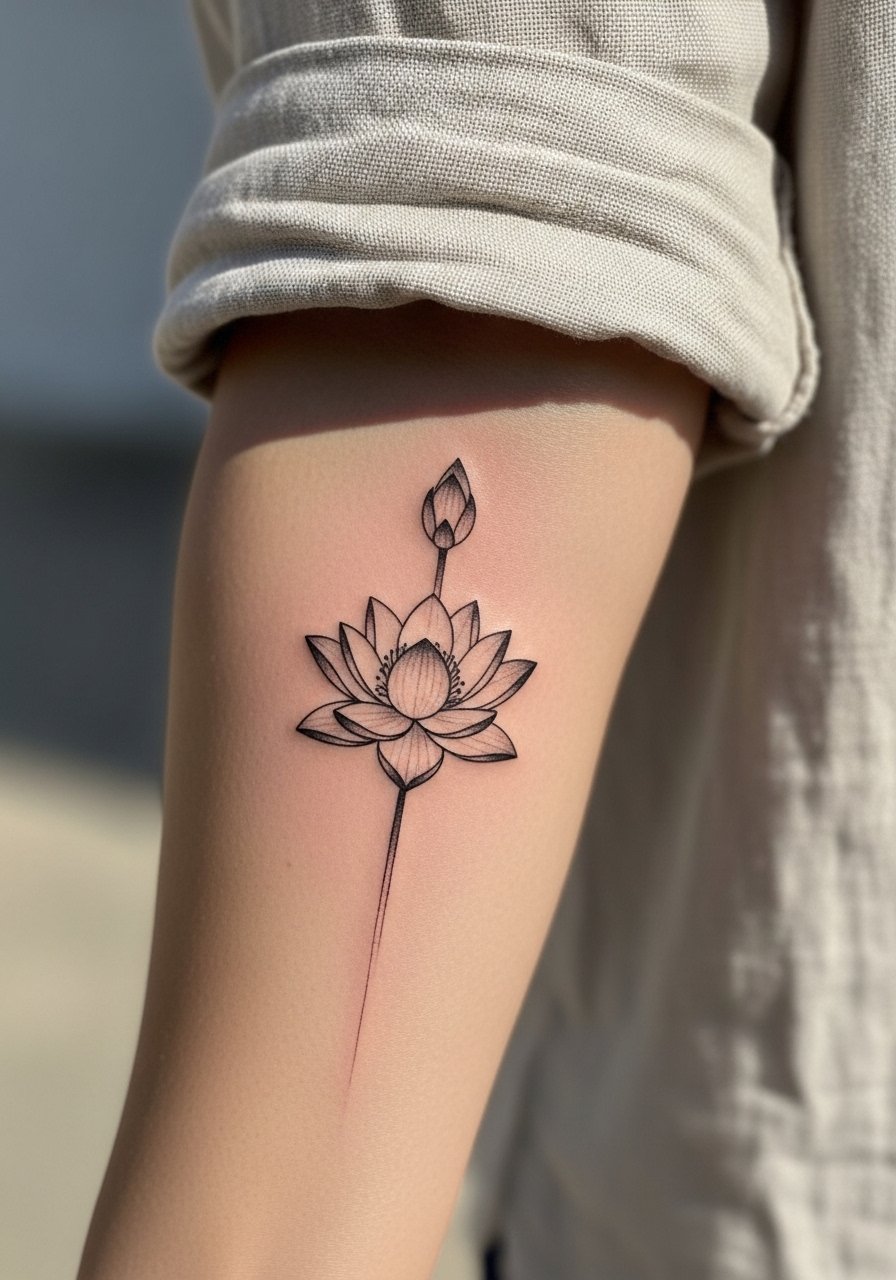
I've seen this style last well on forearms when scaled to two or three inches and spaced from busy veins. In consultation, ask for light gray shading rather than tiny stippling in the center so the bloom keeps depth without overcrowding the linework. The session feels like steady buzzing for 45 to 75 minutes, moderate pain, and most people need only a single visit unless they want extra contrast later. A mistake is choosing ultra-thin lines for a forearm that moves and flexes a lot. Pair the finished piece with a rolled-sleeve linen shirt and a few thin bangles for a quiet, curated look, like a linen button down shirt you can push up for casual display.
3. Dotwork Minimalist Lotus Mandala on the Collarbone
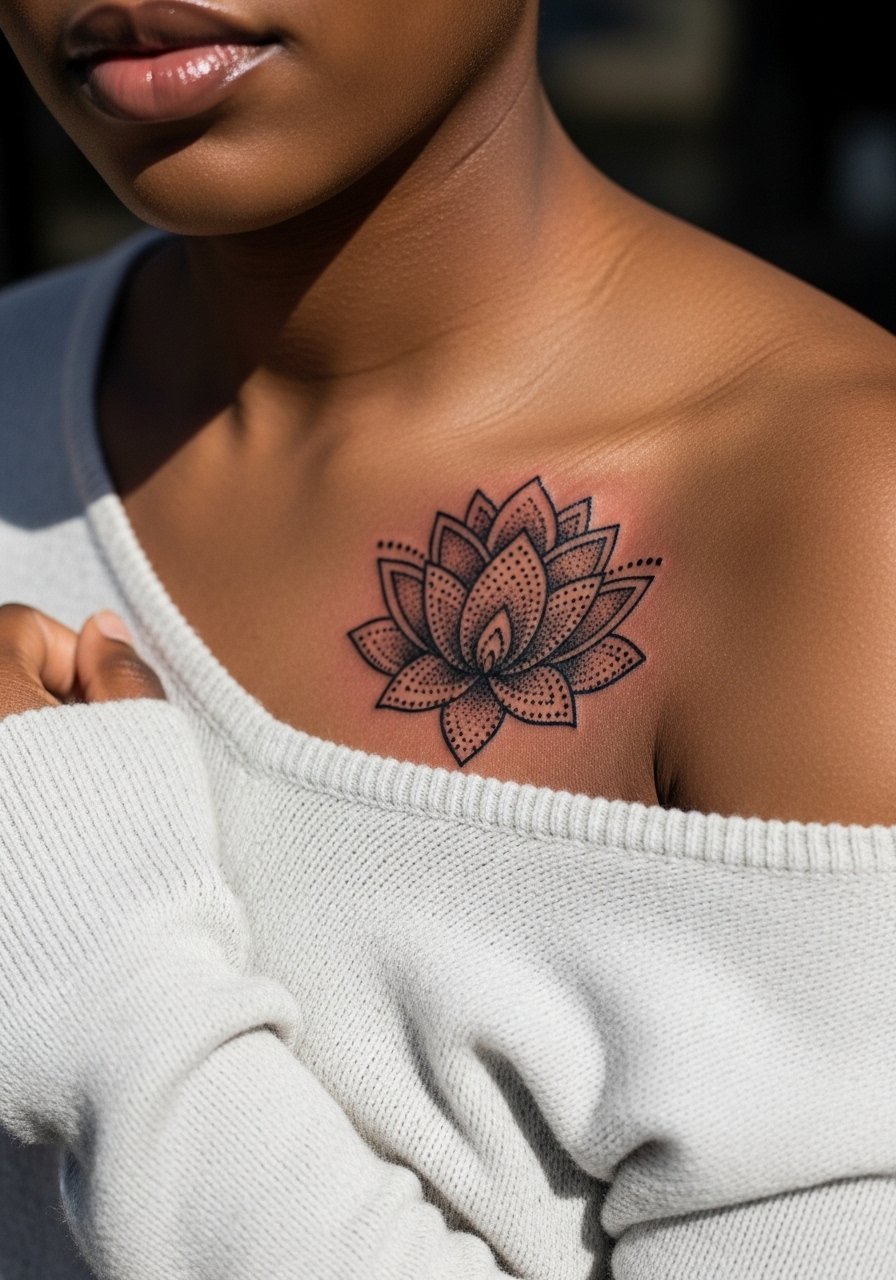
Artists split on whether heavy dotwork around the collarbone stays crisp long term. One camp says dense dot shading can hold when dots are spaced intentionally. The other camp warns that dense work near bone can merge into darker patches as skin shifts. If you opt for this mandala, ask for wider dot spacing and a slightly larger diameter so the pattern keeps its mandala feel at year two. Pain is low to moderate because the collarbone is bony but manageable in a single session. Avoid asking for micro-dot density under 1.5 inches. Style it with an off shoulder sweater to let the mandala sit in the natural shadow of the collar.
4. Negative Space Lotus Petal Cluster on the Outer Ankle
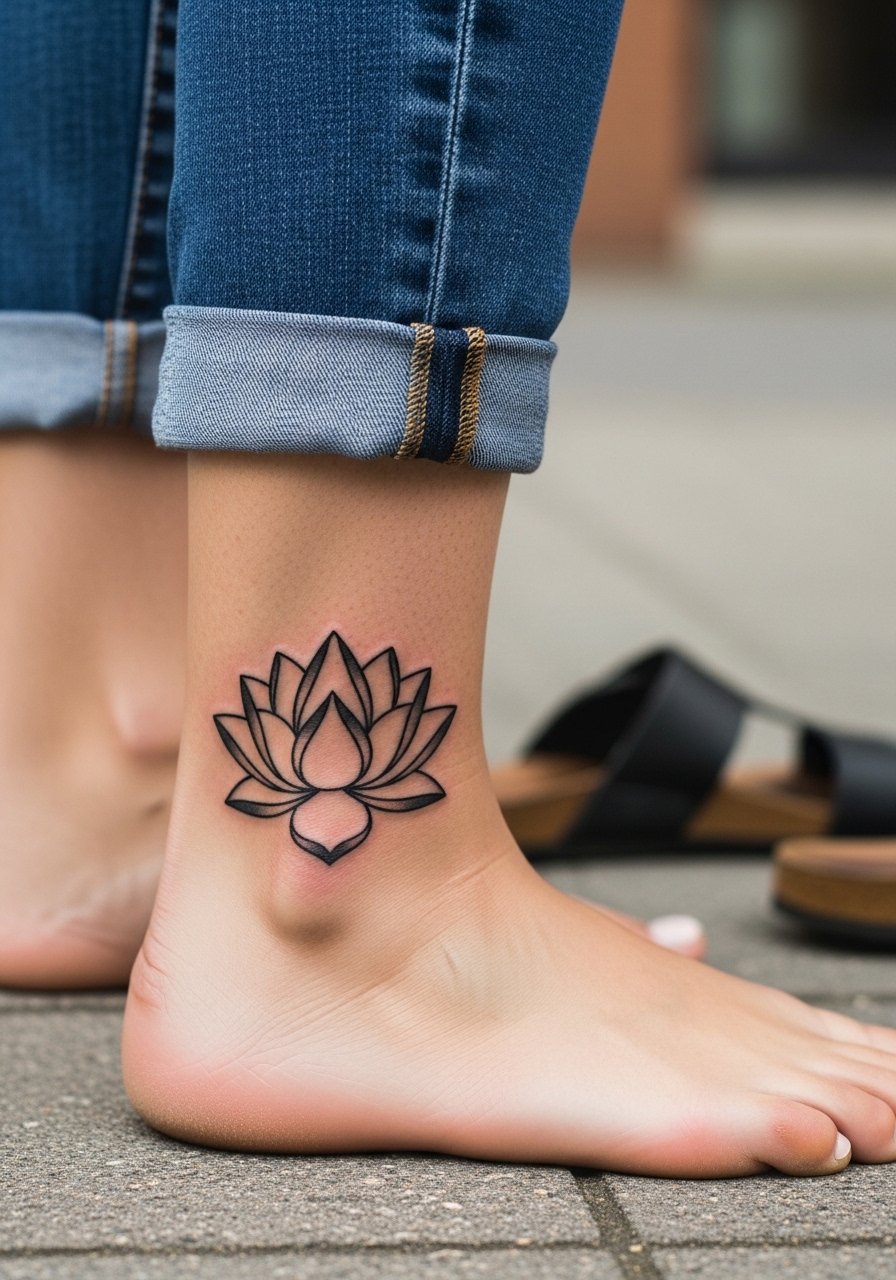
Ankle work gets a lot of friction from shoes and socks, so choose negative space to keep contrast high on medium and darker tones. During your consult, specify clean outline thickness and ask the artist to avoid micro-fill inside the negative petals. The session is short, the ankle is low-moderate on pain, and a common error is going too small. If you plan to wear sandals, show it off with strappy flat sandals or cropped jeans to keep the design visible and uncluttered.
5. Micro Lotus in Bloom Behind the Ear
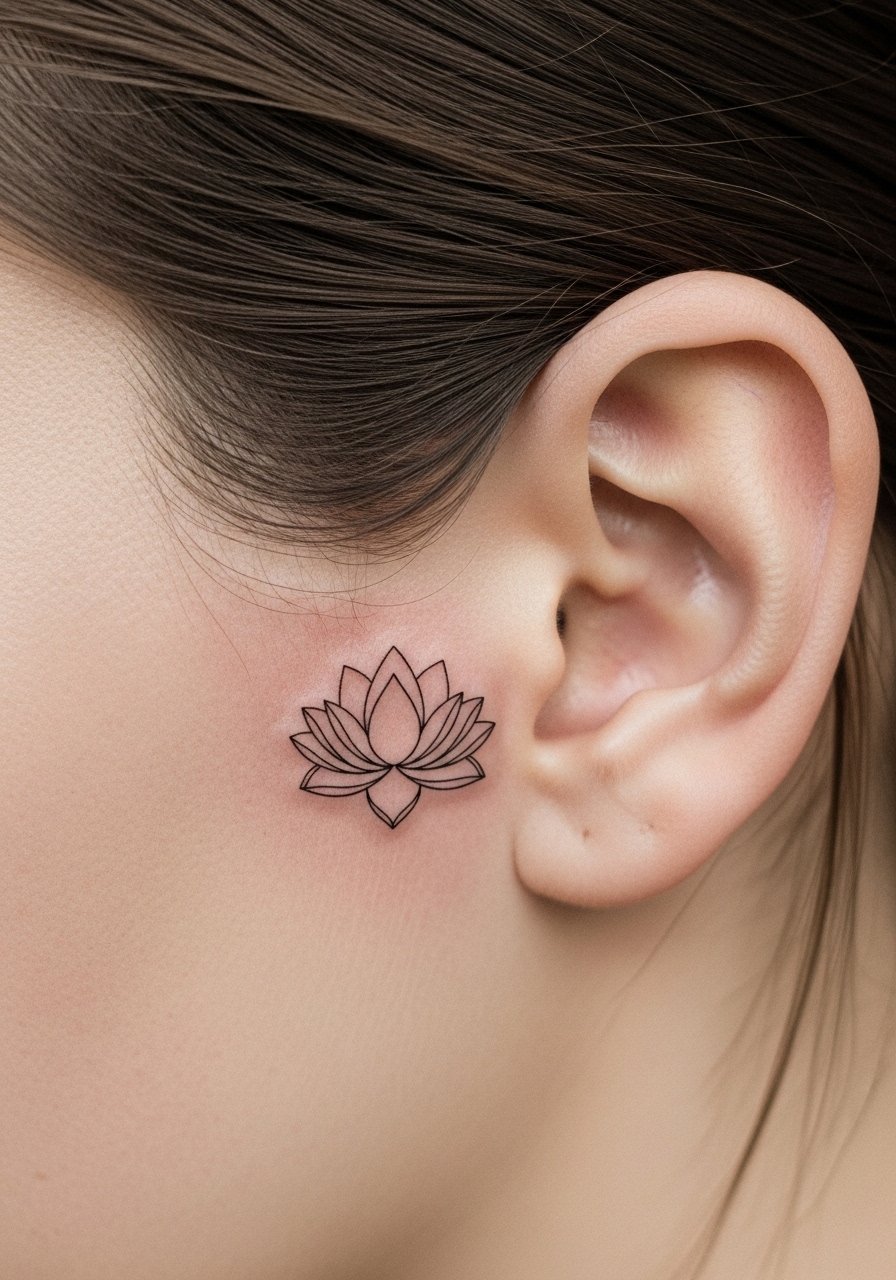
The behind-the-ear micro lotus reads as a private punctuation mark that still peeks out when hair is tucked. The location requires a careful stencil placed on the skin below the hairline. Sessions are quick and the area feels surprising in sensitivity because the skin is thin. A common mistake is asking for too much internal detail in a 0.5-inch space. Expect possible early touch-ups if you sleep on that side or use aggressive hair products. This placement needs an artist comfortable with tiny linework and with portfolios that show healed minis on similar spots.
6. Micro-Realism Lotus on a Finger Pad
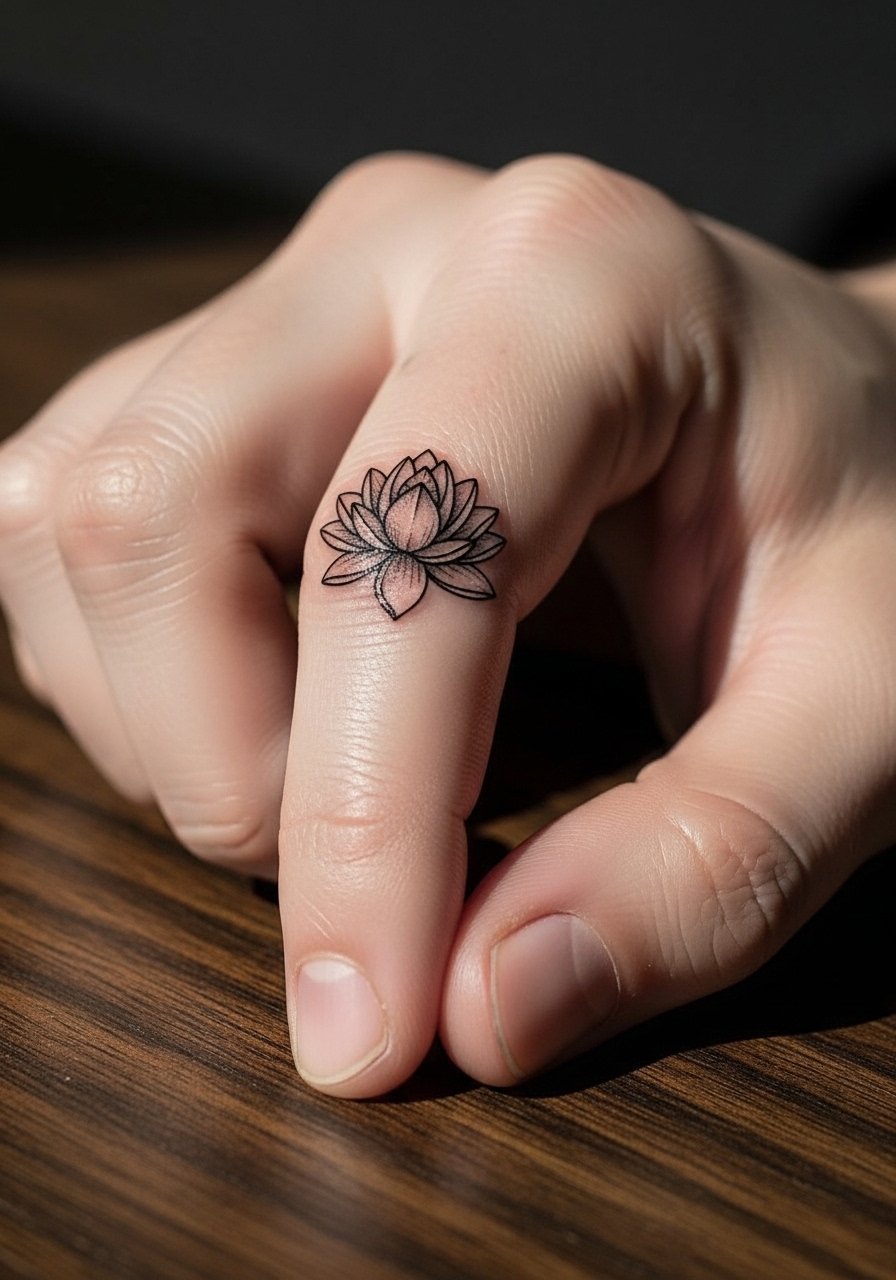
Finger tattoos are notorious for fading and requiring frequent touch-ups because the skin regenerates faster and experiences constant friction. If you want a micro-realism lotus here, tell your artist you accept a slightly bolder outline so the form lasts. The session is short but stinging, and realistic expectations include touch-ups at year one or sooner. A real mistake is booking a tiny script-thin detail for daily-use fingers. Protect the art with minimal friction early on and avoid tight rings over the area until healed. For session comfort wear no rings and keep sleeves short.
Studio Day Picks
The wrist, ear, and finger pieces above demand different prep from larger forearm or collarbone work, so a small kit smooths the appointment and the first days.
-
Stencil transfer paper kit. Lets you preview placement and line weight directly on skin, which is helpful for inner wrist and behind-ear minis.
-
Topical numbing cream. Applied before the session it eases the sting on bony spots, like collarbone and ankle.
-
Thin protective film roll. Keeps small placements, especially fingers and wrists, clean during the first week of hand washing and movement.
-
Fragrance-free body wash. Mild cleansers prevent irritation that can blur ultra-fine linework in the early heal.
-
Aquaphor healing ointment. A thin layer over the first few days helps lock moisture into delicate needle channels without clogging.
7. Geometric Lotus Base for Forearm Stability
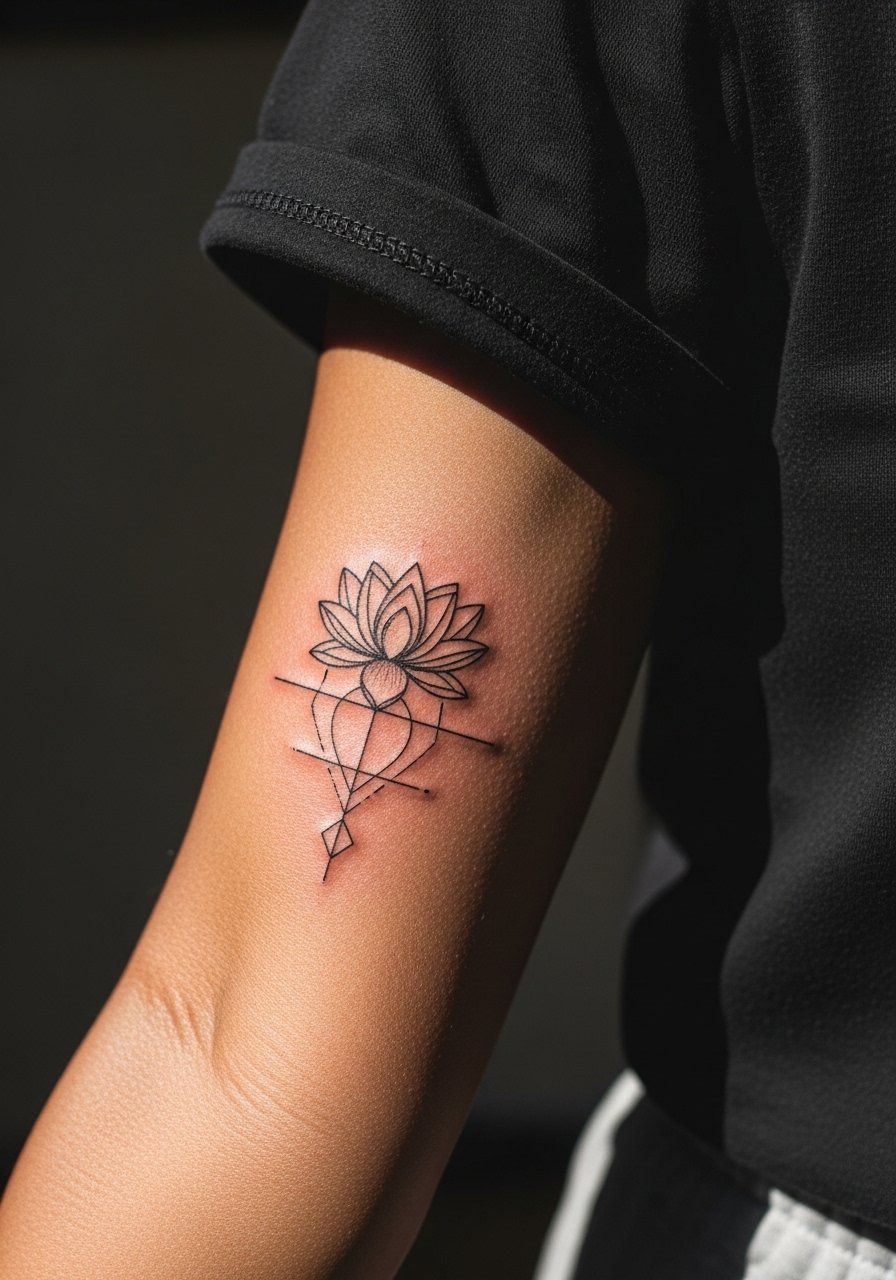
The visual impact of a geometric grounding shape helps a delicate lotus maintain clarity at larger forearm sizes. In the consult, ask for the geometric lines to be slightly bolder than the lotus outline so the piece reads at a glance. Sessions run about an hour, moderate pain. A typical mistake is sketching the geometry too close to the delicate petals, which causes visual crowding as the piece settles. The geometric base also spreads the design across muscle movement so it ages more evenly than a tiny standalone lotus.
8. Blackwork Mini Lotus on the Nape of the Neck
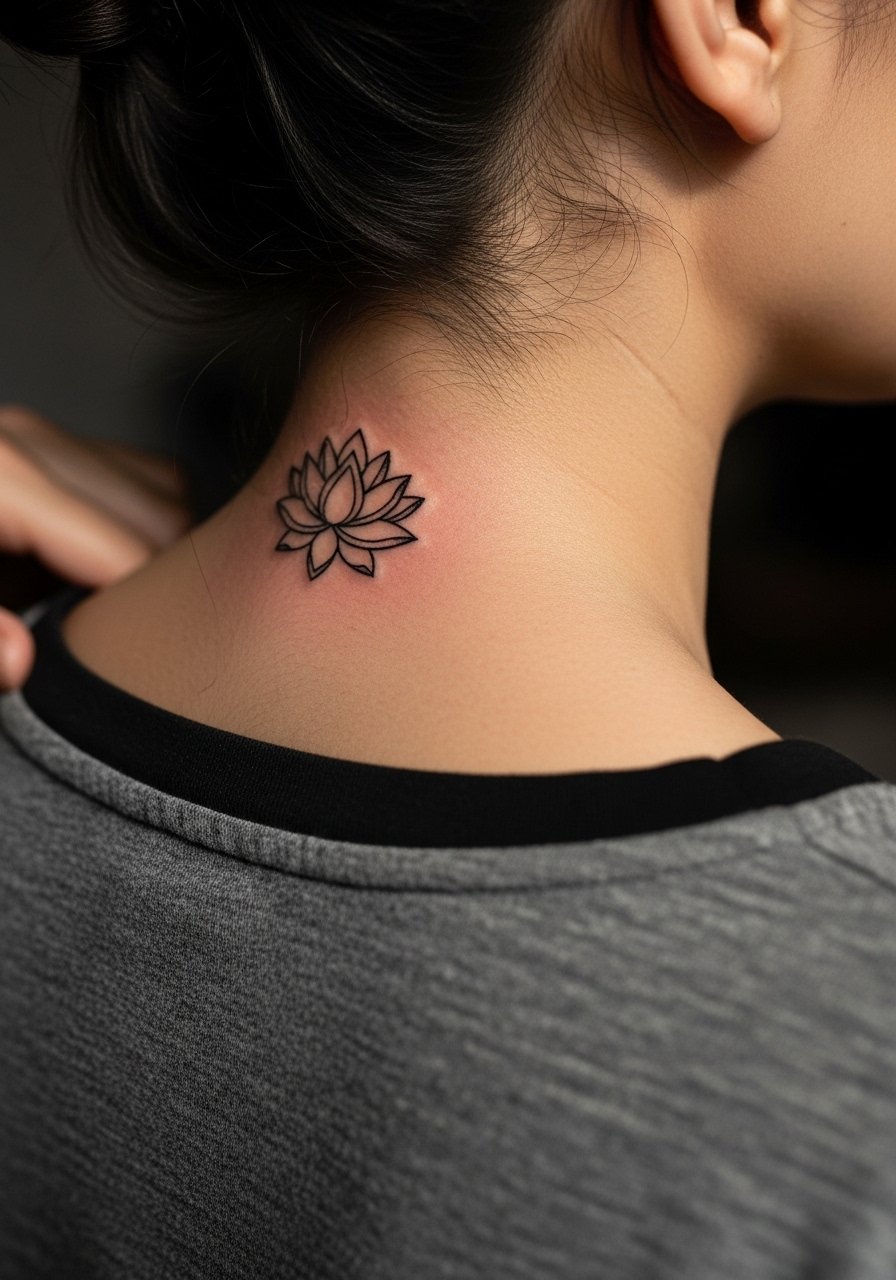
Neck placements can be sensitive socially and in some workplaces, so factor that into your placement decision. The nape takes shading well because it is less exposed than the front of the neck. Expect a moderate pain level and a short session. The main mistake is underestimating how much attention a neck tattoo draws. Ask for a compact design and consider an open-collar top for showing it off. If you want a subtle display, a wide-neck shirt makes it easy to reveal or hide.
9. Lotus and Crescent Moon Behind the Collarbone
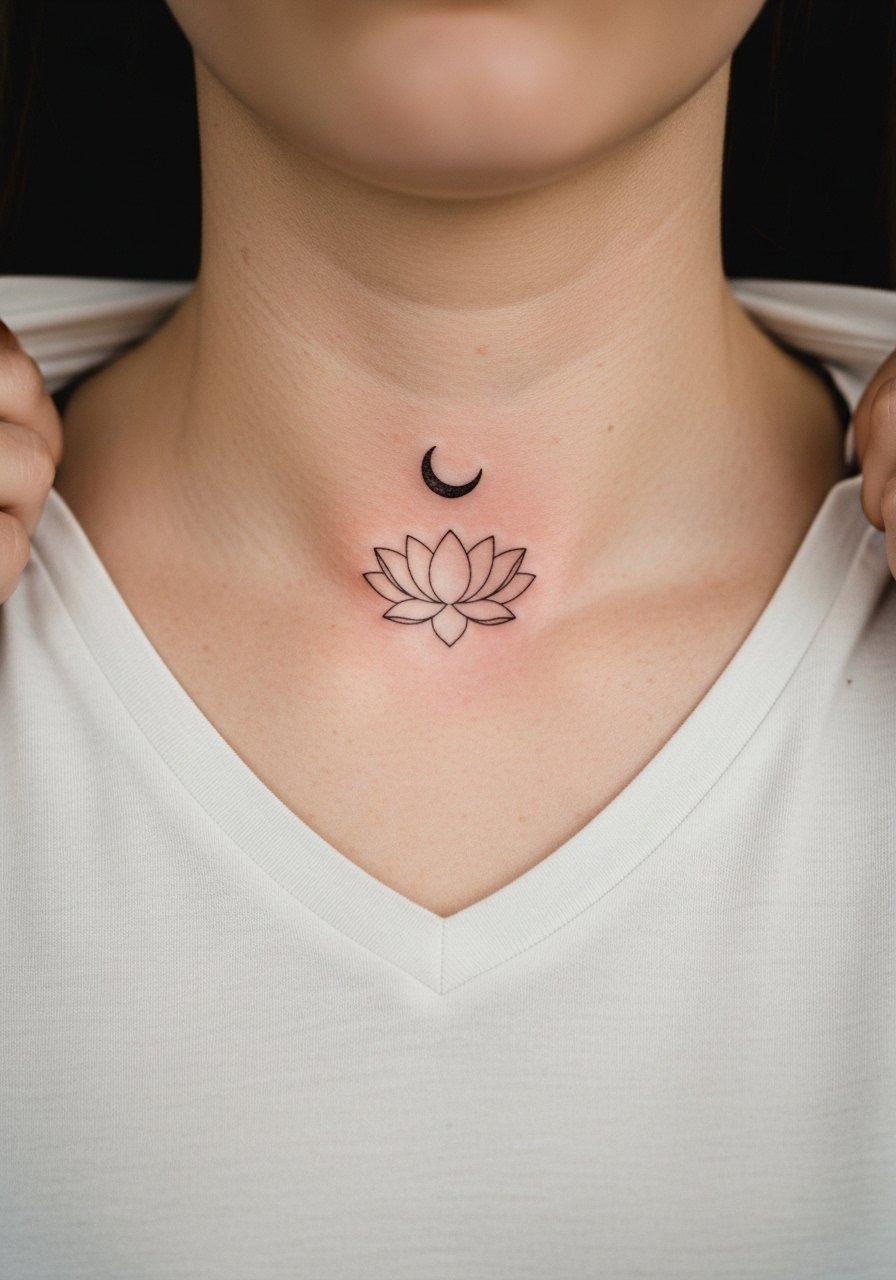
Pairing a lotus with a crescent moon near the collarbone lets the flower read as a personal emblem that sits neatly with clothing silhouettes. The collarbone can be ticklish during tattooing, and the session is usually under an hour. Ask your artist to keep the lotus slightly lower than the moon so the overall composition follows the chest curve. A common aging error is packing too much micro-detail into the moon, which can blur. Style with a v neck linen tee for a subtle reveal on cooler days.
10. Negative Space Collarbone Lotus That Mimics Shadow
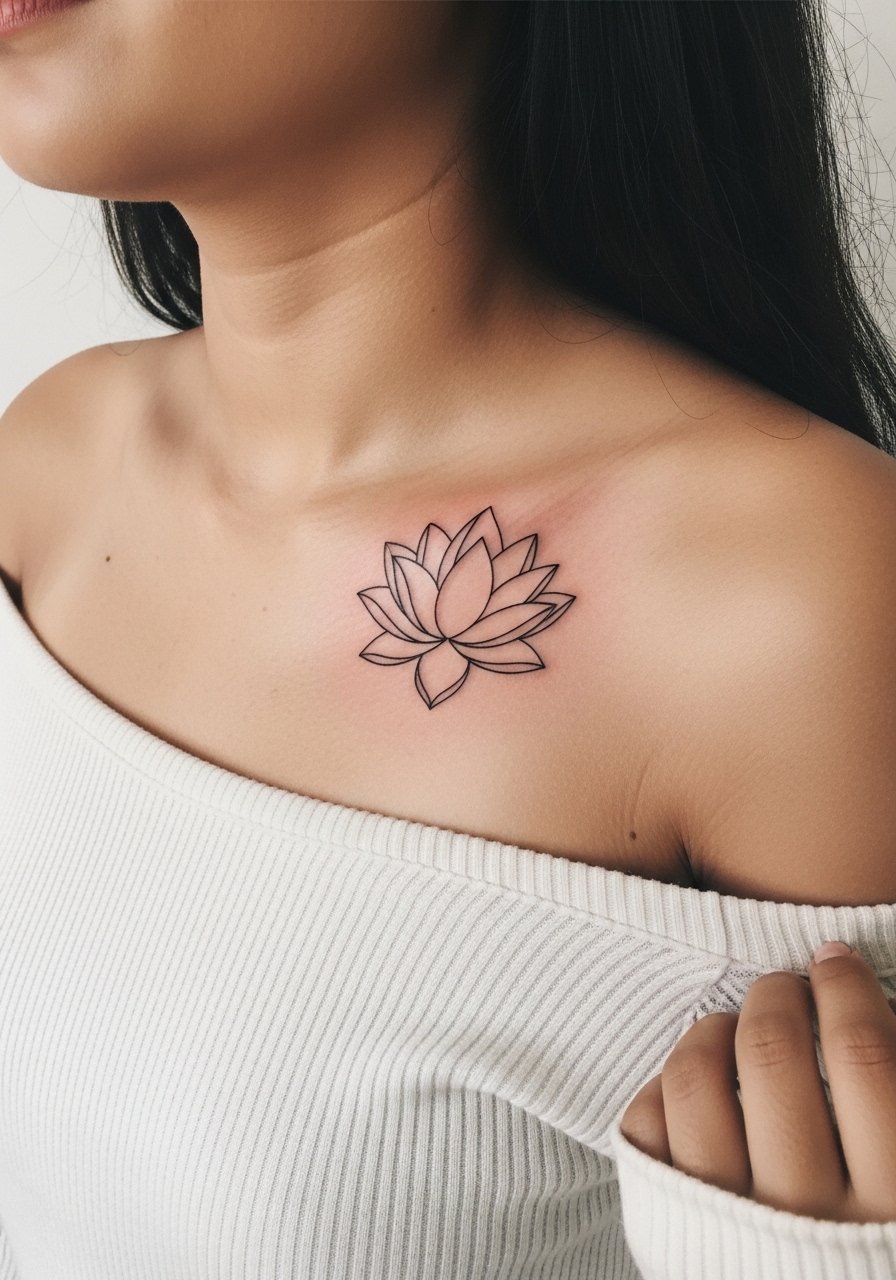
Negative space around the collarbone creates an illusion that the petals are emerging from the body, which helps visibility on darker tones. During consultation, clarify the exact amount of skin you want left uninked to get the contrast you expect. This is a low-session, low-moderate pain placement with an aesthetic payoff. People sometimes ask for ultra-thin outlines and then find the negative space disappears as the lines blur. Choosing a slightly bolder outline keeps the illusion intact through normal wear and sun exposure.
11. Tiny Lotus on the Shoulder Blade
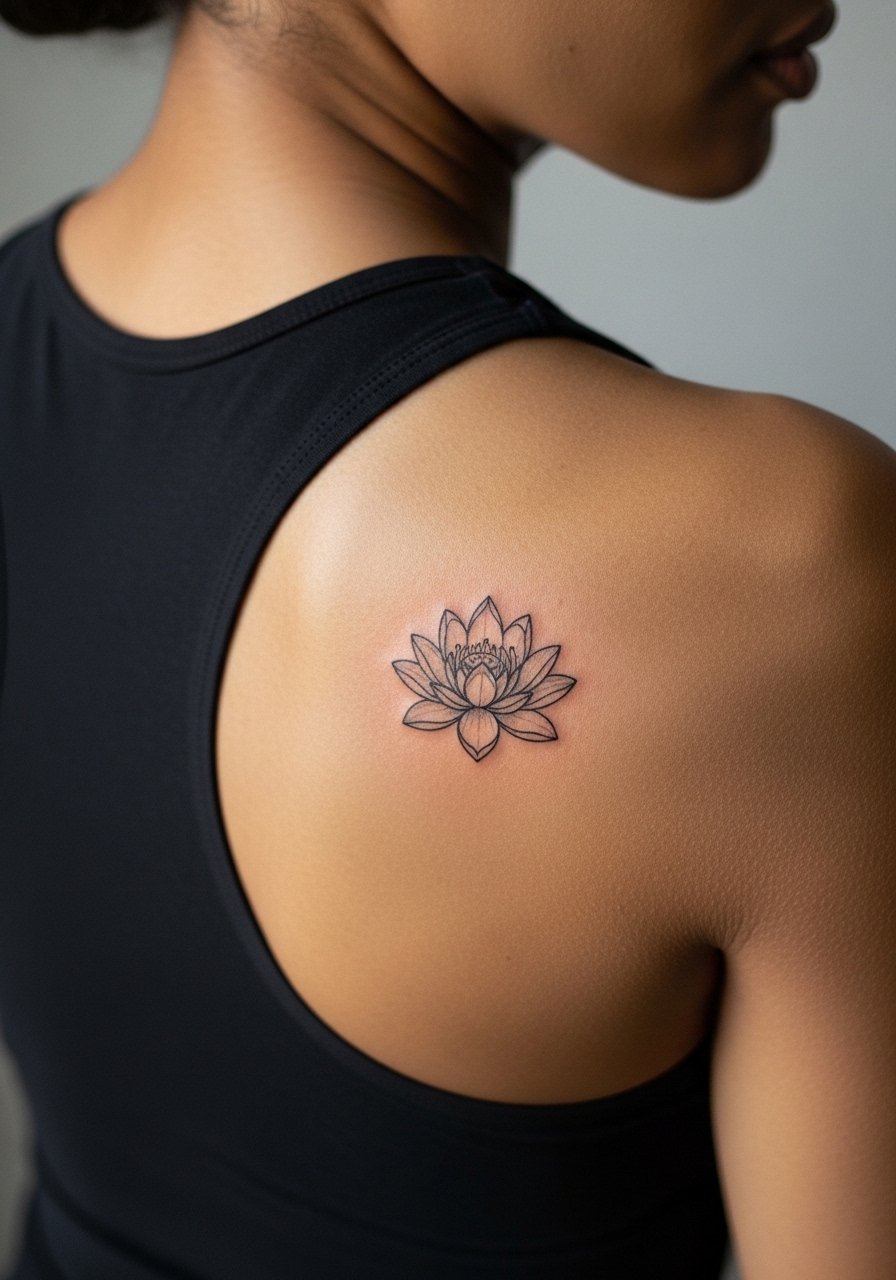
Shoulder blade pieces are forgiving because they sit on a broad, low-friction surface that heals predictably. Expect low pain and a single session under an hour for a 1.5 to 2-inch lotus. Mistakes happen when clients choose overly complex center details for a micro size. If you want to show it off often, a racerback tank frames the area and keeps the tattoo visible without competing with jewelry.
12. Lotus Wrapped Around the Ankle, Minimal Outline
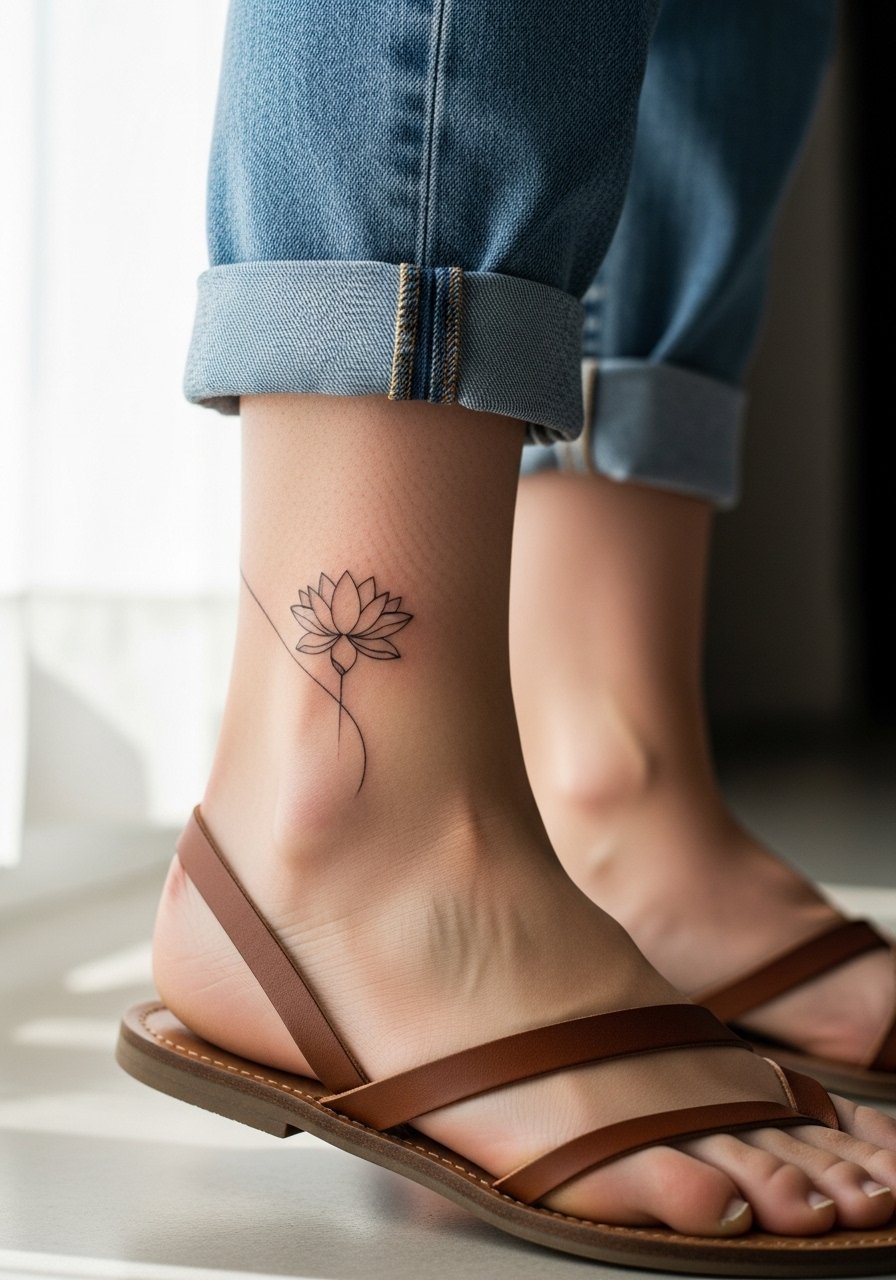
A wrap-around ankle tattoo reads beautifully with summer wardrobes but the curvature adds complexity to stencil placement. The pain is manageable, session brief. Tell your artist you want a thin but steady outline that follows the ankle bone rather than crossing it. The biggest mistake is placing a continuous fine line across a moving joint without room for movement. If you plan on showing this often, pair it with cropped straight jeans that highlight the wrap without chafing.
13. Ribcage Lotus with Emerging Bud
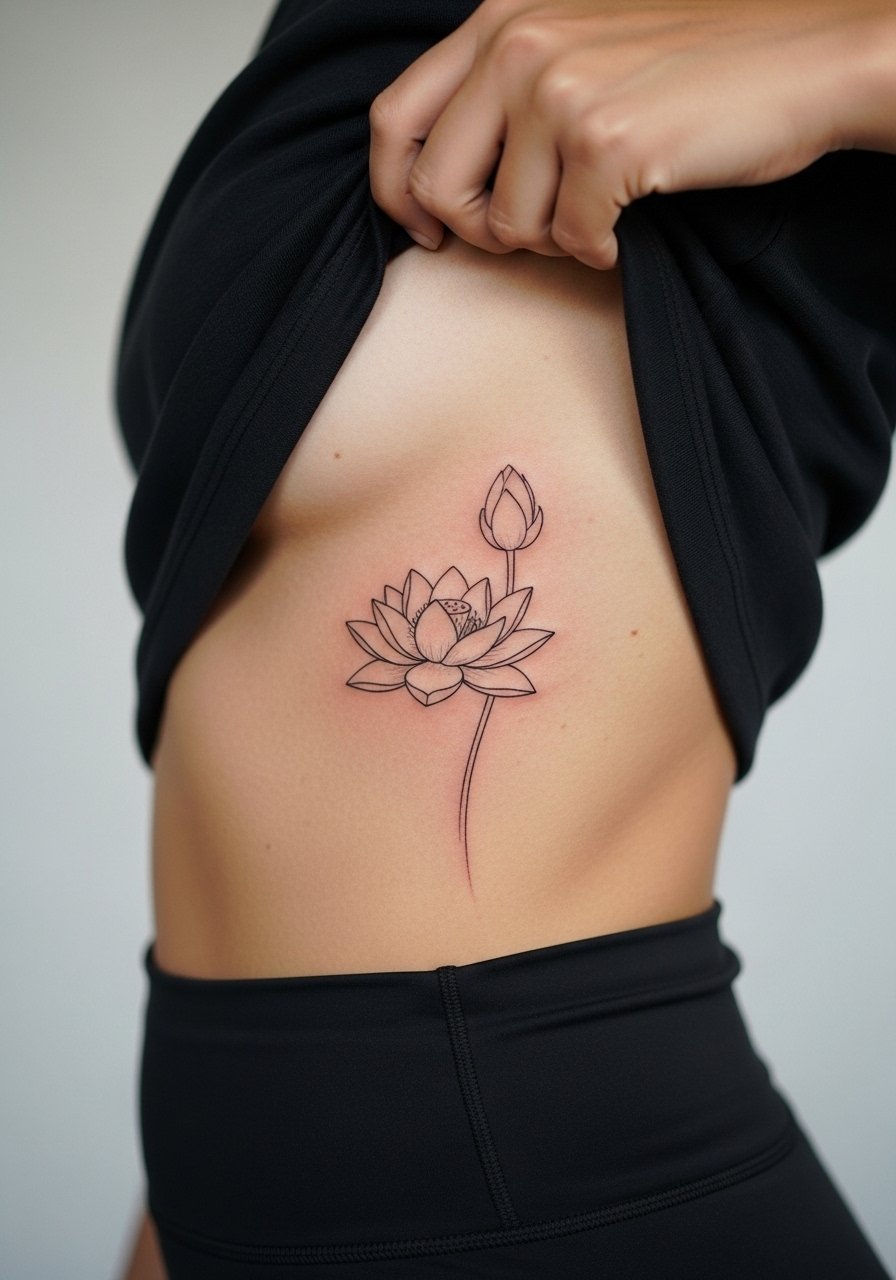
Fair warning, the ribcage is high on the pain chart, but it is also one of the best placements for a private, body-positive lotus that ages well because it sees limited sun and abrasion. Artists divide on fine line here. One group says the skin stretch causes lines to blur in two years. The other group insists that careful depth, spacing, and slight boldening of key contours keeps fine line readable far longer. If you choose this placement, expect a longer session and plan for one touch-up depending on how your skin heals.
14. Micro Lotus Pairing with a Tiny Mandala on the Upper Back
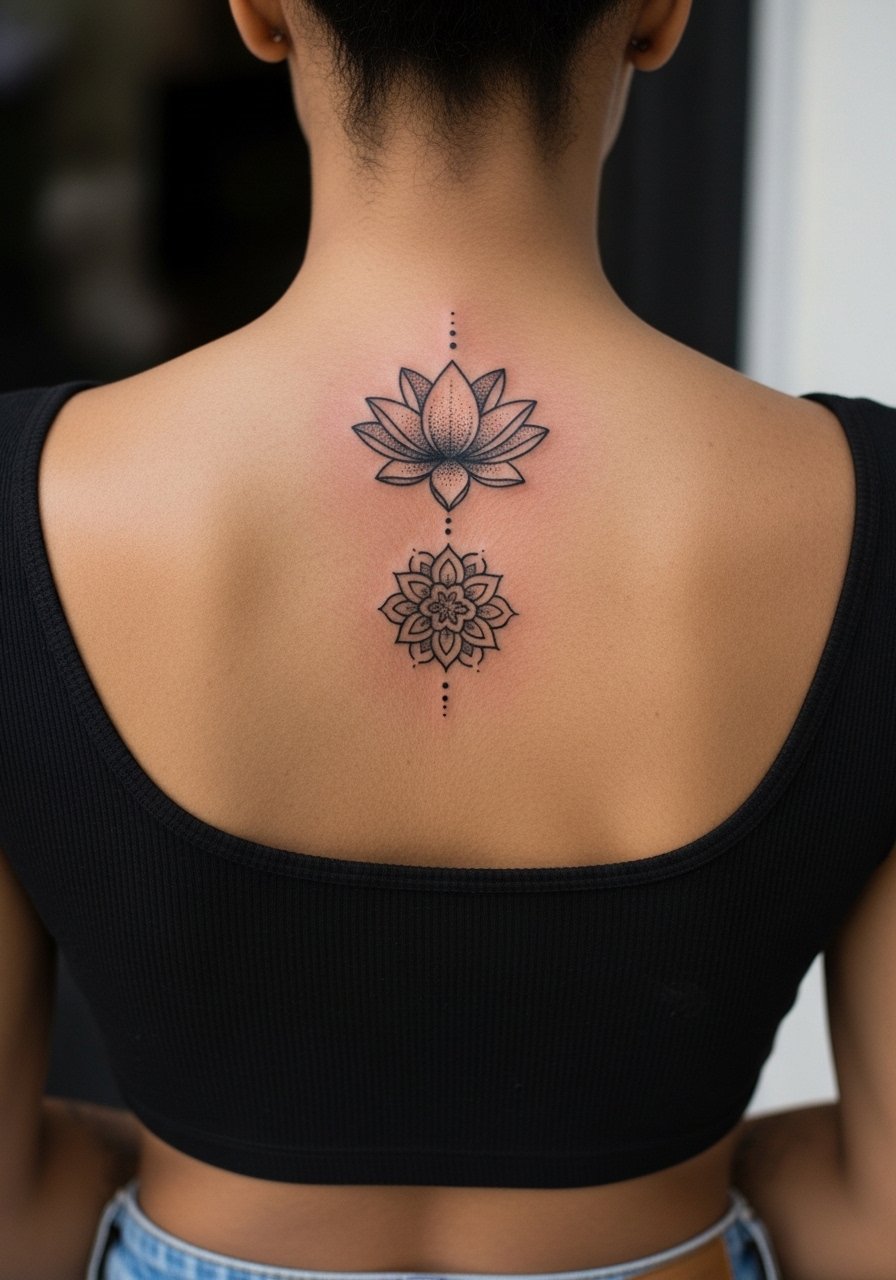
Upper back pieces heal well because the area is flat and avoids constant rubbing. Ask for the mandala and lotus to be scaled proportionally so the mandala does not overpower the bloom. Sessions can be done in one sitting. A common mistake is making both elements too small to retain separation after healing. For show-off wear a backless crop top that keeps the focus on the twin elements.
15. Micro Lotus in the Web of the Thumb
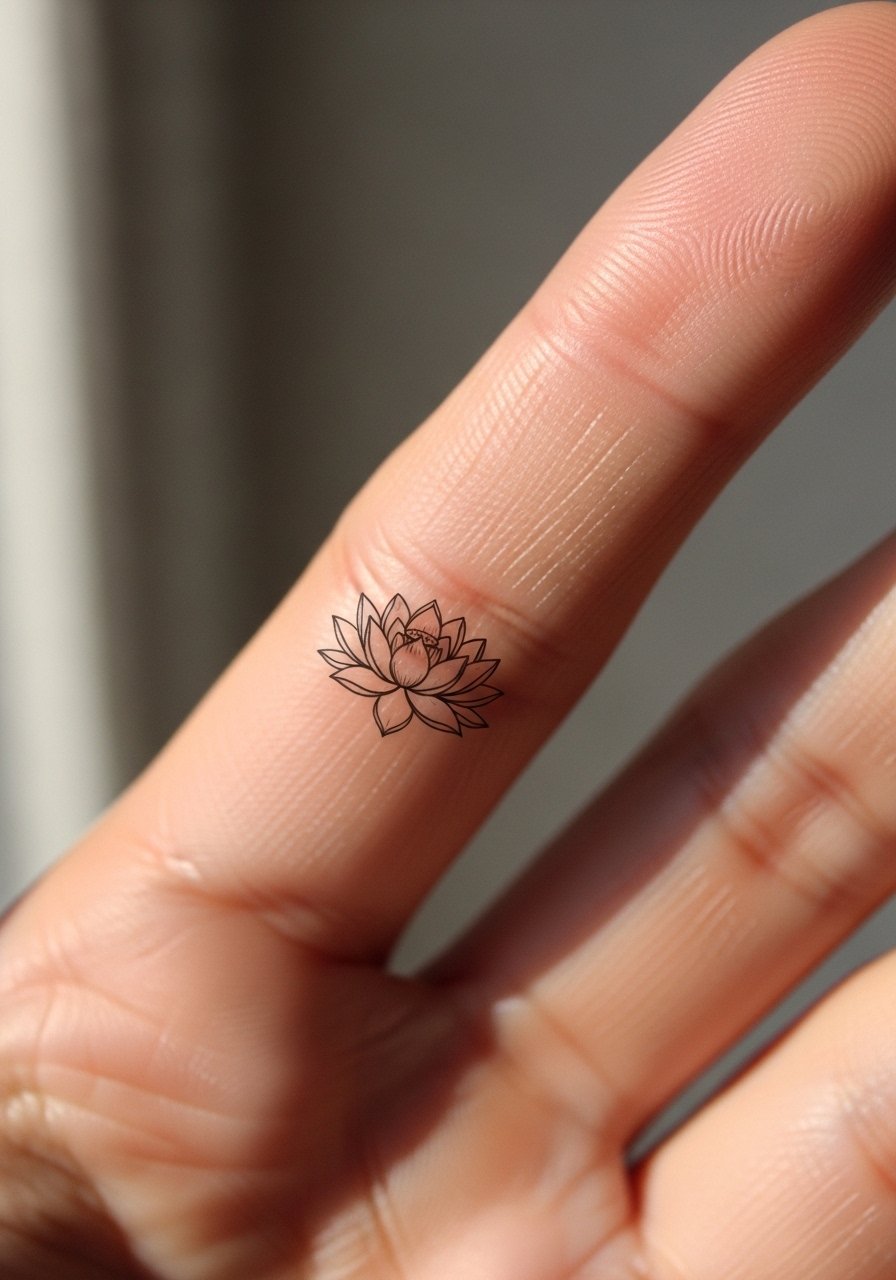
The web space is a discreet spot that can look intentional or like a blemish depending on line clarity. Expect quick sessions and higher fade potential for daily hand use. Tell your artist you accept a slightly thicker outline to extend the life before touch-up. The mistake people make is asking for ultra-fine internal detail in an area that takes a lot of soap and water. Keep daily friction low for the first month to help the lines settle.
16. Minimal Lotus Centered on the Sternum
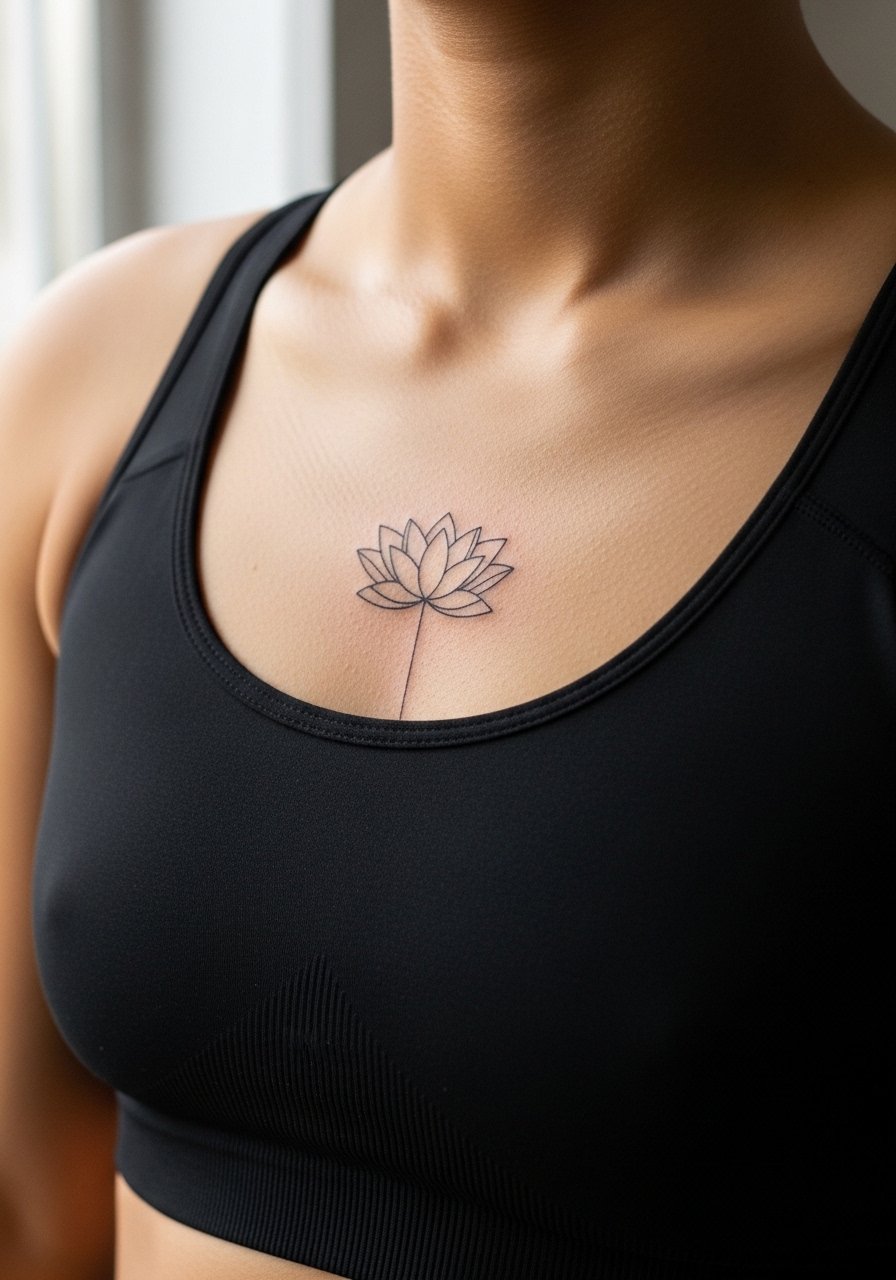
Sternum pieces are intimate and require thoughtful composition because the chest moves a lot with breathing. This placement carries more pain than outer limbs but rewards with a centered, symmetrical look. Ask your artist for slightly increased spacing between petals so motion does not collapse detail. A common error is packing the design too densely. For the session wear a sports bra you can easily remove or shift so the artist has clean access.
17. Tiny Lotus on the Side of the Thigh
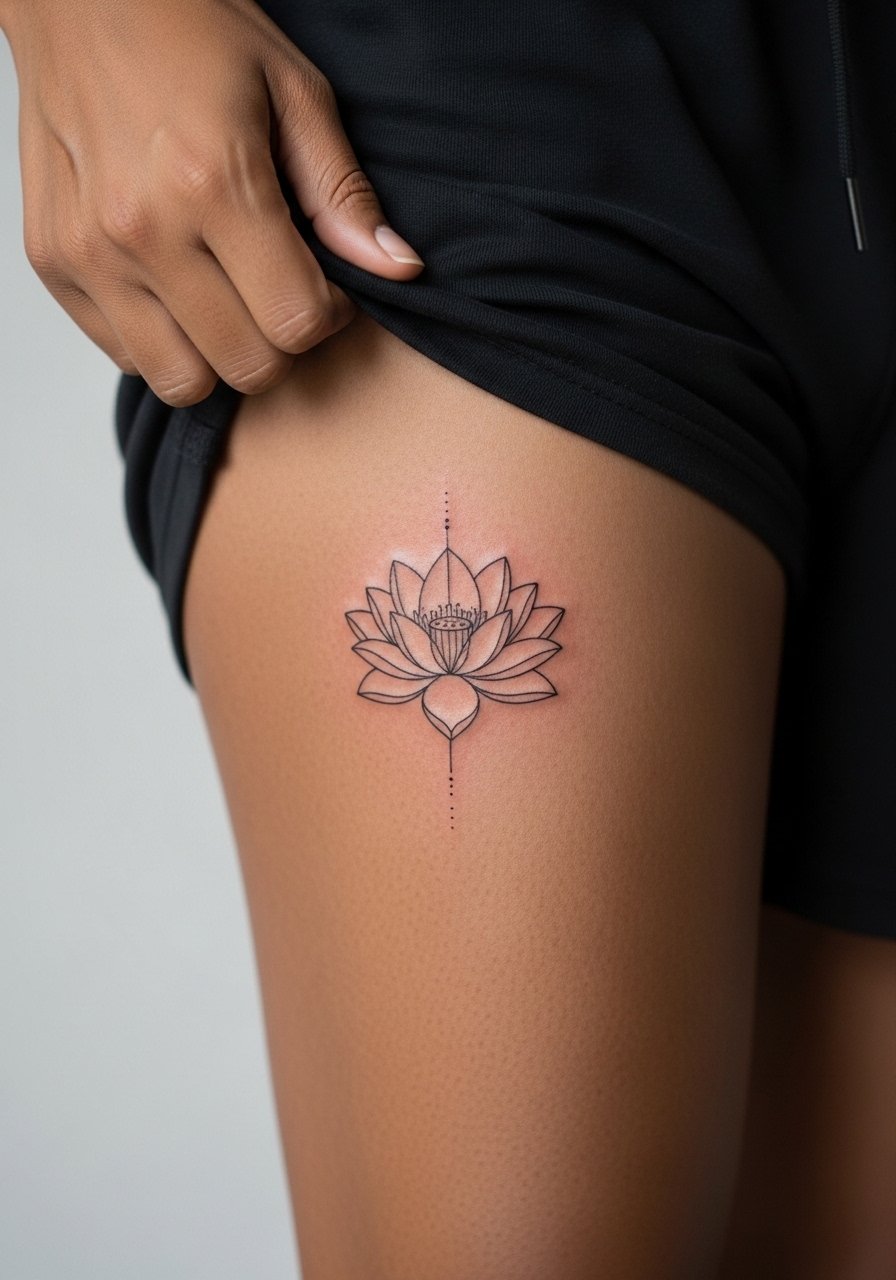
Thigh skin is forgiving and large enough to let a lotus breathe. Sessions are low to moderate in pain depending on proximity to the femur. Tell your artist you want the design sized so it remains crisp when you sit or wear tight bottoms. A typical mistake is going too tiny on a surface that can host more scale. For session comfort wear loose shorts or a wrap so the area is easy to expose and adjust without tugging.
18. Single-Petal Negative Space Lotus on the Rib Edge
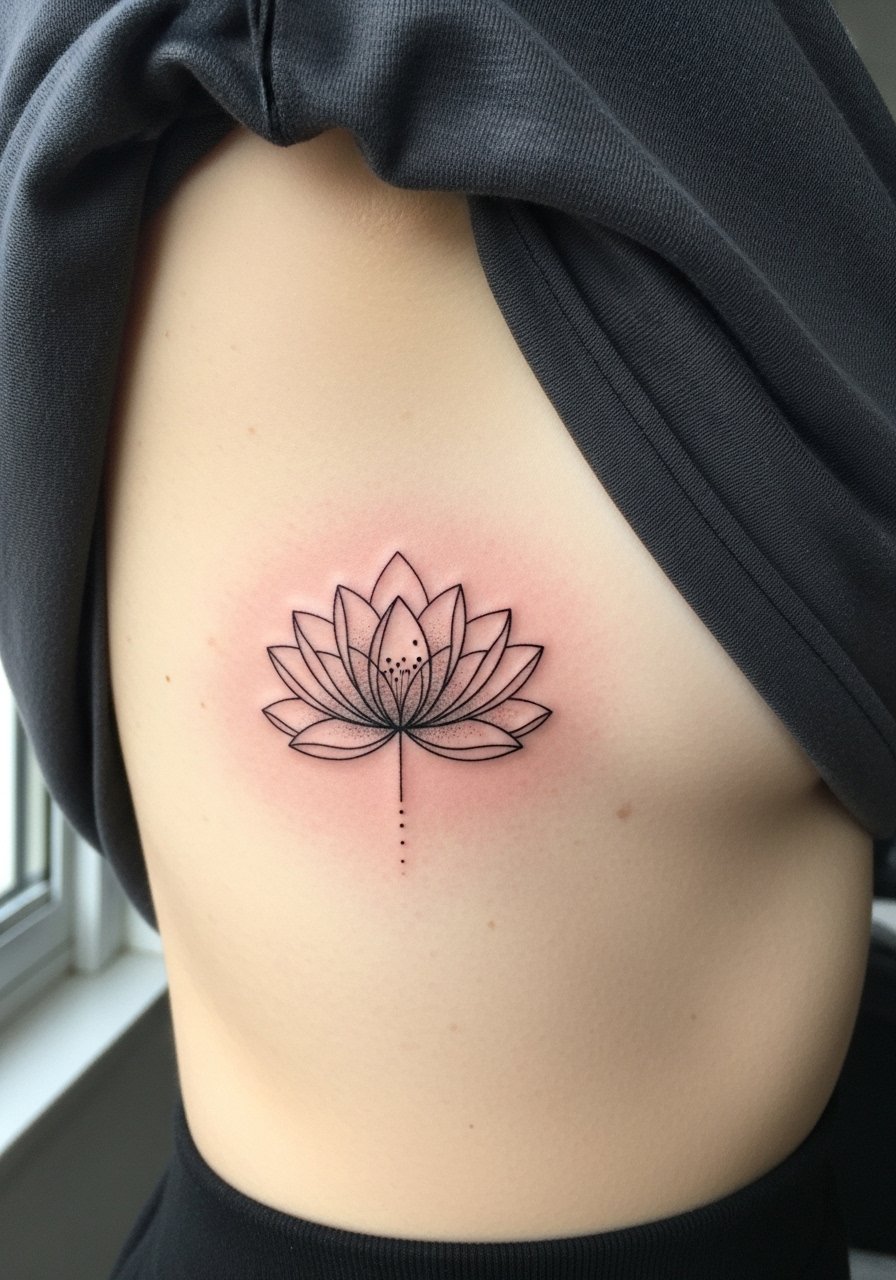
Placing a negative space petal on the rib edge uses the body's natural shadow to sell the illusion. This placement is sensitive and takes patience, and the session can be longer if you want several tiny petals. The mistake most make is asking for micro shading too close to the bone which can blur with breathing motion. For discrete display plan outfits with cropped tees or high-waist bottoms so the piece shows only when you want it to.
19. Pair of Micro Lotuses on Opposite Wrists
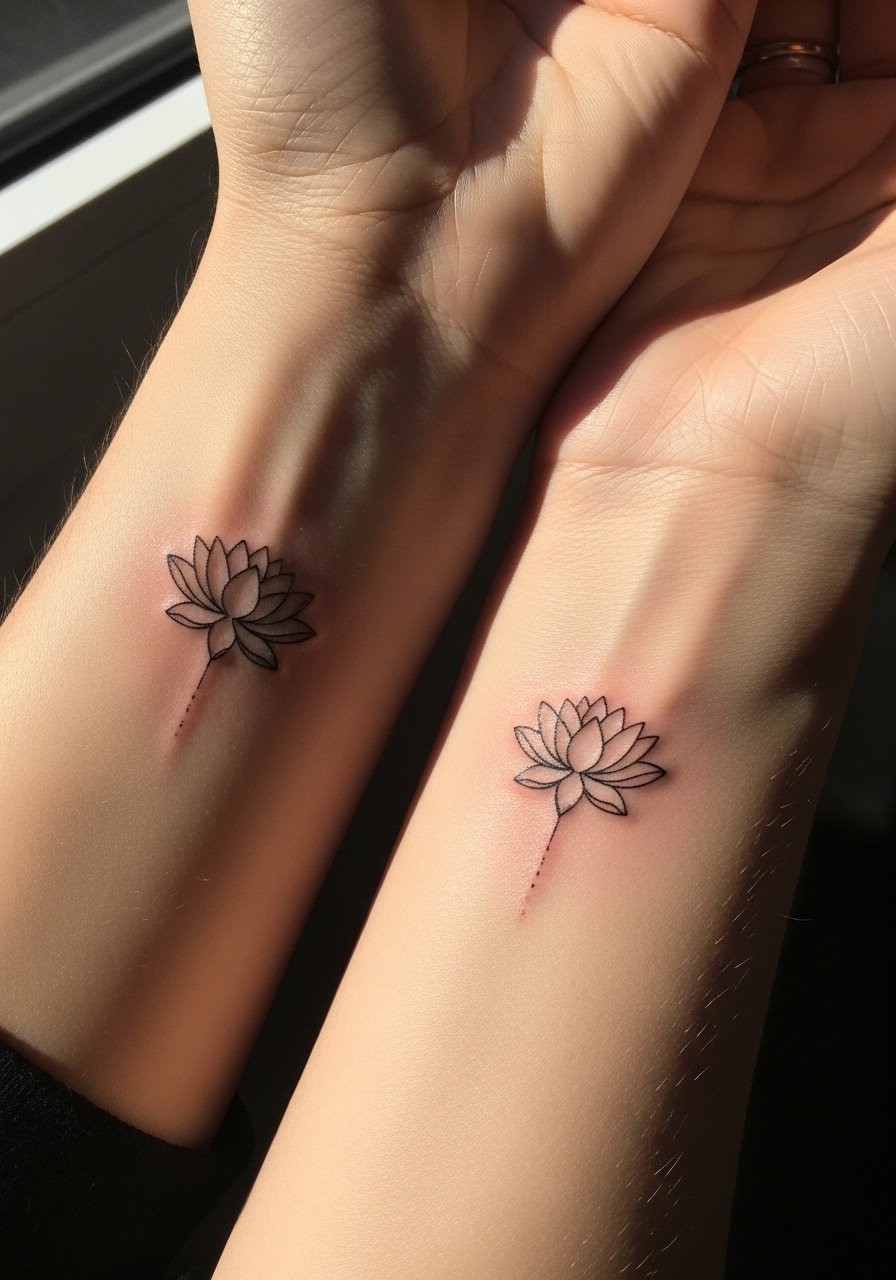
Wrist pairs create symmetry that reads intentional and gives you the flexibility to display one or both. Expect low to moderate pain and faster fading if you use the wrists a lot. A frequent mistake is making both designs identically too small which doubles the risk of blur. For the session, leave sleeves off and plan to accessorize after healing with a minimalist wrist stack on the opposite arm so the pair stays the focal point.
20. Lotus with Geometric Stem on the Outer Calf
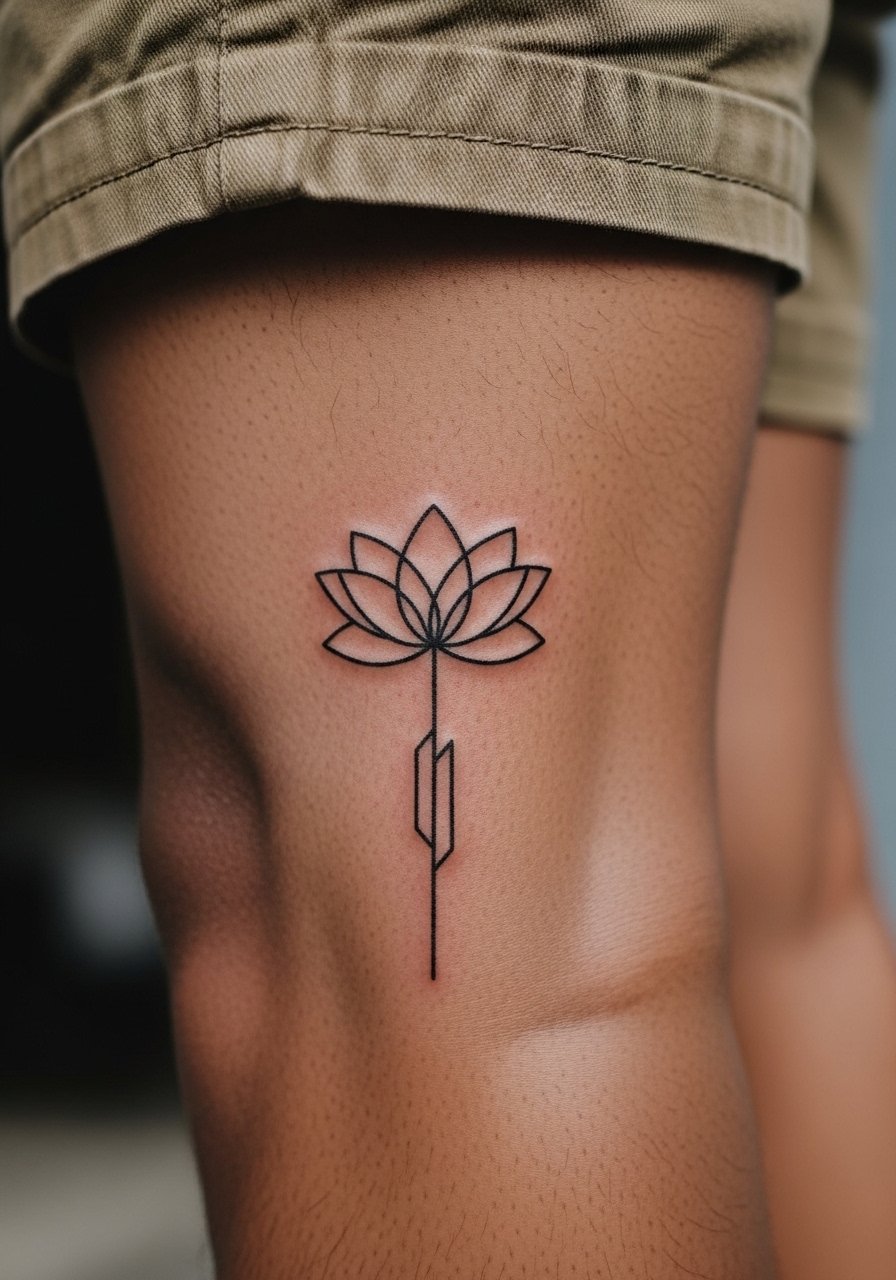
Calf placement gives artists room to add a vertical element like a geometric stem that helps the lotus sit naturally with pants and dresses. Expect moderate pain and a session under an hour for simple compositions. A common mistake is placing the stem too close to the muscle belly so it warps with movement. For show-off moments pick [sleeveless or short styles] that stop above the tattoo line so the leg reads clean when you walk.
21. Mini Lotus Cluster Near the Ankle Bone
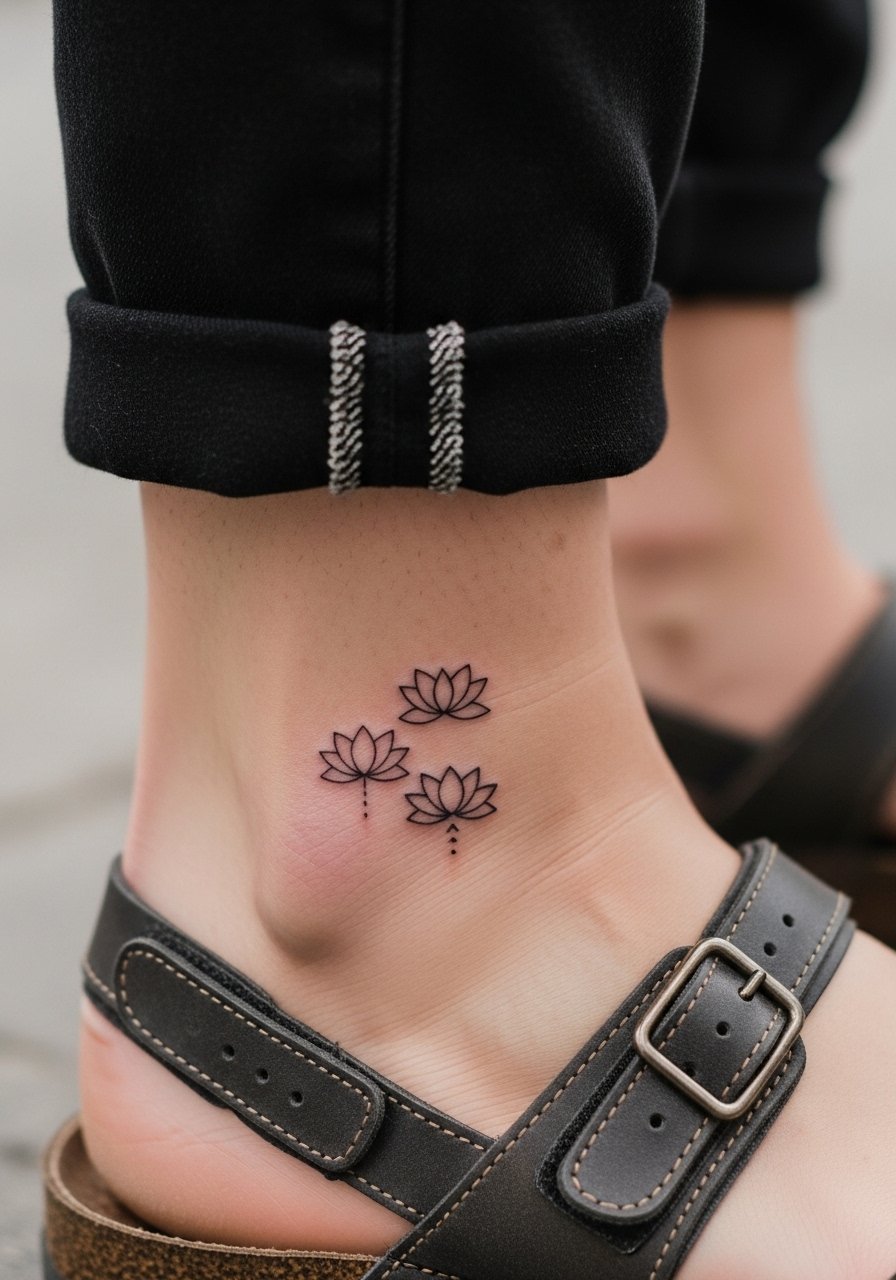
Clusters near the ankle let you repeat the motif for rhythm while keeping each bloom large enough to avoid blur. The ankle bone area experiences friction, so ask for crisp outlines and a slight size bump to keep edges defined. Sessions are quick but healing needs care around footwear. A mistake is packing three minis too tightly. For a clean summer look choose ankle chain jewelry or strappy sandals that leave the cluster visible.
Frequently Asked Questions
Q: Will a fine line lotus on my wrist need a touch-up sooner than on my forearm?
A: Yes, from what I have seen fine line on wrists tends to need touch-ups earlier than forearms because wrists face constant movement and washing. Ask your artist about slightly thicker contour lines and expect a potential touch-up around year two, depending on your skin and sun exposure.
Q: Are black-only lotus designs better for darker skin tones than watercolor versions?
A: Artists and collectors are split. One camp favors black-only work for contrast and longevity. The other camp likes subtle color washes for expressive texture. For darker tones black outlines with negative space often read clearer over time, so discuss visibility options in the consultation and bring healed examples you like.
Q: How much does placement affect the pain and healing timeline for a minimalist lotus?
A: Placement is a major factor. Ribcage and sternum are higher on the pain scale and take longer to feel normal after a session. Forearms, shoulder blade, and calf are lower pain and typically heal faster. Plan session wear that gives the artist access without tugging at the area during healing.
Q: What should I ask my artist to prevent early blurring in micro lotus designs?
A: Ask for a slightly increased line weight, clear spacing between petals, and a recommended touch-up window. Request healed photos of similar placements from their portfolio so you can see how their work settles on skin like yours.
Q: Can I style a small lotus so it looks intentional with my everyday wardrobe?
A: Absolutely. Sleeve choices and simple jewelry make a big difference. For example, a wrist piece pairs well with a thin gold cuff bracelet on the opposite arm, while collarbone lotuses show best with wide-neck tops. Think about what you wear most and preview the tattoo placement with similar clothing before booking.